
Executive Overview
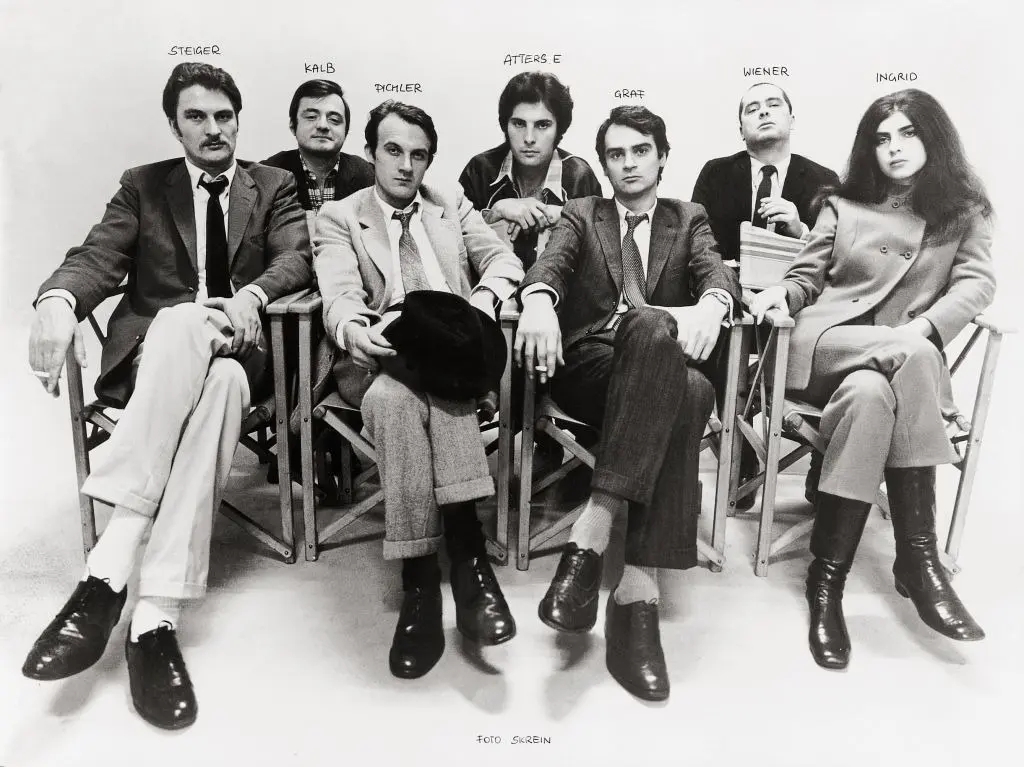
Ingrid Wiener, a foundational figure of the Austrian avant-garde and a key participant in the radical energy of Viennese Actionism, has died at the age of 83, just weeks before her 84th birthday. Her passing was announced by the Charim Gallery via a statement on Instagram. While no official cause of death has been disclosed, her departure marks the closing chapter for a generation of artists who weaponized everyday materials, conceptual rigor, and unapologetic rebellion to dismantle the rigid bourgeois structures of post-World War II Austria.
Spanning a career of over six decades, Wiener’s output defied easy categorization. Operating fluidly across textiles, painting, photography, and collage, she transformed the traditionally domestic craft of weaving into a vehicle for conceptual disruption. Her tapestries incorporated jarring fragments of contemporary life—everything from old shopping lists and electrical cables to discarded newspapers and fresh cucumbers—interwoven with handwritten texts that embedded her intimate thoughts directly into the warp and weft of her work. Alongside her textile innovations, Wiener was widely celebrated for her Traumzeichnungen (dream drawings), an extensive series of watercolor and ink works that cataloged her subconscious visions and surrealist interpretations of reality.
Beyond her individual studio practice, Wiener was defined by a rich ecosystem of artistic collaboration. From her early studies with Waltraud Höllinger (later known as the iconic performance artist Valie Export) to her decades-long creative partnership with Swiss artist Dieter Roth and her marriage to writer and fellow Actionist Oswald Wiener, her life was inextricably linked to the most vital networks of European experimental art. Whether she was weaving avant-garde designs, starring in surrealist cinema, or feeding cultural icons like David Bowie and Peter O’Toole at her legendary Berlin restaurant Exile, Wiener lived as a total work of art—a dynamic force whose legacy continues to challenge the boundaries between life, domesticity, and radical performance.
Read Also
Detailed Chronology: From Postwar Austria to Global Avant-Garde
Formative Years and the Roots of Rebellion
Born Ingrid Schuppan on October 2, 1942, Wiener came of age in an Austria grappling with the cultural and psychological fallout of the Second World War. The society of her youth was defined by conservative values, historical amnesia, and a deeply entrenched patriarchal order. For a young woman drawn to the arts, the path of conformity was untenable.
Her trajectory shifted definitively when she enrolled in a specialized textile training school in Vienna. It was here that she mastered the rigorous technical foundations of weaving, but more importantly, where she found her tribe. Among her classmates was Waltraud Höllinger. The two young women bonded over a mutual dissatisfaction with artistic orthodoxies, forging a lifelong friendship and professional partnership that would help lay the groundwork for feminist and actionist performance in Austria.
The 1960s: Weaving Subversion and Collaborative Experiments
As the 1960s unfolded, Vienna became the crucible for Viennese Actionism—an aggressive, visceral artistic movement that sought to purge the nation’s fascist past through ritualistic, often shocking bodily performances. While contemporaries like Hermann Nitsch and Otto Mühl focused on theatrical blood and ritual slaughter, Wiener and her circle approached subversion through materials, media cross-pollination, and conceptual reinvention.
As early as the 1960s, Wiener and Export began executing large-scale tapestries based on the designs of their friend and collaborator Friedensreich Hundertwasser. These pieces were initially exhibited and sold under Hundertwasser’s name, establishing Wiener’s technical prowess on a broader stage.
Her collaborative spirit soon deepened. By the mid-1970s, Wiener embarked on one of the most ambitious conceptual experiments of her career alongside Export and Swiss multi-hyphenate Dieter Roth. The trio sought to reinvent the medium of tapestry entirely by establishing a radical rule: they would weave only what could be seen directly behind the warp threads. While the physical and visual constraints of this philosophy proved nearly impossible to execute in a rigid manner, the conceptual breakthrough—a fluid, anti-dogmatic approach to weaving that embraced chaos and accident—became a permanent hallmark of Wiener’s practice.
This spirit of cross-disciplinary camaraderie also drew her into the orbit of filmmaker Ferry Radax and writer Konrad Bayer. In 1959, Wiener and Bayer participated in Radax’s groundbreaking surrealist film Sonne halt! (Hold the Sun!), a visual poem that captured the buoyant, anarchic spirit of the young Austrian avant-garde.
Berlin, the Exile Restaurant, and International Horizons
In 1969, Ingrid and her husband, Oswald Wiener—a towering intellect, writer, musician, and fellow Viennese Actionist—relocated to Berlin. The move marked a new phase of cultural entrepreneurship. In Berlin, the Wieners opened several establishments, most notably the legendary restaurant Exile.
Ingrid lent her formidable culinary skills to the venture, transforming the eatery into an informal clubhouse for the international art, film, and music elite. Exile quickly earned a mythic status, playing host to luminaries such as rock icon David Bowie and acclaimed actor Peter O’Toole. It was a space where high art, counterculture, and everyday hospitality seamlessly collided, perfectly mirroring Wiener’s philosophy that art was not confined to museum walls, but lived in the textures of daily interaction.
Later in life, the couple undertook another geographical shift, moving to the vast, untamed landscapes of Canada. The stark wilderness and expansive vistas of North America profoundly influenced Wiener’s internal landscape, sparking a renewed wave of creative output. It was during this period that she poured her energies into her Traumzeichnungen, capturing the surreal architecture of her dreams and translating the psychological resonance of her Canadian surroundings into delicate, haunting watercolors.
The Turn of the Millennium: Rediscovery and Critical Reassessment
For many years, Wiener’s contributions to textiles and conceptual art were overshadowed by the hyper-visible male figures of Viennese Actionism or relegated to the margins of craft history. However, the turn of the millennium catalyzed a long-overdue institutional and critical reassessment of her career in Austria.
The pivotal moment arrived in 2001 when the Charim Gallery in Vienna curated the landmark exhibition Diesseits und Jenseits des Traums: 100 Jahre Jacques Lacan (This Side of the Dream and the Other: 100 Years of Jacques Lacan). During the planning phases, psychoanalyst and cultural figure August Ruhs introduced gallery founder Miryam Charim to Wiener’s dream drawings.
The gallery was immediately captivated. Charim Gallery swiftly established a formal representation agreement with Wiener, mounting a series of critically acclaimed solo and two-person exhibitions that reintroduced her complex oeuvre to a new generation of curators, collectors, and art historians. This sustained institutional attention culminated in her recognition as an indispensable pillar of postwar Austrian modernism.
Supporting Context & Metrics: The Architecture of Wiener’s Practice
To fully appreciate Ingrid Wiener’s impact, one must examine the specific mechanics of her multidisciplinary approach. Her work bridges the historical chasm between high-modernist abstraction, conceptual art, and feminist reclamation of craft.
+-------------------------------------------------------------------------+
                    INGRID WIENER'S ARTISTIC ECOSYSTEM
+-------------------------------------------------------------------------+

  [TEXTILE & WEAVING]         [SURREALIST PAINTING]       [COLLAGE & OBJECTS]
   - Warp-thread rules          - Traumzeichnungen          - Cutting boards
   - Found materials            - Subconscious mapping      - Shopping lists
   - Hundertwasser/Roth         - Watercolor/Ink mediums    - Cables & cucumbers
         |                            |                           |
         +----------------------------+---------------------------+
                                      |
                                      v
                        [THE TOTAL AVANT-GARDE LIFE]
                   (Actionism, Exile Restaurant, Cinema)
The Materiality of the Everyday
Traditional tapestry is frequently understood as a slow, premeditated, and monumental medium—an aristocratic art form requiring months or years of meticulous labor based on a fixed cartoon or sketch. Wiener subverted this tradition entirely. By introducing domestic detritus—old shopping lists, electrical cords, newspapers, cutting boards, and even organic elements like cucumbers—into her textiles, she collapsed the distance between high art and low domesticity.
This methodology shares ideological DNA with the Arte Povera movement and Fluxus, yet Wiener retained a distinctively feminine relationship to material culture. Her textiles do not merely display objects; they trap them, preserving ephemeral moments of daily life in permanent, fibrous amber.
Collaborative Metrics
Wiener’s career was defined by hyper-productive partnerships that spanned decades:
- Valie Export: Collaborated from their student days in the 1960s onward, bridging textile performance and feminist artistic autonomy.
- Friedensreich Hundertwasser: Produced major early tapestries under his supervision and design during the mid-1960s.
- Dieter Roth: Completed six major collaborative tapestries between 1974 and 1997, inventing fluid, non-rigid weaving methodologies that challenged the industrial constraints of the loom.
- Oswald Wiener: A lifelong intellectual and artistic partnership spanning over five decades, traversing Viennese Actionism, experimental philosophy, and global relocation until Oswald’s death in 2021.
Official Statements & Tributes
The art world has responded to Wiener’s passing with an outpouring of grief and admiration, led by Miryam Charim, owner of the Charim Gallery, who championed Wiener’s work for over two decades.
In an official statement released via Instagram, Charim reflected on the depth of their relationship:
"We are deeply saddened by the passing of Ingrid Wiener. Over the years, our artistic collaboration with Ingrid developed into a close personal friendship. Ingrid was far more to us than an artist represented by the gallery. It is painful to lose Ingrid."
Recalling the serendipitous discovery of Wiener’s work at the turn of the century, Charim noted:
"While searching for artistic positions for the exhibition [Diesseits und Jenseits des Traums], August Ruhs introduced us to Ingrid’s dream drawings, and we were immediately captivated by them."
Art historians and curators have similarly emphasized Wiener’s unique ability to synthesize rigorous conceptual frameworks with deeply personal, tactile execution. Unlike many of her male Actionist peers whose works relied on shock value and aggressive public spectacles, Wiener’s radicalism was patient, internalized, and enduring—woven stitch by stitch into the fabric of European art history.
Future Outlook: Preserving a Legacy
Even in death, Ingrid Wiener’s footprint on the contemporary art landscape continues to expand. The Charim Gallery has confirmed that it is currently in the advanced stages of planning a major retrospective exhibition dedicated to Wiener’s life work, with a specific focus on her historical, boundary-pushing collaborations with Valie Export. Scheduled to open in early 2025, the exhibition promises to bring renewed academic and public scrutiny to a body of work that brilliantly dissolved the boundaries between craft, painting, and radical conceptualism.
As museums and institutions increasingly reassess the contributions of women artists who worked outside traditional male-dominated mediums, Wiener’s textiles and Traumzeichnungen offer a vital blueprint for the future. They remind us that the most potent forms of political and artistic resistance often lie not in grand, bombastic gestures, but in the quiet, subversive act of redefining the everyday—transforming the threads of our ordinary lives into monuments of enduring human expression.




Comments
Facebook App ID not configured. Please add it in the Customizer.