
Executive Overview
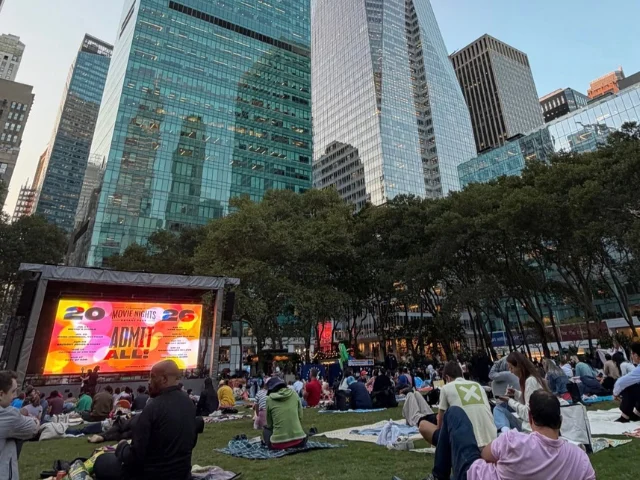
In an era dominated by algorithmic feeds, hyper-personalized streaming algorithms, and solitary viewing habits, New York City is undergoing a profound counter-movement. Across the five boroughs—from the meticulously manicured lawns of Bryant Park to the breezy, post-industrial rooftops of Pier 17 and Brooklyn Bridge Park—outdoor screenings and live-event watch parties have evolved into vital urban rituals.
What began decades ago as simple celluloid-under-the-stars programming has transformed into a sophisticated, multi-million-dollar convergence of place-making, experiential marketing, and communal storytelling. No longer content with merely consuming media within the four walls of traditional megaplexes or alone on living room couches, New Yorkers are reclaiming public space to forge temporary, synchronous communities. These events pair iconic cinematic backdrops with real-time audience participation, breathing new life into classic films and turning episodic television finales into major cultural happenings.
Simultaneously, major streaming networks, telecommunication giants, and lifestyle brands have recognized this cultural shift. By fusing high-end experiential marketing with open-air gatherings, corporations are turning passive viewers into active brand participants. The result is a thriving ecosystem where the city skyline is as much a part of the cinematic frame as the projection itself, and where the shared human gasp, cheer, or laugh in a park outweighs the solitary convenience of on-demand streaming.
Read Also
Detailed Chronology: The Evolution of New York’s Open-Air Screenings
The trajectory of New York’s outdoor film and television culture reflects a broader urban desire to democratize public space and humanize the concrete jungle.
1. The Foundation: Nostalgia and Public Parks
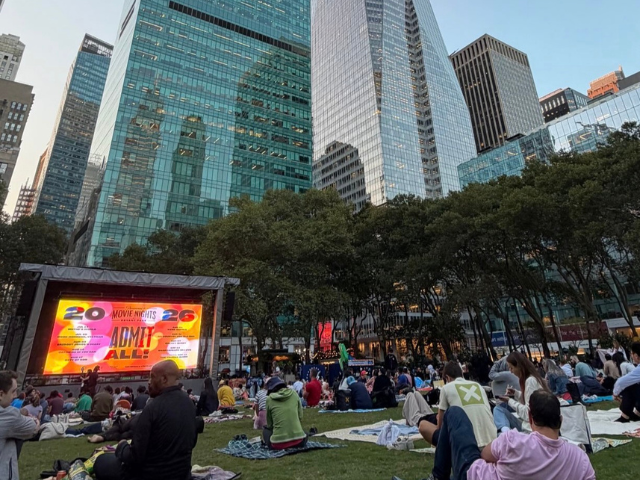
The modern iteration of New York’s open-air cinema movement traces its roots back to the late 20th century, when city parks departments and local business improvement districts sought ways to draw residents back into urban centers after dark. Bryant Park’s Movie Nights initiative emerged as a definitive blueprint. By utilizing the urban green space as a massive, open-air auditorium, organizers invited office workers, residents, and visitors to linger past sunset.
The ritual quickly established a predictable, cherished timeline:
- Late Afternoon (4:00 PM – 6:00 PM): The earliest attendees arrive, staking out prime lawn territory with blankets, shopping bags filled with provisions, and coolers.
- Dusk (7:30 PM – 8:30 PM): The lawn fills to capacity, transforming an open patch of green into a tightly packed mosaic of friends, couples, and families picnicking.
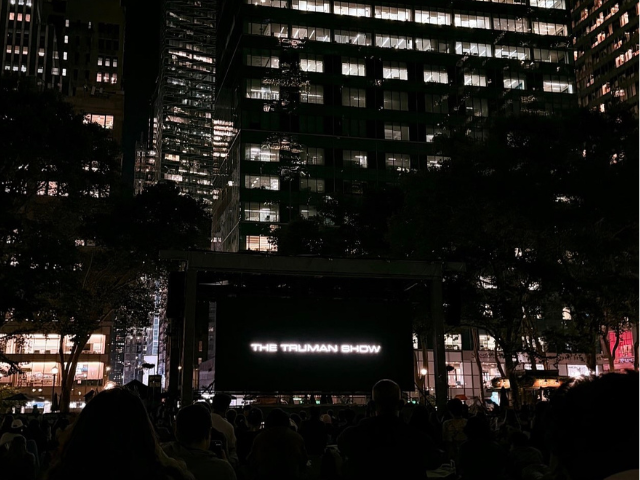
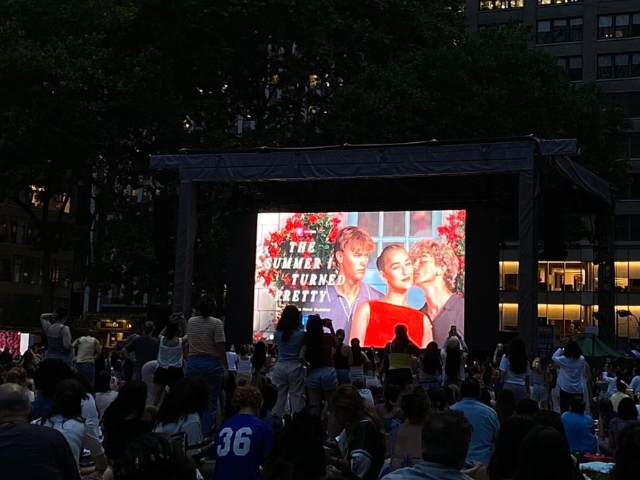
- The Screening: As the projector hums to life, thousands of individuals synchronize their attention, turning a familiar classic—such as The Truman Show or Forrest Gump—into a collective rediscovery.
2. The Streaming Age Pivot: From Celluloid Classics to Ephemeral TV Events
As streaming platforms steadily replaced traditional cable and physical media over the past decade, outdoor screenings adapted. Rather than relying exclusively on repertory cinema houses or nostalgic film prints, event organizers began programming first-run television premieres and series finales.
Last summer marked a pivotal turning point for this trend. Screenings of tentpole television events—such as the final seasons of teen-drama obsessions like The Summer I Turned Pretty—demonstrated that serialized television could command the same communal enthusiasm once reserved for blockbuster films. Fans arrived not just to watch a story unfold, but to participate in a live community of shared theories, character preferences, and emotional investment.
3. The Experiential Era: Rooftops, Brands, and Cast Appearances
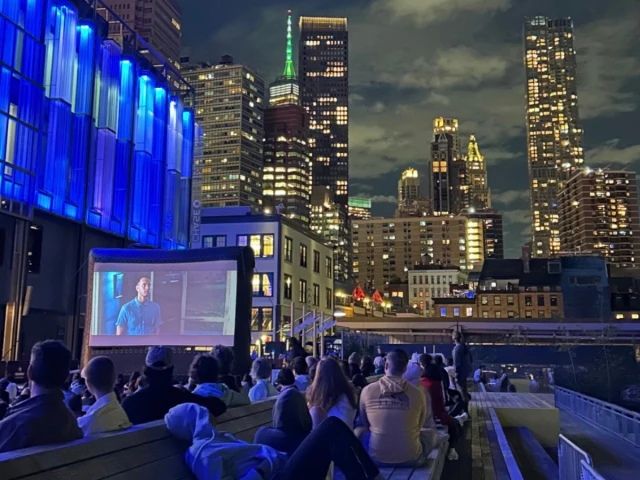
In recent years, the chronology of the outdoor screening has accelerated into high-concept experiential events. Locations have diversified horizontally and vertically: from waterfront piers on the East River to exclusive Manhattan rooftops like 230 Fifth.
Furthermore, these events have become tightly choreographed commercial experiences. When streaming platforms partner with corporate sponsors (such as Prime Video teaming up with T-Mobile or beauty brands like Summer Fridays), the evening evolves seamlessly from a public viewing into an immersive marketing installation. Fans are greeted with themed environments replicating fictional towns (like the show’s Cousins Beach), live cast Q&As, and curated gift bags, officially cementing the open-air screening as a premier medium for contemporary entertainment culture.
Supporting Context & Metrics: The Economics and Psychology of Shared Viewing
To understand the longevity of New York’s outdoor cinema culture, one must examine both the economic motivations driving corporate investment and the psychological drivers compelling urbanites to leave their climate-controlled apartments.
The Psychology of Collective Effervescence
Sociologists often use the term collective effervescence—coined by Émile Durkheim—to describe the energy and enthusiasm generated when a group of people assemble for the same purpose. In a metropolis as densely populated as New York City, residents routinely pass thousands of strangers daily while experiencing profound isolation.
Outdoor screenings dismantle this urban detachment. When an audience of 1,500 people simultaneously gasps at a plot twist or laughs at a decades-old cinematic punchline, individual isolation dissolves into a collective consciousness.
- The Solitary vs. Shared Metric: While on-demand streaming offers infinite choice and convenience, it scores low on emotional resonance compared to shared physical spaces. Market research indicates that viewers retain narratives more vividly when consumed within a social context.
- The "FOMO" (Fear Of Missing Out) Factor: The first-come, first-served nature of many free events (such as Bryant Park and Brooklyn Bridge Park’s Movies With A View) creates an artificial scarcity that elevates the perceived value of attendance. Securing a patch of grass becomes a badge of honor.
The Financial Engine: Experiential Marketing Metrics
For brands and streaming services, traditional ad-spend (such as pre-roll digital ads or billboards) suffers from widespread consumer fatigue and ad-blocker utilization. Experiential marketing, conversely, yields high engagement rates.
- Direct Consumer Touchpoints: Brand-sponsored outdoor activations allow companies to place physical products directly into the hands of target demographics—such as distributing branded lifestyle goods, beauty samples, and interactive photo installations.
- User-Generated Content (UGC): Attendees inherently act as micro-influencers. A beautifully lit photo featuring a skyline backdrop, a curated gift bag, and a beloved TV cast member generates thousands of organic impressions across Instagram, TikTok, and X (formerly Twitter).
- Retention and Loyalty: Industry analytics show that consumers who participate in live, brand-aligned fan events exhibit significantly higher subscription retention rates for streaming services compared to those who acquire content passively at home.
Official Statements and Industry Insights
Cultural critics, urban planners, and entertainment executives have increasingly taken note of how open-air screenings are reshaping the modern entertainment landscape.
Dr. Elena Vance, an urban sociologist specializing in public space utilization at Columbia University, notes that the success of these events lies in their defiance of digital isolation:
"We have engineered a society where entertainment is frictionless, instantaneous, and entirely private. Yet, human beings remain fundamentally tribal animals. When New Yorkers haul blankets across asphalt and grass just to sit shoulder-to-shoulder under a flickering projector, they are performing a quiet rebellion against digital atomization. They are demanding physical proximity to stories and to each other."
A senior marketing executive at a major streaming platform, speaking on condition of anonymity regarding large-scale park activations, highlighted the strategic pivot toward live public events:
"You cannot replicate the energy of a live crowd via an algorithm. When we bring a cast member out onto a stage in Bryant Park or transform a rooftop into a coastal getaway, we aren’t just broadcasting a show—we are manufacturing a core memory for the superfan. That emotional equity translates directly into subscriber loyalty and cultural ubiquity."
City planners and parks advocates also emphasize the civic utility of these gatherings. Representatives from the Bryant Park Corporation have repeatedly pointed out that active, programmed public spaces are inherently safer, cleaner, and more vibrant. By drawing diverse populations into parks after standard business hours, outdoor cinemas help redefine urban centers as living, breathing community hubs rather than mere commercial transit zones.
Future Outlook: Where Outdoor Cinema and Pop-Up Culture Go From Here
As municipal governments look for innovative ways to revitalize post-pandemic downtowns, and as entertainment companies search for cutting-edge methods to cut through digital noise, the future of outdoor cinema in New York City looks exceptionally bright and technologically sophisticated.
1. Technological Advancements in Projection and Audio
While traditional film projectors and basic sound setups have long sufficed, future open-air screenings are poised to leverage cutting-edge AV technology. The integration of ultra-bright laser projection systems will allow for earlier start times—diminishing the need to wait for complete darkness—while directional, localized spatial audio technologies promise to eliminate the audio bleeding often associated with large urban parks, offering pristine soundscapes against the backdrop of ambient city noise.
2. Hyper-Niche Programming and Micro-Festivals
Beyond mainstream studio classics and high-profile television finales, the coming years will likely witness a proliferation of hyper-niche, community-curated outdoor micro-festivals. Neighborhood-specific cultural groups, independent filmmakers, and local arts collectives are expected to secure pop-up permits for vacant urban lots, turning underutilized city spaces into canvases for diverse, multicultural, and avant-garde cinematic storytelling.
3. The Convergence of Augmented Reality (AR) and Live Spaces
As wearable technology and spatial computing advance, brands and event producers are already conceptualizing ways to weave augmented reality into open-air screenings. Imagine sitting on the lawn at Pier 17 while pointing your smartphone or AR glasses at the screen or skyline to unlock interactive narrative layers, exclusive behind-the-scenes content, or synchronized digital art installations that interact with the physical environment in real-time.
Conclusion
Ultimately, the enduring appeal of New York’s outdoor cinema culture transcends passing entertainment trends or clever marketing campaigns. In a city defined by relentless velocity—where towering glass and steel facades dwarf the individual and digital feeds keep eyes locked downward—these screenings offer a rare, collective pause. They invite strangers to drop their guard, sit side-by-side on a patch of grass or a breezy rooftop, and look upward together. Whether it is the glowing Manhattan skyline framing a classic cinematic moment or the roar of an audience welcoming their favorite actors onto a stage, these events prove that while technology can deliver any story straight to our pockets, nothing can ever truly replace the magic of sharing that story with the world around us.




Comments
Facebook App ID not configured. Please add it in the Customizer.