The speculative fiction landscape on television has rarely seen a premise as conceptually dizzying and emotionally grounded as Apple TV+’s hit series Dark Matter. Adapted from Blake Crouch’s bestselling quantum-thriller novel, the first season captured audiences by exploring the infinite pathways of human choice, identity, and sacrifice. The narrative centered on Jason Dessen (Joel Edgerton), a physicist kidnapped from his familiar Chicago life and dragged into an alternate reality engineered by a mysterious quantum superposition engine known simply as "the box."
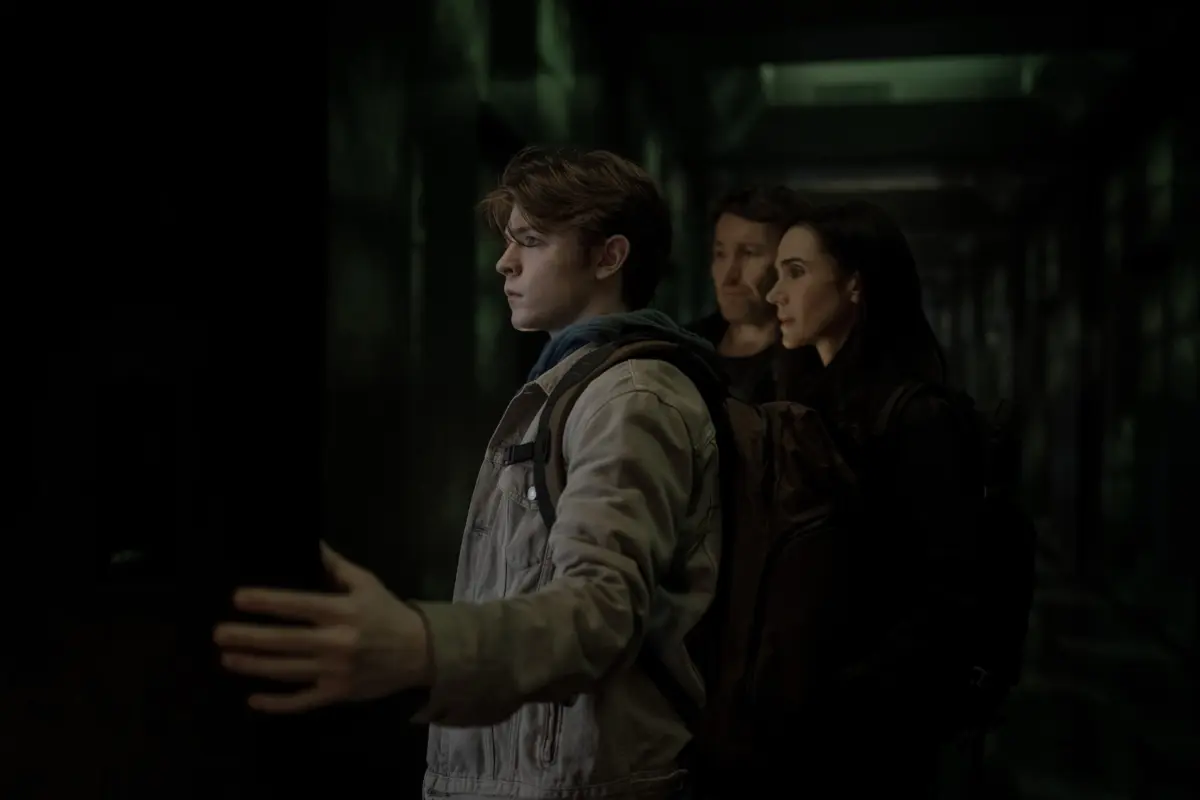
Now, as Dark Matter returns for its highly anticipated second season, the stakes have escalated beyond mere survival. The season premiere wastes no time detonating the illusion of domestic peace. Following a catastrophic confrontation that results in Daniela Dessen (Jennifer Connelly) shooting an alternate iteration of Jason who tracked them across realities, the Dessen family finds themselves thrust once again onto a volatile run across the multiverse.
This deep dive examines the narrative ramifications of the season two premiere, analyzing how an act of violence fundamentally fractures the psychological stability of its characters. Through exclusive insights from series stars Jennifer Connelly and Joel Edgerton, we explore the widening chasm between Jason and Daniela, the looming existential threat of the box’s technology, and what this harrowing new chapter means for the future of Apple TV’s premiere sci-fi property.
Detailed Chronology: The Shockwave of the Premiere
The Catalyst: An Unthinkable Act of Self-Defense
The opening moments of Dark Matter Season 2 establish an immediate sense of dread. For the trailing audience and the characters themselves, the closing moments of the first season offered a fragile, hard-fought hope: Jason One, Daniela, and their son Charlie (Oakes Fegley) had seemingly carved out a quiet nook within the infinite expanse of realities to call home.
That illusion is shattered within the premiere’s opening act. When another version of Jason breaches their sanctuary, Daniela is forced into a split-second, life-altering decision. Rather than yielding to the chaos or relying solely on Jason One to neutralize the threat, Daniela takes matters into her own hands—literally. She picks up a weapon and shoots the intruder dead.
This pivotal sequence serves as the narrative engine for the entirety of the second season. As Connelly notes in discussions surrounding the premiere, the psychological reverberations of pulling that trigger extend far beyond the immediate adrenaline of self-defense.
Forced Back into the Box
The immediate consequence of the shooting is logistical and terrifying: the Dessen family can no longer remain where they are. The multiverse is vast, but an alternate Jason managed to track them down once, proving that their safety is an illusion.
Consequently, the family is forced to return to the box, plunging headfirst back into the swirling vortex of quantum realities. Their objective is no longer merely to find a world where they can thrive, but to seek out a reality stable enough to hide them from the infinite threats posed by their own alternate selves. Yet, as they cross threshold after threshold, the physical toll of continuous displacement is matched only by the psychological deterioration of the family unit.
Supporting Context & Metrics: The Anatomy of a Sci-Fi Phenomenon
Adapting Quantum Mechanics for Prestige Television
To understand the weight of Dark Matter’s narrative choices, one must examine the unique structural challenges of translating a multi-world narrative to the screen. Unlike procedural dramas or serialized mysteries with fixed settings, Dark Matter requires its audience to suspend disbelief regarding the fundamental nature of reality. Every door in the box represents an infinite branching of choices—a physical manifestation of Robert Frost’s "the road not taken."
[The Box: Quantum Superposition Engine]
       │
       ├──> Reality A: The Original Life (Stolen)
       ├──> Reality B: The Utopian Escape (Compromised)
       ├──> Reality C: The Industrial Wasteland
       └──> Reality ∞: Infinite Divergent Paths
The production values of Apple TV+’s adaptation have consistently relied on stark visual contrasts to denote these shifts. In season one, the psychological journey was defined by Jason One’s disorientation in a world that looked like his own, yet belonged to someone else. In season two, the horror shifts inward. The threat is no longer just an unfamiliar world, but the corrupting influence of the technology itself and the haunting realization that every version of Jason carries the capacity for obsession.
Critical Reception and Audience Engagement
Since its debut, Dark Matter has consistently ranked among Apple TV+’s most-watched sci-fi offerings, holding its own alongside heavy-hitters like Severance and Silo. The show’s meticulous pacing, combined with powerhouse performances from its central cast, has earned it critical acclaim for avoiding the typical exposition traps common in multi-verse storytelling. By keeping the emotional stakes anchored firmly on the dynamics of a family under siege, the series retains a deeply human core amidst its mind-bending scientific concepts.
Official Statements: Inside the Minds of the Cast
Jennifer Connelly on Daniela’s Crisis of Trust
For Jennifer Connelly, portraying Daniela in season two required charting a descent into profound psychological uncertainty. Speaking on the aftermath of the premiere’s violent inciting incident, Connelly shed light on her character’s internal turmoil.
"Everything she experiences [is] compounded by what happens at the beginning of season two," Connelly explained in a joint interview with co-star Joel Edgerton.
The act of shooting the alternate Jason left Daniela in a state of profound shock—a trauma she is fundamentally unequipped to process immediately.
"She really doesn’t know how to process it," Connelly continued. "I think everything that she built in her life that she wanted to build is now in question. And she’s asking herself questions about who she trusts, what she can trust, and whether she trusts herself."
This internal crisis quickly manifests in her relationships, particularly with Jason One. While Jason attempts to navigate the tactical realities of keeping them alive, Daniela is paralyzed by the existential weight of their circumstances.
"I think she’s really struggling," Connelly noted. "She takes it upon herself to go on a journey and try to tease those things apart and take responsibility for her own actions, and what she might be bringing to the relationship… some of the characters are thinking about the path not taken and where they want to go, and I think she just really wants to get back to the path she was on because she loves her family and she loved the life she had built, and she doesn’t know how to quite be there anymore."
Joel Edgerton on Jason One’s Dangerous Obsession
While Daniela struggles to reclaim a sense of normalcy, Jason One finds himself consumed by a different kind of darkness—one born of intellectual curiosity and an unquenchable thirst for answers.
Edgerton pointed out that the family’s perpetual state of flight has made a harsh reality undeniable to all of them:
"There’s no real safe place for them," Edgerton said.
This realization forces the family to confront a radical, desperate proposition: "one way to make it safe is to get somewhere that might be okay, and potentially [ask,] should we get rid of this technology?"
However, answering that question requires Jason One to confront his own psychological blind spots. Unlike Daniela, who wishes to bury the horrors of the multiverse behind them, Jason is plagued by an unanswered paradox.
"What he hasn’t answered for himself is how another version of himself created this technology… the final answers or stages of that creation are elusive to him," Edgerton explained.
This intellectual blind spot proves toxic. Jason’s self-serving obsession with understanding the mechanics of his alternate self’s breakthrough begins to overshadow his primary promise to protect his family. The pursuit of scientific truth threatens to destroy the very domestic bliss he fought across infinite dimensions to reclaim.
Furthermore, Edgerton hinted at a fascinating character trajectory for the second season, suggesting that the rigid moral boundaries separating "Jason One" and "Jason Two" may begin to blur.
"We’ll see how Jason One could become closer to what Jason Two was in season one… those two characters almost show glimpses of the opposite."
Future Outlook: Navigating the Multiverse Ahead
As Dark Matter Season 2 unfolds weekly on Apple TV+, leading up to its thrilling conclusion, the overarching question of the series has shifted from "How do we get home?" to "Can we ever truly be safe from ourselves?"
The introduction of this deep-seated marital discord, paired with the moral dilemma surrounding the existence of the box’s technology, elevates the narrative stakes significantly. If the Dessens choose to destroy the device, they forfeit any chance of returning to their specific, foundational universe—assuming it even still exists in a recognizable form. Yet, keeping the box operational means inviting infinite versions of their past and future to hunt them down.
For Daniela, Jason, and Charlie, the journey ahead is fraught with peril both external and internal. As new episodes premiere every Friday through October 30, 2026, viewers can expect a harrowing exploration of identity, culpability, and the terrifying realization that in a universe of infinite choices, the most dangerous variable is human nature itself.







Comments
Facebook App ID not configured. Please add it in the Customizer.