
Executive Overview
Archaeologists operating in the sands of the eastern Nile Delta have unearthed compelling new evidence that brings researchers closer to identifying the long-lost ancient Egyptian city of "Masen." Announced by Egypt’s Ministry of Tourism and Antiquities on August 15, the latest breakthroughs at the archaeological site of Tel Abu Saify—located in Qantara East near the eastern bank of the Suez Canal—reinforce the historical narrative of Egypt’s heavily fortified eastern border.
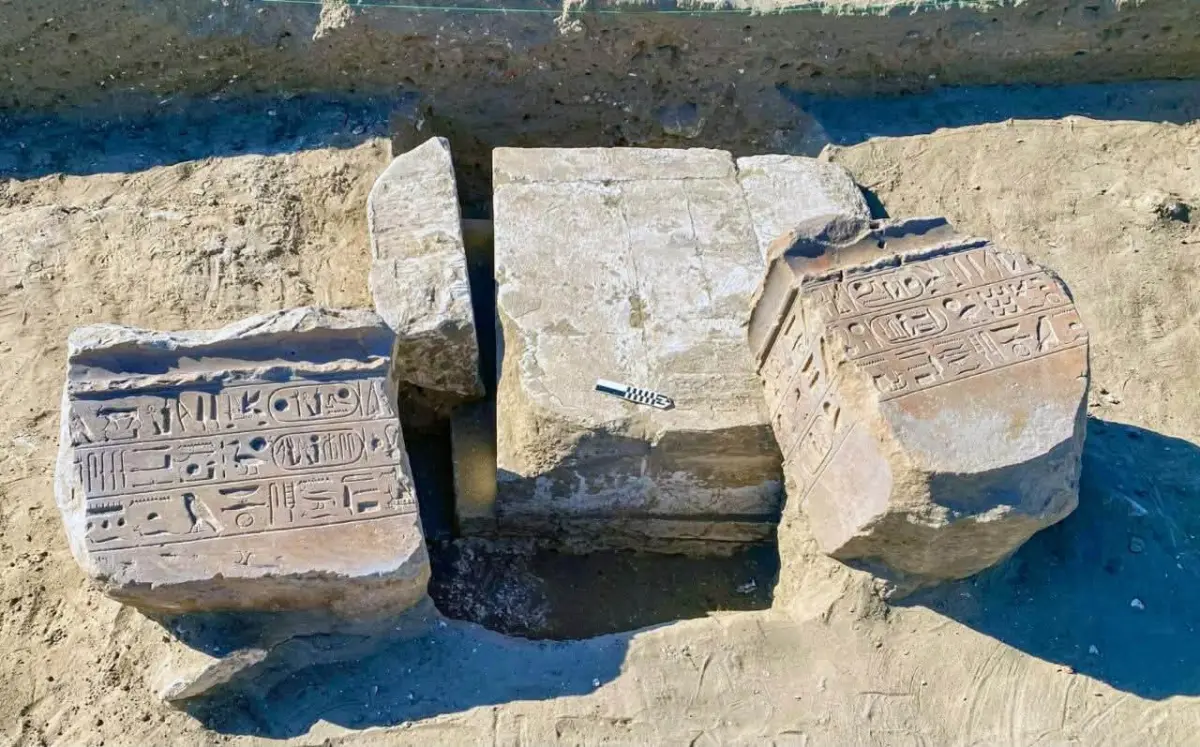
At the center of this archaeological breakthrough is a large, fractured sandstone lintel bearing inscriptions from the reign of Ramses II, one of ancient Egypt’s most powerful and enduring 13th-century BCE pharaohs. The inscriptions explicitly mention restoration work performed on a statue of the falcon-headed deity Horus, who is given the rare epithet "Lord of Masen." For decades, Egyptologists and historians have searched for the physical footprint of Masen, a settlement historically referenced in ancient texts but stubbornly elusive in the archaeological record.
While the newly uncovered artifact serves as a tantalizing signpost, senior Egyptian antiquity officials urge caution, noting that exhaustive excavations must continue before the site can be definitively mapped to the lost city. Alongside the inscribed lintel, the recent excavation season has revealed ancient stone-paved roads, structural expansions to the site’s primary temple, and fragments of fine-grained basalt and jasper statuary. These finds build directly upon remarkable discoveries made at the site last year, which included a sprawling military complex complete with a tree-lined limestone road, defensive trenches, kilns, and residential quarters.
Read Also
Together, these discoveries paint a vivid portrait of Tel Abu Saify not merely as a border post, but as a dynamic, evolving hub of military, religious, and commercial activity that anchored Egypt’s geopolitical defenses against incursions from the East.
Detailed Chronology: Excavations and Breakthroughs
The journey to unearthing the secrets of Tel Abu Saify is a multi-generational endeavor that spans decades of archaeological persistence, punctuated by recent rapid-fire discoveries that are reshaping our understanding of New Kingdom and Ramesside frontier management.
Historical Excavations and Early Foundations
Tel Abu Saify has long been recognized by scholars as a site of immense strategic importance. Located near the eastern bank of the Suez Canal in Qantara East—a vital geographical chokepoint bridging Africa and Asia—the site was first subjected to formal archaeological excavations decades ago. Early digs revealed the skeletal remains of heavy military architecture, including massive mudbrick enclosures, dockyards, and a temple complex. These early seasons established that Tel Abu Saify was no ordinary civilian settlement; it was a heavily guarded military installation designed to monitor and control movement along the "Ways of Horus," the ancient military road network that connected Egypt to the Levant.
Despite these early insights, the exact identity of the settlement and its place within the broader administrative geography of New Kingdom Egypt remained hazy. Earlier generations of archaeologists cataloged the structural remains of the fortress, but the lack of definitive epigraphic evidence left the site’s ancient name open to debate.
The 2024 Breakthrough: Unveiling the Military Infrastructure
The momentum at Tel Abu Saify accelerated dramatically during the previous excavation season. Archaeologists working at the site uncovered an array of remarkably preserved structures that offered a granular look at daily and military life on Egypt’s eastern frontier.
Among the standout discoveries of that season was a wide, limestone-paved road flanked by the remains of ancient trees—an architectural feature that underscored the aesthetic and organizational sophistication of the garrison. In addition to this formal roadway, researchers excavated expansive housing units for soldiers and administrators, industrial-scale kilns for pottery and metalworking, and a deep defensive trench that would have protected the fortress from external assaults. These findings confirmed that Tel Abu Saify functioned as a self-sustaining urban and military node capable of supporting a large garrison and managing significant logistical operations.
The August 2025 Discovery: The Ramses II Lintel
The most recent chapter in the site’s excavation history culminated in the discoveries announced by the Ministry of Tourism and Antiquities on August 15. Spearheaded by a dedicated Egyptian archaeological mission, the team struck epigraphic gold with the recovery of a large sandstone lintel.
The artifact, which was found broken into two distinct pieces, is inscribed on three sides. Its text provides a direct historical link to the 13th-century BCE pharaoh Ramses II (Ramses the Great). Crucially, the inscription details restoration works carried out under royal decree on a statue of the deity Horus, who is specifically styled as the "Lord of Masen."
This singular epigraphic reference has galvanized the archaeological community. By tying the architectural fabric of Tel Abu Saify directly to the toponym "Masen," the discovery offers the strongest physical clue yet that this desert fortress is indeed the urban center historical texts have chased for generations. Alongside the lintel, the mission unearthed two additional stone-paved roads, supplementary rooms belonging to the fortress’s temple complex, and fragmented remains of high-status statues carved from imported basalt and jasper, signaling the presence of elite religious and administrative patronage at the site.
Supporting Context & Metrics
To fully appreciate the significance of the Tel Abu Saify discoveries, one must examine the geographical, political, and historical framework of ancient Egypt’s eastern frontier during the Ramesside period.
The Geopolitical Landscape of the Eastern Delta
The eastern Delta and the Sinai land bridge served as Egypt’s geopolitical soft underbelly. While the natural barriers of the Nile and the desert provided formidable protection, the Sinai route—known historically as Tarur Horus or the "Ways of Horus"—was the primary conduit for trade, diplomacy, and, crucially, military invasion.
During the New Kingdom (circa 1550–1069 BCE), particularly under the Nineteenth Dynasty pharaohs like Seti I and Ramses II, Egypt pursued an aggressive forward-defense strategy. Rather than waiting for hostile forces—such as Asiatic tribes, Sea Peoples, or rival empires like the Hittites—to reach the agricultural heartland of the Delta, the pharaohs established a heavily fortified string of military installations across northern Sinai and the eastern Suez region.
Tel Abu Saify was a linchpin in this defensive network. Its proximity to water sources and major transit routes made it an ideal staging ground for military campaigns projecting power into the Levant, as well as a customs and immigration checkpoint for travelers entering Egypt.
Metrics of the Site and Recent Finds
- Geographical Location: Qantara East, near the eastern bank of the Suez Canal, Egypt.
- Key Historical Era: New Kingdom, specifically the 13th century BCE (Ramesside Period).
- Central Artifact: A large, two-piece sandstone lintel inscribed on three sides, dating to the reign of Ramses II.
- Crucial Epigraphic Clue: An inscription detailing the restoration of a Horus statue dedicated to the "Lord of Masen."
- Supporting Architectural Features: Two recently uncovered stone-paved roads, temple extension rooms, residential housing units, industrial kilns, a defensive trench, and an earlier-discovered tree-lined limestone road.
- Material Culture: Fragments of basalt and jasper statuary, indicating elite patronage and religious devotion.
The Significance of "Masen"
In ancient Egyptian geography, placenames often held deep theological and administrative resonance. "Masen" appears in various texts as a frontier locality, yet pinning it to a physical ruin has long frustrated scholars. The association of Horus—the divine protector of the pharaoh and a warrior deity par excellence—with the title "Lord of Masen" strongly implies that a major temple dedicated to Horus anchored the settlement.
The fact that Ramses II commissioned restoration work on this divine statue suggests that Masen was not a fleeting military outpost, but an enduring urban center of religious and political consequence. Pharaonic restoration inscriptions of this nature were typically executed to reaffirm royal legitimacy, honor local deities, and maintain cosmic and political order (Ma’at) along vulnerable frontiers.
Official Statements and Expert Analysis
The announcement of the Tel Abu Saify discoveries has drawn commentary from top figures within Egypt’s archaeological administration, highlighting both the excitement surrounding the finds and the methodological rigor required to substantiate historical claims.
Mohamed Abdel Badie, head of the Egyptian Antiquities Sector at the Supreme Council of Antiquities, emphasized the broader systemic importance of the excavations. In an official statement following the announcement, Abdel Badie noted that the discoveries "provide further evidence of the site’s changing functions and its strategic importance."
This observation points to a sophisticated understanding of ancient frontier sites. Rather than serving a single static purpose throughout their existence, major fortresses like Tel Abu Saify often underwent architectural and functional metamorphoses—shifting from pure military garrisons to administrative hubs, religious centers, and trade depots depending on the shifting security needs of the Egyptian state.
Hisham Hussein, who oversaw the archaeological mission at Tel Abu Saify, underscored the unique epigraphic weight of the sandstone lintel. By identifying the specific textual references to Ramses II and the "Lord of Masen," Hussein’s team has provided the anchor point that elevates Tel Abu Saify from a generic New Kingdom fortress to a prime candidate for a major lost city.
At the same time, institutional leaders are maintaining strict scientific discipline. Hisham El-Leithy, secretary-general of the Supreme Council of Antiquities, struck a note of measured academic caution in his remarks to Ahram. El-Leithy stressed that further excavation and research is needed in order to definitively confirm the connection between Tel Abu Saify and the lost city of Masen.
This cautious approach reflects modern archaeological standards, where epigraphic hints, while powerful, must be corroborated by comprehensive stratigraphical analysis, extensive artifact cataloging, and the unearthing of broader civic markers—such as administrative archives or boundary stelae—before a definitive ancient toponym can be chiseled into the history books.
Future Outlook: The Road Ahead for Tel Abu Saify
As the dust settles on the initial announcement of the Ramesside lintel, the international archaeological community is turning its attention to what lies ahead for Tel Abu Saify. The upcoming excavation seasons promise to be among the most critical in the site’s modern history.
Priorities for Future Research
- Stratigraphic Expansion: Archaeologists plan to expand horizontal and vertical excavations around the newly uncovered temple rooms and stone-paved roads. Understanding the underlying layers will help determine the chronological evolution of the site, from its earliest pre-Ramesside foundations down to its later Byzantine or Islamic reuse.
- Epigraphic Sweeps: Field teams will meticulously comb the surrounding debris for additional fragments of the sandstone lintel and other inscribed architectural elements. Finding matching text fragments could complete sentences and offer more precise historical context regarding Ramses II’s building programs in the eastern Delta.
- Geophysical Surveying: To maximize efficiency and minimize unnecessary ground disruption, modern non-invasive technologies—such as ground-penetrating radar (GPR) and magnetometry—are expected to be deployed across the wider Qantara East landscape. These scans will help map out unexcavated subterranean structures, perimeter walls, and ancient harbor or canal systems connected to the site.
- Conservation and Site Management: With significant architectural remains now exposed to the elements—including mudbrick walls, stone roads, and delicate inscriptions—the Supreme Council of Antiquities faces the dual challenge of excavation and preservation. Implementing robust conservation protocols will be essential to protect these fragile antiquities from environmental degradation and future development pressures.
Implications for Egyptian Archaeology
The ongoing work at Tel Abu Saify underscores a broader renaissance in the study of Egypt’s geopolitical borders. While popular imagination is often captured by the monumental tombs of the Valley of the Kings or the towering pyramids of Giza, sites like Tel Abu Saify offer a more visceral, human connection to the daily defense, administration, and imperial ambitions of ancient Egypt.
If continued excavations confirm that Tel Abu Saify is indeed the lost city of Masen, it will write a whole new chapter in historical geography. It will provide scholars with a concrete model of how a Ramesside frontier city functioned, worshiped, and defended itself against an uncertain outside world.
For now, the sands of Qantara East are slowly yielding their secrets. As researchers peel back the layers of time—brick by brick, inscription by inscription—the lost city of Masen moves ever closer to stepping out of the shadows of ancient myth and firmly into the light of modern history.



Comments
Facebook App ID not configured. Please add it in the Customizer.