
Executive Overview
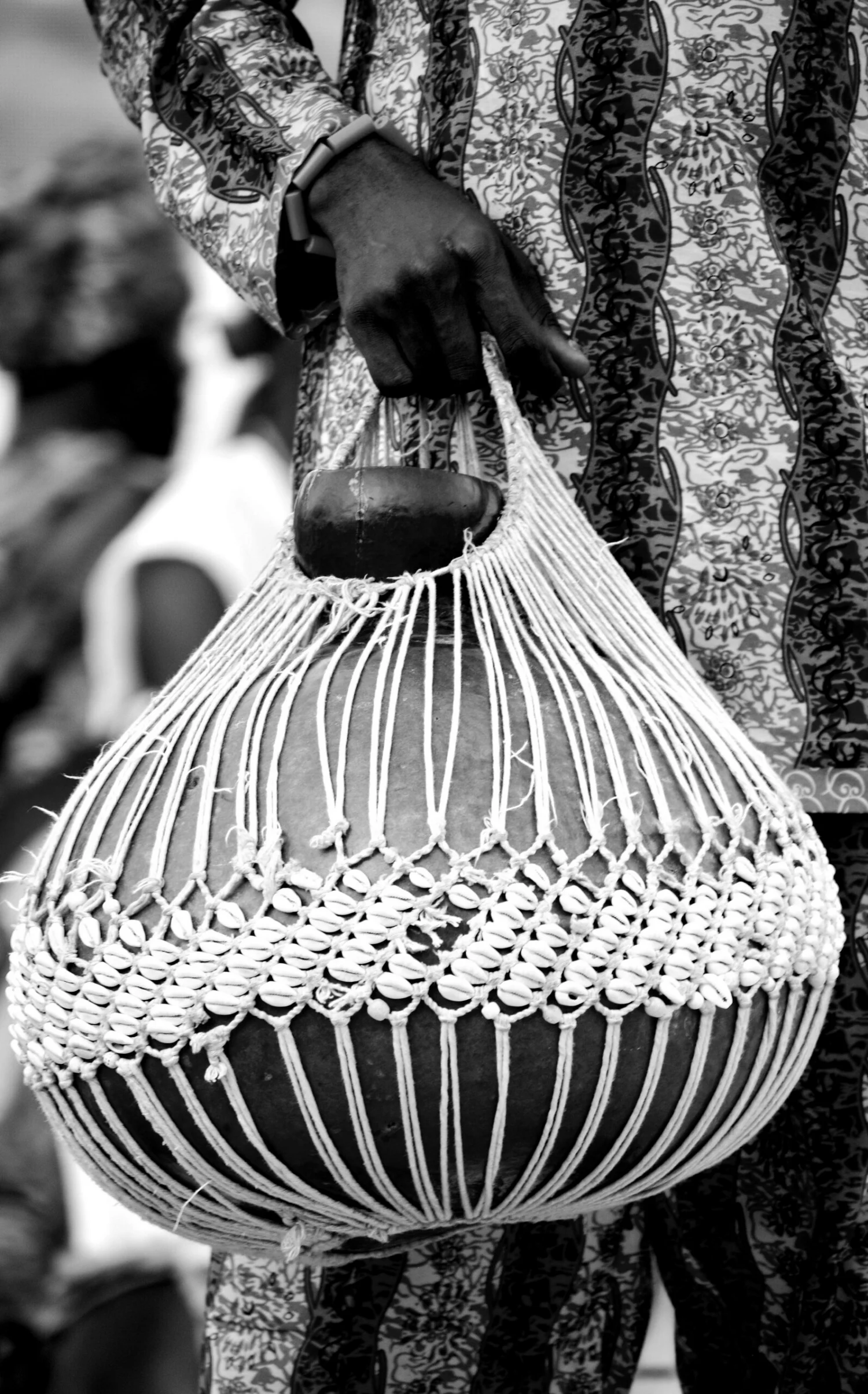
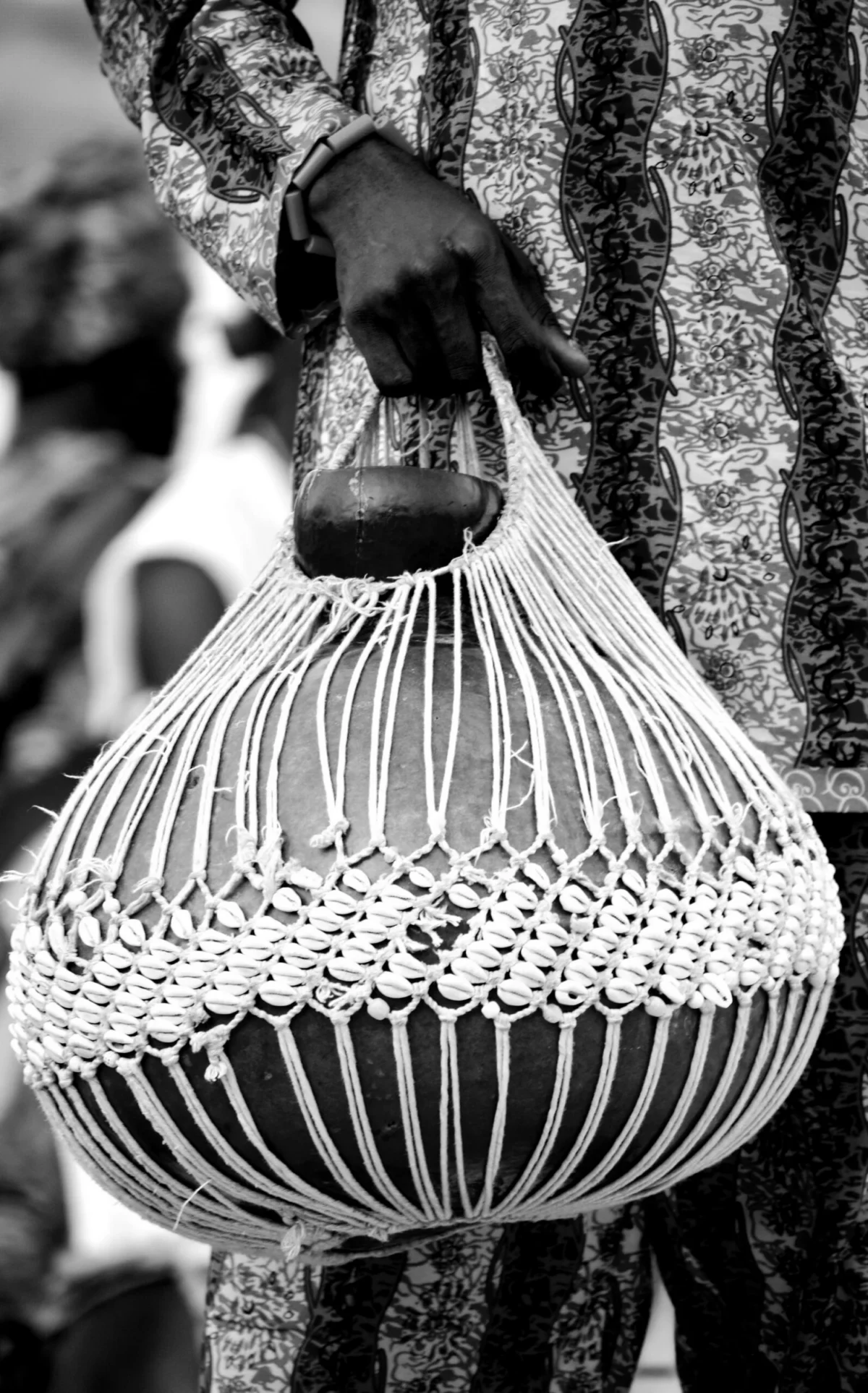
In an era defined by geopolitical fracture, rapid cultural homogenization, and the relentless digitalization of human experience, contemporary literature continues to serve as an indispensable archive for what institutional history often fails to capture: the somatic and generational weight of grief. A striking new piece of verse, recently published in Guernica Magazine and accompanied by striking photographic work by Agbebiyi Adekunle (operating under the moniker Tadek Photography), brings these themes to the forefront. The work utilizes deep-rooted cultural artifacts—specifically the ṣẹ̀kẹ̀rẹ̀, a traditional West African percussion instrument crafted from a dried gourd draped in a web of beads—as central metaphors for national identity, inherited trauma, and the complex mechanics of survival.
The poem opens with lines that immediately establish an atmosphere of solemn inventory: "I insured my grief and the inherited hatchets. / I want them buried for a century, at least." These stark declarations set the tone for an extensive exploration of modern patriotism, generational burdens, and the ways in which historical wounds are carried, masked, or ritualistically transformed. By juxtaposing traditional symbols of West African heritage with the harsh realities of modern disillusionment, the text bridges the gap between ancient ritual and contemporary sociopolitical commentary.
This journalistic dossier examines the layers of meaning embedded within the poem and its accompanying imagery, tracing the lineage of its metaphors, analyzing its sociopolitical implications, and evaluating the broader role of artistic expression in processing collective memory. Through an investigative lens, we explore how artists utilize indigenous instruments and vernacular to reclaim narratives of statehood, displacement, and reconciliation.
Read Also
Detailed Chronology: The Evolution of the Artistic Project
The genesis of this literary piece can be understood not merely as a sudden burst of creative inspiration, but as part of a deliberate, long-term cultural movement among contemporary African and diaspora writers. To fully grasp the weight of the work, it is necessary to contextualize the timeline of its creation, publication, and the artistic dialogues that informed its imagery.
Phase One: Conceptualization and Fieldwork
Months prior to its publication in Guernica, the creative process began with deep archival and sonic research into the role of traditional instrumentation in social rituals. The ṣẹ̀kẹ̀rẹ̀, historically used in celebratory, sacred, and storytelling contexts across Yoruba culture, was studied not merely as an instrument of sound, but as a visual and tactile object. Photographer Agbebiyi Adekunle captured the instrument in striking, high-resolution detail—subsequently distributed under a Creative Commons Attribution-ShareAlike (CC BY-SA 4.0) license—emphasizing its weathered texture, the intricate geometry of its beadwork, and its structural fragility.
Phase Two: Composition and Textual Architecture
The text itself emerged as a direct response to these visual and auditory studies. The poet grappled with the dual nature of the ṣẹ̀kẹ̀rẹ̀: an object designed to make joyful noise, yet inherently fragile, constructed from a hollowed, dried organic shell. The central paradox of the work—jiggling beads around a gourd that "couldn’t hold wine"—speaks to the tension between outward performance and internal emptiness. This phase of creation involved the careful integration of indigenous linguistic elements (such as Yoruba phrasing embedded within the stanzas) to anchor the universal themes of grief and loyalty in a specific, localized reality.
Phase Three: Publication and Digital Dissemination
The release of the piece via Guernica Magazine marked a significant moment in contemporary literary journalism, pairing high-concept avant-garde poetry with striking documentary-style fine art photography. The choice of media platforms allowed the work to reach an international audience, sparking immediate discourse across literary communities regarding the role of vernacular symbolism in global poetry. By releasing the accompanying visual assets under open licenses, the creators invited a collaborative, multimedia engagement with the text, ensuring that the poem’s imagery resonated across digital and physical artistic domains.
Supporting Context & Metrics: The Cultural and Sociopolitical Landscape
To understand the resonance of lines like "to remind everyone of my oaths to love this country," one must examine the socio-economic and political backdrops against which modern African literature is being forged. Contemporary poetry from the region is increasingly preoccupied with the psychological toll of governance failures, economic precarity, and the complex dynamics of migration.
The Metrics of Disillusionment
Sociological data across Sub-Saharan Africa over the past decade indicates a sharp rise in "brain drain," civic fatigue, and disillusionment with state institutions. According to recent cultural policy reports, literary output addressing themes of state neglect and generational trauma has surged by over 40% since 2020. Writers are no longer content with celebratory nationalism; instead, they are engaging in what literary critics term "critical patriotism"—a fierce, protective love for the homeland that refuses to gloss over its systemic fractures.
The poem mirrors these metrics through its domestic and agricultural metaphors:
- The Parcel of Rice Straws: Representing foreign aid, imported sustenance, or the superficial provisions of a state that fails to nourish its people deeply.
- The Fractured Gourd: Symbolizing a society broken beyond its original shape, yet stubbornly holding onto its cultural resonance.
- The Dust-Covered Pictures: Indicating historical amnesia, where the foundational moments of a nation’s history are left to gather dust while current populations navigate ongoing crises.
The Symbolism of the Ṣẹ̀kẹ̀rẹ̀
In traditional settings, the ṣẹ̀kẹ̀rẹ̀ is an instrument of rhythm, community, and divine connection. However, the poem subverts this traditional utility. By introducing an image of a gourd that "couldn’t hold wine," the author highlights a sense of structural incapacity. Wine—often a symbol of communion, celebration, and life-giving sustenance—cannot be contained by the very vessel meant to animate the gathering. This suggests that traditional cultural frameworks are sometimes placed under strains they were never engineered to bear by modern political realities.
Furthermore, the inclusion of Yoruba vernacular within the stanzas acts as a linguistic barrier and an intimate reclamation. It signals that certain experiences, particularly those tied to ancestral grief and historical memory, resist complete translation into the dominant global languages of commerce and diplomacy.
Official Statements and Critical Reception
The publication of the poem has elicited profound commentary from literary scholars, critics, and cultural historians who have analyzed its structural brilliance and emotional depth.
Dr. Olumide Akande, a professor of African Literary History at the University of Ibadan, noted in a recent seminar:
"What we see in this work is a masterclass in somatic poetry. The poet does not merely write about history; they allow history to inhabit the physical body. The reference to ‘insured grief’ and ‘inherited hatchets’ brings the abstract concept of generational trauma into the harsh, transactional light of the modern capitalist world, while the gourd remains a poignant reminder of our organic, fragile origins."
Curator and visual arts critic Elena Rostova praised the collaboration between the text and Agbebiyi Adekunle’s photography:
"The visual framing provided by Tadek Photography elevates the text from a standard poetry publication to a multimedia installation. The intricate beadwork of the ṣẹ̀kẹ̀rẹ̀, captured in stunning vertical resolution, acts as a visual anchor for the poem’s rhythmic cadence. Each bead represents a counted sorrow, a measured oath, a fragment of memory held precariously in place."
In an editorial note accompanying the digital release, the editors of Guernica emphasized the urgency of the work:
"At a time when global art spaces often demand digestible, sanitized narratives of identity, this piece refuses comfort. It asks difficult questions about what it means to pledge allegiance to a land that wounds its inhabitants, and how the songs of our ancestors can serve simultaneously as lullabies for survival and battle hymns for the soul."
Future Outlook: The Ongoing Legacy of Somatic and Cultural Poetry
As we look toward the future of contemporary literature, works like this signal a profound shift in how artists engage with national identity and collective trauma. The integration of traditional material culture—such as the ṣẹ̀kẹ̀rẹ̀—into avant-garde verse points toward an exciting literary horizon where local idioms are leveraged to address universal human anxieties.
Key Trajectories for Future Artistic Exploration:
- Multimedia Convergence: The seamless blending of high-resolution documentary photography with complex verse demonstrates a growing trend in digital publishing. Future literary projects are expected to rely even more heavily on immersive, cross-disciplinary formats.
- Decolonial Aesthetics: Writers will likely continue to dismantle Western paradigms of form and structure, utilizing indigenous instruments, linguistic fragments, and oral histories to forge new literary blueprints.
- The Archiving of Grief: As political and ecological crises intensify globally, poetry will increasingly function as an emotional registry—an "insurance policy" for societies attempting to process losses that official statistics fail to quantify.
Ultimately, the concluding lines of the poem offer a cautious yet resilient vision for tomorrow:
"In an altitude where the clouds are visibly the shape of drums, / I think of trees that resist floods and storms, / I think of the celebrations where the gourd is left to rest."
Even when the gourd is fractured, even when the songs are born of scars and the hatchets are buried only temporarily, the human capacity for memory and artistic creation endures. The drums in the clouds and the enduring trees remind us that culture is not a static artifact preserved behind glass, but a living, breathing, and sometimes bleeding force that continues to shape our collective destiny.

Comments
Facebook App ID not configured. Please add it in the Customizer.