
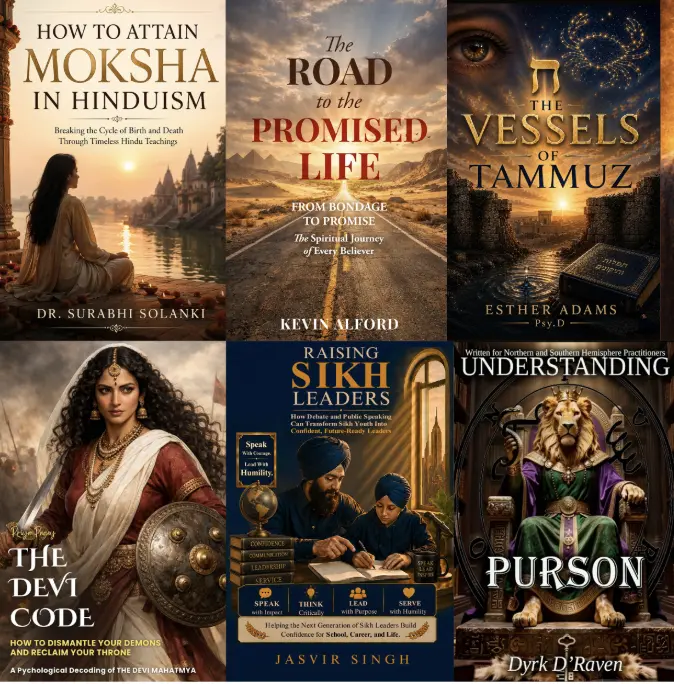
By Global Investigative Desk
Published: Mid-2026 Edition
Executive Overview
The democratization of digital publishing has long been a double-edged sword. While it has lowered barriers to entry for marginalized and independent voices, it has simultaneously opened the floodgates to mass-produced, automated content. Nowhere is this modern digital gold rush more apparent—or more controversial—than in the marketplace of faith and spirituality.
According to a groundbreaking and comprehensive new study released by the artificial intelligence detection platform Originality.ai, an astounding 63% of paperback religious books currently listed for sale on Amazon have been flagged as "Likely AI."
Read Also
This eye-opening statistic underscores a rapidly escalating crisis within e-commerce and digital publishing: the industrial-scale production of algorithmic text, often referred to pejoratively as "AI slop," designed to monetize human devotion. By analyzing over 2,000 English-language paperbacks across 14 distinct faith and belief categories during the first half of 2026, researchers uncovered a systematic campaign to saturate the religious book market with machine-generated volumes.
These texts are not merely supplemental guides or pamphlets; they are full-length paperbacks boasting four-star averages, masking their algorithmic origins behind professionally rendered covers, compelling summaries, and fabricated author biographies. Investigators warn that this trend represents a predatory evolution in digital commerce—one that weaponizes sacred traditions, personal convictions, and existential faith for quick, low-effort profits.
Detailed Methodology and Findings Chronology
To comprehend the scale of this infiltration, one must examine the rigorous parameters established by Originality.ai during their six-month investigative window spanning January through June 2026.
The Sampling Framework
The study’s authors set out to evaluate the integrity of religious and spiritual literature on the world’s largest online retailer. To achieve a representative cross-section, researchers focused exclusively on English-language paperbacks that maintained at least a four-star average rating. By targeting well-reviewed books, the study bypassed poorly performing vanity projects to examine titles that actively capture consumer trust and market share.
In total, 2,034 titles across 14 diverse faith and belief categories were subjected to forensic linguistic analysis.
The Three-Tier Scanning Protocol
Rather than relying on a single data point, Originality.ai evaluated three distinct elements for every book in the dataset:
- Book Summaries (Blurbs): The marketing copy designed to hook prospective buyers.
- Author Biographies: The back-cover or profile blurbs meant to establish the author’s authority, lineage, or spiritual credentials.
- In-Book Samples: The primary metric of the study, derived from the "Look Inside" digital previews provided on Amazon.
To classify a text, the platform utilized a strict threshold. Any sample achieving an AI detection score of 50 or above was officially categorized as "Likely AI." The study’s authors maintain a transparent caveat: while high detection scores strongly indicate that a manuscript was synthesized or heavily assisted by generative language models, it serves as a probabilistic metric rather than definitive legal proof of authorship.
The Chronology of the Sweep
Over the course of the six-month observation period, the automated scans revealed distinct patterns of digital saturation:
- Phase One (January–February 2026): Initial baseline scans of mainstream categories (such as Christianity and Islam) showed moderate-to-high saturation, prompting researchers to expand their scope into niche spiritual and Eastern philosophical subgenres.
- Phase Two (March–April 2026): Secondary deep-dives uncovered staggering concentrations of algorithmic text in alternative spirituality and Eastern traditions, specifically witchcraft, Hinduism, and Taoism.
- Phase Three (May–June 2026): Final data aggregation and cross-referencing revealed that summaries across all books—even those ultimately proven or flagged as human-written—exhibited the highest rates of artificial generation, pointing to a widespread industry reliance on LLMs (Large Language Models) for marketing copy.
Supporting Context & Metrics: Decoding the Data
The depth of the Originality.ai study allows for a granular look at where generative AI is thriving within the spiritual marketplace, as well as where it faces resistance.
Subgenre Breakdown: From Witchcraft to Mormonism
The distribution of AI-authored texts is far from uniform. The study highlights stark contrasts across belief systems:
- Witchcraft: 78% flagged as "Likely AI"
- Hinduism: 76% flagged as "Likely AI"
- Taoism: 74% flagged as "Likely AI"
- Satanism: 22% flagged as "Likely AI"
- Atheism: 40% flagged as "Likely AI"
- Mormonism: 42% flagged as "Likely AI"
While the lower percentages in categories like Satanism, atheism, and Mormonism are partially attributed by the study’s authors to smaller sample sizes compared to more massive global traditions, the high concentration in Eastern religions and alternative spiritualities demanded an explanation.
The researchers put forward a compelling geopolitical and economic hypothesis regarding Eastern religious texts: "Our hypothesis is that non-native English speakers are likely using AI to enter the English-speaking market." Generative AI tools have lowered the linguistic barrier, allowing foreign publishers and independent creators to instantly translate, polish, and synthesize spiritual guides tailored for Western audiences.
Total System Saturation: The Triple Threat
Beyond individual metrics, the study evaluated books that utilized AI across all three audited elements: summaries, author biographies, and in-book samples.
Here, Hinduism emerged as the leader in total system saturation. An astonishing 72 Hindu-focused titles—representing 25% of all Hindu books sampled—were found to have relied on artificial intelligence for every single piece of available text, from the marketing blurb to the internal chapters.
Furthermore, the data illuminated a fascinating secondary trend: regardless of whether the core manuscript was written by a human or a machine, book summaries are overwhelmingly generated by AI. Publishers across the board appear to view marketing blurbs as prime territory for algorithmic automation, saving human creators time while muddying the waters of consumer transparency.
Physical and Economic Signatures: Cheaper, Shorter, and Mass-Produced
Previous investigations by Originality.ai established a consistent economic blueprint for AI-generated literature: such books are almost invariably cheaper and shorter than their human-authored counterparts.
This economic signature held true within the religion and spirituality category:
- Likely AI-Written Books: Average price of $16.84 | Average length of 170 pages
- Likely Human-Written Books: Average price of $18.96 | Average length of 208 pages
This disparity reveals a classic fast-fashion publishing model. By stripping out the time, research, and emotional labor required to produce authentic theological or spiritual reflections, algorithmic authors can undercut traditional writers on price while churning out shorter volumes at high velocities. This creates a volume-based revenue stream that capitalizes on Amazon’s algorithmic search visibility.
Official Statements and Ethical Implications
The implications of flooding the marketplace with machine-generated theology extend far beyond copyright or publishing ethics; they strike at the heart of human existentialism and faith.
The authors of the Originality.ai report delivered a scathing critique of the phenomenon, characterizing AI-written religious books not merely as low-quality content, but as predatory scams targeting vulnerable consumers.
"Religious digital content has been particularly fertile ground for AI slop ever since the earliest AI-generated memes," the authors wrote in the report’s concluding remarks.
"They pull at the heart of a religious person’s beliefs, confirming what they believe to be true while, in the case of Amazon books for sale, exploiting them for profit."
Unlike a technical manual or a fictional sci-fi novel, spiritual and religious texts are sought out by readers during moments of existential crisis, grief, spiritual seeking, or identity formation. Readers turn to these books expecting the lived experiences, theological studies, and authentic philosophical struggles of human authors.
When a reader purchases a book purporting to guide them through Hindu meditation, Taoist balance, or modern witchcraft, they place an implicit trust in the author’s consciousness and intent. Discovering that the prose was spun out by a server farm in a matter of seconds—trained on scraped internet data with zero spiritual grounding—feels, to many, like a profound violation of trust.
Industry ethicists note that generative AI lacks interiority. It possesses no personal relationship with the divine, no firsthand experience of doubt, grace, or transcendence, and no genuine moral framework. Consequently, "AI slop" in the religious sector replaces authentic spiritual dialogue with an empty echo chamber of statistical word probabilities designed to mimic piety.
Future Outlook: The Battle for the Soul of Digital Publishing
As the publishing industry digests the findings of the Originality.ai study, stakeholders across the board are left grappling with an uncertain future. The intersection of generative AI and e-commerce has created an unprecedented regulatory and logistical nightmare for platforms like Amazon.
The Retailer’s Dilemma
Amazon has previously introduced disclosure requirements for authors utilizing AI-generated content, attempting to differentiate between AI-assisted editing and entirely machine-generated manuscripts. However, enforcement remains a monumental challenge. With millions of independent titles uploaded via Kindle Direct Publishing (KDP) every year, manual moderation is impossible. Automated detection tools, while improving, still operate in a gray area of probabilities, making outright bans legally and operationally risky for the retail giant.
What Lies Ahead for Authors and Readers?
- The Rise of "Certified Human" Seals: Just as the food industry developed organic and non-GMO labels to combat processed food saturation, the publishing industry may soon see independent certifications or trusted publishing house imprints guaranteeing 100% human authorship.
- Algorithmic Arms Races: As AI detectors grow more sophisticated, bad actors will increasingly deploy advanced paraphrasing tools and "humanizing" algorithms to bypass detection thresholds, continuing a costly digital arms race.
- Consumer Skepticism and Niche Communities: Readers seeking authentic spiritual guidance may increasingly abandon broad e-commerce platforms in favor of direct-to-consumer sales from trusted independent presses, brick-and-mortar religious bookstores, and established faith communities where lineage and author identity can be personally verified.
Conclusion
The revelation that 63% of paperback religious books on Amazon are likely written by AI serves as a stark warning flare for the digital age. It demonstrates that no domain—no matter how sacred, intimate, or deeply human—is immune to the encroachments of automated commodification.
As algorithms learn to mimic the language of faith, the ultimate burden falls upon readers, publishers, and platforms to defend the sanctity of the written word. Without proactive intervention and a renewed commitment to authenticity, the modern spiritual marketplace risks becoming a hollowed-out echo chamber where machines preach to the masses, and profit is reaped from the ghost in the pulpit.





Comments
Facebook App ID not configured. Please add it in the Customizer.