
Executive Overview
In the architecture of fiction, triumphant transformation has long held the spotlight. Writers are perpetually schooled in the classic positive character arc: a protagonist shackled by a fundamental lie, forced by external conflict to confront a deeper thematic truth, and ultimately rising to embrace it. Yet, this linear trajectory represents only one facet of human psychological reality. What happens when a character encounters the story’s thematic truth and actively rejects, distorts, or fails to integrate it?
Enter the realm of the negative character arc—a sophisticated, often harrowing blueprint for self-deception, tragic downfalls, and moral descent.
To demystify these complex trajectories, acclaimed writing instructor and author K.M. Weiland is set to premiere her definitive masterclass, Negative Character Arcs: The Hidden Pattern of Self-Deception, broadcasting live on October 6 at 1:00 PM EDT. Serving as the grand finale to this year’s prestigious Story School series, the masterclass directly follows her previous installment on flat character arcs, offering creators an exhaustive look at the cascading failures of integration that turn potential heroes into architectural tragedies.
Read Also
By unifying the three primary archetypes of negative transformation—Disillusionment, Fall, and Corruption—Weiland’s upcoming curriculum provides authors with the structural mechanics needed to construct deeply resonant, psychologically inevitable downfalls. For writers striving to master the delicate interplay between plot, theme, and character psychology, this masterclass promises to bridge the gap between abstract emotional states and mechanical plotting.
Detailed Chronology: The Evolution of Character Arc Theory
To appreciate the significance of Weiland’s new masterclass, one must first trace the evolution of her instructional framework, which has heavily influenced contemporary screenwriters and novelists over the past decade.
Phase 1: Practical Mechanics and Structural Synthesis
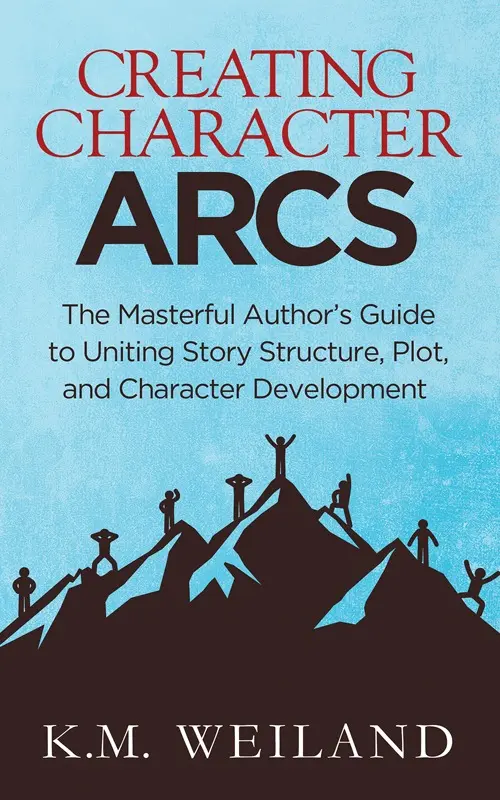
When Weiland first began publishing her insights on character development—culminating in her seminal resource Creating Character Arcs—the predominant pedagogical approach in creative writing treated plot and character as separate entities. Writers were taught to map out structural beats (the First Plot Point, Midpoint, Third Plot Point, and Climax) on one whiteboard, while tracking internal emotional beats on another.
Weiland’s work fundamentally challenged this dichotomy. Through extensive study, she demonstrated that plot and character are inextricably bound:
- Character creates plot. A protagonist’s inner flaws and desires dictate the choices that propel external events forward.
- Plot creates character growth. External pressures test the protagonist, creating the friction necessary for internal transformation.
- Theme anchors both. Underlying every narrative beat is the thematic struggle between the character’s internal "Lie" and the story’s overarching "Truth."
Phase 2: Expanding into Integration and Steadfastness
As her scholarship matured, Weiland expanded her focus beyond the standard positive transformation. In subsequent books, such as Writing Your Story’s Theme, and recent masterclasses like Flat Character Arcs: From Transformation to Integration, she explored what occurs when a protagonist already possesses the truth. Rather than transforming internally, flat-arc characters must learn to steadfastly embody their truth to catalyze positive change in a resistant world.
However, this exploration naturally bred a more complex, uncomfortable corollary: If encountering the truth can lead to steadfast integration, what happens when an encounter with the truth breaks a character instead?

Phase 3: The Climax of Story School (October 2026)
This inquiry forms the foundational spine of Negative Character Arcs: The Hidden Pattern of Self-Deception. Premiering on October 6, this final class of the 2026 Story School series synthesizes years of theoretical research into a unified taxonomy of tragic transformation. By contextualizing negative arcs not merely as isolated bad choices, but as a cohesive spectrum of psychological regression, Weiland equips writers to map out downfalls that feel both earned and inevitable.
Supporting Context & Metrics: The Anatomy of Negative Transformation
What makes a character arc "negative"? According to Weiland, tragedy is not defined simply by a body count, a broken relationship, or a villainous descent. Rather, the defining metric of any character arc—positive or negative—is the protagonist’s active relationship with the story’s thematic Truth.
Rather than functioning as the exact inverse of a positive arc, negative arcs often begin with identical narrative ingredients. The divergence occurs at the crossroads of realization. When life forces the protagonist to confront reality, their reaction dictates their descent through three distinct structural variations.
[Encounter with Thematic Truth]
          │
          ├─► [Disillusionment] ──► Grief over lost illusions; inability to anchor truth.
          │
          ├─► [Fall]             ──► Repeated resistance; clinging to the Lie despite evidence.
          │
          └─► [Corruption]       ──► Active rejection of Truth; embracing the Lie for power.
1. The Disillusionment Arc
In this opening tier of negative transformation, the character’s journey initially mirrors a positive arc. The protagonist successfully dismantles their original Lie and sees reality with striking clarity.
However, unlike a positive arc—where this realization empowers the character—the disillusioned protagonist cannot experience the new understanding as a transcendent or healing Truth. Stripped of their comforting delusions, they are left primarily with grief, cynicism, and an inability to integrate the reality they have uncovered.
2. The Fall Arc
Moving deeper into the descent, the Fall Arc tracks a protagonist who repeatedly chooses the Lie, even when directly presented with opportunities to embrace the Truth.
The tragedy here is rooted in stubborn self-preservation. The character’s worldview is so thoroughly intertwined with their psychological survival that surrendering the Lie feels like annihilation. Consequently, they double down on destructive patterns, allowing the gap between their delusions and external reality to widen until catastrophe ensues.
3. The Corruption Arc
Representing the completed pattern of self-deception, the Corruption Arc frequently features a protagonist who may initially understand the thematic Truth.
Instead of yielding to it, the character makes a calculated or desperate rejection of that Truth in favor of a constricted, self-serving perspective—usually in the pursuit of power, safety, or control. By the story’s conclusion, the Lie is fully weaponized, serving as the character’s new, distorted definition of reality.

The Hidden Pattern Revealed
When viewed in sequence—Disillusionment, Fall, Corruption—these three variations form a macro-pattern of psychological regression. They chart the exact anatomy of self-deception: moving from the shock of an unintegrated Truth, to active resistance against that Truth, to the final, total adoption of the Lie.
Official Statements & Masterclass Insights
In discussing the conceptual framework behind her upcoming masterclass, K.M. Weiland emphasizes that writing compelling tragedies requires moving far beyond simplistic moralizing.
"When I first started writing about character arcs, my primary interest was practical: I wanted to understand how character development fit together with plot structure," Weiland reflects. "But the deeper I got into studying both, the more obvious it became that they weren’t really separate things at all… Negative Character Arcs ask what happens when that process goes awry. That’s a much more complex question than simply asking, ‘Why do people make bad choices?’ After all, most compelling Negative-Arc characters are actually making choices they believe to be necessary, justified, or even good. Their tragedy lies in the widening gap between their worldview and their reality."
By grounding character psychology in structural mechanics, Weiland’s masterclass provides attendees with actionable frameworks. During the live session, participants will examine:
- How the foundational elements—Lie, Truth, Want, Need, and Ghost—mutate across different negative trajectories.
- How external structural beats (First Plot Point, Midpoint, Third Plot Point, Climax) act as escalating reality-checks that force protagonists to either accept or reject the Truth.
- Case studies from classic and contemporary literature, demonstrating how to seamlessly blend high-level psychological theory with rigorous plotting.
Future Outlook: Mastering Steadfast and Tragic Arcs
For authors looking to elevate their craft, understanding negative character arcs is no longer an optional exercise reserved for writing grimdark fantasy or psychological thrillers. It is an essential tool for exploring the full spectrum of human experience on the page.
As writers navigate the complexities of storytelling in an increasingly sophisticated literary landscape, resources that demystify the mechanics of failure are invaluable. Weiland’s masterclass offers precisely that: a clinical, structured approach to writing downfalls that resonate with emotional truth and narrative inevitability.
How to Participate and Exclusive Bundling Options
- Masterclass Negative Character Arcs: The Hidden Pattern of Self-Deception
- Premiere Date: Tomorrow, October 6, at 1:00 PM EDT
- Registration: Writers interested in securing their spot can register directly through the Official Masterclass Portal.
Additionally, for creators seeking a comprehensive education in non-traditional character trajectories, a special bundling option is available. Writers can pair Negative Character Arcs with its companion masterclass, Flat Character Arcs: From Transformation to Integration, as part of the Steadfast and Tragic Character Arcs Masterclass Bundle, currently offered at a 15% discount.
By exploring both ends of the post-Truth spectrum—positive integration versus tragic self-deception—authors can equip themselves with the ultimate toolkit for building characters that linger in the reader’s mind long after the final page is turned.




Comments
Facebook App ID not configured. Please add it in the Customizer.