
Executive Overview
The National Mall in Washington, D.C., has become the focal point of an intense political and cultural battle over American history. The conflict centers on the Smithsonian Institution’s National Museum of American History (N.M.A.H.), where an administration-led campaign targeting alleged "ideological capture" has triggered congressional hearings, executive warnings, and a grassroots civilian defense movement.
At the core of the dispute is a fundamental question: How should a nation curate its past? On one side, executive orders and conservative lawmakers argue that the museum has adopted a partisan, self-critical narrative that minimizes the Founding Fathers and highlights racial and systemic flaws. On the other side, museum leadership, professional historians, and volunteer monitoring groups contend that accurate history requires a full, unvarnished presentation of both triumph and tragedy.
As the United States marks its Semiquincentennial, the institutional independence of the Smithsonian—a complex semi-independent entity governed by a 17-member Board of Regents—faces significant legislative and financial threats. The ongoing struggle highlights the delicate balance between public memory, scholarly integrity, and political power.
Read Also
Detailed Chronology: Escalation of the Culture War
  MARCH 2025               SUMMER 2025              JULY 4                 LATE SUMMER
┌──────────────┐         ┌──────────────┐         ┌──────────────┐        ┌──────────────┐
│ Exec. Order  │────────>│ White House  │────────>│ "Saving      │───────>│ Congressional│
│ "Restoring   │         │ Lunch with   │         │ America's    │        │ Hearings &   │
│ Truth..."    │         │ Sec. Bunch   │         │ Story" Report│        │ N.P.S. Signs │
└──────────────┘         └──────────────┘         └──────────────┘        └──────────────┘
The Initial Salvo: March 2025
The current political crisis began in March 2025, when President Donald Trump signed an executive order titled "Restoring Truth and Sanity to American History." The decree targeted what it described as a widespread "revisionist movement" that cast the United States as inherently and irredeemably flawed.
- Executive Mandates: The order demanded the removal of "improper ideology" across the Smithsonian’s 21 museums.
- Financial Enforcement: It explicitly threatened to slash federal funding if institutional compliance was not achieved.
- Immediate Fallout: The order sparked widespread anxiety within the cultural sector, leading to rumors—later debunked—that historical artifacts related to American slavery and the civil rights movement were being quietly removed from display.
Institutional Diplomacy and the "Portrait Gallery" Incident
Prior to the executive order, subtle pressures had already begun impacting Smithsonian leadership. At the National Portrait Gallery, Director Kim Sajet faced pressure to step down after conservative critics objected to wall text accompanying President Trump’s official portrait, which noted his two impeachments.
In response to the mounting pressure, Smithsonian Secretary Lonnie G. Bunch III sought to maintain institutional autonomy through strategic diplomacy. In August 2025, Bunch met with the President for a private lunch at the White House, successfully de-escalating tensions for nearly a year. By the launch of the Semiquincentennial preparations, observers hoped the institution had weathered the storm.
The July 4 Declaration and Congressional Hearings
The period of relative calm ended abruptly on July 4, when the White House Domestic Policy Council released a document titled "Saving America’s Story." The report explicitly accused the National Museum of American History of being hijacked by radical activists intent on promoting an "anti-white agenda."
Following the report:
- Mandated Signage: The President directed the National Park Service to erect warning signs outside the N.M.A.H., alerting visitors to alleged "ideological capture."
- Subpoenas and Testimony: N.M.A.H. Director Anthea Hartig was summoned to testify before Congress, where Republican members subjected the museum’s curatorial choices to intense scrutiny.
Supporting Context & Metrics: Inside the Galleries
The Civilian Response: Citizen Historians for the Smithsonian
In response to political scrutiny, grassroots organizations emerged to independently audit and document museum exhibitions. Prominent among them is Citizen Historians for the Smithsonian, an initiative launched with guidance from James Millward, a scholar of Central Asian history at Georgetown University.

"I’ve taught in China and seen history erased, and I don’t want it to happen here."
— James Millward, Co-Founder, Citizen Historians
The movement quickly expanded to over 700 participants nationwide. In Washington, local volunteer teams—including retirees, former educators, and public administrators—conduct detailed systematically logged field audits of gallery spaces to verify whether artifacts are being altered or removed under administrative pressure.
       ┌──────────────────────────────────────────────────────────┐
       │     CITIZEN HISTORIANS FOR THE SMITHSONIAN: AT A GLANCE │
       ├──────────────────────────────────────────────────────────┤
       │ Total Active Participants Nationwide:    700+            │
       │ Primary Objective:                       Exhibition Audit│
       │ Targeted D.C. N.M.A.H. Galleries:        8 Core Exhibits │
       └──────────────────────────────────────────────────────────┘
Empirical Audit of Contested Exhibitions
A systematic examination of the N.M.A.H. exhibitions highlighted in the White House report reveals significant discrepancies between official claims and actual gallery displays:
1. Founding Era & Revolutionary Artifacts
- White House Report Claim: The museum has erased the Founding Fathers to advance a politically biased narrative.
- Field Audit Findings: A search of the museum’s active collection database confirms nearly 100 high-profile objects associated with George Washington and the Revolutionary War are on prominent display. These include Washington’s military uniform, battle sword, and personal dinner service, alongside Horatio Greenough’s monumental 1841 neoclassical sculpture depicting Washington.
- Star-Spangled Banner Chamber: The historic flag sewn by Mary Pickersgill is displayed alongside updated research noting the contributions of her team, including Grace Wisher, an African American indentured servant.
2. "Many Voices, One Nation" & Immigration
- White House Report Claim: The exhibition functions as "pro-illegal alien activism."
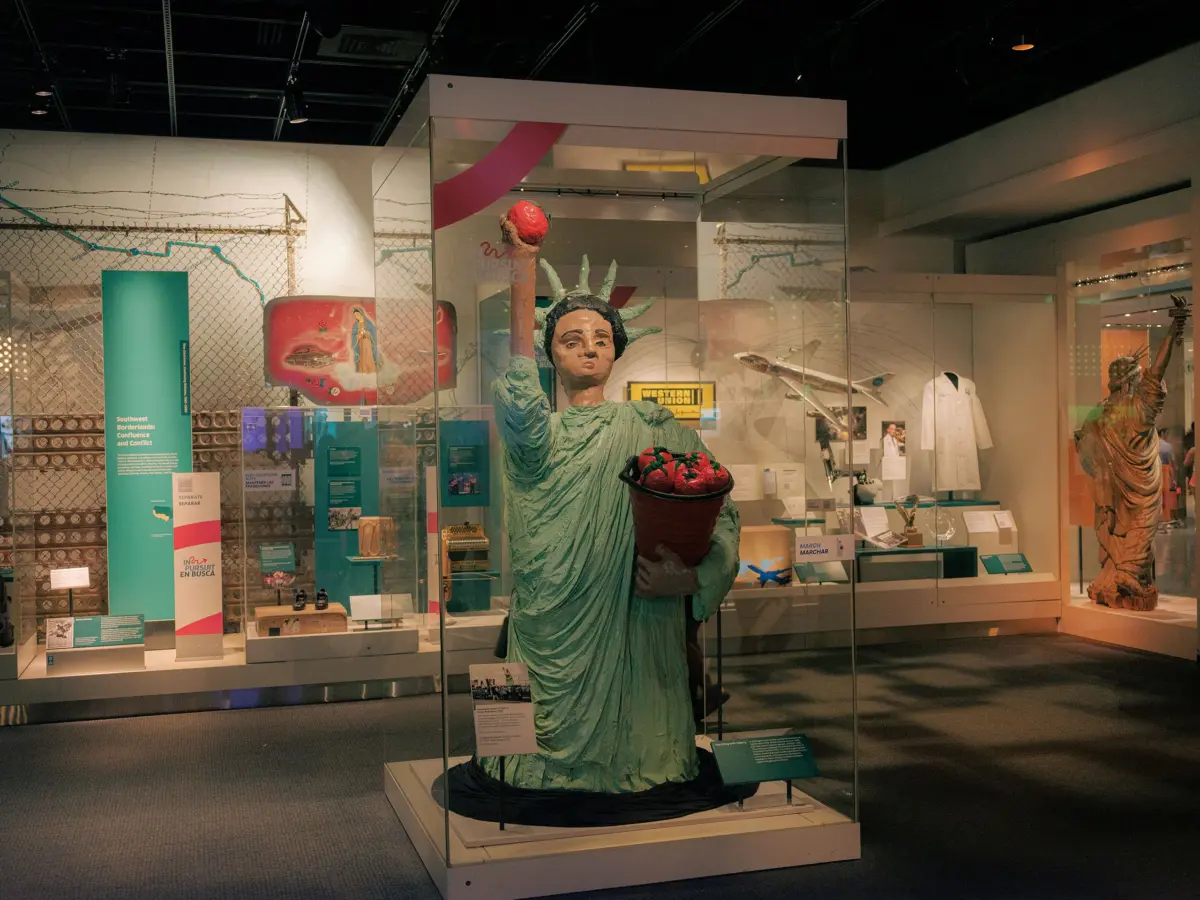
- Field Audit Findings: While the exhibit details the varied origins of American demographics—including artifacts left by migrants in the Sonoran Desert—it also prominently displays an official U.S. Border Patrol uniform, accompanied by text honoring the agent’s 22 years of federal service.
3. "American Democracy: A Great Leap of Faith"
- White House Report Claim: The exhibition selectively highlights progressive protest movements while ignoring conservative contributions.
- Field Audit Findings: The display features Thomas Jefferson’s drafting desk and political campaign memorabilia spanning 250 years, including modern official campaign material like Donald Trump’s "Make America Great Again" hat. The political protest display contains slogans from Black Lives Matter and LGBTQ+ rights movements, alongside conservative displays such as "Secure Our Borders," "Stop Abortion Now," and video coverage of Tea Party rallies.
4. "Entertainment Nation" & Pop Culture
- White House Report Claim: The exhibit inappropriately politicizes classic American cultural icons.
- Field Audit Findings: Objects on display include Dorothy’s ruby slippers from The Wizard of Oz, Irving Berlin’s original score for "God Bless America," and jazz trumpet legend Dizzy Gillespie’s instrument. Controversy centered on a draft animation sketch of Mickey Mouse from Steamboat Willie (1928), accompanied by text explaining its historical connections to 19th-century minstrelsy traditions.
┌───────────────────────────┬─────────────────────────────────┬─────────────────────────────────┐
│ Gallery Exhibition        │ White House / GOP Allegation    │ Empirical Gallery Observation   │
├───────────────────────────┼─────────────────────────────────┼─────────────────────────────────┤
│ American Democracy        │ Erases conservative history     │ Features MAGA hat, Tea Party    │
│                           │ and highlights progressive activism │ displays, & Jefferson's desk    │
├───────────────────────────┼─────────────────────────────────┼─────────────────────────────────┤
│ Many Voices, One Nation   │ Promotes unauthorized migration  │ Displays Border Patrol uniform  │
│                           │                                 │ alongside migrant histories     │
├───────────────────────────┼─────────────────────────────────┼─────────────────────────────────┤
│ Entertainment Nation      │ Attacks classic icons like      │ Contextualizes 1928 animation    │
│                           │ Mickey Mouse as inherently racist│ origins within period entertainment│
└───────────────────────────┴─────────────────────────────────┴─────────────────────────────────┘
Historical Baseline: The 1976 Bicentennial Precedent
To evaluate whether current Smithsonian curatorial practices deviate from historical standards, analysts frequently point to the 1976 American Bicentennial under Secretary S. Dillon Ripley—a former military intelligence officer awarded the Presidential Medal of Freedom by President Ronald Reagan.
During the 1976 celebrations, the N.M.A.H. did not mount a traditional exhibit focused exclusively on individual Founders. Instead, it debuted a major exhibition titled "The Nation of Nations."
- Scope: Traced American identity from indigenous roots and the Bering Strait crossing to modern immigration through Ellis Island.
- Unvarnished History: Included explicit sections on historical American prejudice, featuring anti-Japanese signs from World War II and an authentic Ku Klux Klan hood.
- Institutional Framing: Ripley framed America in the official catalog as a complex "place of turmoil." The exhibition operated without major congressional intervention or accusations of anti-American sentiment.
Official Statements and Testimony
The debate peaked during Capitol Hill hearings examining the museum’s leadership and curatorial philosophy.
Congressional Interrogations
"I was disturbed to hear about the quetzal... foreign bird feathers in a children's show about money."
— Rep. Morgan Griffith (R-VA)

"You are an ally of queer pedophiles... [referencing a RuPaul display in American pop culture]."
— Rep. Nancy Mace (R-SC)

"Is Mickey Mouse racist? ... You don't think blackface minstrelsy is racist?"
— Rep. Brandon Gill (R-TX)
Institutional Defense and Expert Testimony
"It is not for me to determine what is problematic. It is for me to determine what is accurate... I invite lawmakers to walk the building with me and stand in front of the Star-Spangled Banner, in awe."
— Anthea Hartig, Director, National Museum of American History

"All history is revision. Would you prefer your doctors not to be revisionists? The report is a declaration of political war on the historian's profession."
— David W. Blight, Pulitzer Prize-winning Historian
Strategic Implications & Future Outlook
                       ┌────────────────────────────────────────┐
                       │     KEY VULNERABILITIES & FLASHPOINTS  │
                       └────────────────────────────────────────┘
                                            │
           ┌────────────────────────────────┴────────────────────────────────┐
           ▼                                                                 ▼
┌──────────────────────────────────────┐                         ┌──────────────────────────────────────┐
│       LEGISLATIVE / FINANCIAL        │                         │       GOVERNANCE / LEADERSHIP        │
├──────────────────────────────────────┤                         ├──────────────────────────────────────┤
│ • Proposed 10%+ Budget Reductions    │                         │ • Potential Board of Regents Shifts  │
│ • Increased Congressional Audits     │                         │ • Threat to Sec. Lonnie Bunch III    │
└──────────────────────────────────────┘                         └──────────────────────────────────────┘
Governance and Budget Vulnerabilities
The Smithsonian Institution faces structural vulnerabilities amid ongoing political conflict:
- Funding Pressures: Congressional leaders have proposed cutting the Smithsonian’s federal budget appropriation by more than 10%, targeting educational and research departments.
- Board Dynamics: Control of the 17-member Board of Regents remains a critical friction point. If the administration fills upcoming vacancies prior to key legislative cycles, the board’s balance could shift, putting Secretary Lonnie G. Bunch III’s leadership position at risk.
Policy Paradoxes and Public Perception
Despite sharp partisan rhetoric on Capitol Hill, public engagement and bipartisan interactions present a more nuanced reality:
- Cross-Party Participation: In May 2026, Second Lady Usha Vance participated in a public reading event at the N.M.A.H. for Asian American and Pacific Islander Heritage Month, featuring Rajani LaRocca’s Masala Chai, Fast and Slow—an event celebrating diversity inside the very museum criticized by her party’s platform.
- Public Consensus: Bipartisan support persists among select lawmakers, such as Senator Lisa Murkowski (R-AK), who has publicly defended the Smithsonian’s institutional autonomy.
- Visitor Reaction: Field interviews with museum visitors reflect a general preference for historical nuance over ideological censorship. Many express a willingness to engage with complex historical narratives, viewing them as integral to understanding the full scope of the American story.
As the nation navigates its Semiquincentennial, the conflict surrounding the Smithsonian underscores the ongoing challenge of defining national identity: whether public institutions should present a streamlined narrative of national triumph, or preserve an unfiltered record of a complex, evolving democracy.




Comments
Facebook App ID not configured. Please add it in the Customizer.