
Executive Overview
Eighty-one years after the atomic devastation of Hiroshima and Nagasaki in August 1945, the global shadow of nuclear weaponry and environmental fallout remains as potent as ever. Into this fraught geopolitical climate steps acclaimed Japanese writer, manga artist, and conceptual creator Erika Kobayashi, whose lifelong body of work investigates the invisible yet enduring forces of radiation, historical memory, and societal crisis.
In 2025—coinciding with the poignant eightieth anniversary of the dawn of the nuclear age—Kobayashi expanded her artistic footprint by founding arbaro books, an independent publishing house based in Tokyo. The venture’s mission is both urgent and profound: to translate and curate Japanese novels, stories, graphic novels, and art books centered around the atomic experience, making them accessible to English-speaking readers and the global community. Armed with the guiding slogan, “The End of Nuclear Literature. Recall the Past, Resist Now,” Kobayashi seeks to leverage literature as a vital weapon against historical amnesia and contemporary warmongering.
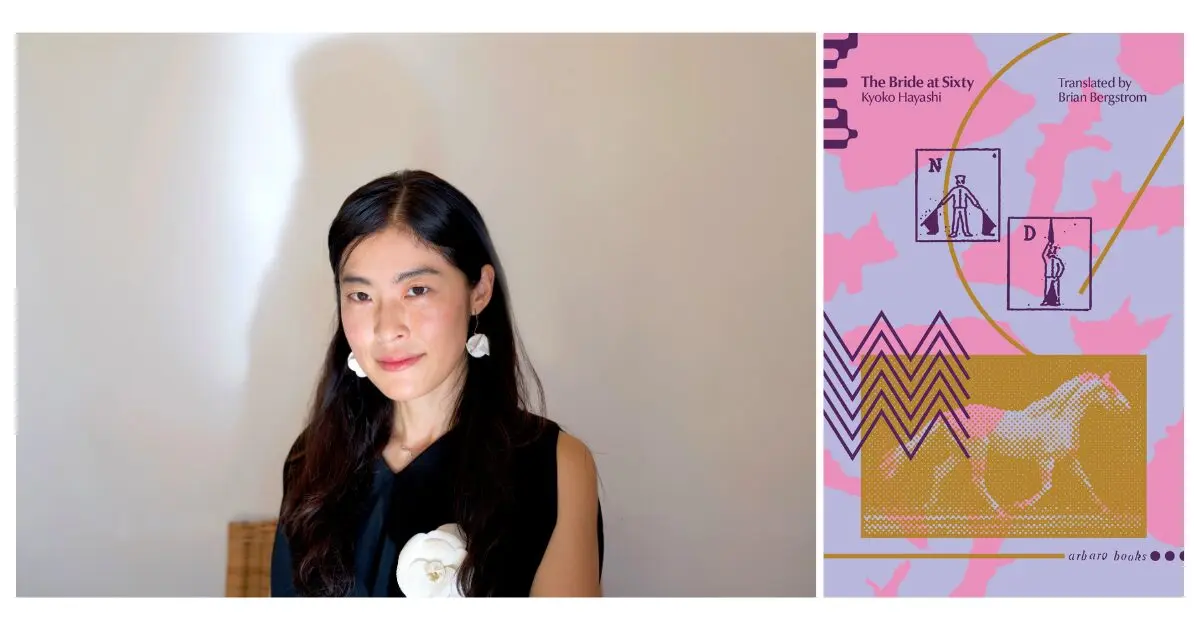
In an in-depth, email-conducted interview translated from the Japanese by Brian Bergstrom, writer and interviewer Sohini Basak sat down with Kobayashi to explore the publisher’s debut lineup—including her own translated graphic novel Seeing the Light and an upcoming bilingual art-book edition of Kyoko Hayashi’s masterpiece, The Bride at Sixty. Their conversation spans the gender imbalances within traditional "atomic bomb literature" (Genbaku bungaku), the psychological parallels between post-Fukushima radiation anxiety and pandemic societal fracturing, and Kobayashi’s ongoing creative collaborations across music, translation, and multimedia installation art.
Read Also
Detailed Chronology: From the Ashes of 1945 to the Launch of arbaro books
The genesis of arbaro books is deeply rooted in the historical timeline of the atomic age, threading a continuous line from the ashes of World War II to modern-day technological disasters.
1945–2011: The Arc of Nuclear Trauma
- August 6 and 9, 1945: The United States drops atomic bombs on Hiroshima and Nagasaki, forever altering global history, wiping out hundreds of thousands of lives, and introducing the chilling reality of nuclear warfare.
- The Post-War Era: A distinct literary genre known as Genbaku bungaku (atomic bomb literature) emerges. Generations of hibakusha (survivors) dedicate their lives to documenting the horrors of the bombings, establishing a robust archive of witness testimony, poetry, and fiction.
- March 2011: The catastrophic meltdown at the Tokyo Electric Power Company’s (TEPCO) Fukushima Daiichi Nuclear Power Plant sends shockwaves through Japanese society. For Kobayashi, the sight of ordinary citizens scrutinizing mushrooms in Tokyo supermarkets for radioactive contamination triggers a profound creative awakening, leading to her graphic novel Seeing the Light (Hikari no Kodomo).
2025–2026: The Birth and Expansion of arbaro books
- 2025 (The Eightieth Anniversary): Erika Kobayashi officially establishes arbaro books in Tokyo. The independent press launches its inaugural the English translation of Seeing the Light, translated by Winifred Bird and designed by Brennan Kelly. The name "arbaro"—derived from the Esperanto word for forest—symbolizes individual trees (books) crossing borders, rooting themselves in foreign soil, and ultimately creating a unified global forest.
- 2026 (Current Developments): arbaro books announces its second major publication: a simultaneous Japanese and English dual-volume release of The Bride at Sixty by the late Nagasaki survivor and Akutagawa Prize-winning author Kyoko Hayashi. This release pairs Hayashi’s powerful short story about aging survivors with newly commissioned conceptual drawings by Kobayashi, designed by Brennan Kelly.
Supporting Context & Metrics: Uncovering Forgotten Voices in Genbaku Bungaku
While Genbaku bungaku is a vast and revered literary category encompassing poems, memoirs, and contemporary manga (such as Fumiyo Kōno’s critically acclaimed In This Corner of the World), it has historically suffered from systemic gender exclusion.
Kobayashi notes that during the post-war decades, very few Japanese women had access to higher education or pathways into professional writing. Furthermore, the male-dominated literary establishment routinely marginalized female perspectives. Addressing this historical blind spot has become a core mission for both Kobayashi’s personal bibliography and arbaro books:
- Rediscovering Pioneers: Recent literary movements in Japan have begun reclaiming pioneering women writers. Notably, 2024 marked a major revival of Yoko Ota’s seminal 1948 work Shikabane no Machi (City of Corpses), republished alongside eleven other pieces by Takanashi Shobō.
- Challenging State Violence: Kobayashi’s broader research highlights the complex intersection between the trauma of the atomic bomb and the military violence perpetrated by Japan’s own historical imperialism, colonization, and wartime mobilization. Her recent novel, Onnanokotachi fusen bakudan o tsukuru (Girls, Making Paper Balloon Bombs—recipient of the 78th Mainichi Publishing Culture Award), investigates how teenage schoolgirls were mobilized inside the Tokyo Takarazuka Theater to manufacture paper balloon bombs, one of which tragically killed five children and a pregnant woman in Bly, Oregon.
- The Global Reach of Translation: Through award-winning translators like Brian Bergstrom (who translated Kobayashi’s Trinity, Trinity, Trinity and Sunrise: Radiant Stories) and Yuki Tejima, Japanese literature is increasingly entering global consciousness. Bergstrom’s translation of Trinity, Trinity, Trinity earned the prestigious 2022–2023 Japan-U.S. Friendship Commission Prize for the Translation of Japanese Literature.
Official Insights: In the Words of Erika Kobayashi
On the Impetus Behind arbaro Books
"I established arbaro books in Tokyo in 2025, the eightieth anniversary of the development and dropping of atomic bombs and the start of the nuclear age. It is an independent publisher dedicated to bringing Japanese novels, stories, comics, and art books related to this cultural reality to readers of English and other languages… ‘Arbaro’ is the Esperanto word for forest. Just as individual trees come together to form a forest, I named it with the hope that, with the help of many people, our books will cross borders, root themselves in new soil, and create a new world."
On the Legacy of Kyoko Hayashi and The Bride at Sixty
"For arbaro book’s second title, the work I most wanted to publish was something by Kyoko Hayashi. Hayashi was fourteen years old when she survived the atomic bombing of Nagasaki… What is extraordinary about her is that she carried August 9th with her throughout her entire life—continuing, for each individual death, each individual life, each individual soul who lived through that day with her, to bear witness… The book that we’re publishing, The Bride at Sixty, is a quiet, powerful work—one in which the author and her friends and fellow survivors are approaching their sixtieth year, a milestone known in Japanese as ‘kanreki.’"
On Parallels Between Post-Fukushima Anxiety and Global Crises
"Seeing the Light is something I wrote in the aftermath of the 2011 accident at the Tokyo Electric Power Company’s Fukushima Daiichi Nuclear Power Plant. I found myself standing in a supermarket in Tokyo, picking up a single mushroom, checking whether it had been tested for radioactive contamination or not… Anyone who has lived through the COVID-19 pandemic will recognize the way a society can feel like it’s fracturing over how to respond to a crisis: over vaccines for example, or over the larger question of what is and is not safe."
On Translation as a Séance
"Translation, to me, felt like a kind of seance—a way to summon back into this world what no longer lives in it… When I see my words transform into other languages, I feel as though each person within those pages is given a new life, made to live again. It moves me deeply, every time. Even in languages I cannot read. And because a book will go on existing even after my death, what is written within it can live. That, to me, is a great hope."
Future Outlook: The Ongoing Struggle Against Historical Amnesia
As geopolitical tensions rise, international conflicts gridlock, and the specter of nuclear escalation periodically dominates global headlines, the cultural intervention spearheaded by Erika Kobayashi and arbaro books arrives at a critical juncture.
Kobayashi’s multi-disciplinary output—spanning novels, graphic narratives, text-responsive installations at venues like Berlin’s KW Institute for Contemporary Art and the Hirosaki Museum of Contemporary Art, and cross-medium performances with musicians like Saho Terao—proves that art and literature can successfully hold complex, contradictory truths: “Beauty and danger can exist together. I believe literature and art are what can hold that wholeness intact.”
Looking forward, arbaro books aims to break down linguistic silos, ensuring that the generational testimony of the hibakusha and the nuanced critiques of modern techno-industrial society do not remain localized in Japan. By transforming books into wandering trees that root themselves across the globe, Kobayashi is building a resilient intellectual ecosystem. Her message to future readers remains clear, urgent, and deeply humane: before humanity commits to repeating the cycles of nuclear violence and war, we must look backward into the century of history that brought us here, listen to the marginalized voices of the past, and deliberately choose a different future.

Comments
Facebook App ID not configured. Please add it in the Customizer.