
Executive Overview
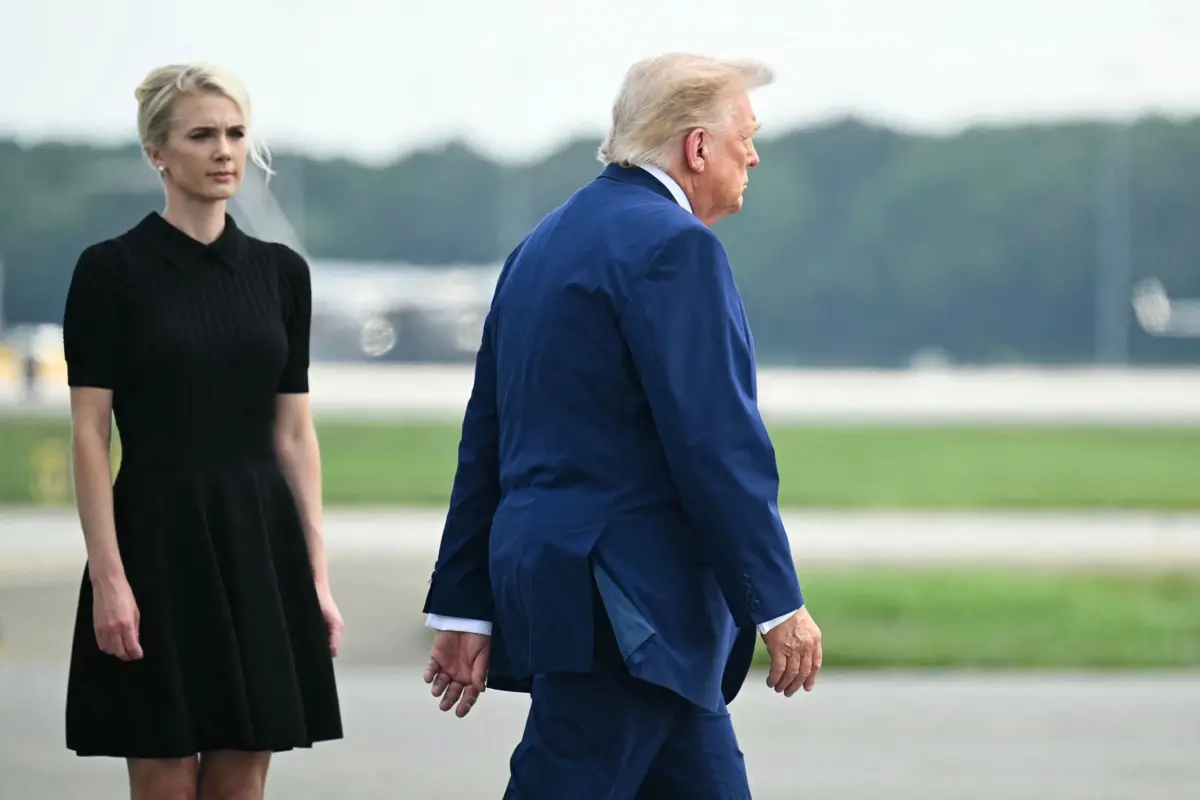
In the current landscape of American politics, few personal narratives capture the nation’s ideological polarization as starkly as the divergent paths of the Harp siblings. On one side stands Preston Harp, a 38-year-old self-imposed political exile living in Managua, Nicaragua, assisting legendary anti-war activist and Vietnam-era veteran S. Brian Willson. On the other stands his younger sister, 35-year-old Natalie Harp, a former One America News Network (OANN) anchor turned high-profile executive assistant and inner-circle confidante to former President Donald J. Trump.
This ideological rift is not merely a domestic quarrel; it is a microcosm of a nation wrestling with its historical identity, foreign policy legacy, and the nature of political devotion. While Preston’s journey led him to the anti-imperialist, pacifist enclaves of Central America—working alongside an 85-year-old activist who lost both legs protesting U.S. military intervention in 1987—Natalie’s trajectory propelled her into the highest corridors of conservative populist power.
As Natalie Harp’s influence within the Trump ecosystem draws increasing national scrutiny—becoming a focal point in high-stakes congressional campaign rhetoric—the story of the Harp family offers an illuminating case study in how religious fundamentalism, American exceptionalism, personal tragedy, and political ambition intersect in contemporary America.
Read Also
Detailed Chronology
  [1987] S. Brian Willson protests train in Concord, CA; loses legs in anti-war demonstration
  [2018] Passage of the federal "Right to Try Act" under the Trump Administration
  [2020] Natalie Harp addresses the RNC; Washington Post scrutinizes cancer timeline
  [2020] Family patriarch commits suicide; ideological fracture within Harp family deepens
  [2020–2022] Natalie serves as television anchor for One America News Network (OANN)
  [2022] Natalie officially joins Donald Trump's executive office as executive assistant
  [2024–2026] Political spotlight intensifies amidst Georgia Senate race commentary by Jon Ossoff
The 1987 Diablo Valley Protest and the Legacy of S. Brian Willson
The lineage of Preston Harp’s current work traces back to September 1, 1987. On that day, a military supply train loaded with munitions departed Diablo Valley in Concord, Northern California. Bound for Central America, the cargo was intended to support the Contras—American-backed insurgents fighting the Marxist Sandinista government in Nicaragua under the covert, extralegal directives of the Reagan administration.
A network of pacifists, heavily populated by Vietnam War veterans who had rejected armed intervention, staged a blockade on the tracks. Among them was S. Brian Willson, an Air Force veteran who had laid his body across the rails. The train failed to stop, striking Willson and severing both of his legs.
Decades later, the 85-year-old Willson resides in Nicaragua, adhering to a vow of living simply. Renowned locally for his decades of resistance, Willson’s quiet life in Managua eventually attracted Preston Harp, who left California to aid Willson in archiving and editing his manuscripts.
       [1987 Diablo Valley Train Protest]
                       │
       ┌───────────────┴───────────────┐
       ▼                               ▼
[S. Brian Willson]             [Reagan Foreign Policy]
(Loses both legs)              (Munitions to Contras)
       │                               │
       ▼                               ▼
[Managua, Nicaragua]           [Central American Conflicts]
(Pacifist Haven)               (Cold War Intervention)
       │
       ▼
[Preston Harp joins Willson]
(Archival & Manuscript Work)
The Harp Household: Radical Exceptionalism and Tragedy
The foundation for the siblings’ eventual split was laid in their upbringing. Raised in an intense strain of evangelical Christianity and homeschooled in California, Preston and Natalie were steeped in doctrines of dogmatic American exceptionalism. According to family accounts, their early education included revisionist historical perspectives that framed the United States as the divine arbiter of global order.
The internal cohesion of the family collapsed in 2020 when their father, a real estate broker, died by suicide. The tragedy shattered the domestic unit. Struggling against religious stigmas surrounding suicide, Natalie and her mother publicly denied the cause of death. For Preston, the refusal to confront the reality of their father’s death marked the final break. Estranged from his mother and sister, Preston departed for Central America, viewing his sister’s subsequent ascension into Trump’s orbit as a psychological search for a surrogate patriarchal figure.
2018–2020: The Cancer Narrative and the RNC Launchpad
Natalie Harp’s public profile rose dramatically during the 2020 Republican National Convention (RNC). Presented as a "California entrepreneur," she delivered a emotional address asserting that President Trump had personally saved her life.
Diagnosed with Stage II bone cancer, Harp claimed that standard chemotherapy treatments had failed and that her survival was made possible exclusively by the administration’s passage of the Right to Try Act of 2018. This legislation allows terminally ill patients to access experimental drugs not yet fully approved by the Food and Drug Administration (FDA).
"They didn’t give me the right to try experimental treatments, Mr. President," Harp declared at the RNC. "You did, and, without you, I’d have died waiting for them to be approved."
Subsequent investigative reporting by The Washington Post cast significant doubt on this timeline. Fact-checkers noted that the specific treatments Harp received were either available through existing FDA expanded-access programs or had been approved prior to the law’s passage, rendering it medically unlikely that the 2018 legislation altered her clinical outcome. Nevertheless, the narrative solidified her position as a favorite of the President.
+-------------------------------------------------------------------------+
|                    NATALIE HARP'S RISE TO PROMINENCE                    |
+-------------------------------------------------------------------------+
|  [2018] Stage II Bone Cancer Diagnosis & Right to Try Act Passage       |
|                                    │                                    |
|                                    ▼                                    |
|  [2020] RNC Speech: Claims Trump saved her life via legislation         |
|                                    │                                    |
|                                    ▼                                    |
|  [2020–2022] Anchor at One America News Network (OANN)                  |
|                                    │                                    |
|                                    ▼                                    |
|  [2022] Appointed Executive Assistant to Donald J. Trump                |
|                                    │                                    |
|                                    ▼                                    |
|  [Present] Key Aide, Gatekeeper, and Subject of National Political Debate|
+-------------------------------------------------------------------------+
2022–Present: Gatekeeping the Trump Ecosystem
Following her RNC appearance, Harp transitioned to a role as an anchor on the right-wing cable channel One America News Network (OANN). During this period, she maintained direct phone contact with Trump. By 2022, she was brought into his official operation as an executive assistant.
Within Trump’s political apparatus, Harp established herself as an indispensable aide. Frequently referred to by campaign staff and media outlets as a crucial gatekeeper—and colloquially dubbed the "human printer" for her practice of constantly providing the former President with hard-copy printouts of favorable news articles, polls, and social media posts—she became a central figure in his daily operational routine. By the post-2024 political cycle, major news organizations including The New York Times highlighted her role as a symbol of the absolute personal loyalty demanded within the modern conservative executive structure.
Supporting Context & Metrics
Comparative Matrix: The Harp Siblings
| Metric / Dimension | Preston Harp | Natalie Harp |
|---|---|---|
| Current Residence | Managua, Nicaragua | Palm Beach, FL / Washington, D.C. |
| Primary Alignment | Anti-imperialist pacifism; S. Brian Willson | Trump Administration / Populist Conservatism |
| Worldview Base | Rejection of American exceptionalism | Strict adherence to nationalist exceptionalism |
| Media Footprint | Critical commentary (CNN interviews) | Former OANN Anchor; RNC Speaker; Executive Aide |
| Key Influencer | S. Brian Willson (Peace Activist) | Donald J. Trump (45th & 47th U.S. President) |
Legislative Analysis: The Right to Try Act (2018)
The legislation that served as Natalie Harp’s political catalyst remains a subject of policy debate. While touted by proponents as a vital deregulation measure for patient advocacy, healthcare metrics reveal a nuanced reality regarding its real-world application versus its political utility.
                      Right to Try Act Impact (2018–Present)

  Claims of Usage vs. Empirical FDA Expanded Access Framework Usage

  [Political Framing / Rhetoric] ══════════════════════════════════ High Impact

  [Empirical Utilization Rates]  ═══════ [Low Direct Usage Relative to FDA Program]

0% 50% 100%- Policy Objective: Provide terminally ill patients access to Phase I-approved experimental drugs without explicit FDA approval.
- FDA Expanded Access Comparison: Prior to 2018, the FDA’s "Compassionate Use" program approved over 99% of patient requests submitted by physicians.
- Systemic Adoption: Major pharmaceutical manufacturers have continued to prefer the standard FDA Compassionate Use pathway due to liability considerations, limiting the operational impact of the Right to Try standalone mechanism.
Official Statements
The contrasting paths of Preston and Natalie Harp have repeatedly broken into public discourse, surfacing in network broadcasts, press conferences, and high-profile campaign events.
Preston Harp on Ideology and Family Breakdown
Speaking in an interview on CNN, Preston Harp provided a blunt psychological and political assessment of his sister’s alignment with Donald Trump, placing the responsibility on their childhood indoctrination:
"Trump is everything that my mom taught us to respect. My mom raised us with the idea that American exceptionalism was the correct way of looking at things, that the United States is the boss of the world. That slavery was—back then—that was normal. People weren’t bad because they had slaves."
Preston further characterized his sister’s entry into Trump’s inner circle not merely as a career move, but as an emotional refuge:
"Her journey to Trumpworld was like a spiriting toward home, a towhead girl stumbling through dense thicket, awestruck by her first glimpse of a thatched roof where a surrogate father lives."
Congressional Campaign Rhetoric: Senator Jon Ossoff
Natalie Harp’s visibility as Trump’s constant companion has also drawn the attention of Democratic strategists. During a high-stakes campaign swing in Atlanta, Democratic Senator Jon Ossoff targeted his Republican challenger, Representative Mike Collins, by weaponizing Trump’s inner sanctum.
Ossoff targeted the former President’s priorities and his reliance on personal aides, specifically naming Harp:
"The President doesn’t want to work; what he wants is to build his ballroom—a gilded monument to his ego—and travel with Natalie on their apparently defenseless flying palace gifted by the Emir of Qatar."
   [Jon Ossoff Campaign Rhetoric] ──► Targets Trump's Symbolic Priorities
                                          │
                                          ├─► "Gilded Monument" (Ballroom)
                                          │
                                          └─► Travel with Natalie Harp (Aide Loyalty)
Institutional Press Analysis
Media organizations focusing on court politics have repeatedly framed Natalie Harp’s role as emblematic of executive power dynamics in the modern era. As The New York Times reported during the 2024 transition:
"President-elect Donald J. Trump has always demanded loyalty from his aides, but few have answered the call like Natalie Harp."
Future Outlook
The saga of the Harp family illustrates broader societal shifts that will continue to influence American politics and political messaging through the 2026 midterm elections and leading into the 2028 presidential race.
                 FUTURE IMPLICATIONS & TRACKING POINTS
                                   │
       ┌───────────────────────────┼───────────────────────────┐
       ▼                           ▼                           ▼
[Hyper-Personalized]      [Rhetorical Weaponization]   [Ideological Dispersion]
 Executive Offices         of Aides in Campaigns        Alienation as a Standard
(Staffers as Symbols) (Ossoff Model in 2026/28) Sociopolitical Phenomenon- The Institutionalization of Hyper-Personal Loyalty: Natalie Harp’s ascent reflects a permanent shift in executive staffing strategies within conservative populism. Formal institutional experience is increasingly secondary to absolute personal fidelity and message enforcement. As the executive branch evolves, aides who serve as personal communications nodes will likely exercise outsized influence over policy access.
- The Weaponization of Staffing in Campaign Strategy: Senator Ossoff’s explicit invocation of Natalie Harp signals a shift in political discourse. Opponents will increasingly target the personal entourages and operational habits of high-profile candidates, using trusted aides as symbols of elitism, access, or detachment from public concerns.
- Familial Alienation as a Political Norm: Preston Harp’s voluntary exile in Managua and complete severance from his nuclear family is an acute example of a broader demographic reality. As political polarization deepens, ideological fractures within American families are moving from private estrangements to public narratives that define electoral choices.
Ultimately, the divergent lives of Preston and Natalie Harp remain tied to the enduring shadow of American foreign and domestic policy. Whether on the railway tracks of historical protest in Central America or inside the private aircraft of a political empire, their split reflects a national conflict over authority, memory, and allegiance.




Comments
Facebook App ID not configured. Please add it in the Customizer.