
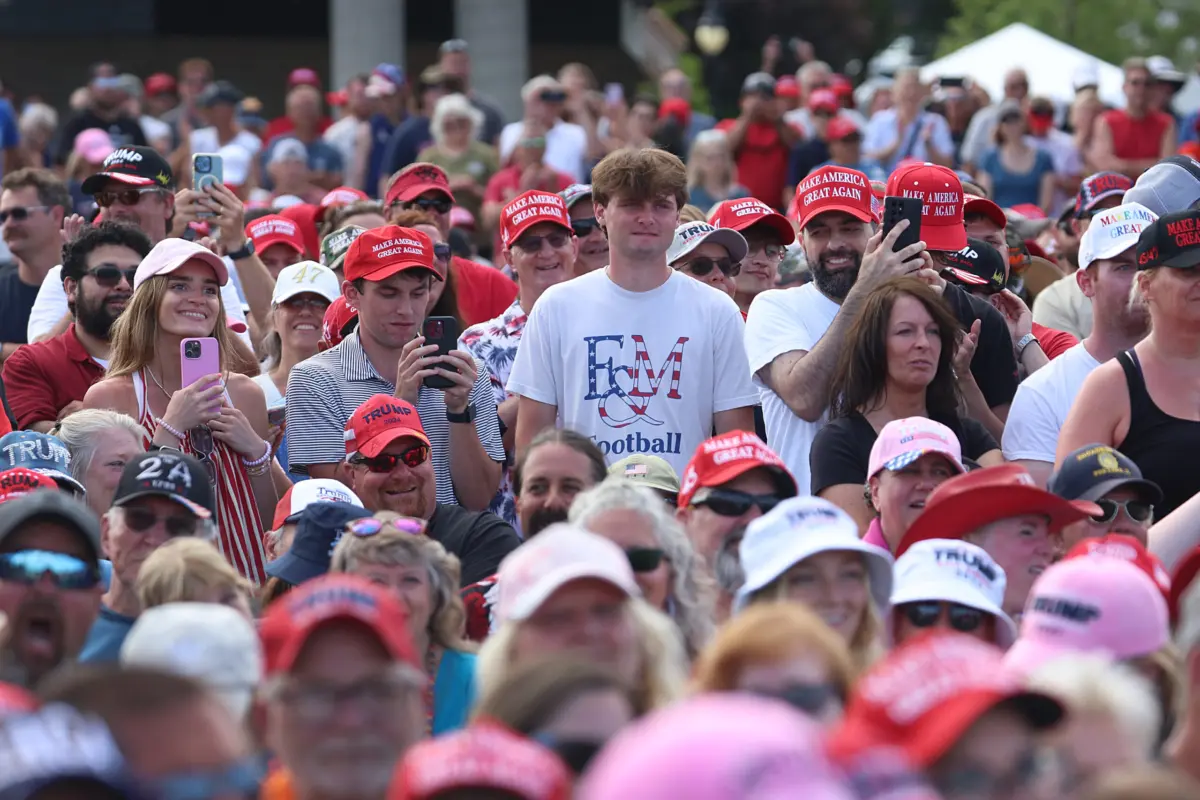
As the United States hurtles toward the high-stakes 2026 midterm elections, the political spotlight has historically focused intensely on the Democratic Party’s internal ideological splits, legislative vulnerabilities, and the eternal question of electability. Yet, a glaring paradox dominates the current political landscape: while media outlets and pundits obsess over the viability of progressive and moderate Democrats, far fewer hard questions are being directed at the ruling Republican Party regarding its own electability crisis.
This asymmetry is increasingly difficult to justify. The governing conservative coalition faces mounting headwinds on multiple fronts. Gas prices continue to climb, squeezing American families at the pump. A litany of high-profile Republican candidates—including Ohio Rep. Max Miller and former Texas Attorney General Ken Paxton, who is mounting a contentious Senate bid—are mired in debilitating personal and political scandals. Meanwhile, the ongoing military conflict in Iran, deeply unpopular from its inception, has devolved into an even heavier political liability as it drags on with no clear end in sight. Compounding these domestic and foreign policy fractures, President Donald Trump’s approval rating plummeted to a staggering 33 percent, marking the lowest watermark of his presidency in recent polling data.
Against this turbulent backdrop, a recent episode of the political podcast America, Actually—hosted by veteran journalist Astead Herndon—tackled these tensions head-on. Herndon sat down with prominent conservative influencer and content creator CJ Pearson to dissect whether President Trump’s political brand is eroding, even among the young voters and core loyalists who powered his 2024 victory. The conversation offers a fascinating window into how the MAGA movement plans to navigate the impending electoral battlegrounds, manage cratering approval metrics, and frame a nationwide debate that contrasts "common sense" with what conservatives characterize as leftist radicalism.
Read Also
Detailed Chronology
To fully understand the current friction within the Republican coalition, it is essential to trace the trajectory of Donald Trump’s second term and the ideological shifts defining the lead-up to the 2026 midterms.
- Late 2024: Following a hard-fought presidential campaign defined heavily by voter frustration over the cost of living and inflation, Donald Trump secures a second term in the White House. Bolstered by notable gains among young male voters and key demographic blocs, the administration enters office with an ambitious domestic agenda centered on deregulation, border enforcement, and tax policy.
- 2025: As the administration settles in, early legislative victories materialize—including the implementation of "no tax on tips" and "no tax on overtime" policies championed during the campaign. However, structural economic pressures persist. Global supply chain shifts, persistent inflation concerns, and rising energy costs begin to strain consumer confidence.
- Late 2025 – Early 2026: Foreign policy entanglements take center stage. The United States initiates and becomes bogged down in an increasingly protracted military conflict involving Iran. Initially met with skepticism, the war rapidly loses public support, introducing significant geopolitical anxiety into the domestic political calculus.
- Mid-2026: The midterm primary season enters its final stretch. Scandal allegations begin to dog several prominent Republican standard-bearers, including Rep. Max Miller and Senate hopeful Ken Paxton. Public frustration peaks as gas prices spike and pocketbook issues dominate kitchen-table conversations.
- August 2026: A Reuters/Ipsos poll reveals that President Trump’s approval rating has sunk to 33 percent, the lowest point of his entire political career. Sensing vulnerability, political analysts begin aggressively questioning the electability of Republican candidates nationwide.
- September 2026 (Upcoming): The Republican Party prepares to host its pivotal midterm convention in Dallas, Texas. The gathering is widely anticipated to serve as a high-profile messaging reset, where the administration aims to pivot away from foreign entanglements and refocus public attention on affordability and domestic achievements ahead of November.
Supporting Context & Metrics
The debate over political viability in the 2026 midterms cannot be divorced from hard data and the shifting priorities of the American electorate. Economic anxiety remains the ultimate arbiter of political success, yet voters are processing contradictory signals from both political parties.
Public opinion metrics underscore a profound disconnect between the White House’s narrative of legislative accomplishment and the lived reality of everyday citizens. While conservative surrogates point to targeted victories—such as the reduction of specific grocery staples like dairy and eggs, alongside localized manufacturing investments like the aluminum smelting plant in Oklahoma—macroeconomic indicators tell a more complex story. Sustained high gas prices and broader cost-of-living pressures have severely dented consumer sentiment, dragging the president’s approval rating down to 33 percent.
Furthermore, the electorate is exhibiting acute fatigue regarding foreign military entanglements. Voter sentiment gathered at recent high-profile public gatherings, such as Donald Trump’s UFC event in Washington, D.C., reveals a distinct undercurrent of conservative and independent criticism directed at three specific areas: aggressive trade tariffs, the protracted conflict with Iran, and lingering public dissatisfaction over transparency regarding historical investigations, such as the Epstein files.
Despite these warning signs, conservative strategists argue that the structural dynamics of the midterms will ultimately favor Republicans if the campaign frames the choice as a binary between pragmatic governance and progressive overreach. By characterizing Democratic challengers—particularly those associated with the Democratic Socialists of America (DSA)—as out-of-touch extremists, the GOP hopes to insulate its candidates from a direct referendum on incumbent performance.
Official Statements and Debate Breakdown
The friction between overarching national discontent and loyalist optimism was laid bare during Astead Herndon’s interview with CJ Pearson on America, Actually. When pressed to grade the president’s second term on a scale of one to 10, Pearson offered a steadfast defense.
"I think the president’s doing incredibly well for the American people. Promises made, promises kept in many ways," Pearson stated, awarding the administration an 8 out of 10. "If you look at this president who ran on securing our southern border, he’s done it… He ran on ‘no tax on tips.’ He did that. He ran on ‘no tax on overtime.’ He did that."
When Herndon confronted Pearson with the stark reality of the president’s 33 percent approval rating and controversial public remarks—including instances where the president downplayed immediate financial struggles—Pearson maintained that the administration’s primary challenge was merely one of communication rather than substance.
"A lot of people are focused on their pocketbooks… but I think that as we get ready to get through this last wave of primaries, you’re going to see a change in his messaging and a reset at the midterm convention in Dallas next month in September," Pearson argued. He emphasized that the upcoming convention would serve as a crucial platform to remind voters of domestic safety and affordability improvements compared to the Biden administration.
The exchange also touched upon the Republican Party’s strategy of contrasting its platform against the left wing of the Democratic Party. Pearson asserted that the GOP must aggressively prosecute the case against socialist and progressive policy proposals, framing the upcoming election as a referendum on "common sense versus crazy."
However, Herndon repeatedly challenged the consistency of this framing, noting that the Republican Party has frequently endorsed candidates facing severe personal and legal scandals—such as Ken Paxton and Max Miller—or those who actively challenged democratic norms, such as Rep. Tom Tiffany’s vote against certifying the 2020 election results. Pearson dismissed these controversies as historical artifacts or matters of personal life rather than legislative governance, insisting that voters are ultimately motivated by practical, everyday concerns rather than past procedural votes.
Future Outlook
As the calendar ticks down toward November 2026, the political landscape remains intensely volatile. The coming weeks will test whether the Republican Party can successfully execute its messaging reset.
The upcoming midterm convention in Dallas will serve as the crucible for this strategy. If the White House and down-ballot candidates can successfully sideline foreign policy controversies—particularly the ongoing fallout from the Iran conflict—and pivot the national conversation back to localized economic relief, taxation, and border security, they may arrest the slide in public approval.
Conversely, if surging gas prices, unresolved scandals, and voter fatigue over international entanglements continue to dominate the discourse, the traditional midterm penalty exacted upon the party controlling the White House could prove devastating. For the MAGA movement and its surrogates like CJ Pearson, the imperative is clear: convince an economically squeezed electorate that the alternative vision presented by the political opposition represents an unacceptable risk, while proving that the promises of the current administration can deliver tangible relief before voters cast their ballots.





Comments
Facebook App ID not configured. Please add it in the Customizer.