
Executive Overview
For decades, the standard narrative of the publishing industry was a romanticized paradox: you did not enter the business for the money; you entered it for the books. Generations of entry-level workers, fueled by a deep-seated love of literature, accepted stagnant wages, long hours, and meager benefits under the implicit understanding that proximity to high culture was a form of compensation in itself. This industry-wide phenomenon—aptly dubbed the "passion tax"—has long allowed corporate giants to exploit the enthusiasm of their workforce.
However, that paradigm is undergoing a seismic shift.
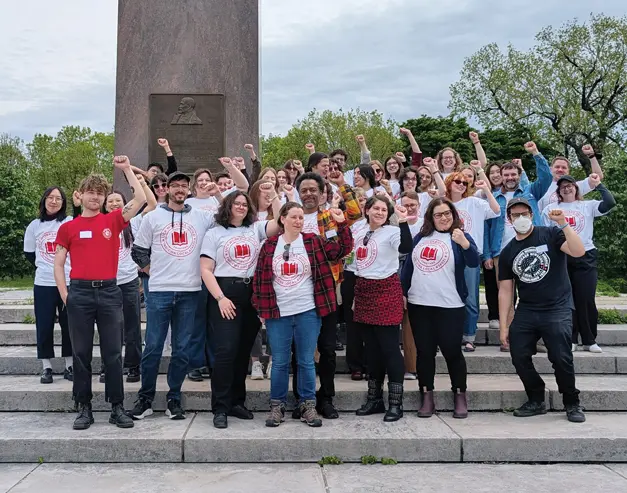
In a historic wave of organizing that has swept across the literary landscape, employees at major publishing houses, university presses, and comic book publishers are unionizing at an unprecedented rate. Last month, approximately 600 workers at the Hachette Book Group (HBG) voted to join the Washington-Baltimore News Guild, forming the largest trade publishing union in modern history. For over 80 years, HarperCollins—whose staff organized under the United Auto Workers (UAW) during the zenith of mid-century American labor power—stood nearly alone as the sole unionized entity among the industry’s elite "Big Five."
Read Also
Today, the Hachette Workers Coalition (HWC), alongside successful union drives at Catapult Book Group, the University of Chicago Press, Dark Horse Comics, and Abrams Books, signals that a new era for publishing labor has arrived. Driven by the erosion of remote-work flexibilities, escalating costs of living in major metropolitan hubs, and the looming existential shadow of artificial intelligence, workers are redefining what it means to be a laborer in the creative sector. This in-depth investigation explores the catalysts behind publishing’s union boom, the corporate pushback that greeted it, and what this wave of collective bargaining means for the future of books.
Detailed Chronology: From Pandemic Fractures to Historic Victories
The roots of the current publishing labor movement trace back through a complex historical arc, marked by decades of setbacks, corporate consolidation, and a recent, sharp resurgence catalyzed by the COVID-19 pandemic.
Historical Precedents and the Toll of Consolidation
To understand the current boom, one must look backward. Unionization in the American creative sector is not entirely unprecedented. Following a wave of labor solidarity, HarperCollins first unionized around 1940. However, the anti-communist purges and political climate of the McCarthy era dismantled much of this early momentum. A second wave subsequently swept through the industry during the turbulent social movements of the 1960s and 1970s.
Yet, as the decades turned, the industry’s infrastructure shifted dramatically. According to Olga Brudastova, president of UAW Local 2110—which oversees the HarperCollins and Catapult unions—the 1980s and 1990s witnessed widespread devastation of publishing unions. This decline was primarily driven by relentless corporate mergers, acquisitions, and the constant restructuring cycles that continue to plague the industry to this day.
The Post-Pandemic Catalyst
The revival of contemporary publishing unionism is intimately tied to the disruptions of the COVID-19 pandemic. When publishers began backtracking on remote-work policies, flexible hours, and health benefits implemented during the public health crisis, employees took notice.
Miriam Vance, a contract and rights associate and awards coordinator at Catapult, notes that the sudden rollback of pandemic-era sick leave policies forced her and her colleagues to realize that their job security and benefits rested on nothing more than "a handshake deal with management." Desiring to preserve the workplace conditions that made Catapult an appealing place to work—such as summer Fridays and remote work options—staffers mobilized.
A similar narrative played out at Dark Horse Comics in Portland, Oregon. An organizing committee member, speaking on condition of anonymity, revealed that the push for unionization was spearheaded heavily by pandemic-era hires. In August 2024, management ordered fully remote employees back to the office two days a week. Compounded by a wage freeze implemented in December 2024 and soaring health insurance premiums, workers experienced a sharp decline in their overall quality of life, prompting the formation of Dark Horse Workers United, which ultimately secured voluntary recognition from management.
The Domino Effect of 2024–2026
The momentum has cascaded rapidly across the industry:
- April 2022–February 2023: The HarperCollins Union executed a historic, three-month strike—marked by Publishers Weekly as the most significant organized labor effort at a U.S. publisher in nearly 50 years—clashing with executives over dismal pay and a lack of diversity.
- Early 2024: Employees at Catapult Book Group launched their union drive, culminating in a successful election for the Catapult Workers Collective.
- Spring 2025: Abrams Books staff unionized with the UAW, further broadening the labor footprint in the trade sector.
- Mid-2026: The Hachette Workers Coalition (HWC) went public in April after organizing on and off since 2022, culminating in a historic victory of roughly 600 workers joining the Washington-Baltimore News Guild. In quick succession, staffers at the University of Chicago Press and Dark Horse Comics announced and successfully won their respective union campaigns.
Supporting Context & Metrics: The Economics of the "Passion Tax"
The motivations underpinning this wave of organizing are strikingly uniform across disparate corners of the industry. In public statements, union drives repeatedly cite three core grievances: inadequate baseline compensation, unsustainable workloads, and severely limited opportunities for career advancement.
The Myth of the Passion Tax
Julia DeVarti, an associate editor at Little, Brown and an HBG organizer, popularized a term that resonates deeply throughout the sector: the "passion tax." This refers to the systemic industry practice wherein workers are systematically underpaid and overworked simply because they are performing labor in a field they fundamentally love.
Jon Schleuss, president of the NewsGuild, observes that this dynamic is most pronounced within corporate publishing houses. Young, idealistic entry-level employees enter the market driven by a love of literature. They willingly surrender decent pay and robust benefits because of the prestige associated with saying, "I’m working at one of the Big Five publishing companies." Over time, these initial sacrifices become permanent fixtures of their employment status.
Hard Numbers: The Living Wage Gap
The financial reality facing contemporary publishing professionals starkly contrasts with the high-culture glamour often projected by the industry. According to data from Publishers Weekly’s 2025 salary and jobs survey, the median salary for industry workers with six years or less of experience sits at $56,000.
When measured against MIT’s living wage calculator, this median income falls a staggering 15.6% short of a genuine living wage for the high-cost New York City metropolitan area.
Noah Perkins, founder and chairman of the Young Publishers Association (YPA)—a networking nonprofit launched in 2024 to support young professionals—notes that financial realities are driving an intense curiosity about collective bargaining. "It did not go unnoticed that wages across numerous companies rose in response to the HarperCollins strike," Perkins explains. "And for workers carrying significant college debt, living in the most expensive city in America, it is clear why they want to learn about what a union could do for their own workplace."
The Threat of Artificial Intelligence
Beyond immediate compensation and workplace flexibility, the rapid evolution of artificial intelligence has introduced a powerful new layer of economic and professional anxiety. Workers across the media and cultural sectors fear that generative AI could be deployed to automate editorial tasks, reduce headcounts, or depress wages.
The NewsGuild has proactively confronted this challenge, securing binding AI protections in 90 distinct collective bargaining agreements across journalism and publishing, according to Schleuss. Standard protective clauses explicitly prohibit employers from replacing human personnel with automated systems or using AI tools to compress compensation scales.
Even in segments where AI has not yet been aggressively deployed internally—such as the University of Chicago Press, which maintains strict policies prohibiting authors and peer reviewers from using generative tools—organizers are viewing unionization as a vital safeguard. Adrienne Meyers, a senior promotions manager and organizer at UCP, emphasizes that union protections are necessary to "make sure that doesn’t change if a management position changes, or if the university puts pressure on us."
Official Statements and Corporate Responses
The corporate reaction to the publishing union boom has evolved from outright hostility to pragmatic, albeit cautious, acceptance. Historically, the Big Five publishing houses have fiercely resisted employee organizing efforts.
Anti-Union Campaigns vs. Executive Shifts
When the Hachette Workers Coalition first went public, management distributed anti-union infographics throughout its Manhattan offices. These posters framed unions as intrusive "third parties" disrupting the traditional manager-employee relationship—a classic union-busting tactic. When questioned by the press at the time, an HBG spokesperson maintained that the company merely intended to "encourage workers to consider all the facts to make an informed decision."
However, once the HWC decisively won its election, executive tone shifted. Hachette CEO David Shelley accepted the election results and publicly welcomed "a new era at HBG" in an email to staff:
"I’ve heard all sorts of things in the business community about what unionization can mean… But at HBG I believe in us ploughing our own furrow. And I believe in being optimistic about the future. I hope that the next phase of our journey will be an excellent one, and that this result will lead to greater levels of unity across the business, and not greater division."
By contrast, other major players have maintained a tightlipped silence. When Publishers Weekly reached out to HarperCollins CEO Brian Murray for comment regarding his experience navigating an established union, a corporate spokesperson declined to make him available or provide further statements. Similarly, executives and spokespeople at Macmillan, Penguin Random House (PRH), and Simon & Schuster declined to comment on their internal employee relations in the wake of the HBG unionization.
The Spillover Effect: Raising the Industry Standard
Despite corporate reticence, union victories at individual publishing houses have consistently triggered a positive ripple effect across the entire industry, establishing higher baseline standards for unorganized houses alike.
- In February 2023, both Macmillan and HBG unilaterally raised their starting salaries to $47,500, immediately preceding the HarperCollins union securing identical raises in its renegotiated contract.
- In July 2026, as the HWC finalized its election victory, Penguin Random House elevated its baseline starting salary from $51,000 to $55,000.
While corporate spokespeople frequently attribute these bumps to unilateral internal adjustments, industry analysts view them as direct defensive measures designed to stem the tide of internal organizing.
Future Outlook: A "Hot Labor Summer" and the Road Ahead
Despite facing systemic barriers, structural intimidation, and the daunting economic realities of corporate media consolidation, publishing workers have found renewed solidarity and extraordinary morale. Across social media platforms, employees and literary allies have enthusiastically celebrated what they have dubbed "Hot Labor Summer"—a clever play on rapper Megan Thee Stallion’s viral cultural phenomenon.
The demographic driving this movement is notably young, highly educated, and increasingly disillusioned with traditional corporate hierarchies. As Adrienne Meyers of the UCP Workers Guild notes, organizing efforts frequently required breaking through initial worker skepticism: "When people were like, The university will do right by us, or, It’s not gonna help to advocate as a group, I was like, Well, has your condition improved advocating just for yourself?"
That persuasive strategy clearly succeeded. Nearly 90% of eligible staffers ultimately voted in favor of joining the UCP Workers Guild, establishing the first union in the 130-year history of the press.
Supported by shifting national polling that demonstrates a historic high in public approval for organized labor—spanning generations and political affiliations—publishing workers are shedding the quiet acquiescence of the past. By dismantling the notion that a love for literature must come at the expense of financial stability and bodily well-being, the workers of Hachette, HarperCollins, Catapult, and beyond are proving that the future of publishing belongs to those who actually make the books.




Comments
Facebook App ID not configured. Please add it in the Customizer.