

Executive Overview
In contemporary poetry, few subjects demand as delicate a balance of unflinching honesty and profound empathy as the domestic realities of mental illness. When a family is breached by the invisible, corrosive forces of psychological distress, the language of everyday life often fails. Into this emotional vacuum steps award-winning poet Michael Broek with his latest work, "Stem," featured as the Missouri Review Poem of the Week for August 24, 2026.
Broek, celebrated for his collections including Refuge/es—which captured the prestigious Kinereth Gensler Award from Alice James Books—turns his lyrical lens inward, confronting the devastating landscape of familial trauma, adolescent self-harm, and the agonizing paradox of parental love. "Stem" is not merely a poem; it is an autopsy of hope, a visceral mapping of a father’s journey through the labyrinth of his son’s psychological crisis.
This piece explores the anatomy of Broek’s composition, examining its structural motifs, its literary and theatrical lineages—tracing back to Samuel Beckett’s Krapp’s Last Tape—and the broader cultural implications of addressing youth mental health through verse. By contextualizing the poem within Broek’s wider bibliography and exploring the critical discourse surrounding domestic trauma in modern American poetry, this article offers a comprehensive examination of a work that refuses to look away from the gray, Navesink waters of human suffering.
Read Also
Detailed Chronology and Literary Context
Michael Broek’s trajectory as a vital voice in contemporary poetry has been marked by a steadfast engagement with displacement, interiority, and the fault lines of modern identity. His debut full-length collection, Refuge/es, established his reputation for blending narrative precision with lyrical urgency, a feat recognized by Alice James Books and supported by fellowships from the MacDowell Colony and the Marble House Project, as well as a scholarship to the Bread Loaf Writers Conference. Over the years, his chapbooks—including The Logic of Yoo (Beloit Poetry Journal), The Amputation Artist (ELJ Publications), and The Window Light—have continually refined an aesthetic capable of holding seemingly incompatible emotional states in tension.
The genesis of "Stem" reflects a thematic pivot in Broek’s recent output toward the domestic sphere, specifically the collateral damage inflicted by mental illness within the household. While his earlier works frequently explored broader geopolitical or philosophical displacements, "Stem" localizes displacement to the hallway of a suburban home, the threshold of a son’s bedroom, and the silent friction of everyday routines.
[Broek's Early Works: Exile & Displacement]
       │
       ▼
[Chapbooks: Interiority & Logic (The Logic of Yoo, The Window Light)]
       │
       ▼
[Current Focus: Domestic Trauma & Mental Illness ("Stem")]
The poem unfolds not through a linear narrative, but through a sequence of affective shocks. It begins with the jarring intrusion of reality: a father walking into his son’s bedroom to find physical manifestations of psychological torment that read like "war wounds" or the marks of a lash. The chronology of the poem mirrors the exhausting, recursive loop of caregiving: the futile trips to the therapist’s door, the adolescent stonewalling ("no—not today"), the petty thefts ("stealing his sister’s cash & stash"), and the domestic detritus of an unmanageable existence ("just more dishes caked with waste").
By refusing to offer a redemptive arc or a tidy resolution, Broek mirrors the exhausting reality of chronic mental health crises. The chronology of "Stem" is one of perpetual suspension—a present tense that refuses to yield to a healing future.
Supporting Context, Metrics, and Thematic Analysis
To fully appreciate the weight of "Stem," one must examine the infrastructure of its metaphors and the cultural metrics surrounding youth mental health that ground its urgency. The poem operates on a series of stark juxtapositions: the intimate horror of bodily self-harm set against the mundane frustrations of domestic life; the fragility of human connection contrasted with the indifferent, elemental persistence of nature.
The Anatomy of the Metaphor: From Glass Stems to Navesink Gulls
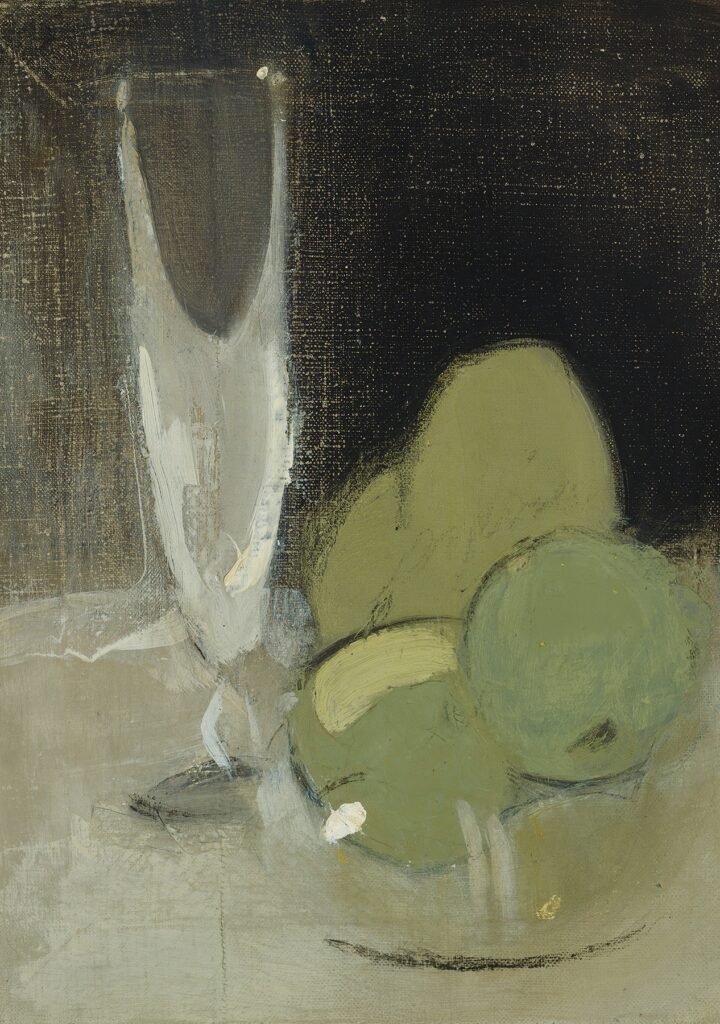
Central to the poem’s metaphorical architecture is the image of the stem. In the third stanza, Broek writes:
There must be a name
for giving up while also
grasping. This is not some glass
I’d thought I’d hold—
its thin stem, mouth opened
upward like a gull’s beak
swallowing everything, even dark.
The stem here morphs from a fragile anchor into an insatiable vessel. The parent’s role is redefined not as a provider of stability, but as an open conduit, forced to ingest the limitless darkness of the child’s suffering. This imagery subverts traditional pastoral or domestic tropes; the home is not a sanctuary, but a theater of helpless consumption.
Furthermore, the poem concludes with a striking image of coastal indifference:

Gulls refuse reason
and fly above the millionaire’s yacht
and fly above the rusted dredge
dawdling in the gray Navesink
not caring that one is a lie—
the other a hurt.
The Navesink River—rooted in the geography of New Jersey, reflecting Broek’s regional ties and his multiple grants from the New Jersey State Council on the Arts—serves as a neutral backdrop. The gulls, devoid of human ratiocination, soar indifferently over both extreme wealth ("the millionaire’s yacht") and systemic decay ("the rusted dredge"). In doing so, they highlight the tragedy of human meaning-making: unlike the gulls, the speaker cannot simply fly above the dichotomy of deception and agony. He is inextricably bound to the hurt.
The Beckettian Inheritance: Hope, Memory, and the Voice
In his Author’s Note, Broek provides a crucial key to unlocking the title’s provenance, pointing directly to Samuel Beckett’s masterwork Krapp’s Last Tape. In Beckett’s play, the aging protagonist listens to audio diaries of his younger self, realizing that his lifetime of ambition and intellectual striving has culminated in isolation and emotional bankruptcy.
Yet, the specific fragment of text that haunted Broek—and birthed the title "Stem"—is Krapp’s memory of an intimate, silent moment with a former lover in a small boat:
"We drifted in among the flags and stuck. The way they went down, sighing, before the stem! […] We lay there without moving. But under us all moved, and moved us, gently, up and down, and from side to side."
This literary lineage is illuminating. Beckett’s scene captures the simultaneous experience of insularity and necessity in human intimacy—the realization that shared moments are ultimately processed in profound solitude. Broek translates this theatrical meditation on lost hope into the paternal relationship. Just as Krapp is haunted by the phantom of a past intimacy, Broek’s speaker is haunted by the ghost of his son’s unmarred childhood, forced to navigate a present where the son wishes for the father’s absolute disappearance ("mostly he’d like me to disappear. That’s okay").
Official Statements and Authorial Insight
In reflecting on the creation of "Stem," Michael Broek has noted the increasing gravity of mental illness as a thematic anchor in his recent writing. The intersection of familial obligation and psychological disintegration has become a central preoccupation of his art.
"I’ve written a lot lately about mental illness and its impact on families," Broek states in his official commentary for the Missouri Review.
By anchoring his poetic inquiry in the specific cadences of everyday despair—the unwashed dishes, the stolen cash, the locked therapist’s door—Broek bridges the gap between high literary modernism (via Beckett) and the raw, unvarnished realities of twenty-first-century domestic life. He resists the temptation to sanitize the trauma. The admission, "Still, I’m here / and I’d kiss that skin / though mostly / he’d like me to disappear," operates as an act of radical vulnerability. It strips away the pretense of the heroic, omnipotent parent, replacing it with the figure of the persistent, unwanted witness who loves without condition and suffers without a map.
Future Outlook: The Resonance of "Stem" in Contemporary Letters
As "Stem" gains wide recognition following its publication as Poem of the Week, its cultural resonance extends far beyond the literary pages of the Missouri Review. In an era marked by an escalating mental health crisis among youth—where families are frequently left to navigate complex psychological landscapes with minimal institutional support—poems like Broek’s perform an essential cultural function. They provide a lexicon for grief that lacks a traditional funeral, offering validation to caregivers who bear witness to self-destruction behind closed bedroom doors.
For Broek, "Stem" signals a powerful new direction as he continues to build upon a celebrated career marked by critical accolades, including his New Jersey State Council on the Arts grants and residential fellowships at MacDowell and the Marble House Project. It proves that lyric poetry remains one of our most potent instruments for investigating the unnamable—giving voice to the trauma of walking down a hallway, opening a door, and choosing to stay.

Comments
Facebook App ID not configured. Please add it in the Customizer.