
Executive Overview
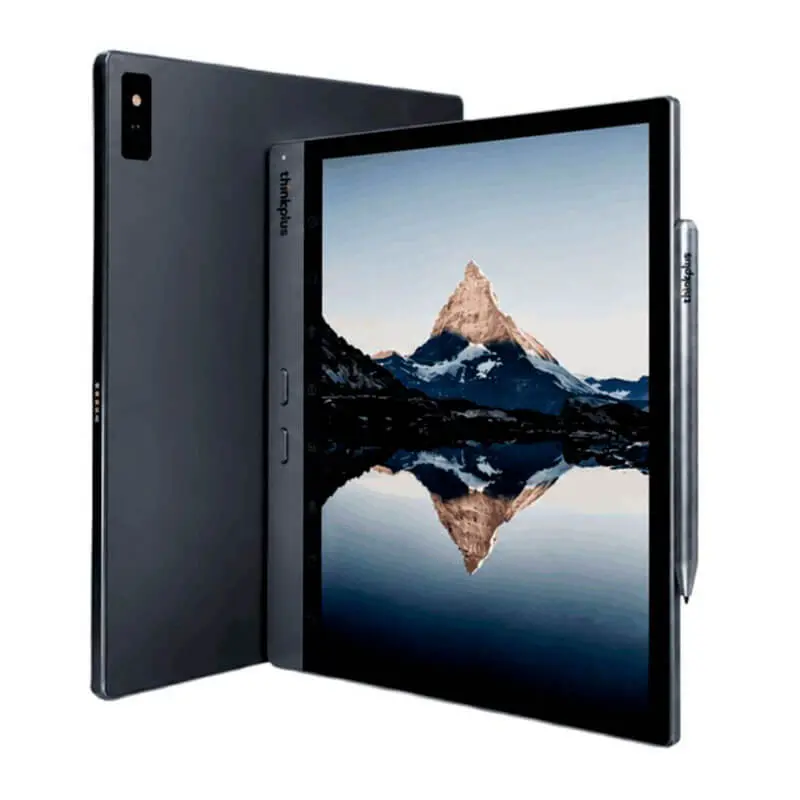
The convergence of artificial intelligence and paper-like display technologies has reached a new milestone with the introduction of the Lenovo ThinkPlus AI Smart E-Ink Screen Office Notebook A510. Running on the modern Android 14 operating system, this premium, productivity-oriented E-Ink tablet is meticulously engineered to cater to the demanding requirements of the contemporary mobile professional, corporate executive, and field researcher. Moving far beyond the conventional capabilities of single-purpose reading devices, the ThinkPlus A510 merges the ocular comfort of electronic paper with advanced computational performance, standalone 4G LTE cellular connectivity, and a robust suite of artificial intelligence integrations.
At its core, the A510 is a specialized 10.3-inch color E-Ink workstation designed to bridge the structural divide between physical notebooks and dynamic digital office environments. By incorporating advanced screen technologies, high-fidelity audio arrays, and high-resolution document-scanning optics, Lenovo has positioned this device as an all-in-one mobile command center. Targeted explicitly at enterprise-level users who manage heavy document workflows, intricate PDF markups, and multi-speaker boardrooms, the ThinkPlus A510 represents a calculated investment in efficiency, ergonomic health, and operational security.
However, its positioning in the market is unapologetically niche. With a retail baseline oscillating between $850 and $950 USD via global e-commerce export platforms, the device bypasses the casual consumer market in favor of specialized enterprise utility. This deep-dive report examines the technological architecture, functional ecosystem, market context, and long-term implications of Lenovo’s latest flagship office notebook.
Read Also
Detailed Chronology and Product Architecture
The developmental trajectory of the ThinkPlus A510 reflects Lenovo’s broader corporate strategy to capture the burgeoning market for specialized enterprise hardware. As remote and hybrid work models continue to mature, the limitations of traditional LCD and OLED tablets—specifically regarding eye fatigue during extended reading sessions and inadequate outdoor visibility—have created a clear opening for high-performance E-Ink alternatives.
The Evolution of the E-Ink Office Concept
For years, E-Ink devices were largely categorized into two camps: dedicated e-readers optimized for black-and-white text consumption, and rudimentary digital paper notebooks with limited processing power. The introduction of color E-Ink panels, specifically iterations utilizing advanced filter technologies like the Kaleido 3 platform, initiated a paradigm shift. Lenovo’s hardware engineers capitalized on this evolution, conceptualizing the A510 not merely as a peripheral screen, but as a standalone computational environment capable of executing complex Android-based office applications natively.
Hardware Engineering and Display Metrics
The architectural foundation of the Lenovo ThinkPlus A510 centers upon its 10.3-inch Kaleido 3 color E-Ink display panel. This screen achieves a sharp 300 DPI resolution for monochrome textual content, ensuring that typography remains crisp, highly legible, and indistinguishable from physical print. When rendering color graphics, charts, and highlighted annotations, the panel operates at a functional 150 DPI. This dual-density resolution strategy optimizes both reading clarity and color saturation without imposing excessive processing overhead on the system chipset.
To address usability in varied lighting conditions—ranging from dimly lit boardrooms to late-night remote workspaces—Lenovo integrated a sophisticated dual-temperature comfort front-light system. Users can dynamically adjust the color temperature balance between warm and cool tones, mitigating blue-light exposure and significantly reducing visual fatigue during marathon editing and review sessions.
Computational Performance and Software Ecosystem
Operating on Android 14, the A510 grants users access to a vast ecosystem of enterprise, document management, and communication applications. Unlike locked-down proprietary e-readers, Android 14 allows professionals to side-load or download verified productivity suites, cloud storage clients, and collaborative tools directly onto the device.
This processing capability is sustained by a massive 6,900 mAh internal battery. Because E-Ink displays consume negligible power when static (drawing current primarily during page refreshes or UI transitions), the 6,900 mAh capacity translates into exceptional operational longevity. Users can routinely expect days—or even weeks—of active note-taking and document review on a single charge, completely redefining uptime expectations for mobile workstations.
Supporting Context & Metrics: Hardware, Audio, and Optics
A granular examination of the Lenovo ThinkPlus A510 reveals a device engineered from the ground up for functional efficiency in professional environments. Every hardware module has been selected to solve specific friction points encountered in modern mobile workflows.
Acoustic Engineering: The Eight-Microphone Matrix
One of the most distinguishing hardware features of the A510 is its professional-grade acoustic capture system. Traditional tablets often struggle with audio fidelity during large meetings, capturing ambient room noise, HVAC hums, and echoing chatter. Lenovo has countered this by outfitting the A510 with an advanced eight-microphone matrix.
Coupled with proprietary, AI-driven noise-reduction algorithms, this array isolates human voices with pinpoint directional accuracy. Whether deployed in a bustling open-plan office or a sprawling conference room, the device records pristine audio streams optimized for real-time transcription, automated meeting summarization, and verbal memo dictation.

Optical Capture: High-Resolution Document Scanning
The integration of a high-resolution 20-megapixel rear camera transforms the A510 from a passive note-taking pad into an active document ingestion hub. Professionals frequently encounter physical paperwork, contracts, whiteboards, and receipts that must be incorporated into digital archives.
Instead of relying on smartphone cameras and third-party transfer utilities, users can utilize the A510’s rear camera to scan physical media instantly. Integrated optical character recognition (OCR) software processes these captures on the fly, converting flat images into fully searchable, editable digital document formats directly within the device’s storage ecosystem.
Ergonomics, Connectivity, and Input Precision
Physical interaction with the A510 is anchored by an included wireless magnetic stylus. Engineered to mimic the weight and balance of a high-end fountain pen, the stylus supports 4,096 levels of pressure sensitivity. This high sensitivity threshold enables nuanced line-weight variations, making handwritten annotations, digital signatures, and freehand sketches feel exceptionally fluid and organic, with virtually imperceptible latency.
Furthermore, the integration of native 4G LTE cellular connectivity liberates the device from the constraints of local Wi-Fi networks. Corporate travelers, field service technicians, and mobile executives can maintain persistent cloud synchronization, transmit encrypted documents, and participate in data-sensitive tasks securely from transit hubs, remote job sites, or client offices without exposing corporate data to unsecured public wireless infrastructure.
Official Statements and Market Positioning
Industry analysts and corporate representatives have framed the launch of the ThinkPlus A510 as a calculated expansion into high-value B2B hardware verticals. While consumer-facing tablets are increasingly commoditized by low-cost entertainment slates, enterprise-grade tools command robust margins by solving specific, high-friction operational challenges.
Targeting the Executive and Research Sectors
Lenovo’s product positioning strategy emphasizes that the A510 is not designed to compete with multimedia powerhouses like Apple’s iPad Pro or Samsung’s Galaxy Tab S series. Those devices, while versatile, are fundamentally ill-suited for users whose primary objective is reading dense textual documents, marking up complex blueprints, or drafting long-form reports under direct sunlight or in high-glare office environments.
In internal product briefs and trade addresses, Lenovo executives have underscored that the target demographic comprises legal professionals, corporate strategists, academic researchers, and governmental officers. These users prioritize three core pillars:
- Ocular Health: Minimizing long-term eye strain through reflective E-Ink display technologies rather than emissive backlights.
- Data Integrity & Security: Utilizing standalone cellular connections and local processing capabilities to minimize data leakage.
- Workflow Continuity: Unifying handwriting, audio recording, document scanning, and cloud synchronization into a single, cohesive form factor.
Pricing Realities and Global Distribution
With an MSRP baseline positioning the device between $850 and $950 USD via specialized international export platforms—such as AliExpress, Giztop, and Good e-Reader—the ThinkPlus A510 occupies a premium pricing tier. Industry observers note that this price point reflects the low manufacturing yields and high component costs associated with mid-to-large-size color E-Ink panels (Kaleido 3 technology), combined with the complex integration of multi-microphone arrays, cellular modems, and high-resolution camera modules. For enterprise organizations purchasing fleet units, or individual professionals seeking an uncompromising digital notebook, the cost is justified by the anticipated gains in daily productivity and reduction of paper clutter.
Future Outlook: The Trajectory of Enterprise E-Ink
The debut of the Lenovo ThinkPlus A510 offers a compelling lens through which to view the future of mobile enterprise computing. As artificial intelligence models become increasingly lightweight and capable of running locally on edge hardware, devices like the A510 are poised to evolve from smart notebooks into proactive digital assistants.
The Integration of On-Device AI
Looking ahead, the logical evolution of the A510’s AI suite involves deeper offline language model integration. While current implementations rely on robust audio capture for cloud-assisted transcription, future iterations of enterprise E-Ink notebooks will likely feature local Neural Processing Units (NPUs) capable of summarizing multi-hour board meetings, generating action items, and cross-referencing handwritten notes with corporate databases entirely offline—ensuring absolute compliance with strict corporate and governmental data privacy mandates.
Market Adoption and Form Factor Evolution
As manufacturing efficiencies improve and color E-Ink refresh rates continue to accelerate, display technologies like Kaleido 3 and emerging full-color reflective panels will likely transition from luxury enterprise novelties to standard office equipment. Lenovo’s early investment in the ThinkPlus A510 establishes a formidable benchmark for competitors, signaling that the future of mobile productivity is not solely about brighter screens and faster video processors, but about purposeful, distraction-free tools designed to enhance human cognition and professional execution.
In conclusion, the Lenovo ThinkPlus AI Smart E-Ink Screen Office Notebook A510 successfully redefines the boundaries of what an e-reader platform can achieve. By wedding the timeless ergonomics of paper with cutting-edge Android functionality, cellular freedom, and artificial intelligence, Lenovo has delivered a definitive tool for the modern knowledge worker.





Comments
Facebook App ID not configured. Please add it in the Customizer.