
Executive Overview
In the rapidly evolving landscape of digital reading hardware, feature parity and ecosystem integration often dictate market leadership. While major manufacturers like Amazon (Kindle) and Kobo have long dominated discussions regarding public library access, PocketBook has quietly positioned its hardware portfolio as a uniquely versatile alternative.
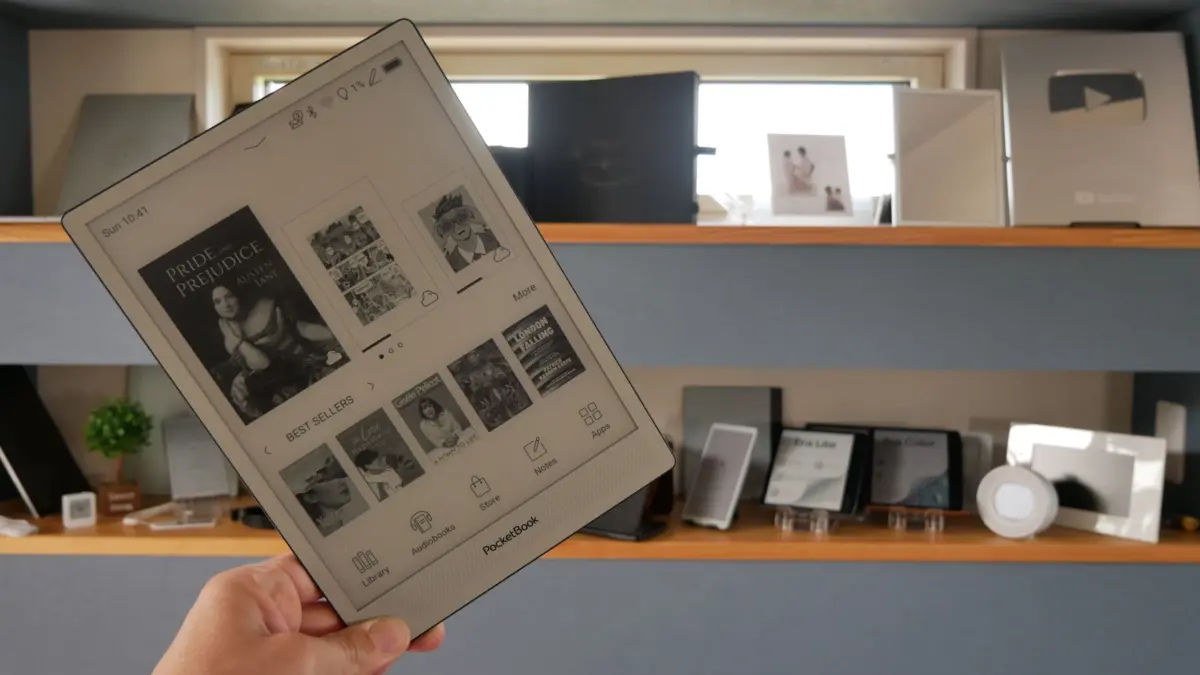
With the official rollout of firmware update 6.11.1437, PocketBook has fundamentally strengthened its value proposition. Building upon its established foundation of native Libby integration for e-books and audiobooks, the new software update introduces full support for digital magazines. Users can now browse, borrow, and track periodical issues directly from their e-readers without relying on auxiliary smart devices, tablets, or computers.
Beyond library expansion, the 6.11.1437 release delivers substantial quality-of-life enhancements across the entire device ecosystem. Notable additions include automated Bluetooth audio reconnection protocols, advanced productivity tools for Notepad applications—such as AI-powered handwriting recognition and "Magic Shapes" geometry conversion—alongside critical bug fixes addressing audio volume and playback resumption.
Read Also
By unifying e-books, audiobooks, and digital periodicals under a single, streamlined reading experience, PocketBook has established a new benchmark for what consumers should expect from modern e-reader software.
Detailed Chronology: What’s New in Firmware 6.11.1437
The deployment of version 6.11.1437 marks one of the most comprehensive software updates PocketBook has released for its current-generation and legacy lineups. The features and system adjustments are categorized across several key areas:
1. Native Libby Magazine Integration
PocketBook’s previous integration with Libby allowed millions of library cardholders to access e-books and audiobooks natively. However, digital magazines remained excluded from the direct-on-device borrowing experience—until now.
According to the official release changelog:
“Magazines are now supported in the Libby app. Users can discover magazines in the library and search, borrow individual issues, and track what they’ve already checked out — all from a dedicated magazine page showing covers, issue details, and availability at a glance.”
This integration eliminates the friction points typically associated with reading periodical content on e-ink screens. Users can evaluate cover art, check issue metadata, and manage checkouts within a native interface optimized for electronic paper displays.
2. Expanded Device Compatibility
PocketBook has ensured that this feature-rich update is not restricted to newly launched flagships. The 6.11.1437 firmware is rolling out across a broad spectrum of the company’s hardware portfolio, ensuring legacy and current device owners benefit alike. Supported models include:
- PocketBook Era & Era Color
- PocketBook Verse Pro & Verse Pro Color
- PocketBook InkPad 4
- PocketBook InkPad Color / InkPad 3 series (where applicable under current lifecycle support)
3. Intelligent Bluetooth Audio Automation
For users who utilize their PocketBooks for listening to audiobooks or reading text-to-speech files via wireless headphones or speakers, Bluetooth management has historically required manual pairing and reconnection routines. Update 6.11.1437 introduces automated pairing protocols:
- The e-reader now automatically connects to a previously paired audio accessory the moment it becomes available, when playback is initiated, or when Bluetooth hardware is toggled on.
- If an active Bluetooth connection drops mid-session, the system automatically pauses playback and attempts to re-establish the connection using a controlled retry sequence. Once reconnected, playback resumes seamlessly from the exact timestamp.
- A dedicated bug fix now allows direct hardware volume adjustments on headphones to properly sync with the device’s master audio level.
4. Advanced Notepad Productivity and AI Integration
For stylus-equipped models and note-taking variants, the Notepad application has received a suite of powerful productivity upgrades:

- Send-to-Email Functionality: Users can now export handwritten notes or text annotations directly from the device to one or multiple designated email addresses. Export formats include raw text or attachments in PDF and TXT formats.
- AI Selection (Handwriting Recognition): By simply drawing a circle around handwritten text on the screen, users trigger an instant, on-device handwriting recognition routine, converting analog scrawls into searchable, editable digital text.
- Magic Shapes: Freehand drawing is notoriously difficult on traditional e-ink displays. The new Magic Shapes utility automatically detects rough hand-drawn circles, squares, rectangles, and arrows, instantly snapping them into clean, crisp geometric figures.
Supporting Context & Metrics: The E-Reader Library Landscape
To fully understand the significance of PocketBook’s latest update, it is necessary to examine how competitive ecosystems handle public library integration. The digital lending market—primarily anchored by OverDrive and its consumer-facing app, Libby—operates differently across major hardware brands.
| E-Reader Brand | Native E-Book Support | Native Audiobook Support | Native Magazine Support | Auxiliary Hardware Required? |
|---|---|---|---|---|
| Amazon Kindle (USA) | Yes (via Send to Kindle / OverDrive integration) | No | No | Optional (Browser / App for magazines) |
| Kobo | Yes (Built-in OverDrive) | Yes (Hardware player exists, but borrowing audiobooks is unsupported) | No | Yes (Computer or mobile app required for magazines) |
| PocketBook | Yes (Native Libby app) | Yes (Native Libby app) | Yes (New in 6.11.1437) | No (All-in-one on-device management) |
The Kindle Paradigm
In the United States, Amazon Kindles interact with library books primarily through browser-based routing or the Send to Kindle infrastructure. While effective for standard reflowable e-books, Kindles do not support digital magazines natively through library channels in the same unified fashion, nor do they support library audiobook lending directly on the e-reader interface (requiring users to rely on the Audible ecosystem for audio content).
The Kobo Approach
Kobo devices feature deep, commendable integration with OverDrive, allowing users to log in with a library card directly on the device to borrow e-books. However, despite housing built-in audio players for purchased audiobooks, Kobo’s native library integration strictly applies to text-based e-books. Users wishing to borrow library audiobooks or browse periodical subscriptions must generally utilize secondary devices.
PocketBook’s Unrivaled All-in-One Model
PocketBook stands alone in offering a truly consolidated library ecosystem. By integrating the full capabilities of the Libby application directly into its Linux- and Android-adjacent firmware architectures, PocketBook allows users to execute the entire lifecycle of digital borrowing—discovery, sample reading, checkout, renewal, and return—entirely on an e-ink display.
The inclusion of magazines completes the trinity of digital media formats (text, audio, and periodicals), eliminating the need for a companion computer, USB side-loading, or smartphone management.
Official Statements and Industry Perspective
Industry analysts and company representatives have long pointed to software flexibility as PocketBook’s primary differentiator against walled-garden competitors.
Michael Kozlowski, Editor-in-Chief at Good e-Reader, notes the strategic importance of this software milestone:
"While hardware specifications—such as screen resolution, warm-light adjustments, and page-turn buttons—often steal headlines, the true longevity of an e-reader is determined by its software ecosystem. By opening up native library magazine support alongside advanced AI note-taking and automated Bluetooth handling, PocketBook is addressing the exact pain points that keep consumers tethered to multi-purpose tablets."
PocketBook’s engineering philosophy has historically centered on open formats and user autonomy. Unlike platforms designed to lock users into proprietary storefronts, PocketBook devices natively support an extensive array of document and media formats (including EPUB, PDF, DJVU, MOBI, FB2, CBR, CBZ, MP3, and M4B). The expansion of Libby compatibility to include magazines reinforces the company’s commitment to providing an uncompromised, open digital reading experience.
Future Outlook: What This Means for the E-Reader Market
The release of firmware update 6.11.1437 signals several key trends for the future of electronic paper technology:
- The Convergence of E-Readers and Productivity Tablets: Features like AI-driven handwriting recognition and shape correction demonstrate that e-note devices are no longer mere digital notebooks; they are intelligent productivity tools capable of handling complex document workflows.
- Elevated Consumer Expectations for Library Integration: As users increasingly turn to public libraries to offset the rising costs of digital media consumption, hardware manufacturers that fail to streamline library access risk losing market share to competitors like PocketBook. The expectation is shifting from basic e-book compatibility to total multimedia accessibility—encompassing books, audio, and now periodicals.
- The Decline of Auxiliary Workflows: The modern consumer demands friction-free digital experiences. PocketBook’s ability to handle complex library queries, Bluetooth pairing handshakes, and file transmissions entirely on-device sets a high bar for future hardware iterations across the industry.
As PocketBook continues to refine its software architecture, update 6.11.1437 serves as a masterclass in adding substantive, highly requested utility to existing hardware—proving that an e-reader can evolve long after it leaves the retail box.



Comments
Facebook App ID not configured. Please add it in the Customizer.