
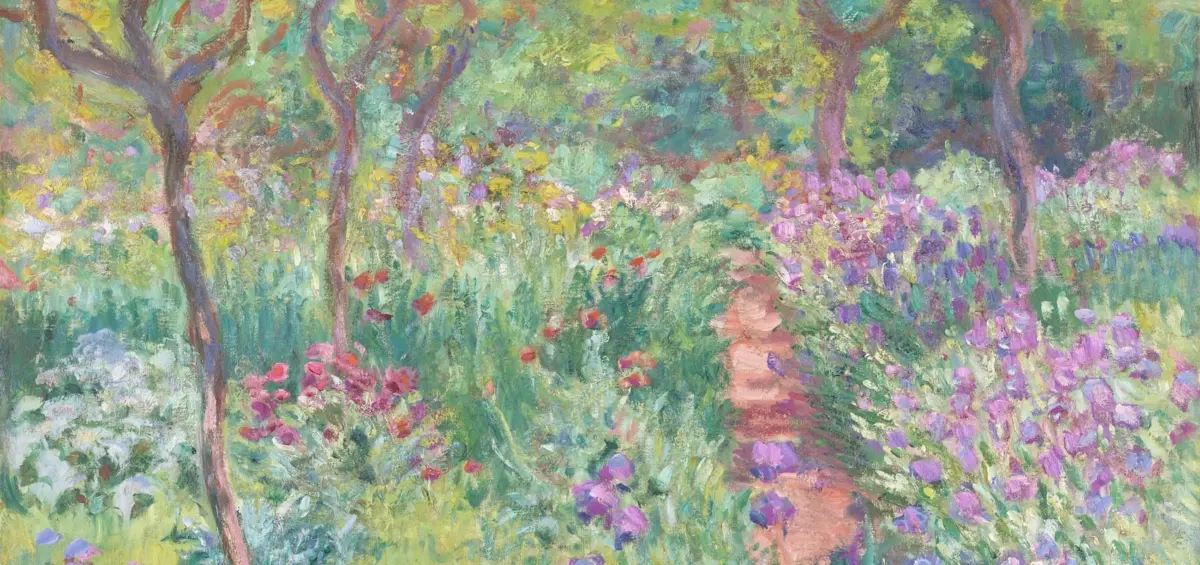
In the contemporary landscape of American poetry, few collections manage to capture the fragile intersection of hope, bodily autonomy, and linguistic topography with the precision found in Might Could by Anna Lena Phillips Bell. Published by Waywiser Books, this 88-page volume ($19) stands as the winner of the prestigious twentieth Anthony Hecht Poetry Prize. Named after a colloquial Southern idiom that encapsulates tentative possibility—denoting a state somewhere between "maybe I could" and "I might be able to"—the collection establishes an overarching thematic framework of nuanced uncertainty and doubtful optimism.
Phillips Bell’s poetic inquiry navigates the arduous terrain of human conception, emotional exhaustion, and the miraculous mechanics of biological creation. Through a meticulous deployment of unconventional syntax, formal innovation—ranging from traditional French fixed forms like the bref double and villanelle to slant-rhymed rondelets—and tactile sonic landscapes, the poet constructs an echo-chamber of thought. The resulting work does not race toward definitive conclusions; rather, it deliberately loops backward and forward, mirroring the circuitous, often halting manner in which human beings process profound emotional and physical struggles. As the literary world recognizes this exceptional volume, Might Could asserts itself not merely as an exercise in formal dexterity, but as a deeply human exploration of what it means to desire against hope, to surrender control to the physical vessel, and ultimately, to find a designated place of rest in an unpredictable world.
Detailed Chronology & Structural Analysis
The Syntax of Becoming: The Title Poem
The thematic and structural DNA of Might Could is immediately apparent in its titular poem, where Phillips Bell employs fractured syntax to induce a rhythmic echoing effect. The opening lines immediately destabilize readerly expectation:
Read Also
What flowers do so well / we struggle to.
By placing the botanical observation in the first line and abruptly shifting the subject to "we" in the second, the poet forces the reader’s cognitive faculties to bounce backward and forward. The struggle, it is gradually revealed through a cascading list of botanical and phonetic signifiers—"stamen, pistil, petal— / white-ruffled, yellow, wilder— / with style and stigma, / anther, answer / new to new to new"—is one of reproduction.
This tension between human limitation and botanical efficiency is further exacerbated when the "we" interrupts the floral sequence. The syntax turns back on itself to locate its verb: "Mostly they do / require, as we do, aid." Only by looking backward can the reader decipher that the human speakers require clinical or external assistance to conceive a child. Once the flowers’ efficient pollination processes are detailed through sharp dental t’s and mellifluous lateral l’s, the couple reflects their lessons back onto themselves: "We gather / ourselves, again." The inclusion of "again" introduces a heavy weariness, transforming a moment of potential triumph into one shadowed by the exhaustion of trying and failing.
The Crown of Bref Doubles: Navigating "Latening"
A central architectural pillar of the collection is "Bref Doubles for a Late Conception," a crown of seven interconnected poems dispersed throughout the volume. Originating from a French fixed-form tradition that pairs elements of fourteen-line structures with interlocking terminal lines—where the final line of one poem launches the next, and the seventh poem’s concluding line loops back to initialize the first—this sequence heightens the sensation of cyclical uncertainty.
In the opening pairs of the crown, the narrative of conception difficulty is mediated through double negatives and temporal paradoxes. Echoing the Southern colloquialism’s latent hesitation—described by one local interlocutor as containing a dash of "no, but I’m too polite to say"—the speaker confronts a reality where forward motion is mentally complicated by past grief. Phrases like "New now that is not the last" and desires to "sail back out / of you" reveal a psyche caught between anticipation and dread. The weariness crystallizes in the interrogative syntax: "would we be / not not juddering but not / so worn, weary?"
Crucially, the first poem of the sequence terminates with the invented or adapted participle "latening." Serving as the precise lexical antonym to a pregnancy’s hoped-for "quickening," "latening" captures the suspended animation of stalled fertility.
As the sequence progresses into its second and third installments, the speaker shifts from evaluating the abstract conditions of the future to addressing her own corporeal form. Attempting to relinquish analytical control over a body that is "Not / a thing to be managed," she adopts a childlike, trusting syntax: "If I say you / handsome vessel."
This tentative trust flowers into the first genuine note of optimism in the third poem:
If I say you safe—
then bell, then ball
of cells, then coracle
of self-and-self-selecting swellat first so small
as to be indiscernible
However, the shadow of doubt is never entirely banished. By the sixth poem, as the pregnancy advances, the couple must actively contend with the terror of regression:
To keep you, more than we know
must be true: more
than the fear we’ll be left
in the before.
The crown culminates in the seventh poem, where "quickened days" heralds a successful conception. The final line of this sequence—which doubles as the foundational opening line of the very first bref double—undergoes a semantic metamorphosis. By returning to the beginning to comprehend the end, the poetry enacts its core philosophy: the future is unspooling and unclear, yet undeniably present.
Supporting Context & Metrics
- Publication Details: Released by Waywiser Books.
- Physical Specifications: 88 pages, paperback edition priced at $19.
- Accolades: Winner of the 20th Anthony Hecht Poetry Prize, a national and international competition honoring exceptional verse collections.
- Form & Prosody: Features a dynamic blend of traditional fixed French forms (bref double, villanelle, rondelet, rondine) juxtaposed with free verse, vernacular Southern idioms, and radical syntactical inversions.
- Thematic Focus: Fertility struggles, bodily autonomy, the emotional mechanics of hope, domestic spaces, and the linguistic exploration of doubt.
Beyond the major sequence, Phillips Bell demonstrates virtuosic control over poetic forms in standalone pieces. In "Undoing," a melodious monometer villanelle, she utilizes consonantal rhyme repetends like "The list / won’t last" to compress emotional gravity into micro-metrical units. Similarly, in her slant-rhymed rondelet—bearing the delightfully exhaustive title "Rondelet of beloved things remembered amid strong aversion to numerous other things, e.g. cruciferous vegetables, the smell of food left on a burner, the smell of scented trash bags or of sausages, the need of going to work"—she manages the domestic grit of everyday life without sacrificing lyricism. Notably, in "Rondine of things seen in a river," the poet incorporates prosaic industrial detritus, weaving "chunks of Styrofoam" seamlessly into a soaring musical line.
The domestic and relational poems further cement the collection’s spatial awareness. In the love poem "List," the polysemic nature of the title word is explored through physical leaning and emotional stabilization:
here I loosen,
list in to who
is who I’d over
ever lean to.
Visual markers throughout the volume, such as the section headings composed of parallel slashes ( /) leaning toward one another like structural supports, visually reinforce this architecture of mutual reliance.
Official Statements & Critical Reception
The awarding of the Anthony Hecht Poetry Prize to Might Could places Anna Lena Phillips Bell within a distinguished lineage of contemporary American poets recognized for formal rigor and emotional depth. While institutional statements from the Hecht Prize committee emphasize the collection’s "mastery of traditional forms and contemporary idioms," literary critics have been particularly vocal regarding the collection’s unique tonal register.
In early reviews and academic commentary, critics have highlighted how Phillips Bell avoids the sentimental pitfalls often associated with narratives of infertility and eventual conception. By anchoring her poetic investigations in the linguistic idiosyncrasies of the American South—specifically the linguistic hedging inherent in "might could"—the poet refuses simple binaries of success and failure, joy and despair.
"Phillips Bell has engineered a poetic language that honors hesitation," notes one contemporary reviewer. "She recognizes that human vulnerability cannot be resolved through neat resolutions or uncomplicated optimism. The poems ask us to inhabit the space of the conditional tense—to live in the permanent, generative anxiety of what might be."
Furthermore, the integration of classical European forms with vernacular phrasing has been praised as a triumph of stylistic synthesis. Rather than treating French forms as museum pieces, Phillips Bell deploys them as stress-test chambers for modern domestic trauma and biological uncertainty.
Future Outlook & Literary Significance
As Might Could circulates through academic seminars, independent bookstores, and poetry workshops, its long-term trajectory in contemporary American letters appears remarkably secure. The collection arrives at a cultural moment wherein narratives surrounding reproductive health, bodily surveillance, and the emotional toll of assisted fertility are receiving unprecedented public scrutiny. By addressing these themes through the lens of high art and rigorous prosody, Phillips Bell elevates personal narrative into universal myth.
The closing poem of the volume, "Place Card," offers a fitting paradigm for the book’s enduring legacy. Beginning as a literal description of a table setting, it expands into an existential meditation on belonging and existential relief:
find
relief, near infinite—not everywhere is your place,
not every purpose yours.
Arrive, and be at rest:
not everyplace, just this.
In securing the Anthony Hecht Poetry Prize and carving out a distinct sonic and emotional space with Waywiser Books, Might Could has definitively found its place. For readers navigating the ambiguities of modern existence, Phillips Bell’s collection provides a rare and necessary permission: the grace to pause, to look backward in order to move forward, and to rest within the quiet, stubborn possibility of the things that might could be.





Comments
Facebook App ID not configured. Please add it in the Customizer.