
Executive Overview
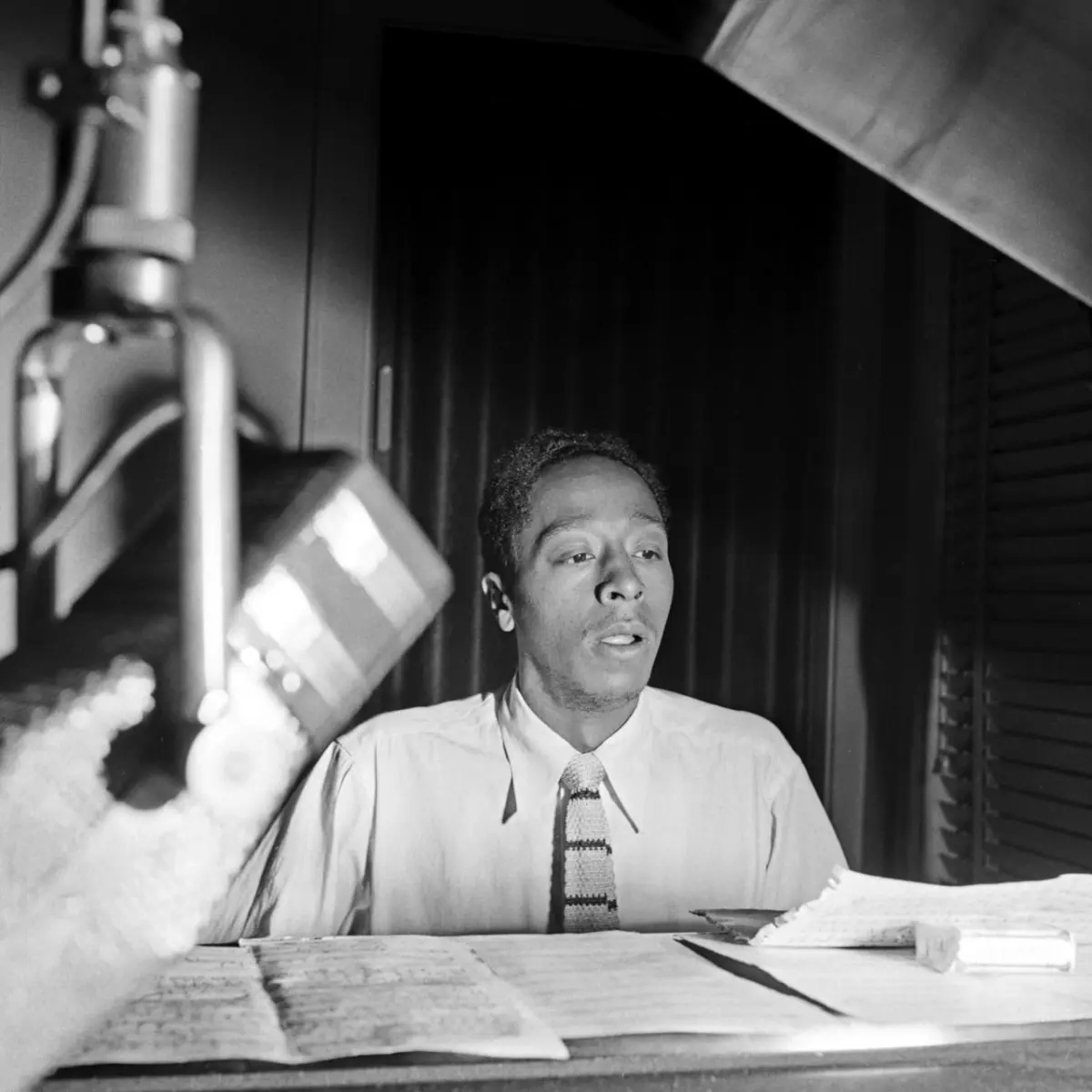
In the winter of 1961, the pages of Down Beat magazine published an interview that sent a quiet shockwave through the American jazz community. The subject was St. Elmo Sylvester Hope, a pianist, composer, and modernist pioneer whose brilliant phrasing and idiosyncratic chordal structures had earned him reverence among the titans of bebop. Yet, sitting in Los Angeles three years into an unofficial exile from New York City, Hope was bitter. He tore into the West Coast music scene with unflinching candor, dismissing its players as "jivin’" and driven by envy.
To the casual reader, Hope’s vitriol seemed like the typical sour grapes of an overlooked artist struggling to find commercial footing. But the reality of Elmo Hope’s life was far more complex and harrowing. Beneath his gentle, professorial exterior—a man who occasionally quizzed his friends on quadratic equations just for amusement—lay a survivor of systemic state violence, predatory drug enforcement, and the devastating institutional suppression of mid-century American culture.
Hope’s story is a microcosm of the mid-century jazz tragedy: a crucible where prodigious genius collided directly with racial profiling, aggressive policing, the penal system’s carceral meat grinder, and the totalizing policing of Black cultural spaces. From surviving a point-blank police shooting in Harlem as a teenager to serving hard time on Rikers Island and Hart Island, Hope’s trajectory exposes how law enforcement and penal policies systematically dismantled the foundational ecosystem of modern jazz.
Read Also
Detailed Chronology
1. The Harlem Crucible and the 1940 Shooting
On November 24, 1940, a 17-year-old Elmo Hope stepped off a Manhattan subway and headed toward his family’s Harlem apartment. Raised by immigrant parents, Simeon and Gertrude, Elmo was the eldest of nine children and a recognized prodigy. While his mother envisioned a respectable, conventional future for him as a classical orchestra player or a university professor, Elmo had dropped out of school to chase the electrifying, untamed promise of jazz.
As he walked along Eighth Avenue, a warning tore through the night: "The cops are coming, you better run!"
Panicked in a neighborhood already blanketed by intense police surveillance and frequent brutality, Elmo fled. Officers Brady and Ferraro pursued the slight, 125-pound youth. Ducking into a building at 2099 Eighth Avenue, Elmo found himself cornered when Officer Brady drew his revolver. As Elmo turned, allegedly reaching into his pocket, Brady fired. The bullet struck Elmo in the back.
Transported to Sydenham Hospital, Hope narrowly avoided permanent paralysis. While he recovered from emergency surgery, the state charged him with assault, attempted robbery, and violating the Sullivan Act—despite no weapon ever being recovered from his person.
The New York Amsterdam News seized upon the incident, contextualizing it within a terrifying wave of 1940 police violence in Harlem. Reports detailed a succession of unjustified shootings, including the killing of Black officer John Holt by his own radio-car colleagues, the fatal shooting of 16-year-old Mario Caneckil, and numerous other victims shot in the back while running from police. These cumulative aggressions directly fueled the powder keg that exploded in the 1935 Harlem riot, which a mayoral commission later blamed squarely on relentless police brutality and the "insecurity of the individual… against police aggression."
Despite the fabricated police narratives in court—shifting from claims that Elmo had targeted "three white men" to vague accounts of street fights—Judge Harry Andrews ultimately dismissed the case when the district attorney failed to produce victims, accomplices, or a weapon.
2. The Apprenticeship and the Taxi Dance Halls
Following the dismissal of the charges, Hope plunged deeper into his musical education. In the early 1940s, formal conservatories did not teach jazz; the music was learned through an arduous, informal apprenticeship system. Aspiring musicians practiced relentlessly in the shadows, hustling for gigs in gritty dives, rent parties, and gin mills.
During this period, Hope formed a lifelong, symbiotic bond with Earl "Bud" Powell. The two adolescents, along with Thelonious Monk, forged an intimate brotherhood. They communicated through a private sign language—a flick of the finger, a jutted chin—and spent days roaming New York from apartment to apartment, hunting for pianos to test new harmonic phrases and push one another to artistic exhaustion.
While Powell found early, precocious notoriety, Hope found himself scraping by in New York’s taxi dance halls. Working in establishments where patrons paid a dime a ticket to dance for the length of a single song, Hope sat at the piano bench, playing standard tunes through their first chorus before subverting the underlying harmonies for his own intellectual satisfaction—a quiet rebellion against the monotony of commercial entertainment.
3. "Carvin’ the Rock": Rikers Island and Hart Island
The systemic trap closing around Black jazz musicians in New York inevitably ensnared Hope. Arrests for narcotics possession—fueled by aggressive, punitive drug laws and the NYPD’s unchecked administrative power—became a routine occupational hazard for the architects of modern jazz.
In October 1951, saxophonist Sonny Rollins was arrested and sent to Rikers Island. Soon after, Hope found himself imprisoned on various probation violations and drug-related offenses, spending time both on Rikers ("The Rock") and Hart Island, the city’s grim potter’s field.
Yet, even within the brutal carceral ecosystem, creativity persisted. Assigned to the prison band—a sanctuary organized by prison chaplains that housed a staggering roster of jazz talent, including Jackie McLean, Ike Quebec, and Roy Porter—Hope and Rollins collaborated. Together, they co-authored enduring compositions like the swaggering "Bellarosa" (written for Hope’s partner Rose Mary) and "Carvin’ the Rock," a high-tempo nod to Charlie Parker and their shared confinement.
4. The Blue Note Era and Second Imprisonment
By the mid-1950s, Hope experienced a brief, brilliant commercial resurgence. His 1954 Blue Note recordings and subsequent Prestige releases—including Meditations, Hope Meets Foster, and Informal Jazz (featuring John Coltrane and Hank Mobley)—drew critical acclaim. Ralph Gleason of the San Francisco Chronicle and critic Ira Gitler hailed him as a distinct, powerful voice expanding upon the foundations laid by Bud Powell and Thelonious Monk.
However, studio praise did not translate into financial stability or legal protection. Paid a pittance by record labels and barred from working standard venues due to the NYPD’s arbitrary cabaret card system, Hope lived on the run.
On October 27, 1956, his luck ran out. Stopped by an officer near 108th Street and Broadway, Hope was found carrying four glassine envelopes of heroin. Brought before Judge Capozzoli, his defense attorney highlighted his contributions to American music, pleading for medical treatment rather than incarceration. The judge expressed bitter frustration with the state’s total lack of infrastructure for treating addiction as a health crisis:
"There is a way to cure a man like this… to think of all the money we spend for many other things and we never have the good sense to spend some real money to cure these men who are really sick, rather than criminals. However, I have to work with the tools that are given to me… Probation is revoked and the defendant is sentenced to six months in the workhouse."
Hope served this sentence on Hart Island, surrounded by mass graves and the chilling reality of a penal system that treated human beings as disposable trash.
5. Exile to the West Coast
Upon his release in 1957, alienated from his family and facing relentless scrutiny in a city where the NYPD and federal narcotics agents viewed jazz musicians as primary targets, Hope chose self-preservation. Accompanied by drummer Philly Joe Jones, he toured west with Chet Baker, ultimately settling in Los Angeles in July 1957.
It was this chain of historical trauma—the Harlem shooting, the systemic harassment, the prison sentences, the loss of his livelihood, and the cultural devastation of his community—that framed his bitter 1961 interview with Down Beat. When Hope criticized the West Coast scene, he was speaking as a man displaced from his spiritual home by forces far more destructive than mere geographical distance.
Supporting Context & Metrics
The policing of mid-century jazz was not merely a series of isolated tragedies; it was an institutional campaign that fundamentally altered the trajectory of American art.
- The Cabaret Card System: Instituted in New York City in 1926 and overseen by the NYPD, the cabaret card required any musician performing in a venue that served alcohol to pass a police background check. This gave the police department absolute discretionary power to strip artists of their livelihoods based on past arrests, particularly drug-related offenses.
- The Scale of Criminalization: The late 1950s saw a massive spike in narcotics-related arrests in New York City. Drug arrests surged from approximately 4,000 annually in the early 1950s to nearly 5,000 by 1956. Jazz icons who fell victim to the cabaret card revocation and drug enforcement dragnet included John Coltrane, Jackie McLean, Thelonious Monk, Bud Powell, Miles Davis, Sonny Rollins, Billie Holiday, and Art Blakey.
- Economic Exploitation: Independent record labels capitalized on the precarious economic standing of brilliant musicians. Hope received a meager flat fee of roughly $300 per album for his work with Prestige Records, forcing him to rely on low-wage menial labor—such as washing dishes in Massachusetts hotels—to survive between recording dates.
Official Statements & Historical Perspectives
The historical record reflects a deep awareness among cultural participants of the destructive nature of state policies toward jazz artists:
- Judge Capozzoli (1956 sentencing hearing): Lamenting the lack of state-sponsored medical rehabilitation for addicted musicians, the judge noted the systemic failure of the carceral state: "To think of all the money we spend for many other things and we never have the good sense to spend some real money to cure these men who are really sick, rather than criminals."
- Jackie McLean on the Jazz Community: Reflecting on the pervasive nature of police targeting and drug criminalization during the era, McLean remarked: "Everybody. Everybody. There were very few cats that didn’t get caught up in that thing… You could practically name anybody from that period."
- John Tynan (Down Beat, January 1961): Describing Hope’s profound disillusionment in his final major interview, Tynan observed that Hope’s caustic critique of the music industry stemmed not from simple malice, but from deep-seated "disgust" born of years of unappreciated generosity and institutional frustration.
Future Outlook
The legacy of Elmo Hope—who passed away in obscurity in 1967 at the age of 43—serves as both a testament to unyielding artistic brilliance and a sobering indictment of systemic injustice. For decades, jazz history sanitized these narratives, focusing exclusively on the notes played on the bandstand while ignoring the brutal socioeconomic and carceral realities that shortened the lives of its primary creators.
Today, as contemporary musicologists, historians, and criminal justice reformers re-examine the mid-century American landscape, figures like Elmo Hope are finally receiving their due. His compositions, preserved on Blue Note and Prestige, continue to challenge and inspire contemporary pianists. More importantly, unearthing the dark history of police surveillance, the cabaret card system, and mass incarceration in the jazz world ensures that the true cost of America’s classical art form is never again forgotten.




Comments
Facebook App ID not configured. Please add it in the Customizer.