
Executive Overview
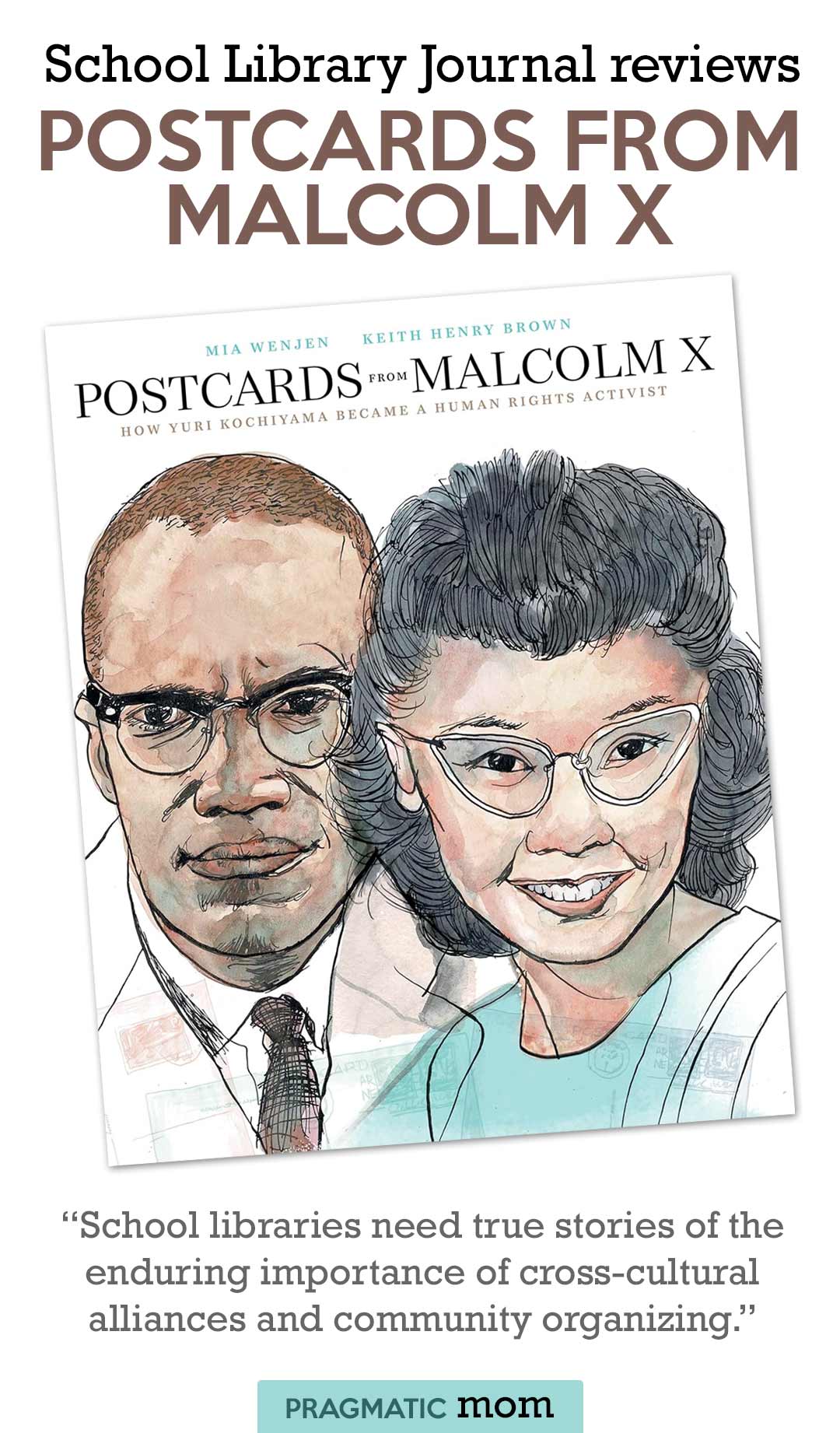
In the upcoming July 2026 issue of the School Library Journal (SLJ), Mia Wenjen’s acclaimed picture book biography, Postcards from Malcolm X: How Yuri Kochiyama Became a Civil Rights Activist, illustrated by Keith Henry Brown, has earned a stellar, highly recommended review. Written for middle-grade readers in grades three through seven, the book bridges generations by introducing young audiences to the powerful, transformative friendship between Japanese American activist Yuri Kochiyama and African American civil rights icon Malcolm X.
Reviewer Jessica Fenster-Sparber underscores the absolute necessity of the volume for modern school collections, writing: “School libraries need true stories of the enduring importance of cross-cultural alliances and community organizing. Recommended for middle grade nonfiction collections.”
This authoritative appraisal arrives at a crucial juncture in educational publishing, where books detailing intersectional solidarity, historical nuance, and grassroots activism are facing unprecedented scrutiny and demand. By examining the dynamic visual artistry of Keith Henry Brown, the rigorous historical scaffolding provided by Mia Wenjen, and the broader socio-political implications of teaching cross-cultural solidarity in contemporary middle schools, this article explores why Postcards from Malcolm X is rapidly becoming a cornerstone text for modern youth nonfiction collections.
Read Also
Detailed Chronology: The Making and Reception of a Groundbreaking Biography
The journey of Postcards from Malcolm X from initial conceptualization to its current critical acclaim in the School Library Journal reflects a meticulous dedication to historical accuracy and young adult accessibility.

The Genesis of a Remarkable Friendship
The narrative core of Wenjen’s book tracks the improbable yet profoundly impactful relationship between Yuri Kochiyama—a Japanese American woman whose family was profoundly affected by the World War II forced incarceration of Japanese Americans—and Malcolm X. Moving to Harlem in the 1960s, Kochiyama immersed herself in the civil rights movement, where her path converged with the prominent leader of the Nation of Islam and, later, the Organization of Afro-American Unity.
Through engaging text and accessible framing, Wenjen’s book highlights their meaningful correspondence, shared political ideals, and deep-seated mutual respect. Crucially, the narrative recounts the fateful day of February 21, 1965, addressing Malcolm X’s assassination at the Audubon Ballroom. Kochiyama was present in the room and famously cradled his head in her final moments. The book handles this tragic historical milestone with profound sensitivity, omitting graphic imagery while maintaining emotional authenticity suitable for upper-elementary and middle-grade readers.

Critical Praise and Scholarly Endorsements
The July 2026 review in School Library Journal highlights several key structural and artistic merits that elevate the book above standard biographical fare:
- Visual Excellence: The book features layered mixed-media compositions by Keith Henry Brown utilizing ink, watercolor, gouache, and pastels. Brown employs a sophisticated, restrained color palette dominated by earthy browns, tans, robust reds, and muted blues. This artistic choice anchors the narrative in historical gravity while visually engaging young readers.
- Informative Back Matter: Recognizing the needs of educators and librarians, the volume includes comprehensive back matter—a detailed timeline, paragraph-long historical biographies of both icons, a glossary, and illuminating notes from the author, illustrator, and editor.
- Accessibility vs. Scope: While Fenster-Sparber notes that certain complex historical nuances are intentionally streamlined for brevity, she argues that this slight condensation is vastly outweighed by the book’s immense contribution to the landscape of middle-grade biographies.
Supporting Context & Metrics: The Mechanics of Modern Nonfiction Publishing
To truly understand the impact of Postcards from Malcolm X, one must analyze the shifting landscape of children’s literature, specifically the surging demand for diverse historical narratives that emphasize community organizing and cross-cultural coalition building.

The Rise of Intersectional Nonfiction
For decades, children’s literature biographies tended to operate in cultural silos, focusing predominantly on singular heroic figures within isolated historical movements. However, contemporary educational standards and library acquisition trends heavily favor stories that illuminate the interconnected nature of social justice movements.
- The Power of Alliances: Yuri Kochiyama’s life is a masterclass in coalition building. As an Asian American woman who dedicated her life to fighting alongside Black liberation movements, her biography provides a vital lens through which modern students can understand solidarity.
- Reading Demographics (Grades 3–7): Targeted precisely at readers aged 8 to 13, the book hits a developmental sweet spot. At this cognitive stage, children begin to develop abstract reasoning skills, making them fully capable of grasping systemic injustice, international human rights, and the mechanics of civil disobedience.
Artistic Composition and Visual Literacy
Keith Henry Brown’s artwork plays an indispensable role in the book’s success. Visual literacy in middle-grade nonfiction is no longer treated as a mere decorative afterthought; illustrations must actively interpret historical texts.

| Artistic Element | Medium Used | Impact on Young Readers |
|---|---|---|
| Texture & Layering | Ink, Watercolor, Gouache, Pastels | Creates tactile, dimensional historical scenes that feel immediate rather than distant. |
| Palette Control | Browns, Tans, Reds, Blues | Evokes the mood of mid-20th-century America while directing the reader’s emotional focus. |
| Pacing | Cinematic framing of key moments | Guides the reader effortlessly through moments of high tension, such as civil rights rallies and historical meetings. |
Official Statements & Critical Analysis
The critical response from reviewers, paired with insights from the creative team, underscores the profound educational philosophy driving Postcards from Malcolm X.
The Reviewer’s Verdict
Jessica Fenster-Sparber’s official verdict in the School Library Journal serves as an authoritative endorsement for collection development librarians across North America:

"School libraries need true stories of the enduring importance of cross-cultural alliances and community organizing. Recommended for middle grade nonfiction collections."
This statement speaks directly to the pedagogical challenges faced by modern educators. In an era where civic education is more critical than ever, books that provide blueprints for peaceful community organizing, cross-cultural empathy, and historical resilience are prioritized on school acquisition lists.
Mia Wenjen’s Broader Literary Mission
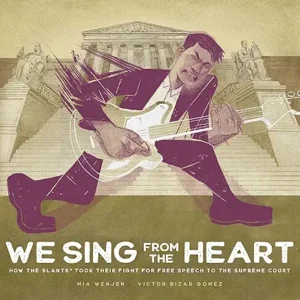
As an accomplished author deeply invested in diverse children’s literature, Mia Wenjen’s broader bibliography—including titles such as Barbed Field, Fortune Cookies for Everyone!, The Traveling Taco, and We Sing from the Heart—consistently champions marginalized histories, hidden cultural narratives, and the complex threads that bind diverse communities together. Postcards from Malcolm X is a natural extension of this literary mission, offering young readers an intimate window into a monumental chapter of American history that textbooks often gloss over.
Future Outlook: The Impact on Curricula and Library Collections
As Postcards from Malcolm X officially launches into the educational market with its glowing School Library Journal recommendation, its trajectory points toward widespread adoption in school and public library systems.
Integration into Middle-Grade Curricula
Middle-grade social studies and English Language Arts (ELA) classrooms are increasingly turning to graphic novels, illustrated biographies, and narrative nonfiction to foster empathy and critical thinking. Because the book includes robust back matter—such as glossaries, timelines, and creator notes—teachers can easily build interdisciplinary lesson plans around it. These resources enable educators to pair the book with primary source documents, civil rights history units, and Asian American and African American history month programming.
Inspiring the Next Generation of Activists
Ultimately, the enduring value of Postcards from Malcolm X lies in its ability to humanize history. By showing how an ordinary individual, shaped by personal adversity and a deep commitment to justice, could form a profound intellectual and personal bond with one of history’s most prominent leaders, the book sends an empowering message to young readers. It demonstrates that history is not merely a collection of dates and names, but a living, breathing continuum shaped by ordinary people choosing to stand together across cultural divides.
For educators, parents, and librarians looking to expand their nonfiction shelves with stories of courage, intersectionality, and historical truth, "Postcards from Malcolm X: How Yuri Kochiyama Became a Civil Rights Activist" stands out as an essential, highly recommended acquisition.

Comments
Facebook App ID not configured. Please add it in the Customizer.