
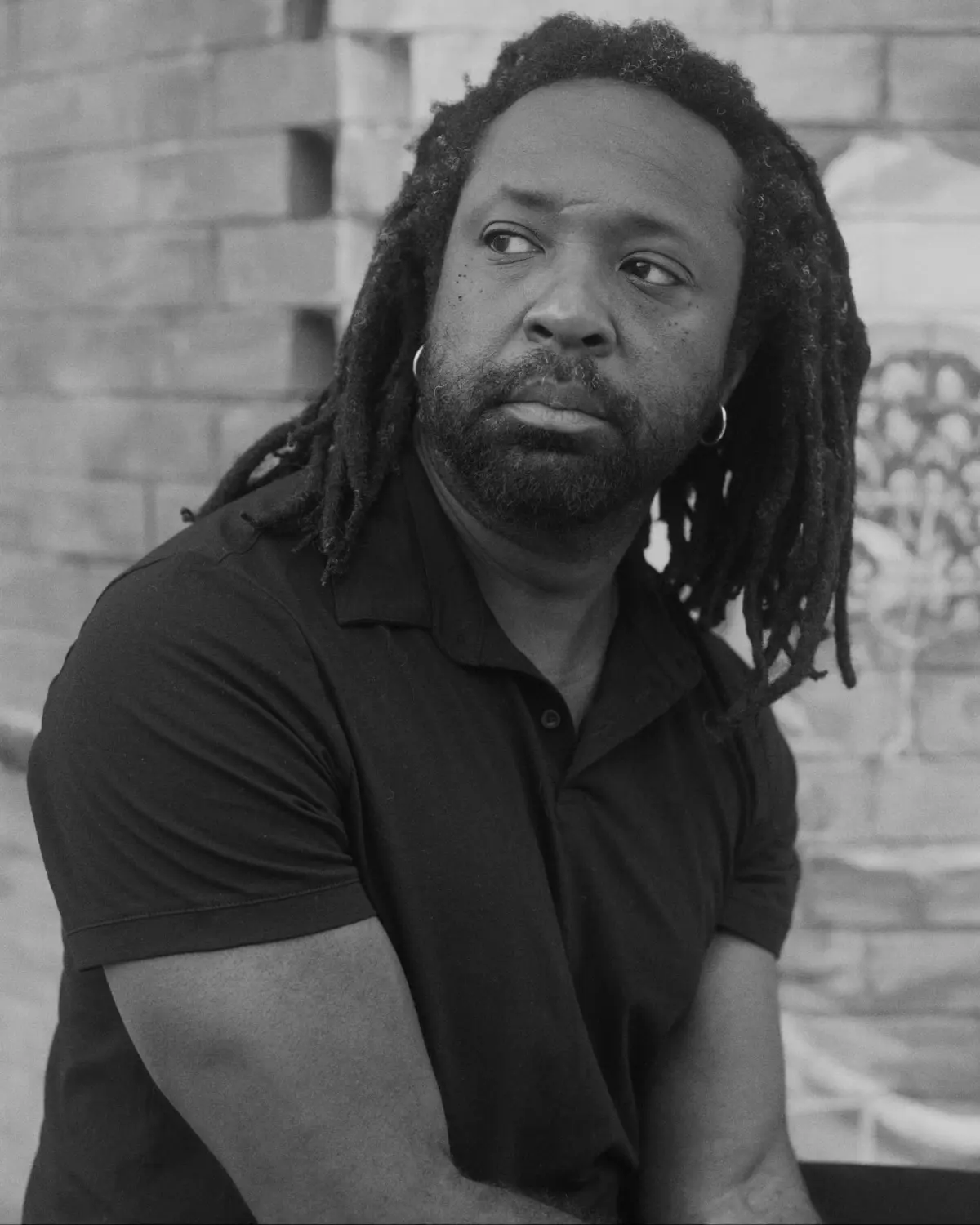
1. Executive Overview: A Canonical Shift in Marlon James’s Oeuvre
Marlon James has long established himself as a master of sprawling, maximalist fiction. From the Booker Prize–winning postcolonial tapestry of A Brief History of Seven Killings (2014) to the mythic, blood-soaked high fantasy of his Dark Star trilogy (Black Leopard, Red Wolf and Moon Witch, Spider King), James’s work operates at a high-intensity spiritual frequency. His novels balance kinetic bravado with profound bereavement, attempting to capture entire worlds—their violence, politics, oral histories, and interior psychological landscapes—between two covers.
Yet, across James’s bibliography, this narrative abundance routinely orbits a central void. In A Brief History of Seven Killings, a vast network of CIA operatives, gang leaders, and journalists spins around "The Singer"—a fictionalized Bob Marley—who flees Kingston following an assassination attempt, leaving a vacuum at the heart of the novel. In his fantasy trilogy, an intricate quest across a reimagined ancient Africa is prefaced by a line that immediately threatens to negate the narrative journey: "The child is dead. There is nothing left to know."
With his latest novel, The Disappearers (Riverhead Books), James turns his forensic focus toward the intersection of queer desire, systemic bigotry, and personal trauma in 1980s Jamaica. Moving away from the grand geopolitical scope of Brief History and the mythic scale of his fantasy works, James delivers an intimate, playlike tragedy. The novel follows a group of gay Jamaican men attempting to mount a theatrical production, only to be shattered by a brutal homophobic attack.
Read Also
By analyzing how trauma compresses human existence into progressively smaller spaces, The Disappearers interrogates a central question: Does extreme loss nullify the life surrounding it, or can life and devastating loss coexist? In doing so, James elevates gay experience—previously positioned on the periphery of his violent underworlds—to the main stage, delivering an uncompromising examination of how marginalized individuals navigate, survive, or succumb to societal erasure.
       MARLON JAMES'S LITERARY TRAJECTORY: THEMETIC EVOLUTION

  +----------------------------------------------------------------+
  |  A Brief History of Seven Killings (2014)                      |
  |  - Focus: Geopolitics, Cold War violence, Gangland Kingston   |
  |  - Central Absence: The Singer (Bob Marley figure)             |
  +----------------------------------------------------------------+
                                  |
                                  v
  +----------------------------------------------------------------+
  |  Dark Star Trilogy (2019–Present)                              |
  |  - Focus: African Mythology, Epic World-Building, Pageantry    |
  |  - Central Absence: The Missing Child / Voided Quest           |
  +----------------------------------------------------------------+
                                  |
                                  v
  +----------------------------------------------------------------+
  |  The Disappearers (New Release)                                |
  |  - Focus: Queer Identity, Post-Trauma, 1980s Jamaica           |
  |  - Central Absence: The Vanishing of Victims / Identity Loss   |
  +----------------------------------------------------------------+
2. Structural Architecture & Chronology: From Audition to Aftermath
The Disappearers is built upon a five-act dramatic structure. Each act functions almost as a distinct monologue or psychological register, charting the trajectory of its characters from hopeful artistic collaboration to horrific disintegration and its long-tail aftermath.
   [ACT I: THE ASSEMBLY] ---> [ACT II: THE CATALYST] ---> [ACTS III-V: THE AFTERMATH]
   - Kingston, 1988           - Mob Attack           - Jordan: Dark Revenge Plot
   - Casting Herbert's Play   - Extreme Violence     - Havelock: Quiet Isolation
   - Eddy's Journals          - Victim Erasure       - Eddy: Privileged Guilt
Phase 1: The Gathering and the Play (1988)
The novel opens in Kingston in 1988. Act I is structured around the journal dispatches of nineteen-year-old Eddy Porteous, an earnest, pop-culture-obsessed, light-skinned young man from uptown Kingston. Eddy answers a coded flyer for a local theater production overseen by Titus Havelock, an Oxford-educated director.
Havelock has selected Fortune and Men’s Eyes, the 1967 Canadian play by John Herbert detailing the oppressive dynamics of incarcerated men. The cast assembled represents a cross-section of 1980s Jamaican queer life:
- Titus Havelock: The refined, intellectual director seeking artistic truth.
- Eddy Porteous: The light-skinned, pop-fluent narrator who acts as the reader’s entry point.
- Jordan Brown: A cynical, dimpled college dropout with a passion for comic books and sharp intellectual defenses.
- Matt Chin: A reserved office worker of mixed Afro-Chinese heritage who becomes an enigmatic object of desire.
- Orrin: A flamboyant "top queen" with blown-out hair, residing in working-class shipping-container housing (a character blueprint reminiscent of James’s HBO crime series Get Millie Black).
Act I serves as an idyll of burgeoning connection. The rehearsals allow these men to explore vulnerability within a hostile environment dominated by the global AIDS crisis and severe local homophobia.
Phase 2: The Eruptive Incident
The optimism of Act I comes to a sudden end in Act II. While Eddy is absent, a local mob ambushes the cast during rehearsal. James shifts the narrative perspective among the attackers, deploying a stream-of-consciousness style that highlights the mob’s collective hysteria and bigotry.
The attack is executed with terrifying brutality: one actor is killed outright, while others suffer horrific mutilations. James depicts the assault not merely as physical violence, but as a deliberate attempt to erase the victims’ humanity.
Phase 3: The Fractured Aftermath and Branching Trajectories
The remaining acts (Acts III through V) explore the psychological and physical fallout of the attack:
- Jordan’s Revenge Plot: Unable to resume normal life, Jordan embarks on a dark mission of retribution. Spying one of his attackers—a closeted man named Gareth—at a clandestine cruising site, Jordan insinuates himself into Gareth’s life. Their relationship devolves into a complex cycle of destructive intimate encounters, blurring the lines between victim and tormentor.
- Havelock’s Withdrawal: Retracting entirely from the theater and public life, Havelock moves to an isolated hillside cottage miles from the nearest neighbor. He adopts an austere existence defined by silence, literature, and quiet resignation.
- Eddy’s Metaphysical Exemption: Sparing physical harm due to his absence during the attack, Eddy navigates a unique torment: the guilt of his light-skinned privilege. His racial and social status grants him a pass out of the tragedy, isolating him from the shared trauma of his castmates.
3. Supporting Context & Structural Themes
+-----------------------------------------------------------------------------------+
|                        THE DUAL METAPHORS OF ERASURE                              |
+-----------------------------------------------------------------------------------+
|   THE PRISON (Herbert's Play)            |   THE STAGE / THE PLAY                     |
|   - External confinement & violence      |   - Performance of artificial identities   |
|   - Pressurized internal dynamics        |   - Concealment of authentic self          |
|   - Threat: Destruction by the state/mob |   - Threat: Total loss of true identity    |
+-----------------------------------------------------------------------------------+
The Dialectic of Plenitude and Absence
A key signature of Marlon James’s work is the tension between narrative abundance and central absence. In The Disappearers, this is expressed through a density of detail—pop-culture references to Bruce Springsteen, Prince, Bret Easton Ellis, and The Cosby Show—contrasted against the gradual vanishing of its cast.

James illustrates how extreme homophobia compresses a human life into progressively smaller spaces until the person disappears entirely. This dynamic is reinforced by historical context: the novel is set at the peak of the 1980s AIDS epidemic, an era when public terror and institutional neglect actively compounded the erasure of queer lives.
Institutional Confinement vs. Theatrical Masking
The novel utilizes two central metaphors to frame the Jamaican gay experience:
- The Prison: Represented by the play-within-a-play (Fortune and Men’s Eyes), the prison signifies the external threat of violence and societal confinement. It creates an environment where marginalized individuals are trapped together, forcing aggression and vulnerability into volatile proximity.
- The Play: The stage represents the necessity of performance. To survive in a hostile society, the characters must adopt roles that mask their authentic selves. The tragedy of the novel occurs when the violent assault robs them of even this artistic sanctuary, forcing them into a single identity: that of the victim.
The Spectrum of Jamaican Masculinity and Queer Desire
James offers a nuanced exploration of Jamaican masculinity, contrasting toxic swagger with delicate interiority. Rather than portraying queer desire as rooted in self-contempt, The Disappearers depicts it as vibrant, sensory, and beautiful.
Through characters like Jordan, James captures the visceral vitality of gay love, contrasting it sharply with the rigid, violent expectations of traditional hyper-masculinity. Violence breaks into this world not because the characters reject their desire, but because society cannot tolerate their expression of it.
4. Textual Evidence, Stylistic Devices, and Critical Debates
+-----------------------------------------------------------------------------------+
|                           KEY TEXTUAL AND THEMATIC DATA                           |
+-----------------------------------------------------------------------------------+
| Setting                 | Kingston, Jamaica (1988)                                |
| Narrative Structure     | 5-Act Polyphonic Play Architecture                      |
| Primary Catalyst        | Mob attack on a production of "Fortune and Men's Eyes" |
| Core Themes             | Trauma, Erasure, Queer Desire, Racial Privilege         |
| Stylistic Signature     | High-velocity dialogue, contrast of shock and lyricism  |
+-----------------------------------------------------------------------------------+
Linguistic Flow and Tonal Shifts
James’s prose shifts seamlessly between dense internal monologue and lyricism. He frequently contrasts dark themes with vivid, unexpected imagery.
For instance, a desolate character contemplating suicide on a balcony hears a "little blue amoeba of pool" whispering to him from below. In another scene, a character dying of AIDS quotes Coleridge’s The Rime of the Ancient Mariner: "Water, water, every where, / Nor any drop to drink," emphasizing the painful paradox of suffering in the midst of abundance.
The Problem of Violence: Catharsis vs. Exploitation
James’s explicit depictions of violence have occasionally drawn criticism, with commentators raising questions about shock value versus emotional intent. The Disappearers features stark imagery during the rehearsal attack:
- An assailant quips about making a "charm bracelet out of all the teeth scattered on the floor."
- A victim’s maimed face is described as having "two small wet holes that seem big like outer space; two bloody black holes where him eyes supposed to be."
However, this graphic detail serves a clear narrative purpose. James uses extreme violence to demonstrate how trauma deforms individuality. As Eddy acutely observes to Matt later in the novel: "I mean it changed all of you into the same person." Violence acts as an erasing force that flattens complex human beings into a single, shared identity of trauma.
Interlocking Voices and Identity Blurring
As the novel progresses, James employs a deliberate technique of identity blurring. The characters begin to share similar background details, phrasing, and sensory observations:
               SHARED PHRASING / IDENTICAL OBSERVATIONS
  +-----------------------------------------------------------------+
  | Matt Chin's Observation:                                        |
  | "...a runner whose living bulge bounces off one thigh then     |
  | the other."                                                     |
  +-----------------------------------------------------------------+
                                  =
  +-----------------------------------------------------------------+
  | Jordan Brown's Monologue:                                       |
  | "You ever watch a boy run, how everything flops on right thigh, |
  | then left?"                                                     |
  +-----------------------------------------------------------------+
This linguistic overlap emphasizes their shared isolation. Deprived of a safe space in society, their individual identities merge into a collective subculture bound by memory, secrecy, and loss.
5. Future Outlook: The Evolution of Postcolonial Queer Literature
The Disappearers represents a significant development in Marlon James’s literary trajectory and postcolonial fiction more broadly. By bringing queer identity from the background to the center of his work, James challenges traditional Caribbean literary conventions that have historically marginalized gay narratives.
       POSTCOLONIAL LITERATURE: EVOLVING NARRATIVE FOCUS

  +----------------------------------------------------------------+
  | TRADITIONAL CANON                                              |
  | - Focus: Anti-colonial struggles, national identity            |
  | - Margin: Queer experiences minimized or excluded              |
  +----------------------------------------------------------------+
                                  |
                                  v
  +----------------------------------------------------------------+
  | JAMES'S REFORMATION (*The Disappearers*)                       |
  | - Focus: Intersection of postcolonial state and queer identity |
  | - Approach: Refusal of simple tragedy; assertion of joy      |
  +----------------------------------------------------------------+
Key Contributions to the Genre:
- Refusal of Simple Victimhood: While the novel depicts horrific violence, it rejects the idea that marginalized lives are defined entirely by suffering. Characters retain their agency, humor, and capacity for passion.
- Deconstruction of the Revenge Narrative: Through Jordan’s destructive relationship with Gareth, James subverts classic revenge tropes, showing that retribution often deepens trauma rather than resolving it.
- Interrogation of Privilege: By contrasting Eddy’s light-skinned privilege with the fates of his darker-skinned castmates, the novel highlights how race and class intersect with sexuality in the Postcolonial Caribbean.
Ultimately, The Disappearers achieves a difficult balance: it honors the reality of systemic violence without reducing its characters’ lives to mere tragedy. Through structural precision and rich prose, Marlon James demonstrates that even when society forces individuals into hiding, their stories, desires, and humanity endure.





Comments
Facebook App ID not configured. Please add it in the Customizer.