
Executive Overview
In an era defined by rapid shifts in publishing models, supply chain dynamics, and digital distribution, maintaining a reliable roadmap for upcoming literary releases is essential for publishers, booksellers, librarians, and readers alike. Locus magazine—long regarded as the definitive journal of the science fiction, fantasy, and horror (SFFH) fields—has officially updated its widely consulted "Selected Books by Author" index on its Forthcoming Books portal.
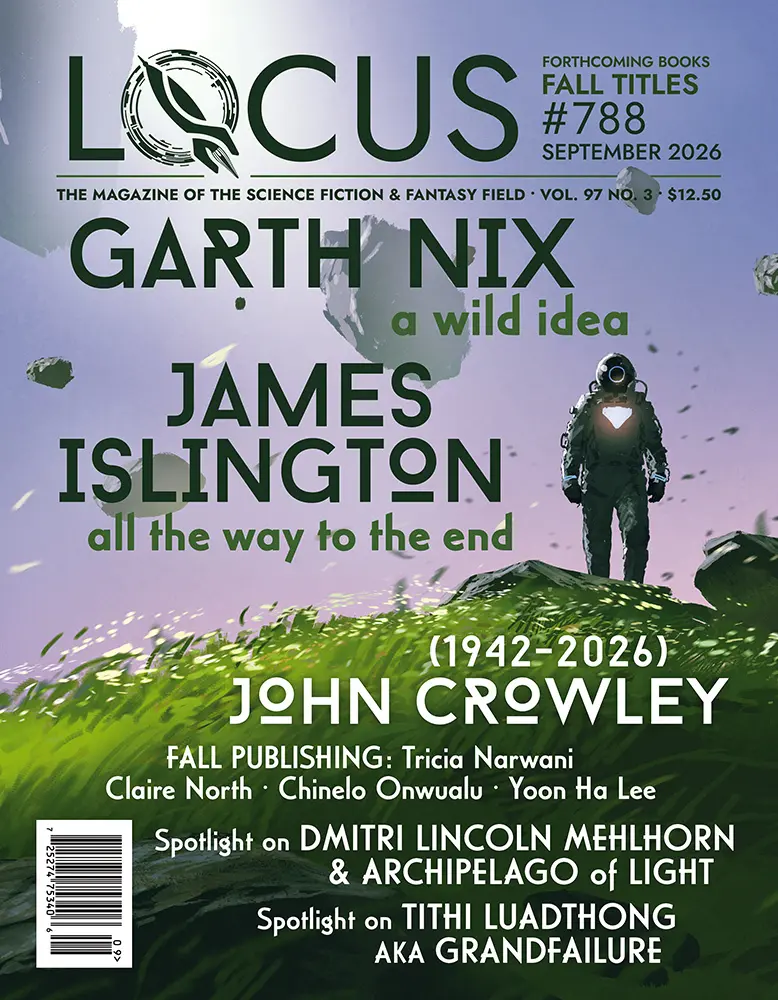
Drawing from data compiled for the landmark September 2026 print and digital issue (Issue 788), this comprehensive database refresh projects publishing schedules through March 2027. The updated index serves as a critical diagnostic tool for the speculative fiction industry, capturing metadata from major commercial publishing houses, independent presses, and bespoke specialty imprints.
Beyond its utility as a consumer-facing catalog, the Locus Forthcoming Books list represents a massive undertaking in bibliographic curation. By organizing upcoming releases by author, the index provides a micro-level view of individual career trajectories, while its broader, publisher-sorted counterpart—available exclusively in the physical and digital magazine editions—offers a macro-level assessment of corporate output and market positioning.
Read Also
As the speculative fiction market continues to navigate post-pandemic consolidation and evolving reader habits, this latest data release provides a stabilizing baseline of industry activity for the next two quarters.
Detailed Chronology: The Lifecycle of Bibliographic Curation
The release of the September 2026 forthcoming books data is the culmination of a rigorous, multi-step editorial cycle designed to translate raw publishing schedules into an organized, searchable database. Understanding how this information is gathered, verified, and disseminated highlights the unique infrastructure that Locus has maintained for over half a century.
[Publisher Solicitations & Catalog Releases]
                     │
                     ▼
[Editorial Verification & Metadata Extraction]
                     │
                     ▼
[Cross-Referencing: Author vs. Publisher Formats]
                     │
                     ▼
[Database Update: Public Portal (Author-Sort)] ──► [September 2026 Print/Digital Issue (Publisher-Sort)]
Phase 1: Data Gathering and Verification (June–July 2026)
The process begins months before publication. The Locus editorial team continuously monitors catalog announcements, direct solicitations, agent reports, and distributor databases. This phase requires constant vigilance, as publication dates in the contemporary landscape are notoriously fluid due to paper shortages, shipping bottlenecks, and strategic rescheduling by corporate marketing departments.

Phase 2: Metadata Standardization (August 2026)
Once raw data is collected, editors standardize the listings. This involves verifying correct author attributions (including pseudonyms), book titles, format types (hardcover, trade paperback, mass-market paperback, and digital-first formats), and price points. Each entry is classified by genre sub-category, ensuring that readers and researchers can distinguish between hard science fiction, epic fantasy, supernatural horror, and slipstream fiction.
Phase 3: The September 1, 2026 Release
On September 1, 2026, Locus launched its dual-track distribution of the new data:
- The Public Author-Sort Database: Hosted on the Locus Forthcoming Books webpage, this searchable index allows users to track upcoming releases by their favorite writers. It covers titles slated for release between September 2026 and March 2027.
- The Proprietary Publisher-Sort List: Published inside Issue 788, this specialized list categorizes books by their publishing houses. This format is highly valued by book buyers, distributors, and library acquisition specialists who purchase inventory based on publisher relationships and distribution terms.
Supporting Context & Metrics: Analyzing the SFFH Publishing Landscape
The data captured in the September 2026 update reveals several notable trends within the speculative fiction market, reflecting broader economic and cultural realities facing the publishing industry.
The Six-Month Horizon (September 2026 – March 2027)
A six-month projection window is critical for the retail book sector. It aligns with the standard planning cycles of major brick-and-mortar retailers like Barnes & Noble and independent bookstores, which rely on advance solicitations to allocate budget and shelf space.
Estimated SFFH Title Distribution by Publisher Category (Sept 2026 – March 2027)

┌─────────────────────────────────────────────────────────┐
│ Big Five Imprints (Tor, Del Rey, Orbit, etc.)   [45%]   │
├─────────────────────────────────────────────────────────┤
│ Independent & Mid-Sized Presses (Angry Robot, etc.) [35%]│
├─────────────────────────────────────────────────────────┤
│ Specialty & Small Presses (Subterranean, etc.)  [20%]   │
└─────────────────────────────────────────────────────────┘
Analysis of the upcoming listings indicates a highly competitive autumn and winter season. Several key dynamics emerge from the data:
- The Resilience of Specialty Presses: While corporate publishing imprints (such as Tor, Del Rey, and Orbit) command the highest volume of listings, specialty and small presses (such as Subterranean Press, Tachyon Publications, and Small Beer Press) continue to carve out vital niches. These smaller entities frequently utilize the Locus listings to signal limited-edition hardcovers and high-concept anthologies that might otherwise escape the notice of mainstream algorithms.
- Format Diversification: The data shows a marked increase in trade paperback originals (TPOs) relative to traditional mass-market paperbacks. Once the backbone of science fiction distribution, mass-market paperbacks are increasingly reserved for backlist titles or specific sub-genres, while premium trade paperbacks have become the preferred physical format for debut authors and mid-list titles.
- Sub-genre Trajectories: A qualitative review of the titles scheduled through March 2027 suggests a continued surge in "cozy fantasy" and speculative climate fiction (cli-fi), alongside a robust resurgence of gothic horror and retro-futuristic space opera.
Official Statements and Institutional Voice: The Economics of Literary Preservation
The publication of the Forthcoming Books list is more than a service to readers; it is a manifestation of Locus‘s mission as a non-profit organization. Published by the Locus Science Fiction Foundation (a 501(c)(3) public charity), the magazine relies on a delicate mix of subscription revenue, advertising, and direct donor support to sustain its operations.

In an appeal accompanying the database update, the Locus editorial board emphasized the critical relationship between community support and independent journalism:
"We rely on reader donations to keep the magazine and site going. We publish hundreds of reviews and news stories each year, but we can’t do it without your help. Every one-time or recurring donation directly funds the intensive labor required to maintain our bibliographic databases, verify industry news, and pay our reviewers."
The Cost of Curation
In the digital age, there is a common misconception that database maintenance can be entirely automated. However, industry insiders point out that automated scrapers and AI-driven aggregators consistently struggle with the nuances of speculative fiction metadata.
For example, automated systems often fail to recognize when a book is a reprint versus a new edition, misattribute collaborative anthologies, or miss schedule changes announced via niche publisher newsletters. The Locus Forthcoming Books list remains authoritative precisely because it relies on human curation, direct outreach to publicists, and decades of institutional knowledge.
Future Outlook: Navigating the March 2027 Horizon
As the industry looks toward the spring of 2027, the speculative fiction landscape faces both significant opportunities and structural challenges. The data compiled by Locus provides a vital baseline for evaluating how these dynamics will unfold over the coming months.
Anticipated Industry Shifts
- Supply Chain Stabilization: After years of paper shortages and fluctuating printing costs, the production timelines recorded in the September 2026 data suggest a return to more predictable scheduling. However, publishers remain cautious, often building buffer weeks into their public release schedules to account for potential distribution delays.
- The Hybrid Retail Environment: The period between September 2026 and March 2027 will test the integration of traditional physical retailing with digital-first discovery. With the rise of social-media-driven word-of-mouth (such as TikTok’s "BookTok" community), publishers are increasingly using the Locus forthcoming list to coordinate early influencer campaigns, sending advance reading copies (ARCs) to reviewers six months ahead of publication.
- The Preservation of Independent SFFH Journalism: The long-term viability of resources like the Forthcoming Books database depends heavily on the financial health of institutions like the Locus Science Fiction Foundation. As traditional ad-supported media models continue to decline, the transition toward a reader-supported, non-profit model will likely serve as a blueprint for other niche cultural publications.
Ultimately, the September 2026 update of the Locus Selected Books by Author list is a testament to the enduring vitality of the speculative fiction community. By providing a clear, meticulously curated window into the future, Locus continues to empower authors, inform readers, and support the complex commercial ecosystem that brings science fiction, fantasy, and horror from the imagination to the printed page.





Comments
Facebook App ID not configured. Please add it in the Customizer.