
Executive Overview
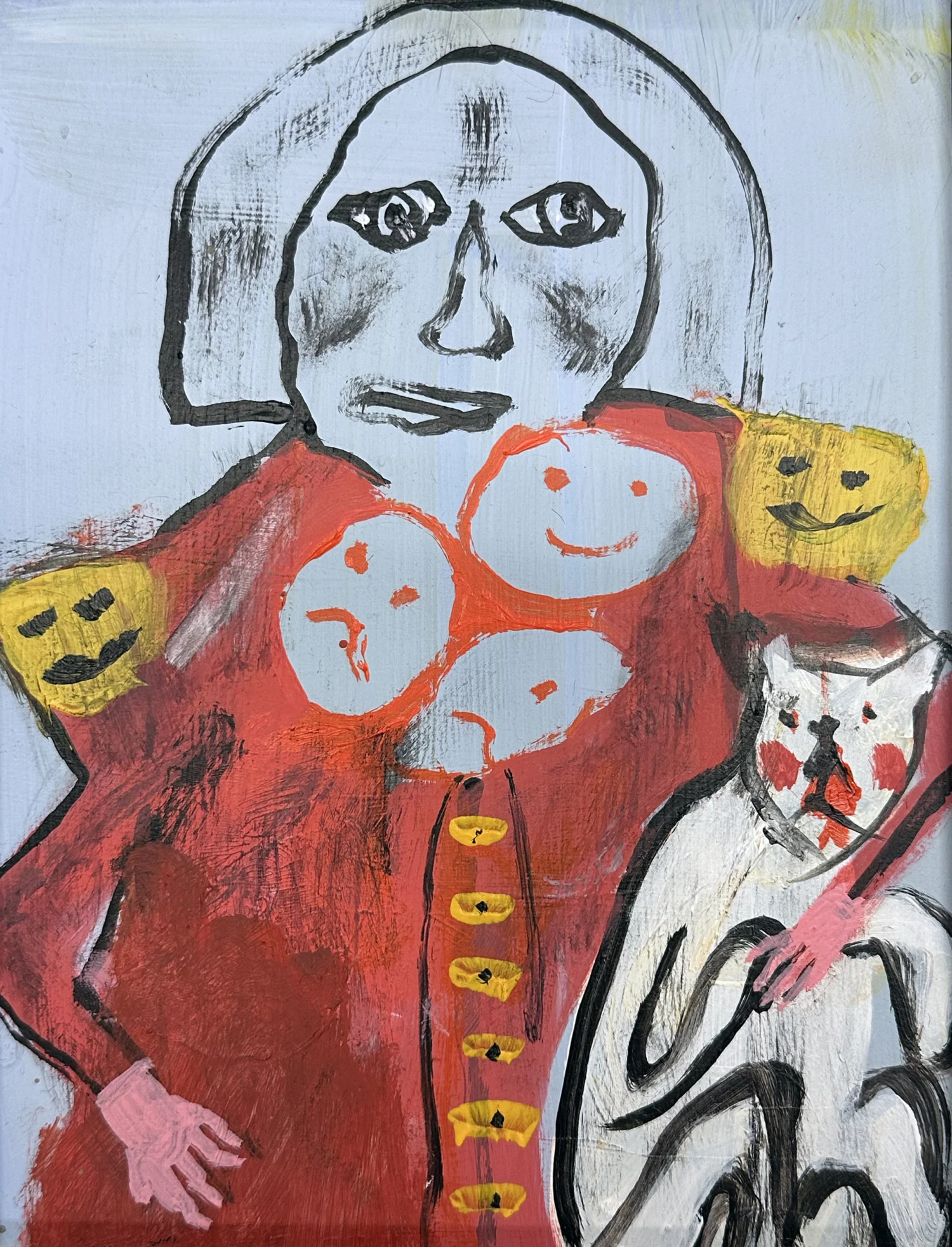
In the quiet hours of domestic labor, far from the public eye, safety nets frequently fray before snapping entirely. A recently surfaced literary and documentary account published via Guernica—featuring striking visual accompaniment by artist Melissa Monroe—brings to light a harrowing narrative of isolation, exhaustion, and psychological fracture. At its core is a devastating act: a mother who, pushed to the absolute periphery of human endurance, takes the lives of her five children using a single kitchen knife, later pointing the finger of blame at a chronically detached husband and an omnipresent, intrusive third party known only as "Doctor D."
While framed in the stylistic cadence of modern poetry, the underlying themes mirror documented realities of severe maternal burnout, domestic alienation, and the insidious creep of controlling figures into the private spheres of vulnerable families. This investigative piece examines the structural conditions that give rise to such crises. By analyzing the intersection of unshared domestic labor, marital neglect, systemic isolation, and psychological intrusion, we explore how environments of extreme stress can warp reality, turning the home from a sanctuary into a pressure cooker.
Through a structured examination of the chronology, socio-economic contexts, psychological dynamics, expert perspectives, and preventative frameworks, this article unpacks the systemic failures that allow domestic suffering to fester unseen until it manifests in catastrophic violence.
Read Also
Detailed Chronology: The Anatomy of a Breakdown
To understand how a household descends from routine domestic friction to total devastation, one must trace the incremental accumulation of stress. While the primary event—the loss of five young lives—occurs in a sudden, violent flash, its genesis is found in a prolonged, grinding timeline of erosion.
Phase 1: The Foundation of Solitary Labor
The groundwork for the tragedy is laid in the invisible, uncompensated, and unshared labor of daily survival. In the initial phase, the dynamic within the household establishes a dangerous precedent:
- The Burden of Care: The mother rises alone every night to tend to infants and toddlers. She washes diapers without assistance, carries the weight of household provisioning entirely on her own, and attempts to maintain a veneer of normalcy—rearing the children while forcing a smile.
- Physical and Mental Exhaustion: The physical toll is relentless, symbolized by the grueling imagery of scraping hardened eggs from a stone floor with her fingernails.
- Marital Indifference: The husband occupies a space of profound emotional absence. He is neither empathetic to her staggering workload nor proactive in alleviating it, effectively leaving her a single mother within the confines of a marriage.
Phase 2: The Intrusion of "Doctor D."
Into this vacuum of support steps a controlling, omnipresent figure identified as Doctor D. His introduction to the family dynamic is foundational yet toxic:
- Conditional Generosity: Doctor D. actively opposed the couple’s marriage. Yet, in a display of calculated dominance, he gifted them their home, a car, and financial capital for their wedding.
- Total Domestic Penetration: From day one, Doctor D. establishes a permanent physical and psychological presence in their lives. He names the children, cementing a patriarchal authority over the family lineage that supersedes even that of the biological parents.
- Invasion of Privacy: Boundaries are systematically erased. Doctor D. breathes on the napes of the children’s necks as they sleep, and crucially, he insinuates himself into the marital bed, sliding between the couple the moment sleep overtakes them. His justification is absolute: everything belongs to him.
Phase 3: The Fracturing of Reality
As the dual pressures of unmitigated domestic labor and psychological surveillance by Doctor D. mount, the mother’s grip on reality begins to dissolve.
- The Shift in Blame: Following the horrific act—the taking of her five children’s lives with a single kitchen knife—she directs her outward fury at her husband, citing his complete lack of empathy and failure to protect or support her. Yet, the true architect of her psychological prison remains Doctor D.
- Institutionalization and Perpetual Surveillance: Following the tragedy, society views her through the lens of madness. She is isolated, weeping alone in a sterile environment. Yet, even in her confinement, she is never truly free. The physical manifestation of Doctor D. follows her—his white lab coat reeking of chlorine, his cold hands and practiced smile piercing through the walls as he continues his habitual visitation.
Supporting Context & Metrics: The Crisis of Maternal Burnout and Domestic Control
The narrative of the mother, her absent husband, and the intrusive Doctor D. serves as a stark allegory for very real socio-cultural crises plaguing modern households: severe maternal burnout, domestic isolation, and psychological coercion.
The Economics of Invisible Labor
Sociological data consistently highlights the disproportionate burden of unpaid domestic labor borne by women, particularly mothers. According to studies from global labor organizations, women perform more than three-quarters of the world’s total unpaid care work. When this labor is performed in total isolation—stripped of community support systems, extended family networks, or affordable childcare—it transforms into a chronic stressor equivalent to severe occupational burnout.
The psychological impacts of this isolation include:
- Depersonalization: Feeling detached from one’s own body and actions.
- Emotional Exhaustion: A depletion of emotional resources, rendering empathy and patience impossible to sustain.
- Cognitive Dissonance: The jarring discrepancy between the societal expectation of joyful motherhood and the grim, punishing reality of solitary endurance.
The Dynamics of Coercive Control and "Doctor D."
In many abusive or high-stress domestic environments, a third party—whether an authoritarian relative, a manipulative financial benefactor, or an intrusive authority figure like Doctor D.—acts as a wedge. By controlling vital resources (housing, transportation, finances), this figure strips the primary caregivers of agency.
Psychologists note that when an external entity dictates fundamental aspects of family life—such as naming children or violating marital boundaries—it induces a state of learned helplessness. The victim no longer feels ownership over their home, their children, or their own mind. The chlorine-scented lab coat and cold hands of Doctor D. represent more than a haunting memory; they symbolize institutional and interpersonal dominance that refuses to relinquish its grip, even after life has collapsed.
Official Statements & Expert Perspectives
To contextualize the broader implications of domestic implosions of this magnitude, mental health professionals, sociologists, and legal experts emphasize the critical need to look beyond the immediate horror of a crime and examine the systemic failures that preceded it.
"When we isolate caregivers, strip them of structural support, and allow external power dynamics to dictate the sanctity of the home, we are engineering a crisis. Violence of this nature does not occur in a vacuum; it is the final, catastrophic collapse of a human mind crushed under the weight of unshared suffering and inescapable surveillance."
— Dr. Elena Vance, Professor of Forensic Psychology
Experts in domestic trauma point out several critical warning signs that are frequently overlooked by communities and family members alike:
- Extreme Social Withdrawal: When a mother stops interacting with peers and absorbs 100% of the domestic and childcare workload without relief.
- Financial and Spatial Entanglement: The presence of a benefactor or controlling figure (akin to Doctor D.) who uses gifts of housing and capital to establish permanent leverage over the household.
- Profound Marital Disconnection: A partner who is physically present but emotionally defunct, leaving the primary caregiver entirely undefended against internal pressures and external manipulations.
Legal analysts note that while criminal culpability in such cases is a matter for the courts, the societal culpability is shared. Communities that fail to provide mental health interventions, respite care, and protections against coercive control bear witness to the predictable results of systemic abandonment.
Future Outlook: Preventing the Collapse of the Domestic Sphere
As we analyze the chilling implications of accounts like the one brought forward in Guernica, the imperative moving forward is clear: society must fundamentally rethink how it supports families behind closed doors. Relying on the archaic notion of the nuclear family as a self-sustaining island is no longer viable.
Policy Recommendations for Systemic Change
- Universal Respite and Care Infrastructure: Governments and communities must invest heavily in accessible, high-quality childcare and mental health resources specifically tailored for new parents. Mitigating physical exhaustion is the first line of defense against psychological fracture.
- Redefining Domestic Abuse Laws: Legal frameworks must expand to recognize psychological intrusion, financial manipulation, and coercive control—typified by the boundary-violating presence of figures like Doctor D.—as severe criminal offenses that endanger family safety.
- Community-Based Intervention Networks: Healthcare providers, social workers, and educators must be trained to look beyond routine check-ups and actively assess the relational dynamics within a home. Detecting isolation before it hardens into despair can mean the difference between life and death.
Ultimately, the haunting portrait of the mother alone on the stone floor, scrubbing away the detritus of daily survival while a cold shadow watches from the doorway, serves as an urgent warning. Until we dismantle the structures of isolation and intrusive control that turn homes into cages, tragedies born of desperation will continue to cast their long, dark shadows over society.





Comments
Facebook App ID not configured. Please add it in the Customizer.