
Executive Overview
Six months after President Donald Trump promised a swift, four-to-week military campaign, the United States finds itself locked in a relentless, recursive cycle of escalation with Iran. What was initially marketed to the American public as a short-term, decisive intervention to neutralize regional threats has metastasized into an open-ended maritime and missile war. This conflict is characterized by intermittent flare-ups, strategic blind spots, and an alarming reliance on digital fabrication to manage public perceptions at home.
The human, material, and strategic toll of this prolonged conflict extends far beyond the immediate battlegrounds of the Middle East. According to confidential warnings issued by high-ranking military commanders to the Pentagon, the continuous drain of critical assets—ranging from advanced naval strike groups to scarce air defense interceptors—is severely degrading America’s broader defense posture. By pulling vital intelligence, surveillance, and reconnaissance (ISR) architecture, as well as capital warships, away from other strategic theaters, the drawn-out campaign against Tehran is leaving the United States acutely vulnerable.
As Washington burns through billions of dollars in advanced munitions and struggles with unprecedented operational fatigue, military analysts are sounding the alarm. The choice to maintain an overwhelming, continuous posture against Iran has forced defense leadership into a zero-sum game of global risk management. Put simply, the United States is dangerously overextended, robbing Peter to pay Paul in an era defined by great power competition.
Read Also
Detailed Chronology: From Swift Promise to Endless War
The Illusory "Four-Week" Horizon
When hostilities formally commenced six months ago, administration officials projected an aggressive, highly compressed timeline. President Trump confidently assured lawmakers and the public that the operation would wrap up within four to five weeks. The objective, as framed by the White House, was to decisively crush Iranian asymmetric capabilities, permanently secure the Strait of Hormuz, and establish a new regional security baseline without getting bogged down in nation-building or protracted attrition.
Yet, structural realities on the ground quickly unraveled those optimistic projections. Iran’s asymmetric warfare doctrine—built around subterranean missile silos, fast-attack naval craft, extensive sea-mine inventories, and proxy networks spanning multiple jurisdictions—proved far more resilient than initial intelligence assessments predicted. Instead of a rapid capitulation, the conflict settled into a grinding stalemate punctuated by sudden surges of kinetic violence.
The Return of Active Hostilities: Larak Island and Beyond
After nearly a month of deceptive relative quiet, the conflict violently reignited over the weekend. On Sunday, United States military forces launched targeted air and missile strikes against active rocket launchers positioned on Iran’s strategically vital Larak Island. According to Pentagon briefings, the preemptive action was necessitated by intercepted intelligence indicating that Tehran was preparing to deploy maritime mines. Such a move would have choked off the Strait of Hormuz, threatening global energy markets and international shipping lanes.
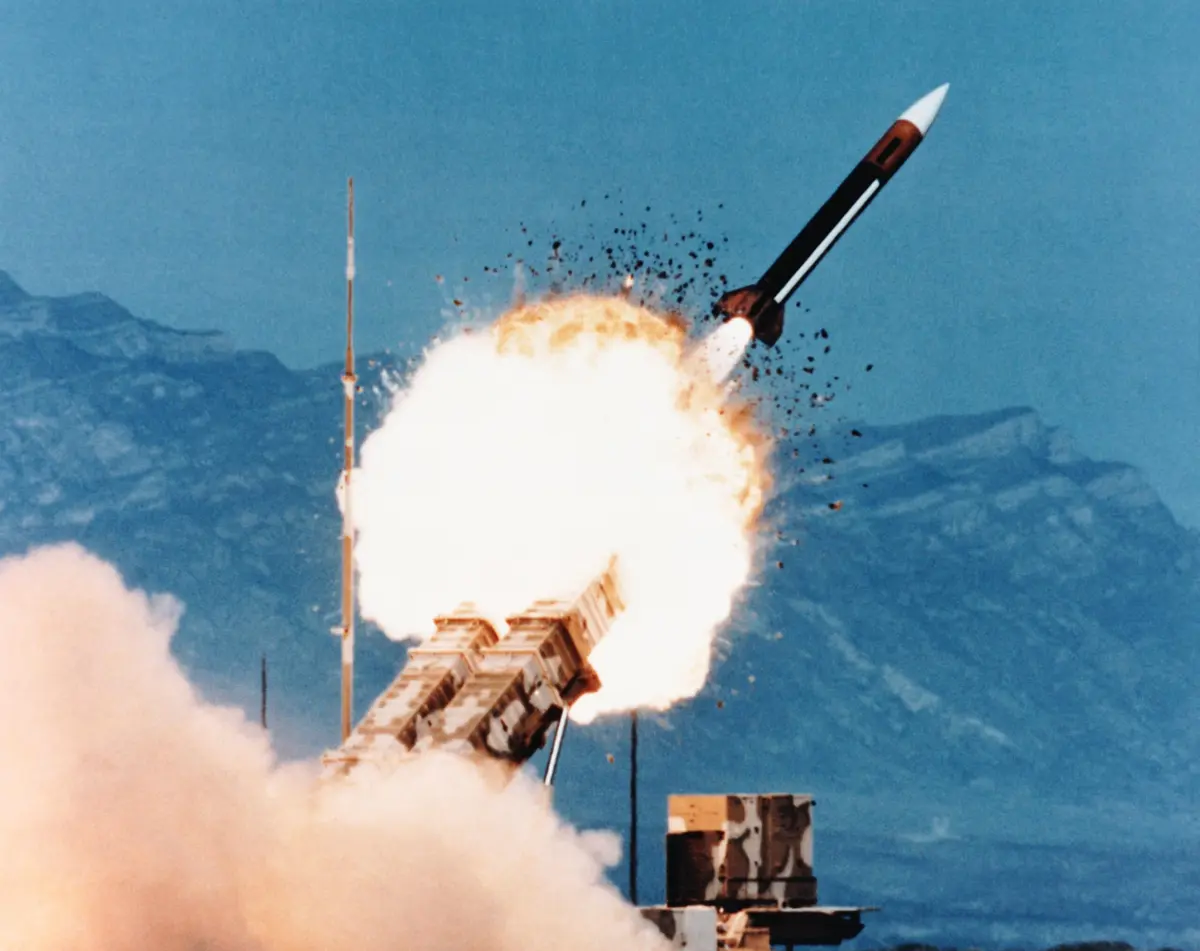
The Iranian response was swift and coordinated. In retaliation for the Larak Island assault, Iran’s Islamic Revolutionary Guard Corps (IRGC) fired a barrage of ballistic missiles targeting US military installations and staging areas in the United Arab Emirates and Jordan. While robust, layered air defense networks—including Patriot and THAAD batteries—successfully intercepted the incoming volleys before they could inflict catastrophic structural damage or casualties, the engagement underscored the fragility of regional stability.
The Information War: AI, Propaganda, and Reality
Compounding the operational friction of the ongoing war is an intensifying struggle over the information landscape. In a bizarre development late Sunday evening, President Trump shared a video on social media purportedly depicting Kharg Island—the undisputed linchpin of Iran’s export-driven oil industry—“being blown to smithereens!!!”
Investigative reporting and digital forensics quickly debunked the post, revealing that the dramatic footage was entirely artificial intelligence-generated. The deployment of AI-crafted warfare propaganda by the commander-in-chief highlights a deeply concerning disconnect between the grim, attritional reality of the war on the ground and the administration’s persistent desire to project immediate, overwhelming victory to the domestic electorate.
Supporting Context & Metrics: The Strain on US Global Posture
While the administration attempts to spin a narrative of effortless dominance, the operational realities within the Department of Defense tell a starkly different story. The ongoing war with Iran is not happening in a vacuum; it is actively consuming the finite resources required to maintain global deterrence.
The Depletion of Advanced Munitions and Interceptors
One of the most pressing concerns circulating within defense acquisition and operational circles is the rapid depletion of advanced precision-guided munitions. The war has forced US forces to expend multi-million-dollar interceptors at an unsustainable rate to counter relatively inexpensive Iranian ballistic and cruise missiles, as well as loitering munitions.
- The Cost-Imbalance: Each successful interception of an Iranian-supplied missile by a US Navy destroyer or land-based battery costs American taxpayers exponentially more than the manufacturing cost of the incoming threat.
- Stockpile Vulnerabilities: Defense analysts warn that the US defense industrial base cannot manufacture high-end interceptors fast enough to keep pace with sustained combat operations. This creates critical inventory deficits that would compromise the nation’s readiness in the event of a high-intensity conflict in the Indo-European theaters.
Fleet Architecture and Maintenance Crises
The United States Navy, long burdened by an intense operational tempo and delayed ship maintenance schedules, is bearing the brunt of the maritime campaign.
- Carrier Deployments: In a move that vividly illustrates the lack of strategic depth, the Navy was forced to reassign its sole dedicated aircraft carrier in the Pacific theater, shifting it into the waters surrounding the Middle East to support the Iran operations.
- Sailor Fatigue: Extended deployments have severely degraded troop morale and strained mental health support systems across fleet commands. Concurrently, maintenance backlogs at public and private shipyards have worsened, as vessels returning from prolonged combat deployments require immediate, extensive overhauls that push shipyard capacities to their absolute limits.
The Zero-Sum Security Dilemma
The cumulative effect of these pressures is a dangerous zero-sum security dilemma. High-ranking military commanders recently transmitted an extraordinary, unvarnished warning to Secretary of Defense Pete Hegseth and Pentagon leadership. The memo explicitly cautioned that the protracted war in Iran is directly restricting the military’s capacity to address surging threats elsewhere on the globe.
According to leaks from the Washington Post, several top military leaders argued that the unending deployment of specialized naval assets and persistent-surveillance aircraft (such as Global Hawks and MQ-9 Reapers) to the Middle East has forced commanders to surrender assets critical to homeland defense and allied security. One senior general reportedly warned that, without a significant influx of newly freed resources, he would soon face an untenable choice: strip away defensive missile cover meant to protect Israel, or leave domestic American installations vulnerable to long-range asymmetric strikes.
Official Statements and Institutional Warnings
The growing rift between political expectations and military reality has brought institutional anxieties into public view. Lawmakers, defense experts, and retired military officials have increasingly voiced concern over the lack of a clear exit strategy.
"We are really robbing Peter to pay Paul. By treating the Middle East as a bottomless pit for high-end assets, we are signaling to our primary strategic competitors that our global bandwidth is dangerously finite."
— Senior Defense Analyst (speaking anonymously on operational readiness)
The Pentagon has officially defended its recent actions, maintaining that the strikes on Larak Island were strictly limited, proportional responses designed to deter further aggression and protect international commerce. "Our commitment to freedom of navigation and the defense of our regional partners remains absolute," a defense spokesperson stated following Sunday’s missile exchange. "We retain the capability and the resolve to address threats wherever they manifest."
However, behind closed doors, congressional committees are beginning to demand clearer accounting from the administration. Lawmakers from both sides of the aisle have expressed unease over the financial trajectory of the war, questioning whether open-ended supplementary appropriations can continue indefinitely without triggering systemic economic and strategic repercussions. The absence of a codified Authorization for Use of Military Force (AUMF) specifically tailored to this new campaign has only heightened constitutional and legislative friction.
Future Outlook: Navigating the Point of No Return
As the conflict stretches past its half-year mark, the strategic horizon for the United States remains profoundly uncertain. The structural drivers that keep Washington and Tehran locked in this perpetual state of friction show no signs of dissipating.
The Danger of Accidental Escalation
With both sides locked into retaliatory loops—US kinetic strikes on proxy infrastructure or direct naval threats followed by Iranian ballistic missile volleys directed at allied Gulf states—the margin for error has vanished. A single miscalculated intercept, a stray missile striking a populated civilian center in the UAE or Jordan, or a successful mining operation in the Strait of Hormuz could easily catalyze an irreversible regional conflagration.
Strategic Re-prioritization or Strategic Drift?
The core challenge facing US defense planners is whether the administration can summon the political will to pivot away from this escalating quagmire before the systemic costs outweigh any transient regional gains. To restore global deterrence, military leadership must address three critical imperatives:
- Rebuilding Stockpiles: Accelerating defense industrial production lines to replenish depleted missile and interceptor inventories.
- Restoring Global Balance: Disengaging high-demand, low-density assets (such as aircraft carriers and specialized ISR platforms) from the Middle East and returning them to the Indo-Pacific and European theaters.
- Defining an Off-Ramp: Formulating a diplomatic and security framework that allows for a sustainable reduction in force posture without sacrificing core allied commitments.
Until these difficult choices are made, the United States will remain tethered to a conflict that its leaders promised would be brief—trapped in a cycle where every tactical victory only deepens the nation’s strategic vulnerability.





Comments
Facebook App ID not configured. Please add it in the Customizer.