
By Patricia J. Murphy
Special Education & Literacy Reporting
Executive Overview
To shelve by genre, or not to shelve by genre? That is the foundational question currently confronting educators, media specialists, and school administrators nationwide as they prepare, update, and diversify their library collections for the new academic year. Traditionally bound by the rigid, century-old constraints of the Dewey Decimal system or alphabetical author ordering, modern school libraries are undergoing a quiet spatial and pedagogical revolution.
Across the country, a growing contingent of forward-thinking educators is answering that query with a resounding and enthusiastic “genrefy.” By reorganizing traditional library shelves into distinct, reader-friendly categories—ranging from graphic novels, dystopian sci-fi, and paranormal mystery to practical non-fiction topics like cooking, coding, and athletic training—schools are dismantling physical and psychological barriers between students and books.
Read Also
Proponents argue that genrefying transforms the library from a quiet, intimidating warehouse of books into an intuitive, bookstore-style browsing experience. The pedagogical shift is yielding immediate, measurable returns: student circulation numbers are climbing, self-directed exploration is flourishing, and children who previously identified as "reluctant readers" are discovering titles that capture their imaginations. However, transitioning a comprehensive K-12 collection is no small feat. It requires meticulous planning, intense physical labor, institutional backing, and, crucially, student collaboration.
This deep dive explores the mechanics, motivations, and measurable outcomes of the genrefication movement. Through interviews with three pioneering educators—Nicholas Moore in Georgia, Kelsey Dangelo-Worth in New Hampshire, and Jennifer Sniadecki in Indiana—this article examines how reshaping the physical architecture of school libraries is redefining literacy instruction for the 21st century.
Detailed Chronology: The Evolution of the Genrefication Movement
The movement to genrefy school libraries did not materialize overnight. It evolved organically out of a collision between modern retail merchandising strategies, shifts in adolescent reading habits, and a growing recognition that traditional library classification systems were inadvertently alienating young readers.
Phase 1: Recognizing the Friction (The Pre-Digital and Early 2000s Era)
For generations, school libraries operated on a strict taxonomy designed primarily for academic research institutions rather than developing readers. Fiction was uniformly shelved alphabetically by the author’s last name (e.g., pulling a Beverly Cleary book right alongside a classic Charles Dickens novel, regardless of content, reading level, or thematic interest). Nonfiction adhered strictly to the numerical hierarchy of the Dewey Decimal classification system.
While this system worked efficiently for trained librarians tracking inventory, it frequently created a formidable roadblock for students. A middle schooler searching for a thrilling, fast-paced supernatural mystery had to know the specific author’s name or wander aimlessly through aisles, staring at uniformly bound spines. For children still developing their literary tastes, this friction often resulted in frustration, disengagement, and an abandonment of the library altogether.
Phase 2: The Retail Inspiration and High-Interest Experiments (2010–2018)
As commercial bookstores like Barnes & Noble and independent shops successfully captured consumer attention by organizing books by lifestyle, mood, and genre, progressive educators began experimenting with similar models. Early efforts were largely piecemeal. Librarians carved out isolated, high-interest sections for perennial student favorites—such as scary stories, graphic novels, and sports fiction—while leaving the rest of the collection in traditional order.
Anecdotal evidence from these early adopters revealed an immediate spike in circulation for those highlighted sections. Yet, comprehensive, wall-to-wall genrefication remained a bold, labor-intensive outlier endorsed only by the most ambitious media specialists.
Phase 3: District-Wide Adoption and Certification Standards (2018–Present)
In recent years, genrefication has transitioned from an experimental grassroots tactic to a formalized, district-supported strategy. Educational leadership programs and library science certification courses now frequently incorporate genrefication methodologies into their curricula.
Today, districts are proactively encouraging—and in some cases mandating—the restructuring of school learning commons before the start of new academic years. Armed with advanced digital library management systems and cloud-based cataloging tools, modern librarians are executing systemic overhauls. They are systematically purging outdated materials, mapping out intuitive category taxonomies, and redesigning physical spaces to foster independent discovery, positioning the school library as the dynamic, beating heart of contemporary literacy instruction.
Supporting Context & Metrics: Why Genrefication Works
The push to reorganize library shelves is backed by both cognitive science and observable behavioral metrics. Understanding why genrefication impacts student engagement requires examining how children interact with physical spaces and make choices in an age of hyper-abundant media.
The Psychology of Choice and Cognitive Load
In cognitive psychology, "choice overload" occurs when individuals are presented with so many options that decision fatigue sets in, leading them to abandon the task entirely. Traditional library shelving structures create immense cognitive load for young readers. Without contextual visual cues, students cannot easily evaluate books based on their evolving personal interests.
Genrefication reduces cognitive load by clustering similar narrative experiences together. When a student interested in speculative fiction walks down an aisle explicitly marked with vibrant signage for "Sci-Fi & Fantasy," their search space is instantly curated. They can compare covers, read synopses, and sample writing styles without navigating unrelated sections of the library.
Furthermore, this arrangement promotes what literacy experts call "accidental discovery." A child looking for a sports biography might scan the shelf and notice an adjacent book about sports psychology or extreme mountaineering, expanding their intellectual horizons organically.
Measurable Impacts on Circulation and Engagement
While qualitative feedback from educators is universally positive, quantitative data provides compelling validation for the immense labor required to genrefy a collection. Across diverse school districts, administrators report consistent trends:
- Surging Circulation Rates: Districts that mandate or encourage genrefication routinely report double-digit percentage increases in overall book checkouts within the first academic year following reorganization.
- Increased Foot Traffic: Libraries transition from quiet, underutilized spaces used primarily for scheduled class periods to bustling hubs where students drop in voluntarily during free periods to browse and socialize around books.
- Elevated Reader Retention: By lowering the barrier to entry, students read more frequently, which directly correlates with improved reading comprehension, vocabulary acquisition, and standardized test scores over time.
Official Statements & Case Studies from the Front Lines
To understand the practical realities of genrefication, one must look to the educators actively transforming their school libraries day in and day out. Three distinct stories illustrate the challenges, strategies, and profound rewards of this movement.
Case Study 1: Nicholas Moore — Powder Springs Elementary School (Georgia)
At Powder Springs Elementary School in Georgia, school librarian Nicholas Moore integrated genrefication planning directly into his library learning certification. Backed by a district-wide philosophy that asserts genrefied collections naturally drive up circulation and student engagement, Moore approached the overhaul with meticulous strategic planning.
"The district’s belief is that with genrefying kids want to read more," Moore explains. "They’re more into books, and circulation goes up."
Before touching a single book, Moore mapped out a comprehensive taxonomy of genres. During his sorting and weeding process, he evaluated his existing inventory to design specific fiction and nonfiction categories tailored to his students’ diverse needs. While his library already separated high-interest fiction like scary stories, sports, and sci-fi, Moore expanded the vision.
"I also wanted to include different topics for my students to experience things beyond the library, to extend learning at home with music, cooking, painting, and more," he notes. Additionally, he divided his nonfiction section into specific English Language Arts (ELA) and math topics, enabling teachers to align library resources directly with classroom lesson plans.
The execution was undeniably grueling. "The biggest part of the job was physical," Moore admits. "It’s pulling books off shelves and putting them in their new genre areas, adjusting shelves, creating signs, adding the labels—with some help from my students—and scanning the books to their changed locations."
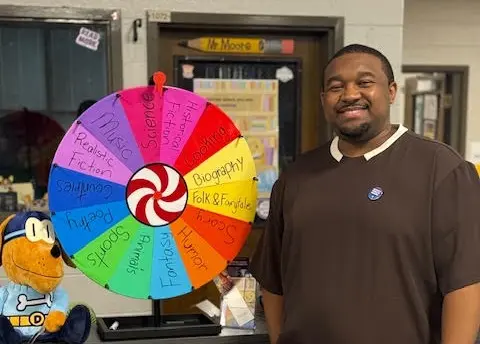
Despite the heavy lifting, the payoff has been extraordinary. Students who initially struggled to understand abstract genre classifications now navigate the space effortlessly. To maintain excitement, Moore utilizes an interactive "genre wheel" during reading advisory sessions, encouraging students to spin and sample categories outside their comfort zones.
"I’m here to promote reading and learning," Moore reflects. "Genrefying won’t look the same in every library, but it’ll help kids develop a passion for books."
Case Study 2: Kelsey Dangelo-Worth — Cornish Elementary School (New Hampshire)
For Kelsey Dangelo-Worth, who teaches sixth through eighth-grade ELA and eighth-grade social studies at Cornish Elementary School in central New Hampshire, reading materials are central to the classroom experience. Serving as an informal hub for student book recommendations, Dangelo-Worth naturally gravitated toward organizing her classroom novel sets, independent reading titles, and historical resources by theme.
"I never really thought about it as genrefying," she remarks, noting that her process began organically out of instructional necessity.
Dangelo-Worth separated middle-grade realistic fiction and young adult titles from her previous teaching roles, dividing them cleanly into sci-fi, fantasy, mystery, and humor. She also organized historical fiction and nonfiction specifically to support social studies curricula.
For Dangelo-Worth, the ultimate goal of a genrefied collection is student autonomy during independent reading time.
"When I ask, ‘What do you feel like reading right now?’ they can browse our shelves on their own and choose exactly what they want," she explains.
This immediate access to targeted literature fulfills her core teaching philosophy: "As an ELA teacher, I want to teach kids how to read, but I also want to make readers!"
Dangelo-Worth emphasizes that genrefication does more than just connect a child with a book; it catalyzes community building. When a student is hooked on a specific title, they look at the surrounding shelf and realize an entire ecosystem of similar books is waiting for them.
"It’s about who they’re going to meet at the shelves and ask, ‘You like that book, too?’" Dangelo-Worth says. "It allows them to be a part of the literary space—and the world."
Case Study 3: Jennifer Sniadecki — South Bend Community Corporation (Indiana)
Jennifer Sniadecki’s introduction to genrefication started with a specific patron demand: horror stories. As a middle school librarian and district library facilitator at South Bend Community Corporation in Indiana, Sniadecki noticed a daily stampede of students desperate for scares.
"Before genrefying, I had kids coming in daily asking where the scary stories were. I’d ask them if they’d read R.L. Stine, Lindsay Currie, etc. And, I thought, ‘Why don’t I pull all of them together?’" she recalls.
Encouraged by this initial success, Sniadecki utilized the Alexandria library management software to systematically overhaul her entire fiction collection. When software metadata fell short, she turned her library into a collaborative workshop, enlisting student volunteers to read back covers, sample chapters, and debate proper categorical placement.
For instance, when debating where to shelve the popular Misfits series by Lisa Yee and Dan Santat, student volunteers argued that while it possessed mystery elements, the characters’ overarching tone was fundamentally adventurous. Sniadecki deferred to the students’ judgment, shelving the series under adventure.
"The true purpose of genrefying is to find books in the library," Sniadecki asserts. "And, because it’s their library, they need to use it the way that makes sense to them."
To tackle nonfiction, Sniadecki applied a hybrid approach to the Dewey Decimal system. She retained numerical classifications while breaking down monolithic subjects into hyper-specific subcategories—taking mammal books traditionally clumped together under Dewey Decimal 599 and separating them into dedicated, highly visible sections for lions, tigers, and bears.
Now in her fifth year of continuous genrefication, Sniadecki views the library organization as a living, breathing project that must be perpetually tailored to student interests. This granular organization supercharges her reader advisory capabilities.
"Now, when kids come in with no idea what they want to read, I can ask them what they’re interested in and/or what was the last favorite book they’ve read," Sniadecki notes, "and I can lead them to the place, the genre, in the library, and they can start there."
Crucially, this discoverability builds vital independence as middle schoolers prepare for the complex research demands of high school. "There isn’t always going to be someone there to help," Sniadecki observes. Until that transition happens, she remains deeply committed to her professional calling: "Being a librarian, I’ve taken an oath to find the perfect books and genres for every student so they can grow in their love of reading and knowledge of the world."
Future Outlook: The Next Frontier in School Library Design
As the genrefication movement matures, the conversation among educators is shifting from whether to reorganize libraries to how to continuously optimize these spaces for modern learners.
Future iterations of school libraries are expected to blend physical genrefication with digital integration. Augmented reality (AR) library maps, interactive digital genre-recommendation kiosks, and student-curated digital book displays are already being piloted in forward-thinking school districts. These technological enhancements will work hand-in-hand with physical genre shelving to create immersive, hyper-personalized literacy environments.
Furthermore, as diversity, equity, and inclusion (DEI) initiatives remain paramount in education, librarians are discovering that genrefication makes inclusive collections much more visible. By creating specific thematic categories focused on diverse perspectives, cultural histories, and global narratives, educators ensure that marginalized students see themselves reflected on the shelves—and that dominant-culture readers are easily guided toward broadening their worldview.
Ultimately, the genrefication revolution represents a profound philosophical shift: school libraries are no longer passive archives designed to safeguard books from damage; they are dynamic, student-centric marketplaces of ideas. By breaking down archaic barriers and aligning library architecture with the natural ways human beings seek out stories, educators are proving that the printed word remains as magnetic as ever—provided it is placed within arm’s reach of the children waiting to read it.
Are you an educator or school librarian currently pondering, planning, or knee-deep in a library genrefication project? We want to hear your tips, success stories, challenges, and questions. Your insights may be featured in an upcoming follow-up report. Reach out directly via email at [email protected].




Comments
Facebook App ID not configured. Please add it in the Customizer.