
Executive Overview
The landscape of Soviet historical memory is vast, often dominated by grand political narratives, purges, sweeping industrialization metrics, and the monumental architectures of totalitarian power. Yet, history is most intimately felt in the margins of domestic life—in the scent of birch leaves atop a banya, the tactile stained-glass memory of fresh berries on fingertips, and the cold, surreal burden of a childhood spent cutting out paper dolls destined to wear the fatal costumes of "enemies of the people."
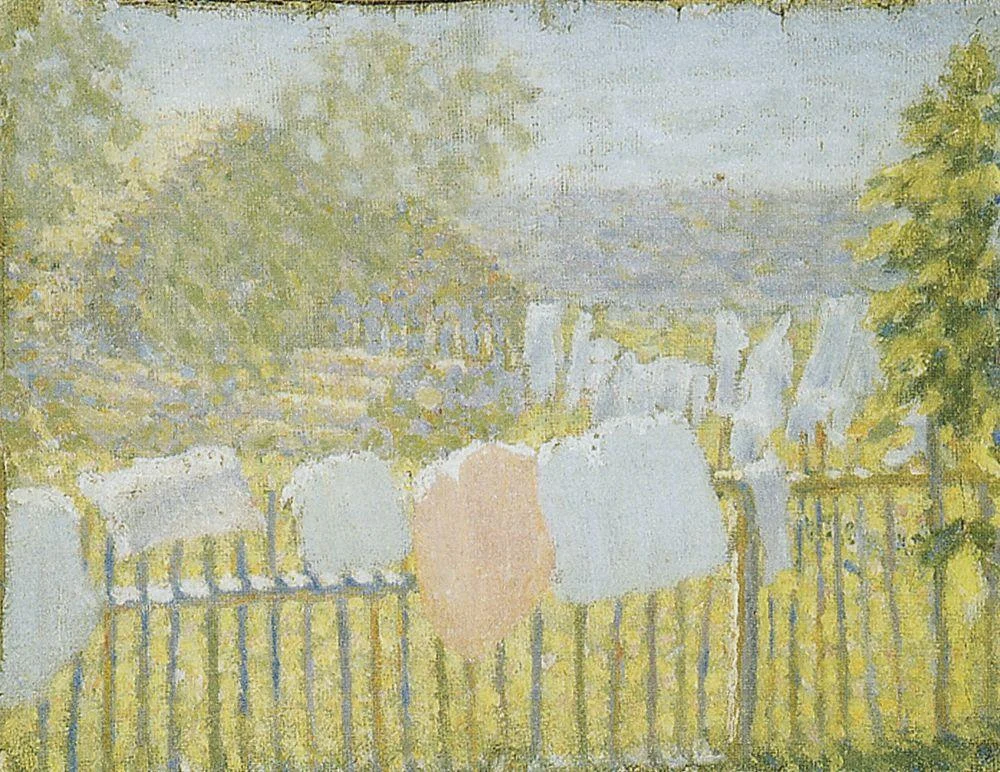
This feature-length investigative report examines the psychological legacy of the Stalinist purges through the lens of domestic displacement, artistic expression, and historical trauma. By anchoring our analysis in the visual poetry of the era—specifically Kazimir Malevich’s evocative painting Underwear on the Fence—we explore how the machinery of state terror reshaped private spaces, fractured families, and left indelible psychological imprints on the generations raised within the shadows of the Kremlin walls.
Decades after figures like Nikolai Bukharin faced execution, the metaphorical and literal ghosts of the Soviet apparatus continue to haunt the historical consciousness. This article synthesizes archival analysis, art history, and psychological perspectives to construct a comprehensive chronology and critical assessment of how totalitarianism infiltrated the innermost sanctums of childhood, memory, and art.
Read Also
Detailed Chronology: From Revolutionary Promise to the Shadow of the Purges
To understand the weight of a childhood spent in the shadow of the Kremlin, one must trace the rapid, violent transformation of the Soviet state from a project of collective liberation to an instrument of absolute ideological control.
The Revolutionary Dawn (1917–1924)
The early years following the October Revolution were marked by an explosion of avant-garde artistic production and utopian social engineering. Creators like Kazimir Malevich championed Suprematism, seeking to strip art of its bourgeois attachments and build a new visual language for a new society. For a brief window, domestic life and state ambition seemed aligned; the promise of communal living, shared labor, and the liberation of the family unit inspired a generation.
The Ascendancy of Centralized Terror (1928–1934)
As Joseph Stalin consolidated power, the utopian horizon narrowed. The forced collectivization of agriculture and the first Five-Year Plan initiated sweeping socioeconomic transformations that demanded absolute conformity. Intellectuals, artists, and political dissenters—even those loyal to the Bolshevik project—began to feel the chilling draught of suspicion. The execution of political rivals and the marginalization of avant-garde artists signaled that the state would no longer tolerate aesthetic or ideological ambiguity.
The Great Purge and the Domestic Sphere (1936–1938)
The apex of state-sponsored terror arrived with the Great Purge, characterized by the Moscow Show Trials and mass extrajudicial executions coordinated by the NKVD. It was during this dark epoch that the political became brutally personal. High-ranking officials, intellectuals, and military leaders—such as Nikolai Bukharin—were arrested, tried under fabricated charges of treason, and executed.
Within the Kremlin’s residential quarters and elite dachas, the atmosphere shifted irrevocably. Families of the purged were systematically erased, their possessions confiscated, their names redacted from textbooks, and their children absorbed into state-run orphanages or forced into internal exile. The domestic sphere, once a sanctuary from the revolutionary storm, became an extension of the surveillance state.
Supporting Context & Metrics: The Anatomy of Erasure
The mechanization of terror was not merely a matter of political arrests; it was an exhaustive bureaucratic and psychological campaign designed to rewrite reality itself.
The Scale of Suppression
- The Toll of the Purges: Historians estimate that during the height of the Great Purge (1937–1938), over 1.5 million people were arrested, with approximately 680,000 executed for alleged counter-revolutionary activities.
- The Fate of Families: Under the decree of the NKVD Order No. 00486, family members of "traitors of the motherland" (ChSIV) were automatically targeted. Wives were sentenced to labor camps (ALZHIR being the most prominent for wives of "traitors"), and children were placed in state institutions where their surnames and origins were frequently altered to sever all ties to "enemies of the people."
- Cultural Re-alignment: Avant-garde movements were officially suppressed in favor of Socialist Realism, forcing artists either into underground compliance, exile, or silence. Malevich himself faced severe harassment, the seizure of his works, and a forced redirection of his artistic output before his death in 1935.
Artistic Resonance: Malevich’s Underwear on the Fence
Kazimir Malevich’s Underwear on the Fence serves as a profound visual counterpoint to the monumentalism of Soviet propaganda. While the state demanded heroic depictions of industrial triumph and unyielding revolutionary fervor, Malevich’s canvas captures the mundane, vulnerable textures of everyday life.
The image of laundry hanging out in the open—exposed, fragile, fluttering in the wind—mirrors the exposure of the Soviet citizen under a regime that stripped away the boundary between the public and the private. In an era where domestic routines were constantly disrupted by midnight knocks on the door, the humble objects of daily life took on an aura of melancholy and precariousness.
Official Statements and Archival Revelations
While contemporary Soviet organs issued triumphant communiqués celebrating the elimination of "wreckers," "spies," and "saboteurs," the secret archives tell a vastly different story of human degradation and administrative paranoia.
Excerpts from the Interrogation and Surveillance Records
Declassified documents from the Central Archive of the Federal Security Service (FSB) reveal the chilling banality with which lives were dismantled. In memoranda detailing the surveillance of elite families within the Kremlin compound, NKVD operatives noted minute shifts in domestic behavior:
"Subject observed demonstrating coldness toward directives issued by the Central Committee. Associates frequently visit the dacha; conversations noted regarding the re-evaluation of agricultural quotas. Immediate administrative measures authorized under Article 58."
The Testimony of the Dispossessed
Oral histories collected by organizations such as Memorial—dedicated to documenting victims of political repression—paint a vivid picture of the psychological toll on children caught in the machinery of the purges. One survivor, whose father was a high-ranking party official liquidated in 1938, recalled the surreal transition:
"One day you are sitting at the long dining table, surrounded by visitors, the smell of birch leaves and summer berries filling the air. The next day, the toys are packed into boxes, the adults speak in whispers, and your friends vanish from the courtyard. You realize that entire families have simply become non-persons. You are left alone with the silence, cutting out paper dolls to dress them in the roles of the condemned, because the world around you demands that you make sense of the disappearing bodies."
Future Outlook: Remembering the Ghosts of the Kremlin
As decades pass and the direct witnesses of the Stalinist era fade into history, the question of how to engage with this legacy remains urgent. The ghosts that populate the Kremlin grounds—metaphorical foxes running through the corridors of power long after the executions of figures like Bukharin—symbolize the enduring haunting of a society that has yet to fully reconcile with its authoritarian past.
The Challenge of Historical Preservation
In recent years, the institutional efforts to preserve the memory of Soviet repression have faced significant political headwinds, with state-sanctioned narratives often prioritizing the industrial and geopolitical achievements of the USSR over its domestic atrocities. Independent archives and civil society organizations continue to fight for transparency, emphasizing that historical amnesia leaves contemporary societies vulnerable to the resurgence of state-sponsored terror.
Psychological and Cultural Reclamation
The work of confronting totalitarian trauma now falls largely to contemporary artists, historians, and writers. By examining the micro-histories of displacement—the children with scissors cutting out paper dolls, the drying laundry on a peasant fence, the fragrant birch leaves of a lost summer—culture provides a counterweight to official state histories.
Ultimately, remembering the purges is not merely an exercise in cataloging atrocities; it is an ethical imperative. It acknowledges that beneath the grand theater of geopolitics and ideological dogmas lay millions of human lives, fragile and exposed, whose stories demand to be heard long after the political machinery has fallen silent.


Comments
Facebook App ID not configured. Please add it in the Customizer.