
Executive Overview
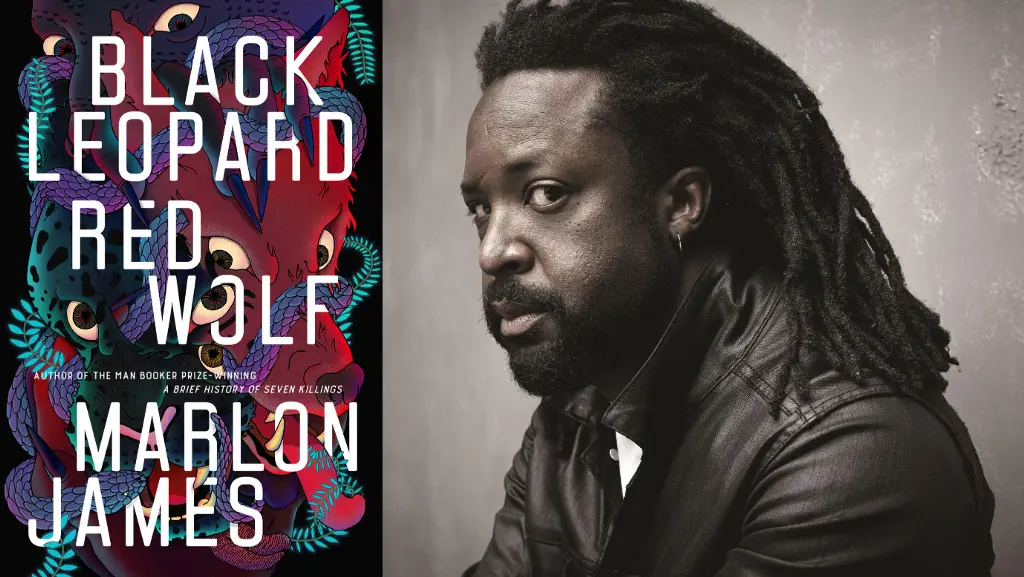
Marlon James—the Jamaican novelist whose sweeping, polyphonic prose earned him the 2015 Man Booker Prize for A Brief History of Seven Killings—continues to reshape the landscape of contemporary anglophone literature. Operating across disparate genres ranging from colonial gothic horror to high-concept African mythic fantasy, James’s artistic trajectory is defined by a refusal to adhere to conventional literary boundaries.
In his latest work, The Disappearers, James turns his narrative focus to post-violence Jamaica, charting the lives of a cohort of men navigating the aftermath of severe homophobic trauma. The novel explores the dual impulses of flight and investigative reckoning: while certain characters attempt to erase their pasts through geographic and psychological exile, others remain compelled to uncover the fates of those swallowed by systemic brutality.
In an in-depth conversation hosted by Electric Literature, James candidly unpacked the operational mechanics behind his fiction. Rejecting canonical dogmas such as "write what you know," James advocates for a practice anchored in radical curiosity, exhaustive archival research, and an embrace of narrative risk. From his strict daily regimen to the crucial role of jazz music in structuring his working environment, James offers a masterclass on navigating creative friction, overcoming writer’s block through rigorous reading, and maintaining artistic integrity in an increasingly unpredictable world.
Read Also
Detailed Chronology: The Literary Trajectory of Marlon James
To understand James’s current methodology and the thematic gravity of The Disappearers, one must examine the evolution of his body of work across the past two decades:
[2005] Published 'John Crow's Devil'
   │   └─ Debut novel exploring religious extremism and gothic horror in 1950s Jamaica.
   │
[2009] Published 'The Book of Night Women'
   │   └─ Critical breakthrough depicting an 18th-century slave revolt through an unsparing historical lens.
   │
[2014-2015] 'A Brief History of Seven Killings' & Booker Prize Triumph
   │   └─ Epic 700+ page novel centered around the 1976 assassination attempt on Bob Marley.
   │   └─ Awarded the 2015 Man Booker Prize, establishing James as a global literary powerhouse.
   │
[2019-2022] Launch of the 'Dark Star' Trilogy ('Black Leopard, Red Wolf' & 'Moon Witch, Spider King')
   │   └─ Groundbreaking fantasy series drawing from West African mythology and non-linear storytelling.
   │
[Present] Publication of 'The Disappearers' & Interdisciplinary Expansion
       └─ Narrative focus shifts to memory, trauma, and identity in post-violence Jamaica.
       └─ Active return to visual arts, figure drawing, and essayistic cultural criticism.
Key Milestones in Development
-
2005: Debut with John Crow’s Devil
After receiving over 70 rejections, James published his debut novel, establishing his interest in historical trauma, theological conflict, and violent power dynamics within small Jamaican communities. -
2009: The Book of Night Women
A brutal, unvarnished depiction of plantation slavery in late-18th-century Jamaica. Written in a distinctive, phonetically rendered voice, the novel established James’s willingness to push sentences to emotional and stylistic extremes. -
2014–2015: A Brief History of Seven Killings
A massive, multi-vocal masterpiece spanning decades, cartels, secret services, and political factions. Winning the Man Booker Prize in 2015 transformed James from a critically acclaimed author into an international literary titan and a member of the Time 100. -
2019–2022: The Dark Star Fantasy Epoch
With Black Leopard, Red Wolf (2019) and Moon Witch, Spider King (2022), James subverted Western-centric fantasy traditions, constructing an expansive universe rooted in African mythologies, fluid sexuality, and unreliable narration. -
Present Era: The Disappearers
Returning to Jamaica’s complex social landscape, The Disappearers tackles the legacy of anti-queer violence. The novel synthesizes detective tropes, psychological realism, and historical investigation, underscoring James’s ongoing obsession with those who vanish from official archives.
Supporting Context & Metrics: Methodological Frameworks and Creative Discipline
James’s output is driven by an unyielding commitment to process over passive inspiration. His working routine balances rigorous daily hours with a heavily sensory environment designed to induce focus and narrative momentum.
The Metrics of the Creative Process
| Parameter | Marlon James’s Operational Standard | Industry Benchmark / Comparative Norm |
|---|---|---|
| Daily Writing Hours | Fixed schedule: 11:00 AM – 6:00 PM daily | Variable / Inspiration-driven model |
| First Draft Philosophy | Complete execution without editing; "shitty first draft" | Continuous editing-in-motion |
| Draft Efficiency Ratio | ~200 generated pages to yield 1 polished page | 5–10 draft pages per finished page |
| Composition Speed | High-speed typing to match rapid cognitive output | Mixed (Longhand draft to digital conversion) |
| Primary Sonic Driver | Free and avant-garde jazz (Alice Coltrane, John Coltrane) | Silent environments or ambient audio |
                       MARLON JAMES'S DAILY WORKFLOW

   [11:00 AM] ──► Desk Arrival & Preparation (Tea, Stretches)
       │
       ▼
   [11:15 AM] ──► High-Speed Typing / Narrative Drafting
       │          (Accompanied by Alice Coltrane / Jazz Audio)
       ▼
   [03:00 PM] ──► Archival Research & Character "Interviews"
       │
       ▼
   [06:00 PM] ──► Hard Stop (Sentence suspended mid-stream if needed)
The Spatial and Auditory Environment
James’s physical writing room defies traditional minimalist literary aesthetics. Operating out of a converted bedroom, his workspace functions simultaneously as an artist’s studio and a research lab:
- Visual Scaffolding: Surrounded by easels, charcoal studies, and life-drawing figure sketches of male anatomy from his active practice in visual art and illustration.
- Textual Anchors: Desk space shared with essential texts including Toni Morrison’s oeuvre, Hilary Mantel’s historical fiction, and Leslie Fiedler’s seminal critical text Love and Death in an American Novel.
- Sonic Environment: A mandatory backdrop of jazz. For James, total silence is unnerving and counterproductive to his generative state. Listening to artists such as Alice Coltrane, John Coltrane, Miles Davis, and Charles Mingus creates a textured rhythm that prepares the room for storytelling.
Official Statements & Philosophical Pillars
Throughout his conversation with Electric Literature, James detailed the core principles guiding his narrative craft, editorial relationships, and creative philosophy.
On Narrative Risk and Pushing Sentences to the Edge
James strongly critiques conservative approaches to creative writing, urging authors to discard artificial boundaries in favor of radical experimentation:
"Risk it. You got to risk sentimentality, you got to risk saying too much. Risk going too far."
He rejects the adage "write what you know," opting instead to let curiosity and rigorous research propel him into unfamiliar territories. For James, true narrative discovery happens when a writer is willing to fail publicly in pursuit of an elusive truth.

                  THE CREATIVE RISK SPECTRUM

   [Safe / Conventional]                     [Marlon James's Paradigm]
   ├── Write what you know                   ├── Research the unfamiliar
   ├── Edit while writing                    ├── Complete first draft entirely
   ├── Self-censor emotional extremes         ├── Risk sentimentality & excess
   └── Rely on passive inspiration           └── Daily structural discipline
On Overcoming Writer’s Block Through Reading
When confronting narrative paralysis, James disdains waiting for divine intervention. Instead, he views reading as the ultimate diagnostic tool:
"Read. Read a way through writer’s block. This is something my students don’t understand, that there are certain things about creative writing I cannot teach you… For me, it was writing women. Nobody could teach me. I had to read Toni Morrison. I had to read Alice Walker. I had to read Iris Murdoch, Muriel Spark."
By interrogating how master stylists resolve structural and voice-driven challenges, James builds a roadmap for his own fiction.
On the First Draft and the Writer-Editor Dynamic
James emphasizes the necessity of writing a manuscript straight through to its conclusion before engaging in revision, warning against the trap of early self-editing:
"My problem with editing as you go is that you’re not writing, you’re correcting… It’s almost as if you stop a car before knowing where it was going. And fine, you stop the car and send it west, but it might have been going east."
Regarding the editing process, James seeks out intellectual friction, valuing editors who challenge his structural choices without attempting to rewrite his voice:
"A good editor doesn’t actually tell you what to write. They can recognize that a sentence, a paragraph, a story needs fixing, but the good editors don’t tell you how to fix it. But they won’t let it go until it’s fixed."
On the Nature of Realism in Modern Dystopia
When asked to choose between realism and surrealism in contemporary fiction, James pointed out how societal shifts have rendered traditional genre definitions obsolete:
"Parable of the Sower was sci-fi up to 10 years ago—now it’s not. Idiocracy was a comedy 20 years ago… I’m going to say realism because realism is no wilder than sci-fi. And hopefully we’re a more rational world in 50 years where nobody will believe the realistic novels… They’re not going to believe realism at all."
Literary Influences and Aesthetic Obsessions
James’s artistic vision is shaped by a diverse blend of high-literary masterworks, commercial pop culture, and visual fashion design.
                          MARLON JAMES'S INFLUENCE MATRIX
                                         │
        ┌────────────────────────────────┼────────────────────────────────┐
        ▼                                ▼                                ▼
[Literary Masters]              [Genre & Pop Culture]           [Visual & Material]
├── Toni Morrison               ├── Chris Claremont (X-Men)      ├── Yohji Yamamoto Fashion
├── Jamaica Kincaid             ├── Crime / Detective Fiction    ├── Life Figure Drawing
├── Salman Rushdie              ├── Dystopian Sci-Fi             ├── Vintage Bell-Bottoms
└── Vladimir Nabokov            └── Action Cinema ('Die Hard')   └── Culinary Arts (Chili Crisp)
Essential Literary Reference Points
- Toni Morrison: Cited by James as his ultimate literary touchstone, re-read annually (focusing on works like Sula and Tar Baby).
- Jamaica Kincaid: Lauded as the exemplar of relentless intellectual curiosity.
- Chris Claremont: The legendary X-Men comic writer whose complex, multi-layered character arcs significantly influenced James’s approach to ensemble casts.
- Vladimir Nabokov: Particularly Pale Fire, a book so masterful it briefly drove James to contemplate abandoning writing altogether due to its technical genius.
Independent Publishing and Bookshops
James remains an ardent supporter of independent presses and local booksellers. He highlights three specific publishers whose catalogs he buys unconditionally:
- Graywolf Press
- Fitzcarraldo Editions
- New York Review Books (NYRB)
When visiting local bookstores, James champions neighborhood pillars like Spoonbill and Sugartown Books in Brooklyn, New York.
Future Outlook: Curiosity, Interdisciplinary Expansion, and Legacy
As Marlon James enters the next phase of his career, his focus remains squarely on intellectual expansion and cross-disciplinary creation.
                           FUTURE ARTISTIC TRAJECTORY

   [Novel Release]  ──►  *The Disappearers* Critical & Academic Tour
          │
          ▼
   [Visual Arts]    ──►  Formal Return to Illustration & Fine Art
          │
          ▼
   [Dark Star]      ──►  Completion of the Final 'Dark Star' Trilogy Volume
          │
          ▼
   [Cultural Work]  ──►  Fashion Criticism, Essayistic Work & Teaching
Long-Term Artistic Commitments
- Sustaining Curiosity as a Core Ethos: James identifies incuriosity as the single unforgivable flaw in a writer. His future projects will continue to cross genres, geographical borders, and historical epochs.
- Visual Arts Integration: By formally re-engaging with figure drawing and painting, James aims to fuse visual design with narrative composition, viewing line, shadow, and form as extensions of sentence structure.
- Cultural and Fashion Commentary: Beyond literature, James remains deeply engaged in material culture—from collecting vintage avant-garde Japanese fashion (such as Yohji Yamamoto) to analyzing pop music releases from Beyoncé and Rihanna.
Ultimately, Marlon James’s enduring legacy lies in his refusal to play it safe. By demanding that every sentence risk going too far, James ensures that his fiction remains vital, terrifying, and undeniably alive.




Comments
Facebook App ID not configured. Please add it in the Customizer.