
Executive Overview
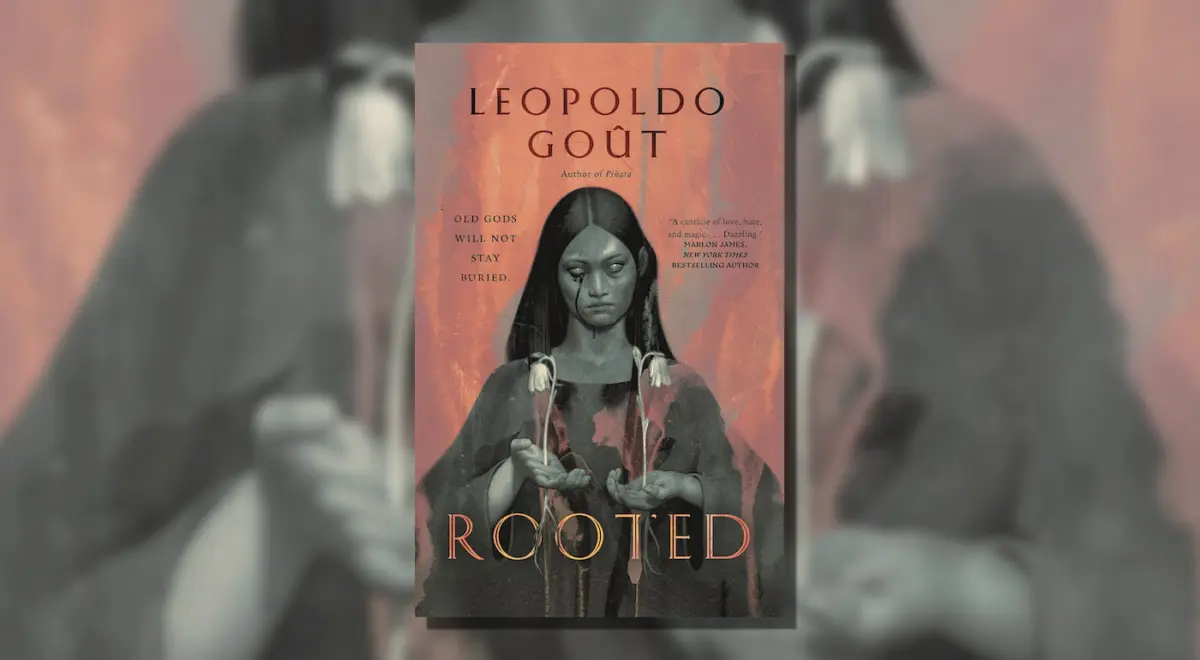
Literary horror continues to evolve, drawing inspiration not merely from supernatural tropes, but from the deep, lingering psychological scars of history, colonialism, and familial secrets. Set for publication on September 15 by Tor Nightfire, Leopoldo Gout’s latest novel, Rooted, positions itself as one of the most anticipated releases of the autumn literary season. Merging high-stakes international law with dark, visceral Mesoamerican mythology, Gout crafts a narrative that probes what happens when the stolen past refuses to stay buried.
The story follows Aurora, a brilliant and successful art lawyer who returns to her native Mexico City to celebrate a monumental professional victory: the repatriation of stolen cultural artifacts. Central to this campaign is the return of a mysterious and deeply unsettling statue of an Aztec deity known as The Flayed One. However, as Aurora soon discovers, the glittering surface of diplomatic success masks a decaying reality. As Mexico City warps around her and long-suppressed childhood nightmares bleed into her waking life, Aurora must untangle a web of family secrets before the ancient forces she has helped liberate consume her entirely.
This deep-dive investigation explores the psychological framework of Rooted, examining the thematic intersections of art repatriation, generational trauma, and the uncanny weight of history on the modern psyche.
Read Also
Detailed Chronology: A Descent into Memory and Myth
To understand the trajectory of Rooted is to follow Aurora’s psychological unravelling—a descent meticulously paced across the span of a humid, disorienting homecoming in Mexico City.
The Ceremony at the Museo Nacional de Antropología
The novel opens under the blistering sun in the courtyard of the Museo Nacional de Antropología. Aurora, alongside her local counterpart Ociel and a cohort of cultural ministers, stands before a gathering of press and museum bureaucrats. Rather than displaying the fragile, newly returned antiquities, organizers have erected a massive promotional poster featuring The Gateway to the Underworld—a monumental Olmec carving shaped like a ferocious beast’s open mouth.
To Aurora, who has purposefully deferred public speaking to her colleagues, the atmosphere is suffocating. Despite her professional pride, the ceremonial pomp feels hollow, mirroring the sterile galas of her corporate career in art law. Amidst the crowd, she spots her mother, Maria, whose presence offers a brief, grounding anchor. Yet, even as the museum director ushers guests inside for champagne and polite networking, an undercurrent of unease pervades the scene.
Stepping outside for a breath of air later in the day, Aurora encounters a chilling omen: a pale, pinkish flower sprouting from a crack in the paved courtyard. Its flesh-like texture and unsettling familiarity trigger a profound wave of déjà vu—an early structural fracture in the barrier between her rational world and the repressed past.
The Press Encounter and the Weight of History
As the reception continues indoors, Aurora is approached by a public relations official seeking a formal statement regarding the repatriation campaign. Articulating her philosophy to the camera, Aurora offers a profound insight into the cost of cultural theft:
"When a people’s art is taken from them, it not only damages the pieces… it also harms the people. A void is created in our cultural memory with each theft, leaving us disconnected from our past."
While her words champion justice and historical restoration, the irony of celebrating cultural reclamation within the sanitized confines of a bureaucratic museum hall weighs heavily on her. The veneer of modern civilization feels dangerously thin, especially as she walks the historic center of Mexico City later that night.
The Sinking Metropolis
Returning through the historic plaza, Aurora observes the Metropolitan Cathedral. Built atop the stones of the old Aztec capital, the monumental Gothic structure is sinking visibly into the desiccated earth, exacerbated by the city’s severe drought. The infrastructure of the colonial and modern eras is literally giving way, weighed down by centuries of stone and the unacknowledged ghosts of history.
Upon arriving at her mother’s apartment, Aurora encounters another pale, flesh-like flower emerging from a crack in the pavement. Touching it, she notes its disturbingly warm, organic texture—a sensory precursor to the psychological and physiological terrors awaiting her indoors.

The Nightmare Convergence
Exhausted by jet lag, alcohol, and stress, Aurora collapses into sleep, only to be dragged into a harrowing variation of a childhood nightmare. Trapped in a state of semi-lucidity on her family’s old wool couch, she clings to a desperate internal mantra: If you can’t see it, it’s not there.
For years, this psychological defense mechanism has governed her subconscious—a futile game of evasion against an unseen entity lurking in the corner of the room. But this time, the dream fractures. Muffled, hostile voices drift from the bedroom of her grandmother, Teresa. Peering through the cracked door, Aurora witnesses Maria and Teresa standing over a violently contorting figure on the bed.
When an uncanny echo reverberates simultaneously from the living room, Aurora breaks her own rule. She looks.
The entity is there in the corner, just as it is thrashing on the bed. The illusion of safety shatters, plunging Aurora headfirst into a reality where the buried past can no longer be ignored.
Supporting Context & Metrics: The Real-World Stakes of Repatriation
While Rooted operates firmly within the realm of supernatural horror, its thematic foundation rests upon very real, contemporary global debates surrounding art repatriation and cultural heritage.
The Global Movement for Cultural Restitution
In recent years, institutions across Europe and North America have faced mounting legal, ethical, and political pressure to return looted antiquities to their countries of origin. The narrative framework of Rooted taps directly into this sociopolitical dialogue:
- The Colonial Void: As Aurora articulates in her press interview, the removal of artifacts creates an existential vacuum in the cultural memory of the source nation.
- Institutional Resistance: Bureaucratic delays, provenance verification challenges, and the friction between Western museums and source-country governments mirror the professional hurdles Aurora navigates daily.
- The Supernatural Metaphor: Gout brilliantly subverts the traditional "cursed artifact" trope. In Rooted, the danger does not stem from a petty curse placed on an object by ancient priests, but from the spiritual and historical vacuum left by cultural erasure. By bringing the gods and artifacts back home, Aurora inadvertently opens the floodgates to a national and familial reckoning.
Official Statements and Editorial Insights
In promotional materials released ahead of the September 15 publication, Tor Nightfire editors have praised Leopoldo Gout’s unique ability to blend high-concept speculative fiction with deeply human emotional cores.
"Leopoldo Gout has constructed a terrifyingly atmospheric landscape where modern corporate life collides with ancient, inescapable mythology," notes the editorial team at Tor Nightfire. "Rooted is not merely a ghost story; it is an examination of what we inherit, what we bury, and what happens when the earth itself rejects our attempts to sanitize history."
Gout, celebrated for his multidisciplinary storytelling across literature and film, draws heavily on the unique sensory landscape of Mexico City—its sensory overload, its seismic instability, and its architectural layers, where modern concrete frequently buckles to reveal the ancient foundations beneath.
Future Outlook: What Rooted Signals for Modern Horror
The release of Rooted on September 15th marks a significant milestone in the current renaissance of folk horror and international speculative fiction. Readers and critics alike are increasingly gravitating toward narratives that use genre frameworks to explore post-colonial identity, generational trauma, and ecological anxiety.
As Aurora’s sanity unravels and she confronts the reality that The Flayed One cannot stay buried, the novel challenges audiences to reflect on their own relationship with history. Gout’s narrative suggests that true horror does not lie in the dark unknown, but in the things we spend lifetimes trying to forget—until the ground beneath our feet finally gives way.
For fans of sophisticated, atmospheric horror that balances intellectual depth with visceral chills, Rooted promises to be one of the definitive reads of the year.



Comments
Facebook App ID not configured. Please add it in the Customizer.