
Executive Overview
The Pakistani television industry, widely celebrated for its rich heritage of storytelling, nuanced character development, and cultural resonance, is currently navigating a pivotal crossroads. Amidst commercial pressures, rapid globalization, and the digital transformation of media consumption, long-standing creative challenges have resurfaced.
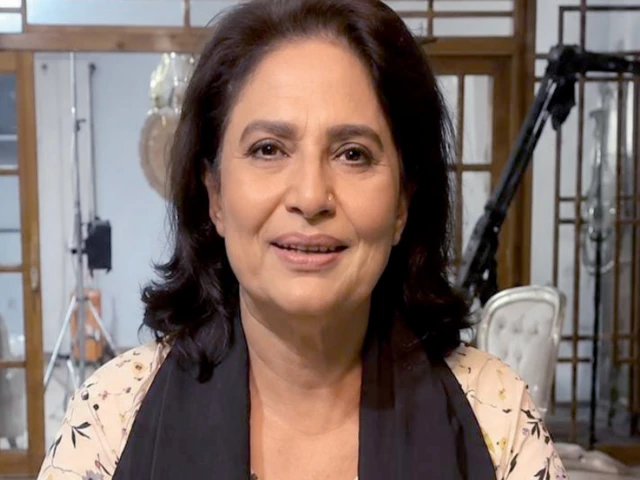
Recently, acclaimed veteran actress Shaista Jabeen—a stalwart of the Pakistani screen with a career spanning over four decades—voiced profound concerns regarding the industry’s creative direction. In a candid critique, Jabeen lamented the modern television landscape’s heavy reliance on repetitive themes, predictable plotlines, and recycled character archetypes. She argued that these trends stifle artistic innovation and risk alienating a discerning audience that increasingly craves intellectual and emotional authenticity.
Despite these systemic creative hurdles, Jabeen remains active in championing projects that push narrative boundaries. She is currently preparing for the premiere of Express Entertainment’s highly anticipated upcoming drama serial, Ikhtiyaar. Featuring a powerhouse ensemble cast that includes Shahroz Sabzwari, Srha Asghar, Faiza Hassan, and Yasir Nawaz, the project has garnered early praise from the veteran performer. Jabeen lauded the drama’s emotionally stirring narrative, the exceptional caliber of her co-stars, and the high-grade production values that hark back to the golden eras of Pakistani television.
Read Also
This report provides a comprehensive examination of Shaista Jabeen’s critique, tracing her illustrious career from the theater stages of the 1980s to the pinnacle of Pakistan Television (PTV) drama in the 1990s. It evaluates the broader socio-economic and structural transformations shaping the Pakistani entertainment sector today, analyzes the tensions between commercial viability and creative integrity, and projects the trajectory of television storytelling in the region.
Detailed Chronology: From the Golden Age of Stage to Modern Television
To fully contextualize Shaista Jabeen’s critique of contemporary drama, one must examine the arc of her professional journey—a trajectory that mirrors the evolution of the Pakistani entertainment industry itself.
The Formative Years: Theater and the 1980s Stage
Shaista Jabeen’s entry into the performing arts occurred during the 1980s, an era defined by vibrant theatrical traditions, rigorous actor training, and a deep-rooted culture of live performance. Long before the proliferation of private satellite channels and digital streaming platforms, the Pakistani stage served as the crucible for raw acting talent.
Working in theater during this period demanded immense discipline, flawless dialogue delivery, and the ability to command an audience in real-time without the safety net of multiple takes or post-production sound design. For Jabeen, these formative years instilled an uncompromising work ethic and a profound understanding of character psychology. The stage taught her how to inhabit complex, multi-dimensional personas—a skill that would later become her trademark on television.
The PTV Era and the 1990s Breakthrough
As the political and cultural landscapes shifted, Jabeen transitioned from live theater to television, finding her spiritual home within the corridors of Pakistan Television (PTV). The 1990s are widely regarded as a golden age for PTV dramas, characterized by socially relevant storytelling, meticulous scriptwriting, and iconic directorial visions.
Jabeen’s major breakthrough arrived with the landmark television drama Dasht, a production that captivated audiences nationwide with its raw realism and gripping narrative. Following Dasht, her career accelerated rapidly as she became a fixture in critically acclaimed serials such as Aaghosh, Duniya Dari, and Beti.
During this epoch, television production operated under state auspices or tightly regulated independent frameworks where quality invariably superseded rapid commercial turnover. Scripts were developed over months, characters evolved through logical psychological arcs, and directors enjoyed the creative freedom to explore sensitive social issues. Over the course of her prolific career, Jabeen has graced more than 50 television serials, cementing her status as one of the most reliable, versatile, and respected character actresses in the country.
The Modern Paradigm Shift and the Current Landscape
Reflecting on the monumental changes she has witnessed across four decades in the industry, Jabeen recently noted a stark contrast between past production environments and contemporary workflows.
"Earlier, we managed to do more with less. Now, there is more, but we are managing with less," Jabeen observed, summarizing the paradox of modern television production. While budgets have technically expanded and technological capabilities have multiplied with high-definition cameras and advanced post-production suites, the artistic soul of the medium has frequently been compromised by relentless deadlines and formulaic commissioning practices.
Supporting Context & Metrics: The State of Pakistani Television
Shaista Jabeen’s critique does not exist in a vacuum; it touches upon systemic issues that industry analysts, writers, and directors have debated for years. Understanding the structural dynamics of the modern Pakistani drama industry requires an examination of key operational metrics, creative bottlenecks, and economic pressures.
The Commercialization of Content and Rating Pressures
In the post-cable boom era—marked by the proliferation of dozens of private entertainment channels—the economic model of television production underwent a radical transformation. Content production transitioned from a state-subsidized or public-service model to a fiercely competitive, advertising-driven commercial enterprise.
Under this modern regime, the success of a drama serial is frequently dictated by Gross Rating Points (GRPs), YouTube view counts, and trending social media metrics. Consequently, networks and commercial producers are incentivized to replicate formulas that have historically yielded high immediate viewership. This has led to the over-saturation of specific tropes:
- The Toxic Domestic Matrix: Endless iterations of abusive marriages, scheming mothers-in-law, oppressed young brides, and passive male protagonists.
- Extramarital Affairs and Family Betrayals: Melodramatic subplots designed primarily to generate outrage and emotional volatility rather than genuine narrative catharsis.
- The Repetitive Anti-Hero: Wealthy, arrogant business moguls who undergo rapid, unconvincing redemptive arcs after inflicting emotional torment on female leads.
The Writer’s Dilemma: Quantity Over Quality
At the heart of Jabeen’s critique lies the critical shortage of fresh, daring writing. In an effort to keep pace with continuous transmission schedules and multi-channel programming blocks, production houses demand a high volume of scripts from a relatively small pool of established writers.
When writers are forced to churn out dozens of episodes under compressed timelines, creative fatigue sets in. Nuanced world-building, subtle character motivations, and experimental narrative structures are frequently abandoned in favor of familiar, fast-paced dramatic beats.
Production Standards: A Tale of Two Realities
Interestingly, Jabeen’s critique is nuanced enough to separate systemic creative shortcomings from technical and logistical execution. While narrative depth has declined, production facilities have evolved. In discussing her upcoming project Ikhtiyaar, Jabeen commended the physical sets and overall working environment, noting that the high-caliber production design briefly transported her back to the meticulous standards of her early career. This dichotomy suggests that while the financial investment in production value (lighting, locations, styling) remains robust, the intellectual investment in original storytelling requires urgent revitalization.
Official Statements and Industry Insights
Shaista Jabeen’s recent commentary has sparked widespread discourse across digital media platforms and industry circles, aligning with broader concerns voiced by other creative luminaries.
Detailed Breakdown of Jabeen’s Remarks on Ikhtiyaar
While expressing her broader concerns regarding the industry’s creative stagnation, Jabeen maintained an optimistic and enthusiastic stance regarding her current venture, Ikhtiyaar, slated to air on Express Entertainment.
"It is a phenomenal drama and a story that touches the heart," Jabeen stated, emphasizing the emotional resonance of the script.
She offered high praise for her colleagues within the ensemble cast—which features prominent names such as Shahroz Sabzwari, Srha Asghar, Faiza Hassan, and Yasir Nawaz—noting that every performer delivered a commendable, deeply invested portrayal of their respective character. Furthermore, she highlighted the comfort and professionalism of the shoot, singling out the production design:
"The set was outstanding, and it reminded me of the television productions of my earlier career."
Broader Industry Echoes
Jabeen’s lament over repetitive themes resonates with a growing chorus of discontent among critically acclaimed writers, directors, and veteran actors who feel sidelined by algorithm-driven commissioning.
Industry veterans frequently point out that while Pakistani dramas continue to command immense international viewership—particularly across South Asia and the diaspora in the UK, North America, and the Middle East—this global success should not breed creative complacency. Critics argue that international acclaim was initially built on the back of daring, culturally rooted masterpieces such as Dhoop Kinare, Khuda Kay Liye, Udaari, and Zindagi Gulzar Hai—projects that respected the audience’s intelligence and tackled complex socio-political realities.
Future Outlook: Navigating Toward a Renaissance in Storytelling
As the Pakistani entertainment ecosystem stands at this critical juncture, the path forward necessitates a deliberate, industry-wide recalibration of creative priorities. Shaista Jabeen’s critique serves as both a timely warning and a constructive roadmap for the future.
1. Diversifying Narrative Horizons
To break free from the cycle of repetitive themes, networks and production houses must actively invest in diverse genres. Beyond domestic melodrama, there is a burgeoning market for psychological thrillers, historical dramas, science fiction, gritty investigative crime procedurals, and light-hearted comedies. Expanding the thematic palette will not only retain core demographics but also attract younger, digitally native audiences who currently consume Western and East Asian streaming content.
2. Nurturing Literary and Scriptwriting Talent
The creative bottleneck can only be resolved by institutionalizing support for new writers. Production houses must establish writers’ rooms, offer mentorship programs, and provide adequate time and financial compensation for script development. A script that has been thoroughly researched, workshopped, and polished over several months will invariably yield a superior television product than one rushed to meet immediate broadcast quotas.
3. Balancing Commercial Viability with Artistic Integrity
Industry stakeholders must re-evaluate the metric of success. While commercial profitability remains essential for business sustainability, true industry longevity depends on cultural impact and critical acclaim. Networks that take calculated risks on unconventional stories often reap long-term dividends in brand loyalty and international prestige.
4. Bridging Generational Expertise
Projects like Ikhtiyaar, which successfully blend seasoned veterans like Shaista Jabeen with dynamic contemporary performers, offer a blueprint for creative synergy. By pairing the rigorous discipline and theatrical depth of older generations with the fresh energy of modern actors and directors, the industry can foster a continuous transfer of knowledge and artistic excellence.
Conclusion
Shaista Jabeen’s poignant critique of the Pakistani television industry is a vital wake-up call from a respected matriarch of the screen. Her career—spanning the challenging stages of the 1980s, the golden narrative heights of 1990s PTV, and the high-definition commercial present—gives her observations profound authority.
As audiences prepare to experience her powerful performance in Express Entertainment’s Ikhtiyaar, the industry at large would do well to heed her counsel. By moving beyond repetitive tropes and returning to the courageous, authentic storytelling that once defined its golden age, Pakistani television can secure a vibrant, globally competitive future that honors both its artistic heritage and its creative potential.

Comments
Facebook App ID not configured. Please add it in the Customizer.