
Executive Overview
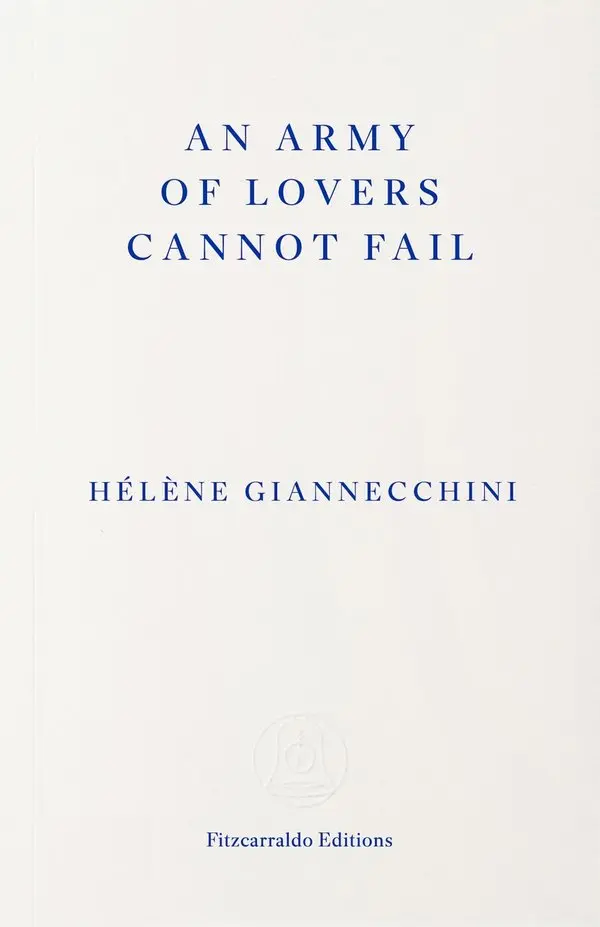
The forthcoming publication of An Army of Lovers Cannot Fail by French author Hélène Giannecchini—translated by Anna Moschovakis and published by Fitzcarraldo Editions—brings to the forefront a persistent, unresolved rupture within contemporary queer culture: the intergenerational transmission of trauma, memory, and political inheritance surrounding the HIV/AIDS epidemic.
Centering on an intensely asymmetrical romantic relationship between a 24-year-old narrator and a 40-year-old former ACT UP Paris activist named Myriam, Giannecchini’s work functions as both a intimate memoir and a rigorous sociopolitical critique. The narrative illuminates how the AIDS crisis of the late 20th century continues to dictate the emotional, relational, and ideological boundaries of queer life today. Through personal testimony, historical exploration, and literary reflection, the book dissects the profound chasm separating those who survived the peak mortality years of the late 1980s and early 1990s from a younger generation that grew up in the era of antiretroviral therapies.
Borrowing its philosophical framework from René Char’s aphorism—"Our inheritance was left to us by no testament"—the work investigates the heavy price of archival silence, the weaponization of language, and the delicate, often volatile mechanics of queer mentorship and romance.
Read Also
Detailed Chronology of the Intergenerational Encounter
[Phase I: Digital Encounter] ──> [Phase II: Illness & Literary Awakening] ──> [Phase III: Act UP Archive Exploration] ──> [Phase IV: Public Rupture]
   * Online meeting in Paris         * Narrator contracts shingles            * Digging into INA archives            * "Sidaïque" slur incident
   * 16-year age gap defined         * Reading of Koltès text                 * Weight of lost generation              * Final severance of bond
Phase I: Digital Acquaintance and Asymmetric Intimacy
The narrative begins with an online connection forged in Paris between the narrator, aged 24, and Myriam, aged 40. Their initial digital interaction—constrained between 8:00 AM work transitions—rapidly consumes the narrator’s routine, establishing a digital dependency that spills into real-world encounters.
Their first face-to-face meeting takes place at a Greek establishment in the 10th arrondissement of Paris. From the outset, the narrator identifies a dual presence in Myriam: a sharp intellectual levity undergirded by a deep-seated, "mineral" anger. The relationship develops into a rhythmic, almost ascetic cadence within Myriam’s sparse apartment—a home defined by unpacked boxes and wall-stacked books despite ten years of occupancy, suggesting a prolonged state of temporary survival or emotional freeze.
Phase II: Tending the Sick and the Ghost of Koltès
A critical shift occurs several months into the affair when the narrator contracts a debilitating case of shingles. Experiencing severe vertigo, fatigue, and pain, she is moved into Myriam’s bedroom. Rather than offering performative sympathy, Myriam provides a restrained, pragmatic care.
During this period of vulnerability, Myriam reads aloud from Bernard-Marie Koltès’s play In the Solitude of Cotton Fields. The act introduces the narrator to the ghost of Koltès—who died of AIDS-related complications in 1989—and serves as the catalyst for Myriam’s initial disclosures regarding her past. Myriam reveals the death of her friend Nils in 1992, exposing the narrator to the visceral reality of 1990s mortality, where severe opportunistic infections often resulted in total blindness and organ failure prior to death.
Phase III: The ACT UP Paris Archive and the Burden of Commemoration
Following the revelation of Nils’s death, Myriam gradually details her formative years. Arriving in Paris from the Vienne region at age eighteen, Myriam abandoned traditional university studies to immerse herself in the radical activist environment of ACT UP Paris. She recounts a life lived in an ongoing emergency:
- Organizing aggressive direct-action protests known as "zaps."
- Navigating hostility from establishment gay business owners in the Marais district.
- Providing end-of-life care for dying friends.
- Experiencing moments of collective dark humor, such as clearing away explicit adult magazines from a deceased friend’s flat to spare his grieving parents from discovery.
Driven by a desire to comprehend her partner’s unhealed wounds, the narrator engages in rigorous independent research. She accesses online databases, including the Institut national de l’audiovisuel (INA) public archives, scanning historical footage and photographs to spot a younger Myriam during historic ACT UP demonstrations. However, as the narrator attempts to engage with AIDS literature—reading authors such as Hervé Guibert, Guillaume Dustan, Jean-Luc Lagarce, and Copi—Myriam reacts with mounting irritation, viewing the young woman’s academic curiosity as an inadequate substitute for lived tragedy.
       ACT UP PARIS MEMORY GAP
+------------------------------------+
| Lived Experience (Myriam)          |
| - Daily caretaking of the dying    |
| - High-adrenaline direct action    |
| - Unresolved grief turned to rage  |
+------------------------------------+
                  VS
+------------------------------------+
| Archival Retrieval (Narrator)      |
| - INA video footage consumption    |
| - Canonical literary study         |
| - Theoretical solidarity           |
+------------------------------------+
Phase IV: Linguistic Violence and the Final Rupture
The tension culminates six months into the relationship at a central Paris café. The narrator is seated with university peers when a friend introduces his new boyfriend. During a conversation regarding Hervé Guibert’s memoir My Parents, the newcomer interrupts to describe Guibert as "one of the first sidaïques who had the courage to say… that he was sick."
The use of the term sidaïque—a highly offensive, stigmatizing slur heavily popularized in the late 1980s by French far-right politician Jean-Marie Le Pen—triggers an immediate and violent confrontation. Myriam stands up, overturns her chair, and berates the young man, shouting:
"We never, never say ‘sidaïque.’ Unless you vote for the Front National. That is Jean-Marie Le Pen’s word—do you understand what you’re saying, you asshole?"
Myriam storms out of the venue. When the narrator pursues her into the street to apologize and defuse the situation, Myriam redirects her fury toward the narrator, condemning her entire generation as "ignoramuses" who remain willfully ignorant of the dead whose sacrifices afforded them contemporary queer life. Overwhelmed by the emotional severity and volatility of the exchange, the narrator severs contact with Myriam permanently.
Supporting Context, Historical Metrics, and Political Lexicon
The Socio-Political Climate of 1990s France
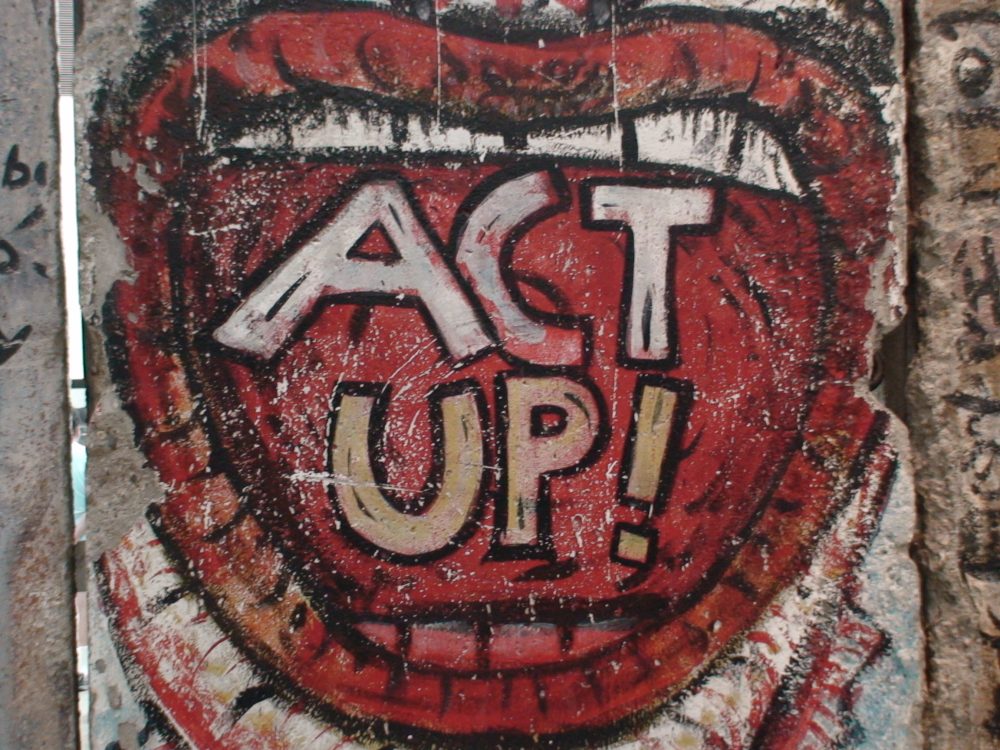
To contextualize the rift depicted in Giannecchini’s work, one must examine the socio-medical environment of France during the late 20th century. ACT UP Paris, founded in 1989 following the model of ACT UP New York, emerged in response to official government inertia, sluggish medical research, and systemic social abandonment during François Mitterrand’s presidency.
Key Milestones in the French HIV/AIDS Crisis:
---------------------------------------------------------------------------------
1981: First official cases of HIV/AIDS reported globally.
1987: Jean-Marie Le Pen advocates for "sidatoriums" on national television.
1989: ACT UP Paris is founded to conduct direct actions ("zaps").
1992: Peak AIDS mortality years in France; death of key cultural figures (e.g., Nils, Guibert).
1996: Introduction of Highly Active Antiretroviral Therapy (HAART), dramatically dropping mortality rates.
---------------------------------------------------------------------------------
Prior to the rollout of HAART (Highly Active Antiretroviral Therapy) in 1996, an HIV diagnosis functioned as a virtual death sentence. For activists in ACT UP Paris, political action was intrinsically linked to personal survival. The group utilized stark, confrontational tactics—such as splashing fake blood on government buildings, organizing public "die-ins," and placing a massive condom over the Obelisk on the Place de la Concorde—to demand rapid drug trials and accessible healthcare.
The Weaponization of Language: The Origin of "Sidaïque"
The explosive confrontation in the Paris café hinges upon a specific linguistic distinction within French political discourse:
               LEXICON OF THE EPIDEMIC IN FRANCE
+-----------------------------------+-----------------------------------+
| Term: "Sidaïque"                  | Term: "Personne Vivant Avec..."   |
+-----------------------------------+-----------------------------------+
| Origin: Coined/Popularized by     | Origin: Human rights and patient  |
| Far-Right (Front National)        | advocacy groups                   |
|                                   |                                   |
| Implication: Pathologizing slur;  | Implication: Neutral, humanizing  |
| frames individuals as vectors     | medical description               |
| of moral and physical decay       |                                   |
|                                   |                                   |
| Historic Context: Used in 1987 to | Historic Context: Adopted by      |
| demand public isolation in        | ACT UP and progressive medical    |
| "sidatoriums"                     | institutions                      |
+-----------------------------------+-----------------------------------+
In May 1987, Jean-Marie Le Pen, leader of the far-right Front National, used the term sidaïque during an interview on channel Antenne 2, proposing that individuals carrying the virus be forcibly isolated from society in dedicated containment facilities called "sidatoriums." Consequently, within French political culture, the word sidaïque is not viewed as a simple archaic descriptor, but as an explicit hate weapon. For survivors of that era, hearing the term used carelessly by a young gay man in a modern café represents a profoundly disturbing historical erasure.
The Literary Lineage of Loss
The narrative explicitly connects its personal drama to a broader canon of French queer literature produced during the height of the crisis:
- Bernard-Marie Koltès (1948–1989): Renowned playwright whose work (In the Solitude of Cotton Fields, Roberto Zucco) dealt with desire, isolation, and covert exchanges. His death in 1989 marked one of the early major cultural losses of the French theater world.
- Hervé Guibert (1955–1991): Journalist and novelist who radically altered public discourse in France regarding AIDS through his 1990 novel To the Friend Who Did Not Save My Life (À l’ami qui ne m’a pas sauvé la vie) and his controversial posthumous film La Pudeur ou l’Impudeur. Guibert exposed the physical degradation of the disease and the hypocrisy of the medical establishment. His 1990 work My Parents (Mes Parents) famously opens with the dedication "To nobody" (À personne).
- Guillaume Dustan (1965–2005): Controversial author and publisher who chronicled post-HAART French gay subculture, self-medication, and barebacking culture in novels like In My Room (Dans ma chambre), representing the raw, nihilistic shift in queer literature during the late 1990s.
Official Statements and Theoretical Perspectives
The central thematic tension of Giannecchini’s text—the struggle to pass down history without producing bitterness or alienation—echoes crucial theoretical debates within queer historiography.
In her landmark 2012 text The Gentrification of the Mind: Witness to an Epidemic Loss, writer and ACT UP New York veteran Sarah Schulman reflects on the systemic failure to transmit the reality of the crisis to subsequent generations:
"We had been focused on conveying the heroism of ACT UP. But we had not succeeded at conveying the suffering. We had not conveyed how profoundly oppressed we had been."
Schulman critically addresses the modern disconnect between surviving activists and younger generations, observing that contemporary youth often treat AIDS history as an aesthetic or academic artifact rather than a living, traumatic legacy:
"He didn’t have anything to offer me… He just wanted me to give him the interview. Recite my stories. I realized that he was looking for something to care about. He was looking for a hook."
Reflecting on her time with Myriam and her reading of Schulman’s work, Giannecchini offers a sober assessment of her own generation’s position at the intersection of survivor grief and contemporary distance:
"We are the inheritors of a history of struggle and suffering, of solidarity and of grief, of action and of pain, of engagement. How can all of this be told? Sometimes, something is lost in the transmission… It isn’t only that a part of the story fails to reach us; it is, I believe, that they have trouble sharing it. The trauma of those years can’t be communicated in words."
Future Outlook: Archival Inheritance and the Transmission of Trauma
Giannecchini’s An Army of Lovers Cannot Fail underscores a critical challenge facing modern LGBTQ+ institutions, archivists, and cultural historians: how to preserve the memory of the HIV/AIDS epidemic when its primary witnesses are aging or deceased, without reducing their lived horror into mere historical trivia.
THE PERSISTENT CHALLENGES OF QUEER HISTORIOGRAPHY

1. The Institutional Risk:
   ┌─────────────────────────────────────────────────────────┐
   | Sanctification of history into sanitized, heroic        |
   | narratives that exclude real loss, anger, and trauma.   |
   └─────────────────────────────────────────────────────────┘
                               │
                               ▼
2. The Generational Gap:
   ┌─────────────────────────────────────────────────────────┐
   | Younger generations inheriting political freedom       |
   | without fully grasping the systemic death that bought it.|
   └─────────────────────────────────────────────────────────┘
                               │
                               ▼
3. The Path Forward:
   ┌─────────────────────────────────────────────────────────┐
   | Developing relational spaces, intergenerational dialogue|
   | and nuanced literature that honors complex grief.       |
   └─────────────────────────────────────────────────────────┘
The text demonstrates that intergenerational queer relationships often bear the unspoken weight of this historical divide. Where younger queer people may seek mentorship or romantic validation, older survivors often carry an unassuaged grief that converts into anger when confronted with modern frivolity or historical ignorance.
As Fitzcarraldo Editions prepares to release the translated work, An Army of Lovers Cannot Fail stands as a pivotal intervention in contemporary European literature. It asserts that true historical inheritance requires more than reading archives or consuming art from the past—it demands a willingness to face the uncomfortable, raw, and unhealed trauma of those who survived, acknowledging that some losses remain permanently beyond translation.





Comments
Facebook App ID not configured. Please add it in the Customizer.