
Executive Overview
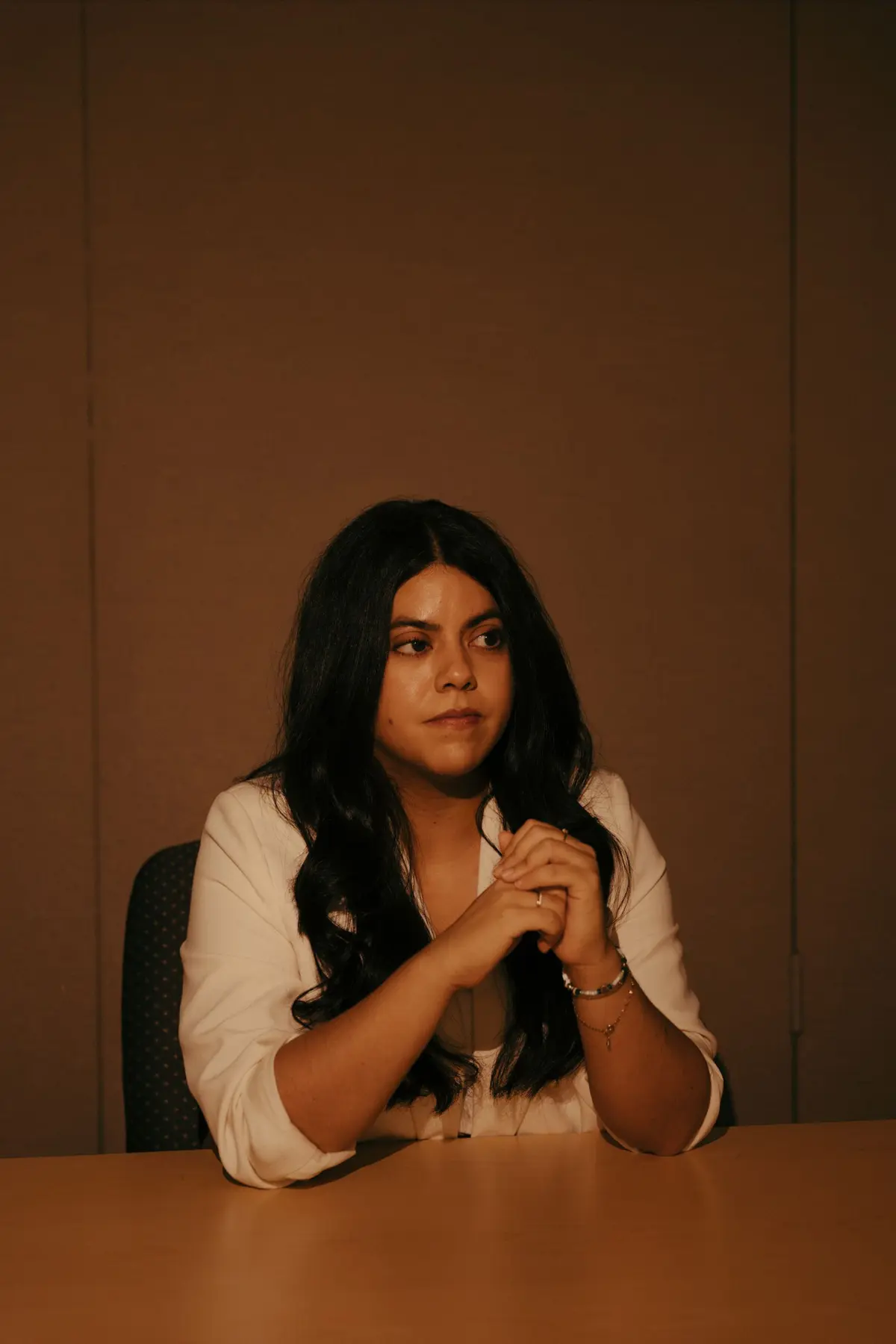
In the sterile conference rooms of Wall Street and the high-stakes campaign headquarters of Washington, D.C., Daysi González is recognized as a formidable strategist. At thirty-one, she is an equity partner at Solidarity Strategies, a prominent Democratic consulting firm on K Street. Her expertise lies in direct mail—crafting the targeted, tactile post office literature that shapes voter perception in high-stakes congressional and presidential races across the United States.
Yet, behind her command of campaign finance loopholes, message strategy, and voter turnout operations lies an extraordinary legal paradox: González is an undocumented strategist shaping the future of American governance while facing imminent forced departure from the country.
González is one of an estimated 200,000 Salvadorans living in the United States under Temporary Protected Status (TPS), a humanitarian dispensation currently winding down amid shifting executive policies and long-standing legislative inaction. Her legal authorization is anchored to an expiring calendar date—September 9—creating a hard deadline that threatens to dismantle twenty-five years of life, education, and professional building in America.
Read Also
Her narrative exposes a profound structural friction in contemporary American politics. While top Democratic organizations, including the Democratic Congressional Campaign Committee (DCCC), disburse hundreds of thousands of dollars to leverage her political acumen, the political apparatus has proven entirely unable—or unwilling—to insulate key operatives like her from systemic immigration enforcement. González’s impending departure highlights not only the precarious reality of TPS beneficiaries but also the broader institutional paralysis surrounding federal immigration reform.
Detailed Chronology: From Earthquake Relief to K Street
+-----------------------------------------------------------------------------------+
| CHRONOLOGY OF DAYSI GONZÁLEZ'S LIFE & CAREER                                      |
+-----------------------------------------------------------------------------------+
| Dec 2000    : Arrives in U.S. from El Salvador on tourist visa (Age 5)             |
| Feb 2001    : Devastating earthquakes hit El Salvador; U.S. grants TPS             |
| 2001-2015   : Raised in Tracy, CA; attends BYU-Idaho under LDS church subsidy       |
| 2016        : Confronts anti-immigrant rhetoric during election cycle              |
| 2019        : Recruited by Chuck Rocha to Solidarity Strategies                    |
| 2020        : Manages firm operations during Bernie Sanders presidential campaign   |
| 2021-2024   : Promoted to Equity Partner; services DCCC and high-profile campaigns |
| Sep 2025    : Final TPS expiration deadline; prepares for overseas relocation    |
+-----------------------------------------------------------------------------------+
Early Arrival and Childhood in California
González’s story in the United States began in December 2000, when she arrived from El Salvador at the age of five alongside her family. Entering on tourist visas, her parents dressed her carefully—cardigan, frilly socks, and a white dress—an effort to convey middle-class respectability to border officers at San Francisco International Airport.
Months after their arrival, in early 2001, catastrophic earthquakes struck El Salvador. In response to the humanitarian crisis, President George W. Bush’s administration extended Temporary Protected Status to Salvadorans residing within the United States. This designation allowed González and her family to remain legally, provided they routinely re-registered, submitted to background checks, and paid recurring federal processing fees.
The family eventually established roots in Tracy, California, a suburban city in the Central Valley. Surrounded by a diverse population of Mexican and Filipino families, González blended seamlessly into the civic fabric. The primary anomaly of her upbringing was religious rather than cultural: her family was devoutly Mormon.
Higher Education and Political Awakening
Although TPS provided work authorization and protection from deportation, it conferred no pathway to permanent residency or federal financial aid. When González sought higher education, her options were constrained by cost. She enrolled at Brigham Young University-Idaho, where tuition was heavily subsidized by the Church of Jesus Christ of Latter-day Saints.
Her time in Idaho coincided with the political ascent of Donald Trump in 2016, an era marked by heightened anti-immigrant rhetoric. During this period, González encountered stark institutional coldness. A university professor, noticing her Spanish surname, derisively remarked, "You better hope Trump doesn’t win."
When she sought legal counsel regarding her long-term immigration options, an attorney advised her to find an American citizen to marry—a strategy she rejected out of concern for maintaining her independence and avoiding potential vulnerability.
Rising Through the Ranks of Washington Strategy
In 2019, González was introduced to Chuck Rocha, a veteran Mexican-American political strategist and founder of Solidarity Strategies. Known for mentoring minority political talent and frequently appearing as a commentator on CNN, Rocha recognized González’s resilience and tactical intelligence.
González joined Solidarity Strategies at a pivotal moment. Shortly after her hiring, the firm was retained to direct Hispanic outreach for Senator Bernie Sanders’s 2020 presidential primary campaign. With much of the leadership focused on the Sanders effort, González assumed primary responsibility for managing the firm’s broader client base from its K Street office in Washington, D.C.
Her operational efficiency and creative output quickly made her indispensable. Within a few years, she rose from an entry-level associate to an equity partner, negotiating strategy for national campaigns, designing visual identity assets, and executing direct-mail campaigns across competitive districts nationwide.
Supporting Context & Quantitative Metrics
The Business and Strategy of Political Mail
Despite the proliferation of digital ad spending and influencer campaigns, direct physical mail remains a foundational pillar of campaign strategy, particularly in down-ballot races. At training seminars, such as one held in New York’s Financial District for first- and second-generation candidates, González emphasizes the tactical psychological value of physical mailers.
"People have to look at it," González explained to prospective candidates. "Even if it’s just, you know, their mailbox to the recycling bin—they have to look."
Her portfolio of work demonstrates the integration of culturally nuanced design with policy messaging:
- Alexandria Ocasio-Cortez Campaign: High-impact typography and targeted progressive messaging.
- Ruben Gallego for Senate: Lotería-themed postcard campaigns ("Vote for our community, vote for Ruben Gallego") designed to engage Hispanic demographics in Arizona.
- Dolores Huerta Foundation: Día de los Muertos-themed non-partisan civic literature under the banner "Vota Palooza".
- Congressional Strategy: Navigating independent expenditure regulations, including public campaign web postings designed to legally signal spending priorities to political action committees (PACs).
Financial and Demographic Impact
González’s central role in the Democratic campaign architecture is reflected in major financial disclosures and broader federal policy metrics:
| Metric / Category | Quantitative Value | Relevance / Source |
|---|---|---|
| DCCC Payments to Solidarity Strategies | $180,000+ | Federal Election Commission (FEC) filings (Current Cycle) |
| Salvadoran TPS Holders Facing Expiration | ~200,000 | Department of Homeland Security (DHS) Estimates |
| Broader Immigrant Population Under "Delegalization" | ~1,000,000 | Cumulative TPS, DACA, and Humanitarian Parole Beneficiaries |
| Duration of González’s U.S. Residency | 25 Years | Continuous residency since December 2000 |
| TPS Renewal Interval | Every 18 Months | Mandatory re-application, fee submission, and background check cycle |
    [Total U.S. Immigrants Facing Status Expiration/Rollback]
    +-------------------------------------------------------+ ~1,000,000 Total
    | [Salvadoran TPS Holders]                              |
    | +---------------------------------------------------+ | ~200,000
    | | [Daysi González - Key Democratic Operative]      | |
    | +---------------------------------------------------+ |
    +-------------------------------------------------------+
Official Statements and Political Commentary
Inside Solidarity Strategies: Powerlessness at the Top
The contrast between political influence and structural powerlessness is deeply felt within Solidarity Strategies. Chuck Rocha expressed frustration over his inability to protect his key business partner, despite his extensive national political network.

"Chuck Rocha don’t need to be over there if I’m gonna have a candidate screaming at me and telling me that I’m stupid," Rocha stated, reflecting on González’s client management skills. "That does not go good for Chuck. But Daysi has a way to tell them that they’re stupid, and to do it in such a nice way."
Rocha admitted to quietly reaching out to contacts within both Democratic leadership and the Trump White House to explore options for relief, only to confront the hard limits of political lobbying on administrative immigration law.
"You mean I can’t call a senator? I can’t call the chairman of the Hispanic Caucus and just fix this shit?" Rocha remarked. "No matter how many important people you know, no matter how much money you think you have, that you’ve made at this little firm—none of that matters."
Rocha pointedly cited systemic historical omissions by national leadership, including the decision during the Obama administration not to pass comprehensive immigration reform when Democrats held majorities in both houses of Congress. "Now me and my team are paying for that," he added.
Critiques of National Democratic Strategy
Immigration policy advocates and former officials argue that González’s situation reflects a strategic hesitation within the Democratic Party to center immigration reform in national platforms.
Andrea Flores, a former border official in the Biden administration and veteran of the Obama administration, noted that political strategists often retreat from proactive immigration legislation out of tactical fear. She highlighted that House Minority Leader Hakeem Jeffries omitted structural immigration reform from major priority announcements detailing the party’s legislative agenda.
"There may not be an immediate electoral gain in prioritizing immigration," Flores stated. "But there is an absolute electoral risk and loss by allowing the system to be as dysfunctional as it is, and allowing the Republican Party to continue to weaponize that dysfunction against Democrats."
Rafael Collazo, Executive Director of the UnidosUS Action Fund, framed the loss of talent like González as an institutional failing across the political spectrum.
"This underscores a failure of leadership that we’re all responsible for," Collazo stated. "But in particular, Congress, and in particular, the people that claim to be more progressive on immigration issues—the Democratic Party, Democrats in Congress—they haven’t done enough. None of them have done enough."
Tony Cárdenas, former California Congressman and long-time client of the firm, acknowledged the narrative limits faced by legislators when confronted by individual cases of legal uncertainty:
"Should Democrats do more? Yes, and the opportunity to do more is really going to be in their hands when they control the House, when they control the Senate, when they control the Presidency… I worked my butt off, man… and you only have so much staff."
Future Outlook: Exile, Adaptation, and Personal Resilience
As her September 9 deadline approaches, González has begun the logistical process of dismantling her life in the United States. Over twenty-five years, she obtained a college degree, built an executive career, co-purchased a home in Northern Virginia with her sister, and cleared the final auto loan payment on her Honda HR-V.
Unlike previous 18-month extension cycles, where administrative reprieves or federal court injunctions provided temporary extensions, the current political environment leaves virtually no remaining legal appeals. González has begun clearing out her personal belongings from the K Street firm, preparing to liquidating her assets, sell her vehicle, and leave the country.
+-------------------------------------------------------------------------------+
| GONZÁLEZ'S RELOCATION & TRANSITION TIMELINE                                  |
+-------------------------------------------------------------------------------+
| [Phase 1: U.S. Winding Down]   --> Clear Office, Sell Assets, Depart U.S.   |
| [Phase 2: Return to El Salvador] --> Temporary Remote Work, Assess Safety      |
| [Phase 3: Relocation to Spain]  --> Apply for Digital Nomad Visa / Citizenship |
+-------------------------------------------------------------------------------+
Relocation Strategy and Overseas Remote Work
González’s initial destination is El Salvador, a country she left as a small child and where few immediate relatives remain. Solidarity Strategies has offered to retain her as a remote consultant, though international connectivity and dynamic client management present operational hurdles.
To establish long-term stability, González is preparing an application for a Digital Nomad Visa in Spain. Spanish immigration frameworks offer an expedited two-year path to citizenship for nationals of former Spanish colonies, including Latin American states—a mechanism González describes with pragmatic irony as "a sort of reparations program."
The Human Cost of Institutional Inaction
González has quietly documented her final weeks in the United States on social media, treating the platforms less as a public political campaign and more as a personal archive. In private moments, she has sought comfort in contemporary culture, attending the final U.S. stadium performances of the South Korean group BTS.
Her narrative illustrates the profound disconnect between the high-level campaign machinery operating in Washington and the real-world impact of American immigration policy. As candidates prepare for upcoming midterms relying on direct-mail strategies designed by Solidarity Strategies, the architect of those strategies will be watching from abroad.
"I don’t know what more they could add," González reflected, describing her conversations with the political figures she helped elect, "other than like, ‘Damn, that sucks.’ And that’s why I want to win and fight for immigrants."



Comments
Facebook App ID not configured. Please add it in the Customizer.