On January 29, 1863, in a frozen valley of what is now southeast Idaho, a detachment of Union Army troops carried out one of the most catastrophic and unacknowledged atrocities in American history. Within a span of several hours, soldiers under the command of Colonel Patrick Edward Connor slaughtered an estimated 250 to 500 Shoshone men, women, and children.
The Bear River Massacre surpassed the casualties of far more widely recognized military engagements and state-sponsored violence against Native Americans, such as the 1864 Sand Creek Massacre and the 1890 Wounded Knee Massacre. Yet, for more than a century, the event remained a historical footnote. Overshadowed by the daily carnage of the American Civil War and obscured by a historiography dominated by white settler narratives, the massacre faded from national consciousness.
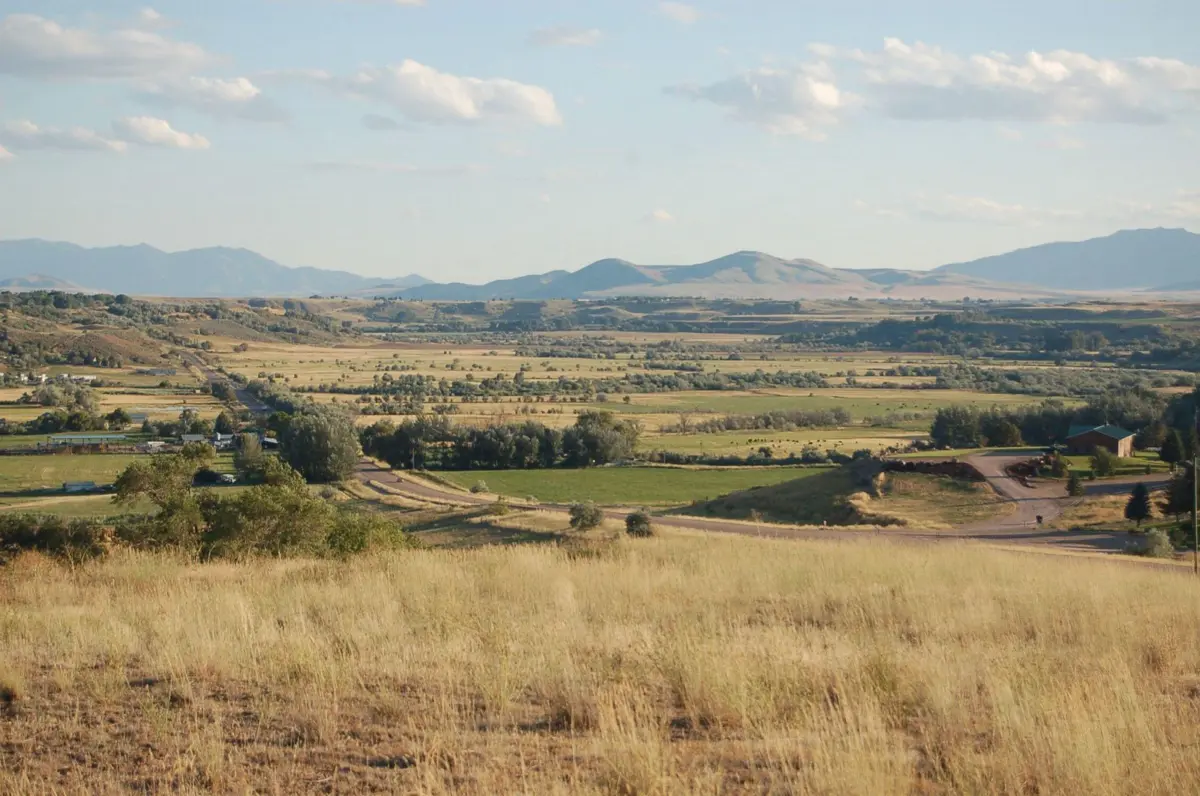
Today, however, the Northwestern Band of the Shoshone Nation is reclaiming this deeply scarred landscape. Through an ambitious, multi-faceted land restoration and cultural revitalization project, the tribe is transforming the site of generational trauma into a living monument. By eradicating invasive species, freeing the imprisoned river, and reintroducing native flora and fauna, the Shoshone are not merely healing an ecosystem—they are correcting the historical record and asserting an enduring, unyielding presence.
Detailed Chronology: The Road to the Bear River Massacre
To understand the catalysts that led to the bloodshed at Bear River, historians must examine the compounding pressures of territorial expansion, shifting political allegiances, and the collision of two fundamentally incompatible ways of life.
The Shoshone World and the Tides of Settlement
Long before the arrival of European and Euro-American settlers, the nomadic Shoshone people inhabited a vast geographic expanse stretching across modern-day Wyoming, Utah, Idaho, Nevada, and California. The Eastern Shoshone developed a sophisticated equestrian and bison-hunting culture along the high plains, while the Western Shoshone adapted to the arid desert basins and rangelands, subsisting on wild plants, fish, and small game. The name Shoshone derives from sosoni, a word denoting high-growing grasses, reflecting their deep integration with the local ecology.
As Mormon pioneers and other white settlers arrived in the Great Basin in the mid-19th century, initial diplomatic overtures quickly deteriorated. Brigham Young, leader of the Church of Jesus Christ of Latter-day Saints, famously advocated a policy of "feed them rather than fight them" to maintain peace with local tribes. However, as waves of homesteaders appropriated fertile valleys, critical Shoshone hunting and fishing grounds were systematically fenced off and destroyed.
Deprived of their traditional sustenance, segments of the starving Indigenous population turned to poaching livestock and taking food stores to survive. Sympathy among settlers evaporated. Local newspapers and authorities began characterizing the Shoshone as vagrants and threats. This generalized hostility intensified after isolated skirmishes resulted in white casualties, leading regional leaders to conflate all Indigenous bands under a single banner of criminality.
Colonel Connor and the Escalation of Force
In response to escalating tensions, the U.S. government tasked the Third Regiment California Volunteer Infantry, led by Colonel Patrick Edward Connor, with subduing the Native populations of the intermountain West. An immigrant from County Kerry, Ireland, Connor viewed Indigenous resistance as outright treason. He arrived in the territory bearing warrants for the arrest of several tribal leaders and openly stated his intention to take no prisoners.
By late January 1863, regional media outlets were openly clamoring for a decisive strike. On January 28—just one day before the attack—the Deseret News published an editorial expressing hope that the volunteer soldiers would successfully "wipe them out."
The Attack: January 29, 1863
Unaware of the total annihilation intended for them, a band of Shoshone had gathered in a sheltered valley featuring natural hot springs, a traditional winter sanctuary where tribal members sought refuge from the bitter cold. The morning of January 29 was bitterly frigid, with snowpacks several feet deep.
When Connor’s troops descended upon the camp at dawn, many tribal members were still asleep. Shoshone leaders had anticipated a parley or an opportunity to surrender their chiefs peacefully; instead, Union soldiers opened fire without warning. Armed primarily with bows and arrows, tomahawks, and a severely limited supply of old muskets, the Shoshone were catastrophically outgunned.
As soldiers swept through the village, noncombatants fled toward the freezing waters of the Bear River in a desperate bid for survival. Accounts recorded by descendants, such as Mae Timbimboo Parry, detail harrowing acts of survival and desperation. Some mothers, fearing that the cries of infants would betray hiding places beneath riverbanks, faced impossible, agonizing choices. Others, including a 12-year-old boy named Yeager Timbimboo (grandfather to Mae and son of Chief Sagwitch), survived by playing dead among the hundreds of corpses strewn across the crimson snow.
By early afternoon, the slaughter was complete. Colonel Connor suffered minimal casualties among his ranks and was subsequently promoted to brigadier general for his actions.
The disparity in historical memory between the Bear River Massacre and events like the Battle of Little Bighorn or Wounded Knee is not accidental; it is the product of media neglect, geopolitical distraction, and institutional erasure.
Historical Event
Date
Estimated Native Casualties
Primary Historical Framing
The Bear River Massacre
January 29, 1863
250 – 500+
Minimized due to contemporaneous Civil War reporting; historically framed as a "battle."
The Sand Creek Massacre
November 29, 1864
150 – 230
Widely publicized political scandal; sparked congressional investigations.
The Battle of Little Bighorn
June 25–26, 1876
~30–40 (Warrior losses)
Dominated American cultural memory as a major military defeat ("Custer’s Last Stand").
The Wounded Knee Massacre
December 29, 1890
250 – 300+
Indelibly etched into national memory; frequently taught as the closure of the Indian Wars.
The Mechanics of Erasure
Several factors converged to push Bear River into obscurity:
The Shadow of the Civil War: In January 1863, the eyes of the Union were riveted on eastern battlefields such as Fredericksburg and Murfreesboro. A remote engagement in the Utah/Idaho territory commanded little journalistic bandwidth.
The Boarding School System: For generations, the U.S. government enforced policies designed to systematically eradicate Indigenous languages and oral traditions, operating under the brutal maxim to "kill the Indian to save the child." This policy fractured the intergenerational transmission of eyewitness histories.
Historiographical Bias: For over a century, standard American textbooks relied almost exclusively on military dispatches and pioneer journals, which routinely whitewashed targeted massacres of noncombatants as tactical victories against hostile forces.
It was not until the late 20th century that scholarly works—most notably Brigham D. Madsen’s 1985 Shoshoni Frontier and the Bear River Massacre and Darren Parry’s 2019 The Bear River Massacre: A Shoshone History—began to center the Indigenous perspective, drawing heavily on oral histories preserved by tribal elders like Mae Timbimboo Parry.
Official Statements & Indigenous Perspectives
The modern journey of the Northwestern Band of the Shoshone Nation is characterized not by bitterness, but by an active, intentional pursuit of dignity, historical truth, and ecological stewardship.
"The Bear River Massacre does not define us today. The loss has made us stronger, more resilient. It’s a horrific thing. I can’t even imagine what my ancestors suffered. But playing the victim here and becoming bitter is not the way to honor our ancestors. We honor them by telling their story."
— Darren Parry, former chairman of the Northwestern Band of the Shoshone Nation
The community’s efforts to rename and reclaim the site reflect this philosophical stance. Designated a National Historic Landmark in 1990 under the nomenclature "Bear River Battleground," tribal leaders immediately challenged the term.
"When you attack a sleeping village of Indian men, women and children, you can’t call that a battle."
— Brad Parry, vice chairman of the Northwestern Band of the Shoshone Nation
In 1993, following persistent advocacy by tribal members, the federal government officially changed the designation to the Bear River Massacre Site. Decades later, the tribe took the ultimate step of sovereign reclamation.
Future Outlook: Healing the Land and Rebuilding Culture
In 2018, backed by tribal resolution and philanthropic support, Brad Parry spearheaded the purchase of 350 acres encompassing the core massacre grounds. This acquisition established the largest contiguous landholding owned directly by the Northwestern Shoshone Nation in the area, setting the stage for a sweeping environmental and cultural renaissance known as the Wudaogwa (Bear River) restoration project.
Ecological Restoration as Cultural Revitalization
The landscape inherited by the tribe had suffered decades of agricultural degradation. The Bear River itself had been artificially channelized and dammed, while invasive species—most notably water-hogging Russian olive trees—choked out native riparian zones.
Under Brad Parry’s direction, conservationists and tribal youth embarked on a comprehensive rehabilitation initiative:
Riparian Rehabilitation: Native species—including willows, milkweed, chokecherries, cedar, and Indian tobacco—were replanted across the valley.
Hydrological Unchaining: The Bear River was released from agricultural levees, allowing its waters to meander naturally and recreate life-sustaining wetlands.
Wildlife Reintroduction: Beavers were brought back to the ecosystem to engineer natural dams, stabilize stream banks, and revive local biodiversity.
Beyond its immediate local benefits, the restoration of the Bear River carries regional ecological significance. As the single largest tributary to the imperiled Great Salt Lake, the revitalized river system is projected to return thousands of acre-feet of water annually to the dwindling lake basin.
A Living Monument
For the Shoshone people, the ultimate objective of this monumental undertaking transcends ecological metrics. It is an act of cultural continuity.
"We want this to be a place where our kids grow up and learn about our history, the plants and medicines that we used, how to grow Indian tobacco, the chokecherry jam we used to make, how we used sagebrush and cedar for ceremony, our ancient way of life. The settlers honored their ancestors by building monuments and putting up statues. Our way of honoring them is in the dirt, by bringing nature back into balance. The massacre site is now a place of healing. It is a living statement that we’re still here."
— Brad Parry, Vice Chairman, Northwestern Band of the Shoshone Nation
Through dirt, water, native flora, and the unyielding transmission of ancestral memory, the Shoshone are ensuring that the dark winter morning of January 29, 1863, is never forgotten—not as a monument to defeat, but as the bedrock upon which a resilient, thriving culture continues to write its future.

/https://tf-cmsv2-smithsonianmag-media.s3.amazonaws.com/filer_public/7c/51/7c51535e-f62b-4688-80a7-40a744294846/2m5hrrj.jpg)
/https://tf-cmsv2-smithsonianmag-media.s3.amazonaws.com/filer_public/7c/51/7c51535e-f62b-4688-80a7-40a744294846/2m5hrrj.jpg)
/https://tf-cmsv2-smithsonianmag-media.s3.amazonaws.com/filer_public/69/e7/69e7f694-785c-404a-89aa-2cb657394b3a/bighorn.jpg)
/https://tf-cmsv2-smithsonianmag-media.s3.amazonaws.com/filer_public/dc/ea/dcea2226-df95-48e7-85b2-6a207729ad6b/ft_washakie.jpg)
/https://tf-cmsv2-smithsonianmag-media.s3.amazonaws.com/filer_public/6e/f9/6ef9d1ec-746e-46cc-8e8a-19abe817821b/2m5hnpg.jpg)
/https://tf-cmsv2-smithsonianmag-media.s3.amazonaws.com/filer_public/08/43/08437d68-9801-4406-8b01-ef68c49949e6/pioneer_historic_byway_-_bear_river_massacre_overlook_-_nara_-_7721060.jpg)

Comments
Facebook App ID not configured. Please add it in the Customizer.