
Executive Overview
London’s historic skyline is defined by the magnificent dome of St. Paul’s Cathedral, an architectural masterpiece that has served as the spiritual heart of the capital and the seat of the Bishop of London for centuries. Yet, this bastion of Anglican tradition and British heritage has suddenly found itself at the epicenter of a fierce cultural storm.
In an announcement that has reverberated far beyond ecclesiastical circles, cathedral officials revealed a landmark, four-year partnership with Fabric—one of the capital’s most influential and iconic electronic music nightclubs, globally renowned for its cutting-edge curation of house, techno, and drum and bass.
While cathedral administrators champion the initiative as a bold, forward-thinking strategy to engage younger demographics and revitalize visitor numbers through world-class contemporary arts programming, the backlash has been swift and severe. Descendants of national heroes, preservationists, and traditionalist churchgoers have condemned the collaboration as a desecration of a hallowed national monument.
Read Also
At the center of the dispute lies a profound philosophical tension modernizing institutions face: how to balance the financial and cultural imperative of audience outreach with the solemn preservation of sacred, historical space. With critics drawing lines between sacred worship and rave culture, this developing saga promises to force a national conversation regarding the boundaries of heritage management, secularization, and the commercialization of sacred architecture in twenty-first-century Britain.
Detailed Chronology of Events
To understand the magnitude of the current controversy, one must trace the timeline of events that led to this unprecedented cultural collision between the Church of England and London’s underground clubbing scene.
The Evolution of Cathedral Programming (2024–2025)
St. Paul’s Cathedral is no stranger to secular artistic performances, though historically these have been curated with extreme reverence for the building’s religious acoustics and spiritual purpose.
- Early 2024: The cathedral hosted an atmospheric, ambient live performance by Australian singer-songwriter RY X, which was widely praised for utilizing the vast, echoing nave to create a meditative, spiritual ambiance.
- Mid-2025: Punk-rock icon and poet Patti Smith performed a rare, intimate acoustic-leaning set within the cathedral walls. While raising eyebrows among ultra-traditionalists, the event was largely absorbed as an acceptable extension of modern cultural engagement.
The Fabric Partnership Announcement (Late 2025–Early 2026)
Buoyed by the perceived success of these isolated cultural interventions, cathedral leadership began exploring long-term strategic alignments with prominent London cultural institutions. Discussions culminated in a multi-year collaborative agreement with Fabric, a titan of London’s electronic music ecosystem.
When the four-year partnership was officially made public, it sent immediate shockwaves through traditionalist organizations, heritage societies, and descendants of historical figures interred within the cathedral crypts. The announcement immediately transitioned from a routine cultural press release into a national front-page debate over the commercialization of sacred spaces.
Supporting Context & Metrics: History, Art, and Heritage at Stake
To fully appreciate why this partnership has provoked such an explosive reaction, one must examine the immense weight of history, art, and national memory embedded within the stone walls of St. Paul’s Cathedral.
Architectural and Historical Significance
Designed by Sir Christopher Wren and completed in the early 18th century following the Great Fire of London, St. Paul’s is an architectural triumph of English Baroque style. It has borne witness to the defining moments of modern British history:
- State Funerals: The solemn farewells of wartime Prime Minister Winston Churchill (1965) and "Iron Lady" Margaret Thatcher (2013).
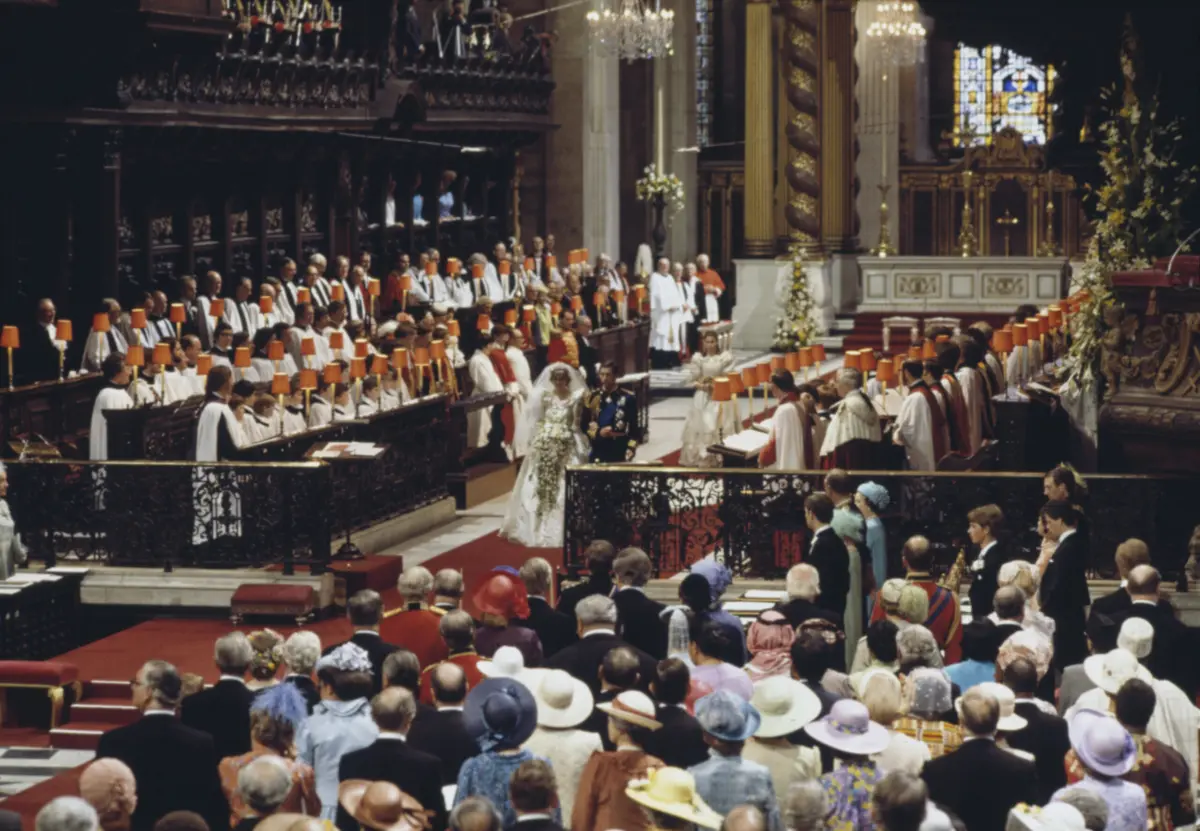
- Royal Celebrations: The fairy-tale 1981 wedding of then-Prince Charles to Lady Diana Spencer.
A Repository of Sacred and Secular Masterpieces
The cathedral is far more than a house of worship; it is a premier national gallery and mausoleum. Visitors walk among world-renowned art and sculpture, including:
- A version of William Holman Hunt’s deeply spiritual 1853 masterpiece, The Light of the World, completed with assistance from Edward Robert Hughes.
- Henry Moore’s tender, modernist sculpture Madonna and Child (1943).
The Final Resting Place of Heroes
Beneath the grand floors lie the crypts of Britain’s most celebrated military leaders, scientists, and artists, including painter J.M.W. Turner, inventor Alexander Fleming, and, most notably, Vice-Admiral Horatio Nelson. Nelson’s naval heroics during the Napoleonic Wars—culminating in his glorious yet fatal victory at the Battle of Trafalgar in 1805—cemented his status as an immortal pillar of British identity. It is the sanctity of these resting places that has ignited the most impassioned resistance to the Fabric partnership.
Official Statements and Stakeholder Perspectives
The fault lines of the debate are sharply drawn between cathedral administrators striving for modern relevance and traditionalists fiercely guarding historical sanctity.
The Cathedral’s Defense: Engaging New Audiences
Defending the controversial alliance, Sandra Lynes Timbrell, Director of Visitor Engagement at St. Paul’s Cathedral, emphasized the necessity of artistic innovation to keep historic institutions alive and financially sustainable in a post-pandemic landscape.
"The planned events will showcase world-class talent and create unforgettable experiences for audiences," Timbrell stated in an official release. She expressed optimism that the collaboration with Fabric would successfully bridge demographic gaps, introducing a younger, more diverse generation of visitors to the cathedral and encouraging them "to discover and engage with this historic building in new and exciting ways."
Cathedral proponents argue that historical churches have always been community hubs, patronizing the cutting-edge art of their respective eras, and that electronic music and immersive soundscapes are simply the contemporary manifestation of this artistic tradition.
The Backlash: Descendants and Preservationists Speak Out
Conversely, the opposition has mobilized rapidly, led by descendants of those entombed within the cathedral and representatives of heritage protection societies. The Times of London first brought the family’s indignation to light, noting that critics view the four-year deal as a dangerous escalation far beyond benign, one-off musical recitals.
Andy Smith, Press Officer for the Nelson Society:
"He was the absolute hero of his age. It is a profound insult to his memory, but to all those national heroes who are either buried or memorialized at St. Paul’s Cathedral."
Peregrine Hood, President of the Nelson Society and a Direct Descendant of Admiral Nelson:
In a scathing statement to the Daily Telegraph, Hood articulated the profound despair felt by traditionalists:
"Is nothing sacred any more? What a sad reflection on where spiritual integrity and Christianity are today. St. Paul’s Cathedral positioning itself in this way is deeply depressing. This extends far beyond Nelson. St. Paul’s is one of the great sacred spaces of Christianity and a place of enormous significance to our national life and history."
Critics point out that Fabric, while a legitimate and culturally revered institution within the realm of electronic dance music, carries an ethos rooted in club subculture, late-night hedonism, and high-decibel bass culture—elements they argue are fundamentally incompatible with the solemnity, prayer, and quiet reflection required of a consecrated Christian cathedral.
Future Outlook: The Road Ahead for St. Paul’s and Fabric
As the ink dries on this four-year agreement, the immediate future of the St. Paul’s–Fabric partnership remains shrouded in uncertainty and intense public scrutiny.
Key Questions Facing the Partnership:
- Programming Boundaries: How will cathedral authorities curate Fabric-associated events to ensure they respect the sacred architecture and religious sensitivities of the congregation? Will performances lean toward ambient electronic soundscapes, or will the beats resemble the club’s signature high-energy underground nights?
- Financial Pressures vs. Moral Authority: Like many historic European churches, St. Paul’s faces exorbitant maintenance and operational costs with dwindling state subsidies. Can the Church of England successfully monetize its cultural assets without alienating its core worshipping community and donors?
- Regulatory and Diocesan Oversight: Will internal pressure from the Bishop of London’s diocese or heritage oversight bodies force concessions, revisions, or scaling back of the planned events over the next four years?
Conclusion
The collision between St. Paul’s Cathedral and Fabric is much more than a local London news story; it is a cultural litmus test for the modern world. It forces historic institutions to ask painful questions: Must a sacred space adapt to the rhythms of contemporary secular youth culture to survive, or does doing so strip away the very soul that makes the space sacred in the first place?
As the first collaborative events draw near, all eyes will be on the great dome of St. Paul’s—watching to see whether this bold alliance will successfully forge a vibrant cultural bridge, or whether it will fracture the delicate bond connecting Britain’s storied past with its restless future.





Comments
Facebook App ID not configured. Please add it in the Customizer.