
Executive Overview
The rise of the digital creator economy has fundamentally altered traditional socio-economic boundaries, offering marginalized individuals an unprecedented pathway to financial independence, social mobility, and public agency. In South Asia, where rigid class stratifications and labor inequalities have historically constrained the prospects of domestic workers, the advent of short-form video platforms has acted as an equalizer.
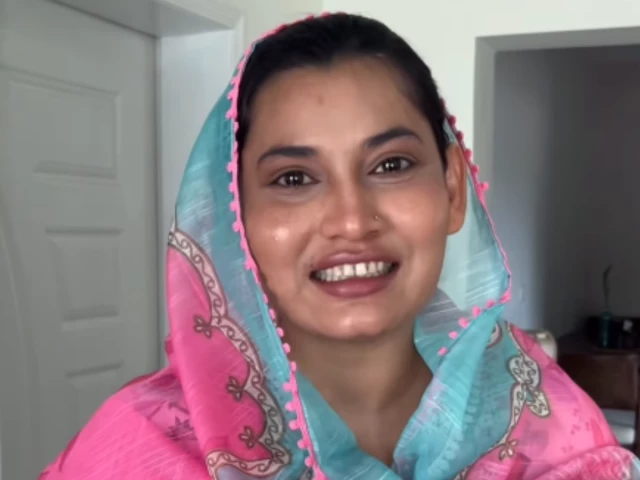
A quintessential embodiment of this structural shift is the viral Pakistani content creator widely known as the “DHA wali maid.” Based in Lahore, this former domestic worker has completed a remarkable transformation into a digital personality with a multi-platform following exceeding one million subscribers. Her journey recently reached a profound milestone when she announced the enrollment of her three children into a well-regarded urban private school.
Documented via an emotional Instagram reel, the milestone not only highlights the personal triumphs of a single mother but also serves as a potent case study on the democratization of digital media, the power of algorithmic visibility, and the generational impact of educational empowerment. This report examines her trajectory, the mechanics of her digital ascent, the broader socioeconomic implications of her narrative, and the cultural resonance of her journey across Pakistan’s digital landscape.
Read Also
Detailed Chronology: From the Margins of Labor to the Digital Forefront
1. The Domestic Sphere and the Birth of Content Creation
For years, the creator’s life mirrored that of millions of working-class women in Pakistan. She labored as a domestic worker in the upscale, affluent neighborhoods of Defense Housing Authority (DHA) in Lahore. Her daily routine involved the grueling, low-wage tasks typical of domestic labor: cooking, cleaning, and maintaining households for employers who belonged to a vastly different socioeconomic stratum.
Recognizing the ubiquitous nature of smartphones and the rising popularity of lifestyle vlogging, she began documenting her realities. Unlike traditional influencers who curate opulent, unattainable lifestyles, her early content offered a raw, unfiltered window into the daily grind of a working-class woman. She shared glimpses of her duties, her perspective on labor, and the realities of navigating class divides in urban Pakistan.
2. Algorithmic Breakthrough and Rapid Scaling
What began as an organic documentation of her life quickly resonated with a broader audience. Viewers on platforms such as Instagram, TikTok, and YouTube were captivated by her authenticity, resilience, and unvarnished perspective. As her subscriber count began to compound, crossing the coveted one-million mark, her content evolved. She transitioned from documenting her labor as a domestic worker to showcasing her newfound independence, entrepreneurial ventures, and the incremental improvements in her family’s quality of life.
3. The Educational Milestone: Investing in the Future
The defining moment of her public journey occurred when she shifted her focus explicitly toward breaking the cycle of generational poverty: education.
In a recent viral Instagram reel, she posed a rhetorical yet poignant question that captured the philosophical core of her journey:
"What can a single woman really achieve?"
Answering her own question, she articulated a vision centered on systemic upliftment through education:
"I want my children to become officers, ‘sirs’, so that people work under them and they don’t work under anybody."
The video meticulously chronicled her journey preparing for this transition. It captured her shopping for new school uniforms, followed by scenes of her three children—dressed immaculately in their new attire—heading off to their first day at an upscale Lahore school with bright smiles. This narrative arc resonated deeply across the internet, transforming her from a viral novelty into a respected figure of perseverance and maternal devotion.
Supporting Context & Metrics: The Mechanics of Digital Mobility
To understand the magnitude of the “DHA wali maid’s” success, it is necessary to examine the socio-economic context of domestic labor in Pakistan and the structural dynamics of the country’s creator economy.
+--------------------------------------------------------------------------+
|                  THE SOCIO-ECONOMIC SHIFT MATRIX                         |
+--------------------------+-----------------------------------------------+
| Traditional Path         | Digital Creator Economy                       |
+--------------------------+-----------------------------------------------+
| • Intergenerational      | • Direct monetization via ad-revenue & brands |
|   domestic servitude     | • Ownership of intellectual property & voice  |
| • Sub-minimum wages      | • Algorithmic reach bypassing gatekeepers     |
| • Limited social mobility| • Rapid scaling & community-backed support    |
+--------------------------+-----------------------------------------------+
The Socio-Economic Realities of Domestic Labor
According to the International Labour Organization (ILO) and various domestic labor rights organizations in Pakistan, millions of women and children are employed as domestic workers. Operating largely within the informal economy, these workers face systemic vulnerabilities, including:
- Sub-minimum wages,
- Absence of legal protections or labor rights,
- Social stigmatization, and
- Extremely limited pathways for upward economic or educational mobility for their offspring.
Within this framework, education is often the only viable exit strategy from generational poverty. However, the skyrocketing costs of quality private education in urban centers like Lahore typically place it entirely out of reach for working-class families.
The Evolution of Financial Independence
The creator’s path to funding her children’s education was incremental and strategic. In an earlier interview and video log, she revealed that she had dedicated five years of continuous service to the same employer in DHA. As her online presence grew and began generating alternative revenue streams through platform monetization, brand collaborations, and digital engagement, she achieved financial stability.
Her initial financial milestone was practical and targeted: she saved enough money to enroll her children in a private school in her native village. However, recognizing the disparities in educational standards between rural institutions and top-tier urban academies, she did not stop there. Once her digital earnings scaled sufficiently, she relocated her educational investment to a prominent school in Lahore, ensuring her children access to competitive academic networks.
Official and Cultural Responses: A Unified Digital Chorus
The viral school-readiness video triggered an unprecedented outpouring of emotional support, solidarity, and validation from across the Pakistani cultural ecosystem, uniting mainstream celebrities, influencers, and everyday netizens.
Celebrity Endorsements and Public Resonance
The comments section of her Instagram reel became a digital town hall celebrating working-class triumph:
- Actor Zoha Tauqeer kept her praise concise yet powerful, writing "Mashallah."
- Actor Ghana Ali expressed profound emotional resonance, noting that the clip "makes me so happy."
- Influencer Waliya Barakzai publicly affirmed her solidarity, stating she was proud of the creator’s tenacity.
- Singer Annural Khalid and comedian Ali Gul Pir both left heart emojis, signaling universal cultural approval and respect.
Grassroots and Netizen Reactions
Beyond celebrity endorsements, the public response highlighted a deep-seated cultural appreciation for maternal sacrifice and ambition:
- One follower commented: "I hope we stay here till we see them as officers."
- Another netizen shared an emotional reaction: "I’m crying. This is so wholesome."
- A third user penned a reflective note in Urdu, emphasizing that a determined woman can achieve anything, and concluded with a heartfelt prayer for the children’s academic future.
Future Outlook: Implications for the Creator Economy and Social Mobility
As the “DHA wali maid” continues to expand her digital footprint past the one-million-subscriber milestone, her trajectory offers broader implications for the future of digital media, labor dynamics, and social equity in South Asia.
1. The Democratization of Narrative Agency
Historically, the stories of marginalized populations in Pakistan were mediated by third parties—documentary filmmakers, journalists, or fiction writers—who often framed them primarily through the lens of victimization and despair. Platforms like Instagram and TikTok have inverted this paradigm. By holding the camera, creators from working-class backgrounds take full control of their narratives, framing their lives not just through hardship, but through dignity, ambition, humor, and agency.
2. Redefining Influencer Culture
The saturation of traditional influencer spaces—often dominated by lifestyle content, luxury consumerism, and superficial aesthetics—has created consumer fatigue. Audiences are increasingly gravitating toward "authenticity economies" where creators offer genuine value, relatable struggles, and inspiring redemption arcs. The "DHA wali maid" exemplifies this shift, proving that aspirational content is no longer defined solely by material wealth, but by human resilience and triumph over systemic barriers.
3. Long-Term Societal Impact
While digital success is not a panacea for systemic economic inequality, stories like hers act as powerful catalysts for cultural change. They challenge deeply ingrained class prejudices, inspire other marginalized individuals to leverage digital tools, and underscore the urgent necessity of expanding access to quality education for working-class families.
Conclusion
The transformation of the “DHA wali maid” from a domestic worker to a celebrated online personality with over a million followers is far more than a heartwarming viral story. It is a testament to the disruptive power of the digital age and the unyielding determination of a mother committed to rewriting her family’s destiny. By channeling her digital success directly into the education of her children, she has transformed algorithmic engagement into generational capital—ensuring that the legacy of servitude ends with her, and a new legacy of leadership begins.

Comments
Facebook App ID not configured. Please add it in the Customizer.