
Executive Overview
History is rarely written solely in the grand declarations of state papers or the thunderous roar of artillery across frozen steppes. More often, it is inscribed in the quiet, agonizing margins of private memory—in the sudden silence at a long dining table, the unexplained absence of neighbors, or the compulsive, solitary labor of a child cutting paper dolls to represent the missing.
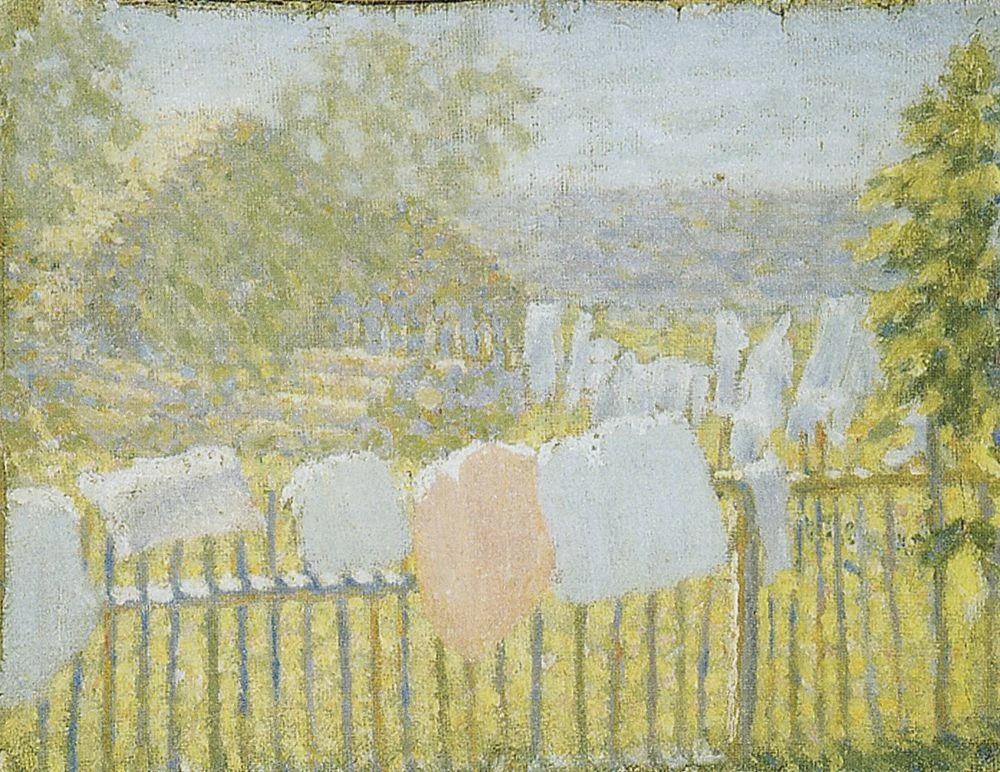
This investigative feature examines a haunting literary and historical fragment that resurfaces a dark chapter of the Soviet twentieth century: the haunting aftermath of the Great Purge, symbolized by the lingering ghost of Nikolai Bukharin and viewed through the intimate, fractured lens of childhood trauma. Paired with Kazimir Malevich’s evocative visual masterwork, Underwear on the Fence, the narrative explores how the apparatus of state terror—epitomized by the chilling transformation of friends and colleagues into "enemies of the people"—invaded the most secluded sanctuaries of domestic life.
By analyzing the chronology of the Stalinist purges, the psychological toll on the generation raised within the shadow of the Kremlin walls, and the enduring architectural legacy of terror, this report pieces together a comprehensive look at how political execution mutated into generational grief. Through archival context, historical metrics, and literary analysis, we decode the phantom fox that still runs the grounds of the Kremlin long after the executioner has laid down his pen.
Read Also
Detailed Chronology: From Revolutionary Zeals to the Kremlin’s Shadows
To understand the weight of the excerpt’s opening line—“Long after Bukharin’s execution, the fox ran the Kremlin’s grounds”—we must retrace the harrowing timeline of the Soviet political elite during the late 1930s. The trajectory of the USSR from the idealistic tumult of the October Revolution to the paranoiac execution chambers of the Great Purge provides the structural framework for this cultural and historical trauma.
1. The Revolutionary Apex and the Seeds of Paranoia (1917–1928)
Following the Bolshevik seizure of power, the Kremlin transformed from an ancient tsarist citadel into the nerve center of the world’s first socialist state. Figures like Nikolai Bukharin—celebrated by Lenin as the "favorite of the whole party"—helped draft the ideological foundations of the new regime. However, the bitter ideological struggles that followed Lenin’s death in 1924 created deep fissures within the Bolshevik leadership. Joseph Stalin’s consolidation of power systematically marginalized the old guard, setting the stage for total ideological conformity enforced by violence.
2. The Acceleration of the Great Terror (1936–1938)
The mid-to-late 1930s marked the bloodiest institutionalized purge in modern European history. Show trials orchestrated in Moscow sought to delegitimize and physically annihilate anyone perceived as a threat to Stalin’s absolute authority.
- March 1938: The Trial of the Twenty-One takes place, featuring Nikolai Bukharin alongside Alexei Rykov and Christian Rakovsky. Accused of participating in a fantastical conspiracy with foreign intelligence agencies, Bukharin’s forced confession remains one of the most chilling documents of totalitarian coercion.
- March 15, 1938: Bukharin is executed at the Kommunarka shooting ground near Moscow. His death effectively closed the chapter on the original Bolshevik revolutionary leadership, leaving the Kremlin populated by sycophants, guards, and the terrified families of the condemned.
3. The Domestic Sphere Under Siege
As the excerpt illustrates, the terror did not remain confined to the Lubyanka basements or the courtrooms; it bled directly into the elite residential quarters within the Kremlin and the infamous House on the Embankment. Children of high-ranking officials experienced a sudden, terrifying shift in reality. Toys were confiscated, apartments were sealed with red wax, and parents vanished into the night.
The child sitting on the father’s lap amidst the fragrant birch leaves of the banya (Russian bathhouse) exists in a temporal suspension—savoring a fleeting moment of warmth before the inevitable knock on the door. The text notes: “When do you notice that each summer one family doesn’t arrive?” This slow realization marks the psychological initiation of a generation into the mechanics of state-sponsored disappearance.
Supporting Context & Metrics: The Scale of the Purge and Artistic Resistance
To contextualize the personal tragedy depicted in the text, one must look at the quantitative and cultural dimensions of the Stalinist era. The terror was not an aberration; it was a systematic, bureaucratized operation that consumed millions.
Quantitative Metrics of the Terror
- Arrests and Executions: During the height of the Great Purge (1937–1938), the NKVD arrested more than 1.5 million people. Of those, approximately 680,000 to 750,000 were executed—an average of nearly 1,000 executions per day.
- The "Enemies of the People": Under Article 58 of the RSFSR Criminal Code, dissenters, suspected spies, and ordinary citizens denounced by neighbors were categorized broadly. Crucially, the decree Family Members of Traitors of the Motherland (ChSVR) mandated the imprisonment or internal exile of the wives and children of executed officials, turning entire bloodlines into legal non-entities.
- Orphaned Generations: Hundreds of thousands of children were swept into the state orphanage system, where their names were often changed to sever all ties with their "traitors" of parents, leaving them to navigate a world where they were forced to cut out paper dolls representing ghosts.
Kazimir Malevich and the Visual Metaphor of Domestic Dislocation
The accompanying visual choice—Kazimir Malevich’s Underwear on the Fence—serves as a brilliant counterpoint to the text. Malevich, the pioneer of Suprematism, spent his later years navigating the tightening ideological controls of socialist realism. While his abstract squares and crosses initially sought a pure, spiritual geometry of art, his depictions of ordinary rural and domestic life often carried a profound sense of isolation and exposure.
Hanging laundry on a fence in Malevich’s visual lexicon is an act of vulnerability. It represents the private life laid bare before the public eye—an apt metaphor for the surveillance state that penetrated the most intimate corners of Soviet apartments. Just as the laundry flutters helplessly in the wind, the children of the purges were exposed to the harsh elements of political climate changes beyond their control, hanging out to dry in a cold ideological landscape.
Official Statements and Archival Revelations
For decades, the mechanisms of the purges were shrouded in state secrecy, officially categorized under dense bureaucratic euphemisms like "repressed" or "sentenced to ten years without right of correspondence" (a deliberate lie masking immediate execution). However, the opening of Soviet archives in the early 1990s provided official confirmation of the brutality that survivors had whispered about for generations.
The Anatomy of Confession and Silence
Historians examining the Bukharin interrogation transcripts note the chilling psychological disintegration of a man who had once helped shape Soviet theory. In his final letter to Stalin—beginning with the famous plea, "Stalin, why do you need me to die?"—Bukharin begged for mercy not for himself, but for his young wife, Anna Larina, and their infant son.
While the state officially rehabilitated Bukharin and thousands of others during Glasnost in the late 1980s, the institutional silence surrounding the psychological devastation inflicted upon children remained largely unexamined. Official state statements from the post-Soviet era have formally acknowledged the crimes of political repressions, yet contemporary political shifts in Russia have frequently sought to sanitize this dark history, re-centering Stalin as an effective wartime manager rather than the architect of domestic annihilation.
The phantom fox running the Kremlin grounds—invoked in our framing text—acts as an enduring metaphor for this unaddressed guilt. It is a wild creature inhabiting the heart of state power, moving stealthily through the corridors where atrocities were plotted and signed off on, reminding the viewer that no amount of whitewashing can erase the footprints left in the snow.
Future Outlook: Memory, Art, and the Responsibility of Witness
As time distances the modern world from the immediate horrors of the 1930s, the preservation of memory shifts from the testimony of direct survivors to the realm of literature, art, and historical forensics. The challenge facing contemporary historians, archivists, and writers is how to keep the human cost of totalitarianism visible in an era of digital noise and historical revisionism.
1. The Danger of Historical Amnesia
In societies grappling with authoritarian nostalgia, the sanitization of historical trauma presents an ongoing threat. When state entities downplay mass repressions to foster nationalist unity, the victims of events like the Great Purge are effectively killed a second time. The painstaking work of organizations like Memorial (itself subjected to dissolution and harassment in recent years) remains vital in keeping the database of the dead accessible to the public.
2. The Role of Literature as Forensic Evidence
As the featured text demonstrates, poetry and lyrical prose often achieve what dry historical ledgers cannot: they capture the feeling of terror. Sitting on a father’s lap while birch leaves are fragrant, only to realize later that families vanish like seasonal leaves, communicates the visceral disruption of childhood more effectively than casualty statistics. The child with the scissors—exhausted, up all night cutting clothes for the dead—becomes an archetypal figure of mourning, tasked with clothing ghosts who were denied proper graves.
3. Conclusion: The Unending Vigil
The fox in the Kremlin will continue to run long after the monuments have crumbled and the last direct witnesses have passed away. It represents the untamable conscience of history, pacing the perimeter of power, refusing to let the ghosts rest. For contemporary readers, engaging with these fragments is not merely an exercise in academic remembrance; it is an act of moral witness. We, too, are left with the scissors, picking up the scattered pieces of a broken century, attempting to stitch together a coherent understanding of humanity in the shadow of absolute power.


Comments
Facebook App ID not configured. Please add it in the Customizer.