
Executive Overview
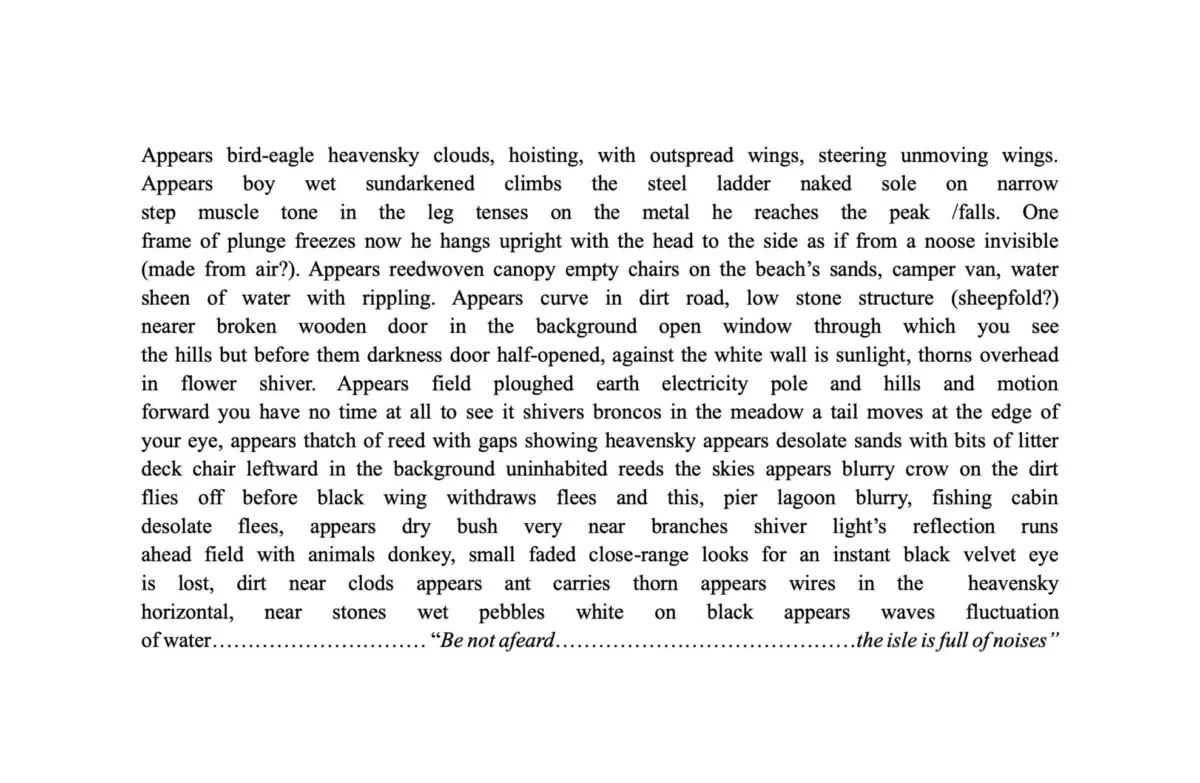
In an extraordinary convergence of contemporary visual art and lyric poetry, acclaimed Greek writer Katerina Iliopoulou has unveiled her latest trans-medial work, translating the dynamic, fugitive imagery of Yiannis Isidorou’s experimental video art project, Where Is Pablo Frank?, into text. Published on August 18, 2026, by Words Without Borders, this piece showcases Iliopoulou’s unique ability to tether rapid visual movement to the enduring weight of language. Brought into English by translator Jackson Watson, the poem serves as a masterclass in inter-semiotic translation—transforming flickering screen moments, spatial shifts, and kinetic video stills into a profound literary landscape that bridges Greece’s rich avant-garde history with contemporary global verse.
The collaboration brings together three distinct creative forces: Isidorou, whose conceptual video serves as the source text; Iliopoulou, who interprets the visual medium through Greek verse; and Watson, who bridges the linguistic divide for an international English-speaking audience. Set against the backdrop of Greece’s thriving contemporary natural and digital art ecosystems, the project challenges traditional boundaries between viewing and reading, asking audiences to reconsider how movement can be captured, preserved, and reflected through the written word.
Detailed Chronology of the Project
The genesis of Where Is Pablo Frank? stretches across a multi-stage creative process that began with Isidorou’s original visual composition and culminated in the August 2026 publication. Understanding the depth of Iliopoulou’s poetic adaptation requires a close examination of the timeline that brought these visual frames into poetic form:
Read Also
- The Visual Foundation (Pre-2026): Conceptual artist Yiannis Isidorou produces Where Is Pablo Frank?, a striking video art piece centered on fleeting motifs, rapid-fire motion, and evocative imagery—most iconically captured in stills of a young boy leaping in mid-air. The video explores themes of transience, presence, and absence, questioning the permanence of identity within modern visual culture.
- The Poetic Interpretation (Early to Mid-2026): Struck by the kinetic energy of Isidorou’s work, Katerina Iliopoulou undertakes the ambitious task of translating motion into meter and metaphor. Rather than simply describing the video, Iliopoulou’s Greek verse acts as a parallel sensory experience, weaving the pacing, pauses, and rapid shifts of the screen into stanzas.
- English Translation and Adaptation: Translator Jackson Watson collaborates with Iliopoulou to render the Greek text into English. The translation process requires delicate handling to preserve the rhythmic cadence of Iliopoulou’s original wording while ensuring that the English audience captures the underlying conceptual tensions of Isidorou’s visual narrative.
- Publication on August 18, 2026: The completed poem, accompanied by both its Greek original and English translation alongside multimedia embeds of Isidorou’s video, is officially published by Words Without Borders, immediately drawing praise from critics of international poetry and contemporary art alike.
Supporting Context & Metrics
To fully appreciate the significance of this release, one must examine the broader landscape of contemporary Greek literature and the unique mechanics of inter-semiotic translation.

The Art of Inter-Semiotic Translation
Inter-semiotic translation—or transmutation—involves translating a sign system (such as moving images, music, or painting) into another sign system, such as words. While traditional literary translation navigates between two human languages, Iliopoulou’s work navigates between two entirely distinct mediums: the temporal-spatial reality of video art and the discursive rhythm of poetry.
- Visual-to-Textual Metrics: Isidorou’s video runs on a continuous loop of dynamic cuts, utilizing fragmented narratives that mirror the fast-paced information consumption of the 21st century. Iliopoulou counters this by deploying enjambment, caesuras, and abrupt line breaks, effectively forcing the reader’s eye to "leap" across the page much like the boy suspended in mid-air in the project’s hero imagery.
- Bilingual Accessibility: The publication structure on Words Without Borders provides readers with side-by-side access to the English translation by Jackson Watson and the original Greek text. This transparency highlights the meticulous lexical choices required to turn visual motion into semantic weight.
The Creative Trio
- Katerina Iliopoulou: A cornerstone of modern Greek letters, Iliopoulou has established a reputation not only as a formidable poet but also as an insightful editor and translator. Her previous works, including connections to poetic landscapes like Cape Tenaron, demonstrate a deep fascination with the natural world, topography, and the psychological resonance of physical spaces.
- Jackson Watson: A writer and translator hailing from Georgia, Watson specializes in rendering complex, rhythmically intricate contemporary European verse into fluent English without sacrificing its foreign texture.
- Yiannis Isidorou: A prominent Greek conceptual and visual artist whose work frequently investigates the intersection of moving images, historical memory, and contemporary alienation.
Official Statements and Critical Reception
The release of Where Is Pablo Frank? has sparked conversations across literary and artistic circles regarding the evolving nature of poetry in the digital age.
Reviewers and literary critics have lauded Iliopoulou’s linguistic agility. In introductory notes accompanying the publication, editors emphasized how Iliopoulou "weaves motion into language as she translates quickly moving images into a poem." This capacity to treat a video frame as a strophic unit marks a notable departure from conventional ekphrasis—the traditional poetic description of a static work of art, such as a painting or sculpture.
Because Isidorou’s work is inherently time-based, Iliopoulou’s poem does not merely describe an object; it dramatizes an unfolding event. The inclusion of the YouTube video player directly alongside the text invites readers to perform a comparative study, moving fluidly between the visual stream and the textual current.

Although formal press conferences were bypassed in favor of direct digital publication, cultural commentators in Athens and beyond have noted that projects like Where Is Pablo Frank? reposition Greek poetry on the international stage, proving that contemporary Greek writers remain at the bleeding edge of cross-disciplinary artistic experimentation.
Future Outlook: The Intersection of Text and Moving Image
As the boundaries between digital art, film, and literature continue to dissolve, works like Katerina Iliopoulou and Yiannis Isidorou’s Where Is Pablo Frank? point the way forward for creative collaboration.
- Expanded Multimedia Collaboration: The success of this translation suggests a growing appetite for poetry that interacts directly with digital and video art. Future literary projects are expected to increasingly incorporate multi-sensory elements, breaking free from the static page.
- The Role of the Translator as Co-Creator: Translations that handle complex, multi-medial source texts demand an exceptionally high level of interpretive skill. Jackson Watson’s work on this piece underscores the vital role that contemporary translators play in ensuring that avant-garde international art resonates globally.
- Ongoing Exploration of the Natural World: Themes centered around the natural world and human movement—as highlighted in Iliopoulou’s thematic tags—remain deeply urgent in contemporary art. As ecological and spatial anxieties shift, artists and poets will continue to seek out new languages to articulate motion, displacement, and presence.
Ultimately, Where Is Pablo Frank? stands as a testament to the resilience of poetry. By capturing the fleeting velocity of a video screen within the permanent architecture of words, Iliopoulou and Watson have created a timeless artifact from a transient digital moment, inviting readers everywhere to pause, watch, and read between the frames.


Comments
Facebook App ID not configured. Please add it in the Customizer.