
Executive Overview
In an era defined by fractured cultural narratives, fleeting digital discourse, and the rapid commodification of visual culture, the role of the independent art critic and journalist has never been more vital—or more precarious. Enter the Dorothea & Leo Rabkin Foundation. Based in Portland, Maine, the foundation has officially named the eight recipients of its highly anticipated 2026 Rabkin Prize for visual arts journalists.
Carrying an unrestricted cash purse of $50,000 per recipient, the Rabkin Prize is widely recognized as one of the most generous, prestigious, and transformative awards of its kind. Since its inception in 2017, the foundation has injected a cumulative $4.1 million directly into the hands of the writers, critics, and cultural historians who shape how humanity understands art.
The 2026 cohort represents a diverse, fearless vanguard of thinkers whose work stretches far beyond the pristine white walls of traditional galleries. This year’s laureates are deeply invested in the invisible infrastructures that dictate what the public sees—and what it is systematically denied. Ranging from investigative data journalists and podcast hosts to academic pioneers and institutional curators, the eight winners share a commitment to rigorous research, historical context, and uncompromising independent thought.
Read Also
This year’s distinguished honorees are:
- Damien Davis – Artist, educator, and writer interrogating visual culture and the construction of cultural narratives.
- Melaine Ferdinand-King – Inaugural curator of the African American Museum of Rhode Island and historian of community-building through art.
- Tyler Green – Veteran critic and host of the enduring The Modern Art Notes Podcast.
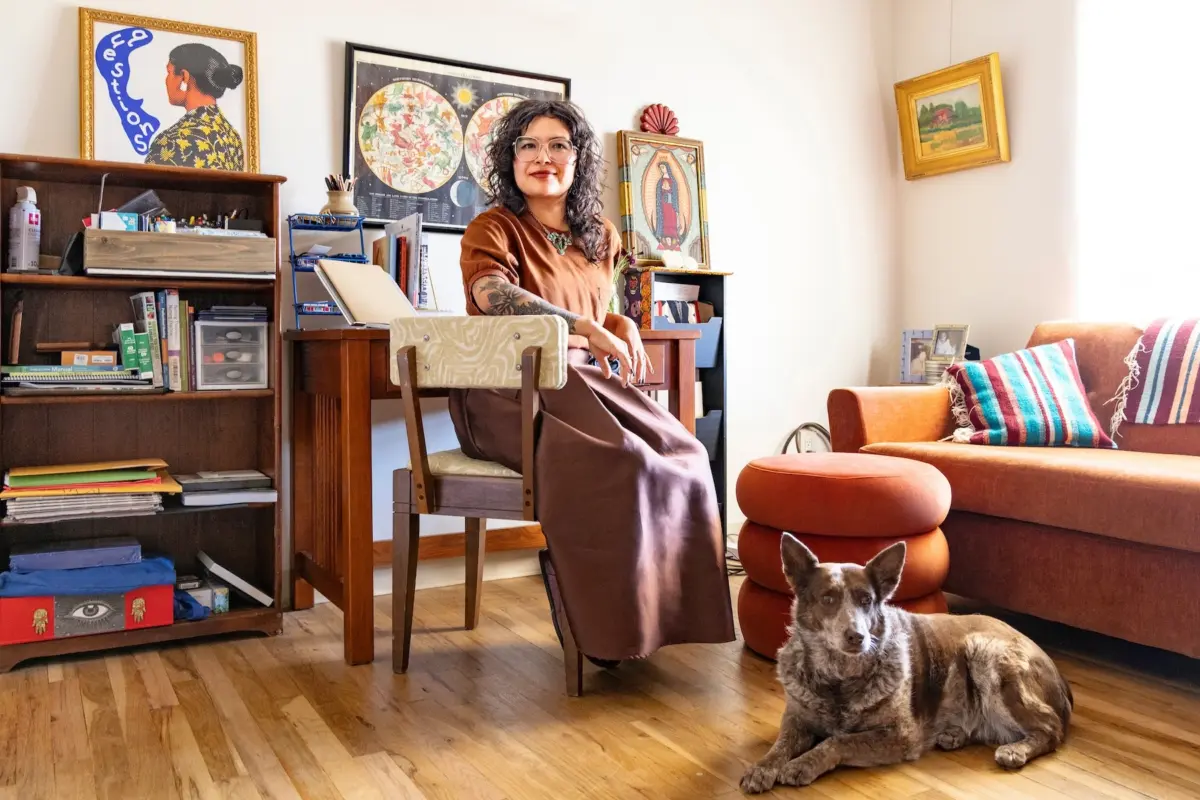
- Alicia Inez Guzmán – Investigative journalist and critic specializing in colonialism, identity, land, and the ecological legacies of nuclear testing on Indigenous populations.
- Julia Halperin – Investigative data journalist and co-founder of the seminal Burns Halperin Report tracking institutional equity.
- Sarah Lewis – Harvard University professor, founder of the Vision & Justice civic initiative, and author.
- Jan Tumlir – Author, educator, and founding editor of the Los Angeles-based contemporary art journal X-TRA.
- Kaelen Wilson-Goldie – International critic and journalist uncovering the complex geopolitical intersections of art and global conflict.
As these writers turn their gaze toward history, institutional architecture, racial equity, and geopolitical conflict, the 2026 Rabkin Prize stands as a bulwark against the erosion of deep-dive cultural criticism.
Detailed Chronology: The Evolution of the Rabkin Prize
To understand the weight of the 2026 awards, one must examine the institutional trajectory of the Dorothea & Leo Rabkin Foundation. Established by art collectors, patrons, and philanthropists Dorothea and Leo Rabkin, the foundation was built on a foundational philosophy: that art cannot thrive without a robust, independent ecosystem of writers who can contextualize, challenge, and celebrate it. Leo Rabkin, an artist himself known for his intricate boxes and tactile sculptures, understood intimately the isolation of the creative studio and the desperate need for articulate, empathetic interlocutors.
2017–2020: Laying the Foundation
When the Rabkin Prize was launched in 2017, the landscape of arts journalism was already reeling from severe structural contractions. Legacy print newspapers and magazines were gutting their arts and culture desks, replacing dedicated, long-form critics with syndicated wire copy or freelance gig workers operating under impossible turnaround times. Recognizing that the financial precarity of art writers threatened the health of the entire visual arts sector, the Rabkin Foundation stepped into the breach.
In its inaugural years, the prize established its signature model: no application fees, no bureaucratic hoops for nominees to jump through, and—most importantly—an unrestricted cash award. Unlike grants earmarked for specific book projects or travel expenses, the Rabkin Prize money belongs entirely to the writer to spend as they see fit, whether that means paying off student loans, securing healthcare, or simply buying the time required to complete a complex investigative feature.
2021–2025: Navigating Cultural Shifts
Through the early 2020s, as global pandemics, racial justice reckonings, and culture wars threw the art world into sharp relief, the Rabkin Foundation adapted its lens. The prize began increasingly honoring critics who treated art not as isolated aesthetic objects, but as social barometers. Writers who utilized data journalism, historical excavation, and community-based archives were elevated to the forefront.
By 2025, the foundation had distributed millions of dollars across dozens of critics working across the United States. It built a reputation for identifying prophetic voices before they achieved mainstream academic or institutional acclaim, cementing its status as the Pulitzer Prize of the independent art criticism world.

2026: The Current Cohort and Their Impact
The announcement of the 2026 class marks a high-water mark for the foundation. Selected by a stellar jury comprising writer and educator Irene Borger (founding director of the Herb Alpert Award in the Arts), Jaime DeSimone (chief curator at the Farnsworth Art Museum), and Legacy Russell (curator, writer, and executive director of The Kitchen in New York City), the eight winners embody the absolute pinnacle of contemporary art writing.
The 2026 laureates reflect a profound evolution in how art is evaluated. They are not merely reviewing exhibitions; they are auditing museums, mapping the carbon and nuclear footprints of land art, analyzing data-driven inequities in museum acquisitions, and tracing the ripples of global geopolitics through visual media.
Supporting Context & Metrics: The Anatomy of the 2026 Laureates
To fully grasp why these eight individuals were selected, one must examine their individual contributions to the ecosystem of visual culture. The foundation’s citation notes that this year’s winners are united by their insistence on "close attention, deep research, complexity, independent thought, and a long view."
Damien Davis: Interrogating the Visual Lexicon
Operating fluidly between studio practice, art history, and critical writing, Damien Davis focuses heavily on how symbols, shapes, and colors are weaponized or liberated within cultural narratives. Based in Newark, New Jersey, Davis’s critique stems from an artist’s intimate knowledge of material production. He examines how racialized visual tropes are manufactured, sustained, and ultimately dismantled through collective visual literacy.
Melaine Ferdinand-King: Archiving Community and Memory
As the inaugural curator of the African American Museum of Rhode Island, Melaine Ferdinand-King brings a distinctly institutional yet grassroots-focused perspective to her writing. Ferdinand-King’s scholarship positions art as a vital anchor for community-building and historical preservation. In her upcoming contributions to the Rabkin Interviews podcast, she notes: "History is the ground that we walk on. It sets the conditions that art responds to. And art is where history and even identity and lived experience become legible, known to wider audiences."
Tyler Green: The Auditory Chronicler
A ubiquitous presence in the ears of art enthusiasts worldwide, Tyler Green is the creator and host of The Modern Art Notes Podcast, one of the longest-running and most respected cultural interview programs in existence. Green’s rigorous, deeply prepared long-form interviews have created an irreplaceable oral history of contemporary art over the past two decades. His work insists that rigorous art criticism can successfully bridge the gap between niche academic scholarship and public accessibility.
Alicia Inez Guzmán: Land, Colonialism, and Nuclear Legacies
Working out of the American Southwest, Alicia Inez Guzmán provides a vital, underrepresented geographic and thematic focus to art journalism. Her investigative reporting and criticism probe the intersections of colonialism, land sovereignty, and identity. In recent years, Guzmán has trained her critical eye on the harrowing cultural and ecological legacies of nuclear testing on Indigenous communities, demonstrating how land art and landscape photography intersect with state violence and historical trauma.
Julia Halperin: The Data-Driven Equity Auditor
As a critic and investigative data journalist, Julia Halperin has fundamentally transformed how the art market accounts for itself. Alongside co-founder Thea Burns, Halperin established the Burns Halperin Report, a landmark periodic study that systematically tracks equity, representation, and diversity within museum collections and gallery rosters. By replacing anecdotal arguments with irrefutable statistical data, Halperin has forced major cultural institutions to reckon with their historical blind spots.
Sarah Lewis: The Architecture of Vision and Justice
A professor of African and African American Studies at Harvard University, Sarah Lewis is a towering intellectual force in contemporary visual culture. Through her civic initiative, Vision & Justice, and her award-winning scholarship—including her acclaimed book The Unseen Truth: When Race Changed Sight in America—Lewis examines the fundamental role that representation plays in a functioning democracy. Her writing exposes how visual technologies have historically codified racial hierarchies and how artists work to rupture those old paradigms.
Jan Tumlir: Chronicling the West Coast Avant-Garde
Based in Los Angeles, Jan Tumlir has spent decades shaping the discourse around West Coast contemporary art. As a founding editor of X-TRA, the influential contemporary art journal, Tumlir has provided a crucial platform for critical writing that resists the New York-centric hegemony of the traditional art world. His essays and educational work combine historical erudition with sharp, localized insights into how art operates on the Pacific Rim.

Kaelen Wilson-Goldie: Art in the Shadow of Global Conflict
Operating on an international scale, Kaelen Wilson-Goldie is a Beirut- and New York-based critic and journalist whose work investigates the volatile relationship between art, politics, and war. Her writing consistently uncovers how artists navigate, resist, and document geopolitical crises, particularly across the Middle East and the broader Global South. Wilson-Goldie’s criticism serves as an urgent reminder that art is frequently the first casualty—and the most resilient survivor—of global conflict.
Official Statements and Institutional Vision
The leadership of the Rabkin Foundation has consistently emphasized that the prize is not merely a retroactive pat on the back, but an investment in the future of public discourse.
In a joint statement accompanying the 2026 awards, the foundation articulated the pressing stakes of contemporary cultural commentary:
"Across a range of practices, they consider how art operates in the world, tracing its relationship to history, land, race, institutions, war, memory, and public life. At a moment when cultural narratives are intensely contested, these writers insist on close attention, deep research, complexity, independent thought, and a long view."
This philosophy is mirrored in the meticulous documentation accompanying the awards. Continuing a beloved tradition, the foundation commissioned acclaimed photographer Kevin J. Miyazaki to capture intimate portraits of each winner inside their private writing spaces—be it an apartment in Brooklyn, a studio in Newark, or a study in New England. These photographs do not present the critics as detached, neutral observers from nowhere; rather, they ground them in the tangible, lived environments where late-night research, drafting, and intellectual wrestling take place.
Furthermore, to amplify the voices of the laureates beyond the written word, the foundation has announced the forthcoming launch of The Rabkin Interviews. This dedicated podcast series will feature the 2026 winners in conversation, unpacking their methodologies, discussing the mechanics of their writing processes, and debating the pressing ethical and aesthetic questions facing arts journalism today.
Future Outlook: The Resilient Future of Art Criticism
As the Rabkin Foundation crosses the milestone of $4.1 million in total distributions since 2017, the broader cultural sector faces profound structural questions. Traditional media outlets continue to downsize their cultural coverage, shifting toward algorithmic aggregation, clickbait culture-war commentary, and brief exhibition roundups.
Yet, the 2026 Rabkin Prize winners offer a powerful counter-narrative. They prove that audiences still crave depth, historical consciousness, and moral clarity. By funding these eight writers to the tune of $50,000 each, the Rabkin Foundation is doing far more than providing temporary financial relief; it is actively underwriting the historical record.
The impact of this year’s cohort will ripple across university syllabi, museum boardrooms, international biennials, and public consciousness for years to come. Whether tracking the statistical underrepresentation of women of color in museum vaults, mapping the toxic residue of nuclear fallout on Indigenous lands, or decoding the subtle semiotics of abstract sculpture, these critics are the stewards of our cultural memory.
In the words of Melaine Ferdinand-King, art is where history, identity, and human experience become legible to the wider world. Thanks to the Dorothea & Leo Rabkin Foundation, the people tasked with reading those histories aloud have been given the resources to keep the light burning bright.

Comments
Facebook App ID not configured. Please add it in the Customizer.