
Executive Overview
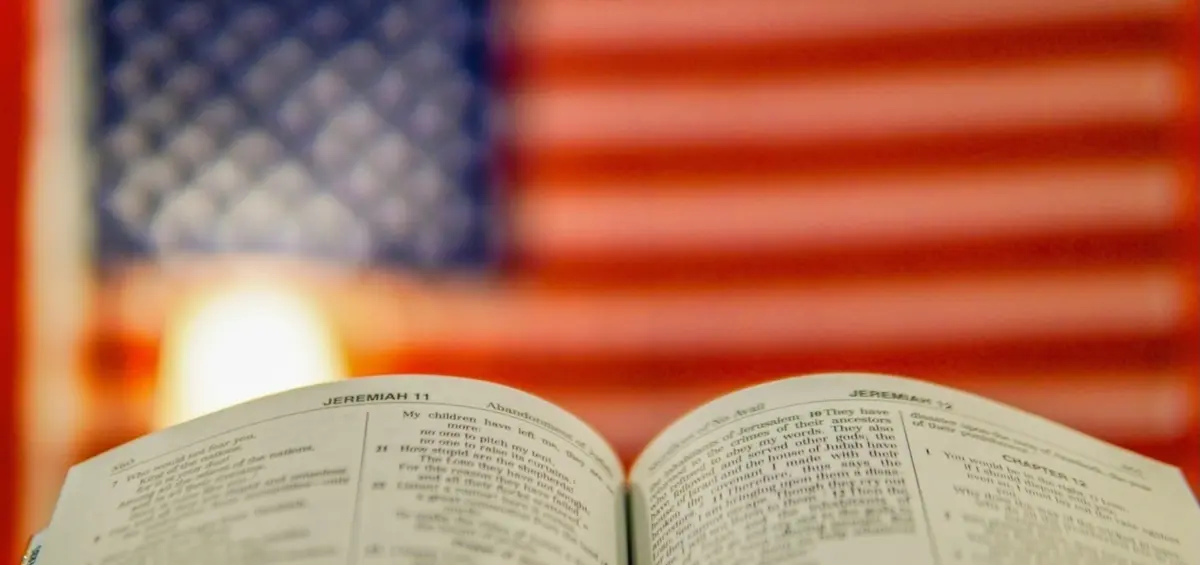
The decision by the Texas State Board of Education to integrate biblical passages and religious literature into its mandatory K–12 public school curriculum has ignited a fierce, nationwide debate over the boundaries of church, state, and education in the United States. Sparked by a series of sweeping curriculum updates, the move immediately drew intense media scrutiny from international and domestic outlets alike. Headlines from the New York Times, the BBC, and The Guardian broadcasted a stark message: Texas public school students will now be required to read the Bible.
At its core, this educational overhaul represents far more than a localized policy shift affecting the state’s 5.5 million public school students. It has catalyzed an existential debate over the cultural, historical, and religious identity of the American republic. To critics, particularly civil liberties groups, progressive educators, and historical associations, the mandate is viewed as an alarming, revisionist encroachment of Christian nationalism into secular public education. They argue that the policy privileges a single religious tradition at the expense of America’s diverse pluralistic fabric.
Conversely, proponents and conservative policymakers defend the policy through multiple lenses. Some lean on a pragmatic, secular rationale reminiscent of E.D. Hirsch’s theories of "cultural literacy"—arguing that foundational comprehension of Western literature, politics, and history is impossible without recognizing biblical allusions. Others, however, reject this sanitized, purely academic defense. They boldly assert that the Bible is fundamentally distinct from standard literary texts and that acknowledging Christianity’s central role in the formation of American history and values is both honest and necessary.
Read Also
As school districts prepare to implement these standards, this clash highlights a foundational dilemma in modern American civic life: Can a secular educational system adequately teach the history and literature of a nation deeply shaped by religious faith without crossing the constitutional line into indoctrination?
Detailed Chronology
The path toward the Texas State Board of Education’s controversial curriculum overhaul developed through several distinct legislative and administrative milestones:
- Spring to June: The national spotlight turned sharply toward Texas when the State Board of Education approved a heavily scrutinized, mandatory reading list for K–12 public schools. The proposed list integrated short, episodic biblical passages—such as Adam and Eve, the parting of the Red Sea, and Daniel in the lions’ den—into every grade level, juxtaposed with classic literary works.
- The SBOE Social Studies Framework Approval: Following the reading list approval, the board advanced a comprehensive 140-page social studies framework for grades K–8. This framework explicitly incorporated "Religious Literature, including the Hebrew Scriptures (Old Testament) and New Testament" alongside traditional civics staples such as Founding documents, free enterprise, and Texas history. Specific directives mandated that third graders learn about Abraham and Moses, fourth graders study the Catholic Church and the Pope during the Middle Ages, and psychology students analyze the concept of the soul in ancient scriptures, including the Hebrew Bible.
- National Media Storm and Institutional Pushback: Major news organizations—including PBS, NewsNation, the Houston Chronicle, and MSN—began publishing critical investigations detailing the curriculum changes. These reports characterized the updates as a concerted conservative push to enshrine Christian teachings in public classrooms. Shortly thereafter, institutional bodies like the American Historical Association (AHA) issued formal statements condemning the framework for alleged Eurocentrism, ideological distortion, and the suppression of religious diversity.
- Historical Precedents of Religious Discourse in Public Life: The Texas debate immediately joined a long lineage of cultural flashpoints involving faith and politics in America. Observers drew parallels to past national moments: Jimmy Carter’s 1976 proclamation of being a born-again Christian, George W. Bush’s 2001 presidential ascension, and Louisiana’s 2024 legislative mandate requiring the Ten Commandments to be posted in public school and university classrooms.
- Implementation Phase and Ongoing Legal Challenges: As textbook publishers race to adapt materials to meet the new state guidelines, civil liberties organizations, parent coalitions, and legal defense funds continue to evaluate potential constitutional challenges under the Establishment Clause of the First Amendment.
Supporting Context & Metrics
To fully understand the gravity of the Texas curriculum changes, one must examine the scope of the state’s educational ecosystem and the pedagogical theories driving the debate.
- Scale of Impact: The Texas public school system serves approximately 5.5 million students across more than 1,200 school districts, making any curriculum shift by the State Board of Education influential enough to impact national textbook publishing markets. Because textbook publishers often tailor their offerings to satisfy the massive Texas market, changes approved in Austin frequently find their way into classrooms across the United States.
- Curricular Integration: The newly approved standards do not isolate religious texts into standalone theology classes. Instead, they weave biblical excerpts into broader literary and historical timelines. In twelfth grade, brief biblical passages sit alongside works like Shakespeare’s Hamlet and Jane Austen’s Pride and Prejudice. In tenth grade, they appear alongside Julius Caesar and Dante’s Inferno; in seventh grade, beside The Diary of a Young Girl; and in fifth grade, alongside C.S. Lewis’s The Lion, the Witch and the Wardrobe.
- Comparative Religious and Historical Frameworks: The social studies and psychology guidelines intentionally place biblical studies within a wider global context. For instance, the directive instructing psychology students to study the concept of the soul in ancient scriptures is paired with explorations of the Egyptian Book of the Dead, the ancient Indian Vedas, and Buddhist philosophies. Similarly, lessons on Moses and Abraham are contextualized within broader units on Mesoamerican, ancient Greek, and Roman histories.
- The E.D. Hirsch "Cultural Literacy" Model: Supporters of the curriculum frequently cite educational theorist E.D. Hirsch’s seminal 1987 work, Cultural Literacy: What Every American Needs to Know. Hirsch argued that reading comprehension and academic success in a knowledge economy depend heavily on a shared foundation of background information, myths, historical events, and literary allusions. Because Western literature, political oratory, jurisprudence, and art are saturated with biblical references—from Abraham Lincoln’s "house divided" speeches to Martin Luther King Jr.’s prophetic rhetoric—proponents argue that omitting the Bible leaves students functionally illiterate regarding their own cultural heritage.
Official Statements & Diverse Perspectives
The debate over the Texas curriculum has fractured the educational and political landscapes, drawing starkly contrasting statements from policymakers, historians, and commentators.
The Secular/Pedagogical Defense
Mainstream analysts and liberal defenders of the curriculum have cautiously endorsed the inclusion of the Bible on strictly secular, educational grounds. Writing in publications like The Atlantic and the New York Times, commentators such as Adam Kirsch and James Traub utilized Hirsch’s framework to argue that college readiness and historical comprehension demand basic familiarity with scripture. From this viewpoint, a snippet on the burning bush is not an act of religious proselytizing, but an essential literary touchstone. As one pedagogical argument goes, two students entering a university civics course will have vastly different comprehension levels of Abraham Lincoln’s speeches depending on whether their high school education equipped them to recognize biblical allusions.
The Explicitly Religious Rationale
Contrasting sharply with the sanitized "literature as history" defense, conservative board members have embraced the religious significance of the policy without hesitation. Brandon Hall, a Baptist pastor and Texas State Board of Education member elected in 2024, explicitly rejected watered-down historical narratives. Ahead of the vote, Hall stated to media outlets:
"We’re going to stop watering down American history. We’re going to teach the truth. Our nation was founded as a Christian nation, and Texas is a Christian state."
Proponents of this view argue that sanitizing the Bible into a mere literary tool misses its actual power. They contend that scripture cannot be neatly domesticated by an Enlightenment skeptic or comparative religion professor because the Bible inherently serves as a profound moral and spiritual summons to those who open it.
The Critical & Progressive Alarm
Opponents view these developments with profound apprehension. The American Historical Association issued a scathing critique accusing the SBOE of promoting Eurocentric, ideologically distorted, and exclusionary narratives. Local advocacy groups and organizations like the American Civil Liberties Union (ACLU) argue that mandatory scripture reading in public schools violates the constitutional separation of church and state. Critics point out that framing the American experiment as exclusively Christian marginalizes non-Christian students, secular families, and the historical contributions of religious minorities and non-believers to the nation’s development.
Future Outlook
As the Texas State Board of Education’s curriculum standards move from theory to practical classroom implementation, the long-term consequences for American education remain uncertain. Several critical trajectories are emerging:
- Imminent Legal Challenges: Civil rights organizations and legal watchdogs are widely expected to file lawsuits challenging the constitutionality of mandatory Bible integration in public schools. Plaintiffs will likely argue that the policy violates the Establishment Clause of the First Amendment by promoting a specific religious text over others, setting up potential landmark battles in federal appellate courts and potentially the U.S. Supreme Court.
- National Textbook Market Shifts: Because Texas commands immense purchasing power in the educational publishing sector, publishers must decide whether to produce specialized editions for Texas or alter their national textbook lines to incorporate the newly required religious and historical literature. This could lead to a de facto standardization of Bible-inclusive curricula across multiple states with conservative majorities.
- Deepening Polarization in Local School Districts: Implementation will fall heavily on local school districts, superintendents, and classroom teachers. This decentralization threatens to spark fierce local school board elections, parent-teacher disputes, and community polarization over how strictly or flexibly the new mandates are interpreted and taught.
- Re-evaluating the Purpose of Civic Education: Ultimately, the Texas curriculum controversy forces a fundamental reckoning within American education. It challenges educators and policymakers to answer a defining question: Can public schools successfully navigate the intersection of faith and civic literacy, or will efforts to restore a shared cultural heritage permanently fracture public trust in the educational system?
Whichever path unfolds, the Texas mandate has ensured that the debate over the soul of American public education will remain at the forefront of the national conversation for years to come.




Comments
Facebook App ID not configured. Please add it in the Customizer.