
Executive Overview
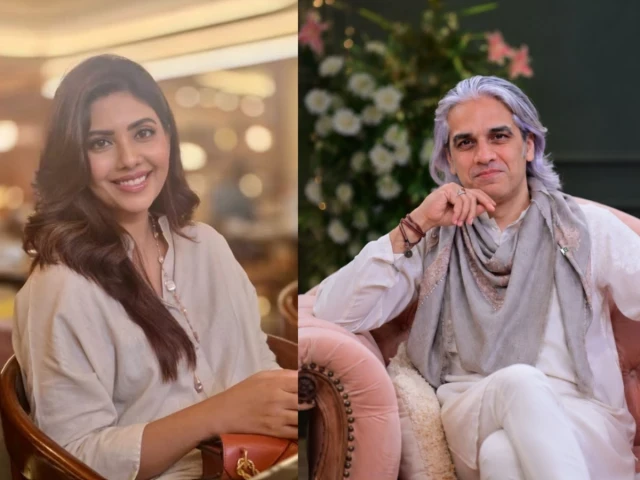
In an era where traditional domestic structures face unprecedented pressures from shifting economic realities and evolving social consciousness, celebrity discourse frequently serves as a cultural mirror. Recently, prominent Pakistani television and film actors Omair Rana and Sunita Marshall appeared as guest speakers on Nida Yasir’s widely viewed morning show, Good Morning Pakistan. What began as a routine television segment quickly evolved into an unfiltered, deeply analytical roundtable discussion concerning the psychological health of modern marriages in South Asia.
The conversation systematically deconstructed deeply ingrained societal norms, ranging from the casual public humiliation of wives by their husbands to the invisible emotional toll exacted by toxic masculinity, patriarchal conditioning, and extended family interference. By tackling taboo subjects—such as male emotional suppression, the weaponization of domestic humor, and the fallacy of the traditional "give-and-take" marital contract—Rana and Marshall offered a masterclass in progressive relationship psychology.
This report provides an exhaustive exploration of the dialogue, examining the socio-cultural underpinnings of the issues raised, the systemic conditioning that perpetuates domestic friction, and the practical frameworks proposed by the panellists to foster egalitarian, resilient, and emotionally honest partnerships.
Read Also
Detailed Chronology: The Evolution of the Morning Show Discourse
The segment on Good Morning Pakistan traversed a meticulously structured journey through the lifecycle of contemporary relationships, moving from public interactions to the private sanctuary of the home, and finally to the broader socio-economic pressures that govern husband-wife dynamics.
Phase One: Public Humiliation and the Illusion of "Harmless" Humor
The conversation commenced with a sharp critique of a socially pervasive yet rarely penalized behavior: husbands publicly mocking, dismissing, or belittling their wives under the guise of casual comedy. Sunita Marshall did not mince words, immediately stripping away the protective veneer of "harmless banter."
"It signals a fundamental lack of regard for one’s partner rather than harmless humour," Marshall asserted, drawing attention to a glaring societal contradiction. She noted that while a bride is frequently elevated rhetorically as the izzat (respect/honor) of the household during wedding festivities, she is routinely stripped of basic human dignity in everyday social settings.
The panel diagnosed this habit as a symptom of deeply rooted patriarchal conditioning. Boys are subtly taught from infancy that females occupy a subordinate rung on the social hierarchy. Consequently, men often feel an unearned sense of entitlement to use their wives as punchlines, expecting compliance and quiet endurance in return. Marshall and the panellists emphasized that this cycle perpetuates itself because women are historically discouraged from establishing firm boundaries early in a relationship. They advocated for immediate, calm, and direct communication—addressing the inappropriate "joke" in real-time rather than swallowing the hurt in silence, which only normalizes emotional erosion.
Phase Two: The Pathology of Toxic Masculinity and Male Vulnerability
A core pillar of the discussion centered on the emotional quarantine imposed upon men within patriarchal societies. The panellists dissected how young boys are culturally engineered into "hunters"—forced to view emotional softness, empathy, and grief as existential weaknesses.
In this rigid framework, anger and frustration are artificially designated as the only socially acceptable emotional outlets for men. Omair Rana expanded on this, casting a critical eye toward the media and entertainment industries. He observed that television dramas and cinematic releases consistently romanticize aggressive, vicious, or emotionally stunted male leads, framing toxic dominance as heroic. This dangerous feedback loop validates harmful real-world behaviors, feeding cinematic fiction back into domestic reality.
To counteract this, the panel argued that the rehabilitation of male emotion must begin in the nursery, championed by mothers who refuse to raise sons in emotional isolation. Furthermore, addressing a viewer’s written query, the panellists unanimously agreed that men possess an equal human right to be vulnerable with their wives. Vulnerability, as Marshall eloquently summarized, "means showing that you are human." Far from eroding authority, mutual vulnerability was championed as the non-negotiable cornerstone of long-term marital health.
Phase Three: Practical Frameworks for Conflict Resolution
Moving from abstract emotional concepts to tactical daily management, Omair Rana introduced a remarkably effective communication tool known as the "Three H’s."
Couples frequently descend into chaotic arguments not because they lack love, but because they misinterpret their partner’s immediate emotional needs. Rana suggested that before venting or attempting to solve a crisis, partners should explicitly state their required form of engagement by choosing one of the three H’s:
- Hear me out: Simply listen without offering unsolicited advice or trying to fix the situation.
- Help me solve the problem: Engage collaboratively in practical troubleshooting.
- Hug me: Provide unconditional physical comfort and reassurance without words.
This framework strips away the guesswork from interpersonal communication, neutralizing unnecessary escalation before it can take root. It reinforces the broader philosophical shift advocated by the panel: that marriage must transition from a transactional, ledger-based "give-and-take" arrangement into an unconditional "give-and-give" pact. In this progressive model, both spouses actively invest in each other’s holistic personal growth, discarding the antiquated notion that the husband functions as the sole "owner" of the household.
Supporting Context & Societal Metrics
To fully grasp the weight of the actors’ commentary, one must examine the broader socio-cultural landscape of South Asian marriages. The dynamics discussed by Rana and Marshall do not occur in a vacuum; they are reinforced by institutional, familial, and economic pressures.
[Societal Conditioning] ---> [Suppressed Male Emotion] ---> [Reliance on Aggression]
          |
          v
[Internalized Misogyny] ---> [Denial of Female Autonomy] ---> [Public/Private Boundary Violations]
          |
          v
[Extended Family Interference] ---> [Domestic Power Struggles] ---> [Marital Attrition]
The Double Standard of Economic Independence
The panellists confronted the pervasive double standard surrounding working wives. Despite mounting inflation and severe economic pressures that frequently render dual-income households an absolute financial necessity, women seeking professional careers face immense resistance.
The cultural script often dictates that a woman’s labor is acceptable only when economically forced, yet her career is rarely afforded the same respect, mental space, or institutional validation as a husband’s professional pursuits. The guests called for a cultural pivot, demanding that men treat their wives’ workplaces with the same gravity and respect they afford their own. Additionally, they critiqued the societal expectation that a woman’s entire identity and emotional security must be outsourced exclusively to a father, brother, or husband, arguing instead for radical self-reliance and the cultivation of independent self-worth.
The Myth of the Patriarchal Provider
Conversely, the panel acknowledged that rigid gender scripting inflicts severe psychological damage upon men as well. Patriarchal societies tie a man’s intrinsic human worth almost entirely to his financial output. When economic volatility strikes—such as inflation, unemployment, or business failure—men frequently experience profound psychological distress, depression, and identity crises because they have never been equipped with emotional toolkits to survive outside the narrow definition of the "sole provider."
Navigating Extended Family Minefields
Few topics strike as raw a nerve in South Asian domesticity as extended family interference. The panel directly addressed the traditional trap wherein husbands are pressured to act as presiding judges in conflicts between their mothers and wives.
Rana and Marshall warned that turning the marital home into a courtroom—where the husband takes sides—only breeds terminal resentment and elevates minor friction into destructive power struggles. The recommended antidote is deliberate emotional neutrality: husbands must maintain composure, refuse to play favorites, and actively empower the women in their families to resolve their differences directly and respectfully. Furthermore, the panellists advocated for a generational paradigm shift that views parents not as infallible, untouchable authoritarians, but as human beings capable of error, thereby opening the door to healthy domestic accountability.
Official Insights & Quotations from the Panel
The depth of the discussion was captured in several standout philosophical declarations that resonated deeply with viewers across Pakistan:
- On Public Respect: "It signals a fundamental lack of regard for one’s partner rather than harmless humour… A wife may be described as the ‘respect of the house’ while not being treated with that same respect in practice." — Sunita Marshall
- On Marital Economics: "A good relationship is not one of give and take; it is one of give and give… A husband is not the owner of the house; both spouses are equal members of the family." — Panel Consensus
- On Emotional Literacy: "Dramas and films frequently dress up vicious or aggressive male leads as heroic, feeding the same behaviour back into real relationships." — Omair Rana
- On Humanizing Vulnerability: "Vulnerability means showing that you are human… If you don’t respect yourself, no one else will respect you." — Sunita Marshall & Omair Rana
Future Outlook: Re-engineering the Domestic Paradigm
The viral reception of Omair Rana and Sunita Marshall’s appearance on Good Morning Pakistan signals a profound appetite for cultural introspection within South Asian society. As urban centers grapple with the friction between traditional values and modern realities, conversations of this nature serve as vital cultural catalysts.
Looking forward, the trajectory of marital health in the region depends on several critical milestones:
- Curriculum and Parenting Reform: Shifting early childhood education and domestic child-rearing practices to eliminate the emotional starvation of boys and the systematic under-valuation of girls.
- Media Accountability: Encouraging creators, writers, and producers within the Pakistani entertainment industry to retire toxic tropes of aggressive masculinity and submissive, suffering womanhood in favor of nuanced, egalitarian partnerships.
- Institutional Workplace Support: Normalizing and protecting women’s professional ambitions through supportive corporate policies and mutual domestic load-sharing.
- Mental Health Normalization: Dismantling the stigma surrounding therapy, emotional communication, and vulnerability for both husbands and wives.
Ultimately, the insights shared by Rana and Marshall remind modern audiences that sustainable marriages cannot survive on antiquated power dynamics or enforced silence. By replacing coercion with communication, hierarchy with equality, and emotional suppression with mutual vulnerability, couples can construct relationships that weather external storms while honoring the fundamental humanity of both partners.





Comments
Facebook App ID not configured. Please add it in the Customizer.