
Executive Overview
In an era defined by global uncertainties, fast-paced digital consumption, and high-stress societal demands, readers are increasingly turning their backs on grimdark realities in favor of literary sanctuary. Enter cozy fantasy—a subgenre that has quietly evolved from a niche corner of independent publishing into a dominant force occupying prime real estate in major bookstores worldwide. Characterized by low stakes, warm atmospheres, gentle magic, and deep emotional resonance, cozy fantasy functions as an antidote to modern anxiety.
While the genre has always existed in the margins of speculative fiction—drawing inspiration from pastoral classics and nostalgic 1990s pop-culture witchcraft—its recent explosive growth has signaled a fundamental shift in reader appetites. Authors are no longer merely spinning tales; they are architecting emotional safe spaces. Among the leading voices in this movement is acclaimed author Lucy Jane Wood, whose works—including Rewitched, Uncharmed, and her latest release, Disenchanted—exemplify the delicate craft required to build these immersive literary worlds.
In this comprehensive examination, we explore the mechanical anatomy of cozy fantasy, tracing its historical roots, analyzing the precise writerly techniques required to evoke profound comfort, and evaluating the long-term trajectory of a genre that promises readers not just an escape, but a homecoming.
Read Also
Detailed Chronology: The Evolution and Ascent of Cozy Fantasy
To understand how cozy fantasy captured the cultural zeitgeist, it is necessary to examine the timeline of its evolution from traditional speculative fiction to its current independent powerhouse status.
- The Pre-Cursor Era (Late 20th Century): While high fantasy dominated the late 20th century with sweeping multi-volume epics (think The Lord of the Rings and The Wheel of Time), subtle precursors to cozy fantasy quietly thrived. Works like Tove Jansson’s Moomin series, Diana Wynne Jones’s domestic-yet-magical novels, and Peter S. Beagle’s The Last Unicorn laid the groundwork by prioritizing character relationships, whimsical philosophy, and low-threat environments over geopolitical warfare. Concurrently, the 1990s pop-culture explosion of televised witchcraft (Sabrina the Teenage Witch, Charmed, and Practical Magic) established a visual and tonal vocabulary centered around everyday domesticity infused with sparkling, accessible magic.
- The Indie and Niche Awakening (2010s): During the early-to-mid 2010s, online reader communities on platforms like Tumblr, Reddit, and early BookTube began actively curating lists of "comfort reads." Authors working outside the traditional Big Five publishing houses began deliberately writing speculative fiction that rejected tropes of war and trauma in favor of baking, community-building, and gentle self-discovery.
- The Mainstream Breakthrough (2020–2022): The COVID-19 pandemic served as a massive cultural catalyst for the subgenre. Confined to their homes and overwhelmed by real-world crises, readers sought emotional refuge. This period saw the meteoric rise of titles like Travis Baldree’s Legends & Lattes, which proved that a story about an orc retiring from adventuring to open a coffee shop could become an international bestseller. Publishers quickly realized that "coziness" was not merely a passing fad, but a sustainable, highly lucrative market sector.
- The Institutionalization of Coziness (2023–Present): Today, cozy fantasy occupies dedicated sections in major literary chains. Bestselling authors such as Becky Chambers, S.T. Gibson, and Lucy Jane Wood routinely top bestseller lists. The genre has expanded its stylistic boundaries, incorporating romantic subplots, cozy mysteries, and slice-of-life narratives, establishing itself as a permanent, foundational pillar of modern fantasy literature.
Supporting Context & Metrics: The Anatomy of a Comfort Read
What separates a cozy fantasy novel from traditional low fantasy or cozy mysteries? According to industry analysts and authors working within the space, the subgenre relies on a specific formula of emotional beats, structural constraints, and sensory saturation.
1. Choosing the "Comfort Blanket" Setting
A defining characteristic of cozy fantasy is its deeply immersive geography. Unlike high fantasy, which demands vast maps and sprawling kingdoms, cozy fantasy restricts its theater of operations to intimate, hyper-detailed environments. Whether it is a magical bakery, a dusty small-town museum, or a specialized bookshop selling sweet treats and stationery, the setting must act as a psychological anchor.
- The Sanctuary Principle: While external plots may occasionally introduce tension, the primary setting must always remain a safe harbor where characters—and by extension, readers—can retreat to catch their breath.
- Reflective Architecture: The environment frequently mirrors the internal psychological state of the protagonist, offering physical warmth to counteract emotional isolation.
2. Sensory Over-Saturation
In high-stakes fantasy, world-building is measured by economic systems, magical laws, and centuries of lore. In cozy fantasy, world-building is measured in sensory details. Authors intentionally overload scenes with tactile, comforting imagery: the smell of roasting potatoes, the scratch of wool blankets, the glow of low-lit hearths, and the steam rising from endless cups of tea. This hyper-focus on domestic textures creates an immersive atmospheric barrier that shuts out the chaotic noise of the real world.
3. Mundane Magic and Micro-Scale Stakes
Magic in cozy fantasy is rarely used to overthrow dark lords or shatter continents. Instead, it is deployed at a microscopic level to solve the everyday inconveniences of life. Witches use minor enchantments to perpetually reheat neglected coffee, blow-dry their hair instantly, or organize chaotic bookshelves. This "point and sparkle" magic strips away the intimidation of high fantasy, rendering mystical abilities accessible, playful, and deeply relatable.
4. Found Family and the Power of Acceptance
At its core, cozy fantasy is less about magic and more about healing. The protagonists are almost universally outsiders—misfits, loners, or individuals recovering from past trauma. The narrative engine is driven by the assembly of a "found family"—a ragtag group of endearing characters who embrace the protagonist unconditionally. This trope taps into a universal human desire: the yearning to be completely understood, accepted, and loved exactly as one is. And, invariably, this found family is anchored by an omnipresent, highly opinionated cat.
Insights from the Frontlines: Authorial Perspectives
Reflecting on her transition into the genre, bestselling author Lucy Jane Wood notes that writing cozy fantasy was less of a calculated career move and more of an organic alignment with her personal nature.
"Cozy fantasy has always been around, but has grown in popularity over the past few years and established itself as one of the most beloved corners of the bookshop," Wood explains. "It was never a genre that I intentionally set out to write within, but instead one that I stumbled into and have been lucky enough to stay a while."
For Wood, whose work is heavily inspired by a lifelong affinity for 1990s witches and an inherently homebody lifestyle, crafting these worlds is an exercise in intentional pacing and emotional safety. Whether penning Rewitched, Uncharmed, or Disenchanted, her creative process begins with a simple question: Where would I want to spend a rainy Sunday afternoon?
"When I think back on how I came to find myself here, it makes perfect sense," Wood shares. "I’m a cozy person by nature, and coziness is a way of life that I’m always actively seeking. At any given time, you’ll find me with a cup of coffee in hand, a blanket around my shoulders, and a very dribbly cat on my lap, while I channel my lifelong love for 90s witches into my cozy, comforting stories."
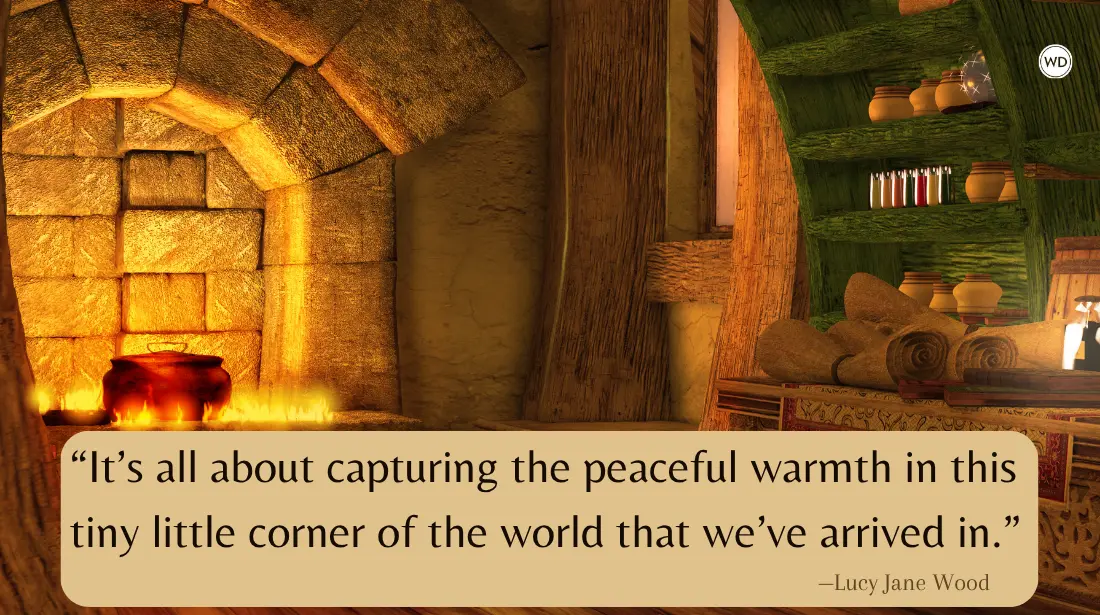
When constructing her narratives, Wood emphasizes the deliberate amplification of atmospheric details. She notes that while balancing a gentle overarching plot with minor narrative tension is necessary to keep pages turning, the true magic lies in doubling down on the sensory elements.
"If your characters have just tackled a tricky conversation or a dramatic moment, balance it with a scene of extra caffeine and contemplation," Wood advises. "And when you think you’ve mentioned just enough candles, cold weather, or piled bookshelves, add another few for good measure."
Future Outlook: The Longevity of Literary Comfort
As the literary landscape continues to shift, industry analysts frequently debate whether cozy fantasy is a fleeting pandemic-era trend or a permanent fixture of modern publishing. Current market indicators strongly support the latter.
The psychological drivers behind the genre—burnout, screen fatigue, economic anxiety, and a cultural pivot toward self-care—show no signs of abating. Readers are increasingly seeking media that protects their mental well-being rather than taxing it. Consequently, publishers are expanding their cozy catalogs, branching out into cozy sci-fi, cozy horror, and cozy historical fiction.
Furthermore, the interactive nature of modern reading communities (such as BookTok and Bookstagram) ensures that cozy fantasy maintains a powerful, self-sustaining ecosystem. Books with high aesthetic value—featuring illustrated covers, sprayed edges, and prominent feline companions—vibrate outward through social media algorithms, turning reading into a visual and communal lifestyle choice.
Ultimately, cozy fantasy fulfills an ancient and essential function of art: it offers solace. By trading existential dread for warm tea, grand wars for community bakeries, and lonely isolation for found family, the genre provides a profound emotional service. As long as the world outside remains noisy and demanding, the doors of the cozy fantasy bookshop will remain open, welcoming readers inside to pull up a chair, pet a magical cat, and breathe a collective sigh of relief.


Comments
Facebook App ID not configured. Please add it in the Customizer.