
Executive Overview
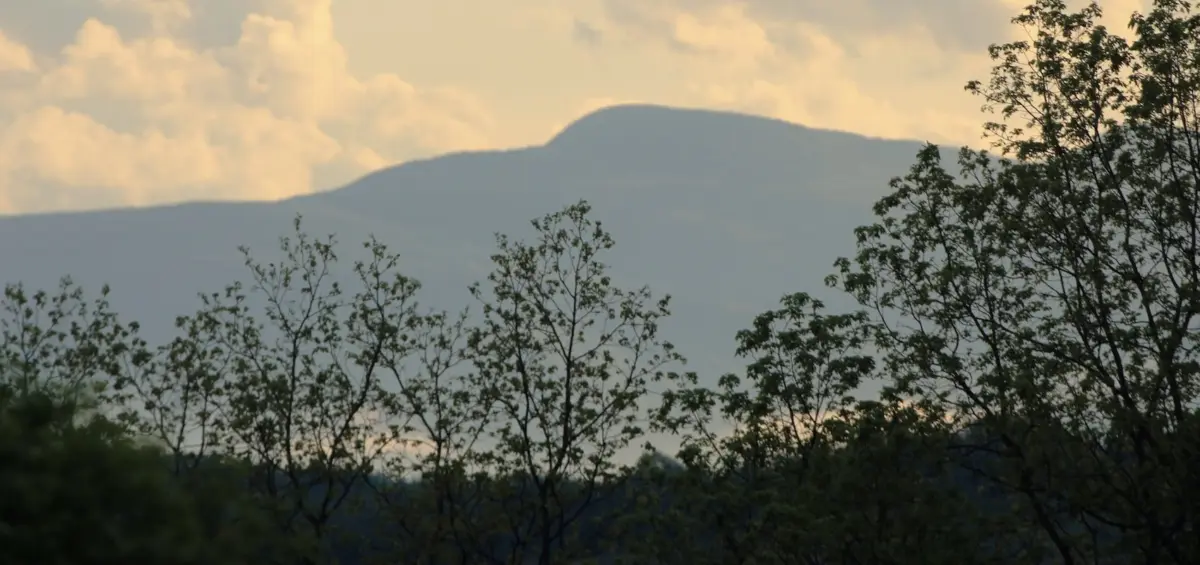
For seven years, a 14-by-24-foot rustic cabin on Wildcat Mountain in the Catskills served as both a crucible and a sanctuary. Situated at an elevation of 2,300 feet, this off-grid dwelling featured no running water, electricity, cellular connectivity, or internet service. It was into this rugged isolation that a former educator, shaped by an impoverished upbringing in 1980s Queens and haunted by the legacy of an erratic, troubled father, retreated following the collapse of both his career and his marriage.
This deep-woods residency was not merely an exercise in outdoor survival; it was an extended psychological and spiritual pilgrimage. Eschewing traditional therapeutic interventions, the author chose a regimen of profound silence, physical exertion, and environmental immersion. Through the rhythm of chopping wood, carrying water from a distant spring, and surviving erratic mountain weather—including a direct lightning strike—the narrative details a transition from wounded alienation to deep integration.
Now, on the precipice of marriage and a return to community life, this feature examines the transformative mechanics of solitude. Drawing on the intersections of environmental hardship, generational trauma, and personal reconciliation, the account charts how radical isolation can reset an individual’s internal compass, ultimately reframing the wild not as a place to escape humanity, but as a mirror in which to rediscover it.
Read Also
Detailed Chronology: Seven Years on Wildcat Mountain
Phase I: The Descent and the Arrival (Year One)
In June, following a ten-year career in classroom teaching, the author arrived at Wildcat Mountain in pitch darkness, navigating by memory because his only flashlight had been left inside the cabin. Burdened by personal failure, professional burnout, and the profound grief of an unresolved familial past—specifically the death of an alcoholic father who spent his days sitting in darkened rooms—the residency began in a state of emotional crisis.
The early days were defined by physical labor. Armed with an old wood stove salvaged from his childhood home, the author began the arduous task of heating the small cabin by hand-sawed wood. To secure basic necessities, he hiked down a steep, 300-foot descent to a mountain spring, hauling heavy jugs back up the incline. Employment at a local native plant nursery and a maple syrup farm provided sparse wages and minimal human interaction, preserving the strict boundaries of his solitude.
Phase II: The Metamorphosis of Silence (Years Two through Five)
As the seasons turned, the silence of the mountain began to recalibrate the author’s consciousness. Extended periods of wordlessness—ranging from days to entire weeks—diminished the perceived importance of human speech.
- The Sensory Shift: The natural world replaced human discourse. Encounters with wildlife—from chipmunks and bears to the subtle acoustics of caterpillar infestations chewing through the forest canopy—became the primary text of daily life.
- The Lightning Strike: During the first summer, a severe electrical storm culminated in a direct lightning strike to the cabin’s improvised television antenna, turning the surrounding air blinding white and filling the forest with a thunderous crack. Rather than fleeing, the author integrated these high-consequence environmental perils into a daily acceptance of smallness before cosmic forces.
- The Bear Confrontation: Following a weekend visit from friends, a young black bear breached the cabin, scattering provisions and establishing a territorial claim. Rather than employing firearms, the author utilized primal aggression—shouting, throwing stones, and setting water-bucket tripwires—to establish dominance, demonstrating an intuitive alignment with survival instincts over intellectualized fear.
Phase III: The Reckoning and the Threshold (Year Seven)
As the seventh year drew to a close, external realities intervened. A renewed relationship with a former partner, Catherine, set a definitive expiration date on the bachelor life.
March brought bitter cold temperatures ranging from five degrees at night to twenty during the day, accompanied by two and a half feet of snow. Engaging in an unseasonable spring cleaning ritual, the author scrubbed the floor, processed old papers, and discarded unused seeds. This physical clearing of the cabin served as a symbolic threshold. Pushing out the accumulation of seven years of solitude brought an overwhelming emotional release—tears shed not merely for the life being left behind, but for the profound mystery of time, mortality, and reconciliation with his father’s memory.
Supporting Context & Metrics: The Ecology of Solitude
The physical and geographical parameters of Wildcat Mountain provided a specific backdrop for this psychological reconstruction. Understanding the mechanics of this transformation requires examining the physical metrics of the environment:
- Geographical Scale: Encompassing roughly twenty square miles, Wildcat Mountain matches the land area of Manhattan. However, its eastern half is a designated, trackless wilderness area devoid of trails, historical settlement, or modern infrastructure.
- Resource Logistics:
- Water: Sourced via a 300-foot vertical descent down a leaf-slick mountain slope to a natural spring.
- Heat: Maintained exclusively via hand-split birch and cherry wood burned in a cast-iron stove.
- Labor: Employment caps were strictly maintained at a maximum of four days per week and eight hours per day, leaving sixteen daily hours for reflection, reading, and maintenance.
- Psychological and Philosophical Parallels: The author’s journey mirrors historical precedents of desert-dwelling monastics, such as those studied by the late-antique monk John Cassian. The transition from abstract psychological therapy to environmental immersion aligns with modern ecopsychology frameworks, which posit that prolonged exposure to natural vastness reduces self-referential cognitive processing—often referred to as overcoming "insensate human cares."
Official Statements and Reflections
The introspective nature of the narrative is underscored by philosophical and spiritual dimensions, drawing on historical frameworks of initiation:
"Initiation, first of all, is not a psychological paradigm at all. It’s not about therapy. It’s not about solving your problems with your father or your mother or how you were hurt… Initiation is not a psychology: it’s a cosmology."
— Reflecting the insights of Franciscan theologian Richard Rohr regarding the necessity of cosmic scale in human maturation.
Reflecting on the reconciliation with his father’s legacy, the author notes a fundamental shift in perspective regarding generational inheritance:
"I found myself wanting, among other things, to be a husband and a father. I still wanted to be better than he was. But he himself would have wanted nothing less. Now I saw that I wished to be not his rival but his heir. It was the proper place of an heir not only to inherit the effects, but to put them to better use as well."
On the nature of silence versus superficial human discourse:
"Treating words with due seriousness, using them to say and discover those things they were minted to convey, is where real meeting and true conversation begin. Otherwise, we are better off with what nature provides, which is to say, silence: It feels like one of the great gifts of experience, preferable to careless words, as pure air is preferable to a cloud of flies."
Future Outlook: The Return to Community
The conclusion of the Wildcat Mountain experiment marks not an abandonment of the wilderness, but its internal absorption. Having completed the rigorous initiation of silence and physical exertion, the author stepped off the mountain to enter marriage.
The trajectory outlined for the future involves a deliberate integration of the lessons learned in isolation into a shared domestic life:
- Domestic Integration: Future plans include returning to the Catskills region with his wife, continuing labor at the native plant nursery, and cultivating food directly from the land.
- Parenthood as Continuation: Anticipating a growing family, the author envisions passing down the intimate geographic and starry literacy of the Catskills to his children—transforming a solitary refuge into a generational homestead.
- The Enduring Presence of the Wild: The physical cabin remains a touchstone, proving that true transformation does not require the permanent erasure of civilization, but rather a temporary descent into foundational elements—where wood, water, weather, and silence conspire to rebuild the human spirit.





Comments
Facebook App ID not configured. Please add it in the Customizer.