
Executive Overview
Across the United States, a unified cry is echoing through the Democratic Party: the ultra-wealthy must pay their fair share. From New York City Mayor Zohran Mamdani’s targeted real estate agendas to Texas congressional candidate James Talarico’s populist stump speeches, and Georgia Senator Jon Ossoff’s searing critiques of the "Epstein class" populating administrative circles, taxing the rich has become the defining ideological litmus test of the modern progressive movement.
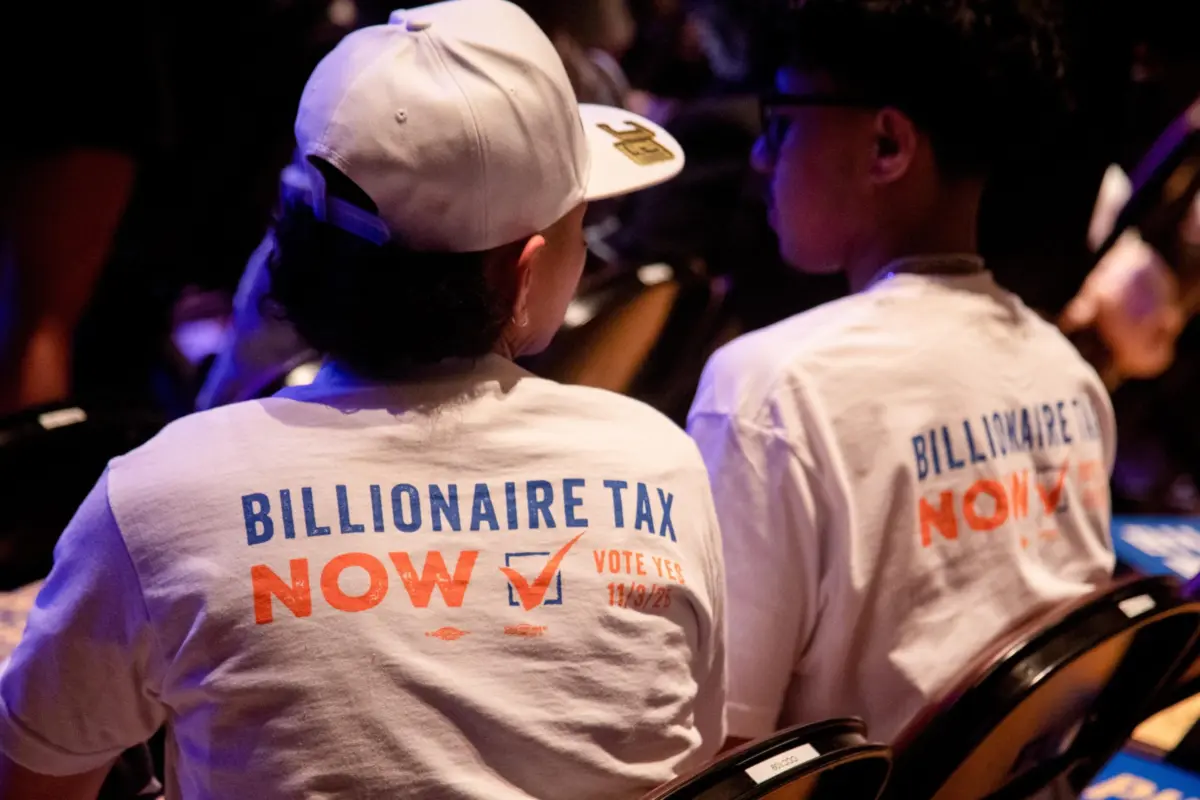
Yet, for all the rhetorical fervor echoing through national politics, only one state has successfully translated this populist sentiment into a concrete, high-stakes electoral reality. This November, California voters will head to the polls to decide the fate of a first-of-its-kind, one-time wealth tax. Targeted squarely at the roughly 250 billionaires residing within the Golden State, the measure would levy a staggering 5 percent tax on their total assets.
Unsurprisingly, the proposal has ignited a fierce, multi-million-dollar war. The state’s ultra-rich are furious, with high-profile figures like tech mogul Sergey Brin already pulling up stakes and relocating to more tax-friendly jurisdictions. Proponents of the measure—anchored by aggressive labor unions and populist firebrands like Senator Bernie Sanders (I-VT) and Representative Ro Khanna (D-CA)—argue it is a long-overdue reckoning against generational hoarding. Conversely, moderate Democrats, business coalitions, and prominent economic scholars warn that the policy is a blunt, destructive instrument that risks backfiring spectacularly.
Among the skeptics is Cristobal Young, a Cornell University sociology professor and author of the seminal 2017 text The Myth of Millionaire Tax Flight: How Place Still Matters for the Rich. While Young’s extensive research has long challenged the conservative dogma that millionaires will flee a state at the mere hint of higher income taxes, he cautions that California’s radical new ballot initiative is an entirely different beast. In a recent interview on the podcast Today, Explained with co-host Sean Rameswaram, Young dissected why this unprecedented wealth tax may cross the line from progressive triumph to economic hazard—and outlined what a sustainable alternative might look like.
Detailed Chronology: From Rhetoric to the Ballot Box
The journey toward California’s unprecedented wealth tax initiative did not happen overnight. It represents the culmination of decades of growing wealth inequality, exacerbated by a tax code that structurally favors capital accumulation over wage labor.
The Rise of Progressive Populism (2020–2024)
Following the economic fallout of the COVID-19 pandemic, wealth concentration at the top of the American economy accelerated to historic highs. While working-class Americans faced soaring inflation and stagnant real wages, tech titans and corporate executives saw their stock portfolios swell.
Progressive lawmakers seized on this divergence, transforming income and wealth inequality from an academic talking point into a central pillar of national campaigns. Wealth taxes, once viewed as radical fringe ideas dismissed by mainstream economists, entered the Overton window. Federal proposals, such as the Billionaires Income Tax Act championed by Senate finance members, began laying the intellectual groundwork for sub-national experimentation.
California’s Legislative Impasse and Citizen Initiative (2025–2026)
Frustrated by legislative inertia in Sacramento, where moderate Democrats routinely watered down or blocked continuous wealth tax proposals, labor unions and progressive activist groups bypassed the traditional legislative process. Utilizing California’s robust ballot initiative system, organizers gathered hundreds of thousands of signatures to place a direct wealth tax constitutional amendment before voters.
By mid-2026, the measure officially qualified for the November ballot. The proposal stunned the financial world by targeting not just annual income, but total accumulated assets—forcing a 5 percent one-time levy on the roughly 250 billionaires who call California home.
The Exodus Begins (Summer 2026)
As the polling heats up, the psychological and physical flight of capital has already commenced. High-profile billionaires, most notably Google co-founder Sergey Brin, have publicly restructured their residency, moving primary homes and corporate anchors out of California to states with no personal income or wealth taxes, such as Texas and Florida. These departures have supercharged the debate, serving as both a cautionary tale for opponents and a rallying cry for proponents who argue that capital flight is merely a bluff by the greed-driven elite.
Supporting Context & Metrics: The Mechanics of Modern Inequality
To understand why California’s ballot measure is generating such intense polarization, one must examine the fundamental plumbing of the American tax code.
The Unrealized Capital Gains Loophole
The primary grievance driving the billionaire tax movement is the treatment of unrealized capital gains. Under current federal and state tax frameworks, labor is taxed immediately. Every paycheck earned by a nurse, teacher, or software engineer faces income tax withholding.
Conversely, wealth accumulated through corporate stock appreciation remains entirely untaxed until the asset is sold. For billionaires whose fortunes are tied up in massive blocks of equity—such as founders of Silicon Valley tech giants—this creates an astronomical loophole. Billions of dollars can accrue year after year without triggering a single cent of tax liability, provided the stock is never liquidated.
Furthermore, the ultra-wealthy bypass the need to sell stock—and thus trigger capital gains taxes—by leveraging their immense holdings. By borrowing against their untaxed stock portfolios, billionaires secure massive lines of credit to fund their lavish lifestyles. Because loans do not legally constitute income under current tax codes, these cash infusions remain invisible to the IRS and state tax agencies.
The Research on Millionaire Tax Flight
For years, the standard counter-argument against raising taxes on the wealthy has been the "threat of migration"—the prediction that high earners will simply pack up and leave for low-tax states like Florida, Texas, or Nevada.
However, empirical research complicates this narrative. Professor Cristobal Young’s exhaustive tracking of millionaires before and after state-level tax increases reveals a surprising reality: tax migration is remarkably low.
- Ties to Place: The super-rich are deeply embedded in specific geographic ecosystems. Social networks, specialized labor markets, family ties, and cultural hubs mean that moving is rarely as frictionless as simply signing a lease in Miami.
- Prior Success: Historical data shows that when states raise income taxes on millionaires, they routinely generate substantial new revenues with very minimal population loss. For standard income tax adjustments, the "threat of flight" is largely a myth.
Why California’s Proposal is Uncharted Territory
Despite his findings on millionaire income taxes, Professor Young warns that California’s new ballot initiative is fundamentally different from anything studied before.
Previous tax hikes focused on incremental adjustments to annual income brackets, netting modest percentage increases. California’s proposed 5 percent asset tax, however, threatens a catastrophic cash-flow event. For individuals holding fortunes in the tens or hundreds of billions, a one-time 5 percent wealth grab translates into individual tax bills ranging from $10 billion to $13 billion.
Even for billionaires, liquidating billions of dollars in stock within a compressed timeframe to pay a one-time state tax is an unprecedented shock. It risks destabilizing local markets, forcing massive corporate sell-offs, and triggering legal challenges regarding constitutional overreach and double taxation. Furthermore, Young notes a glaring strategic contradiction: "It’s a one-time tax, but this is not a one-time problem. Why are we talking about a one-time sort of Band-Aid over this?"
Official Statements & Expert Perspectives
The debate over the California ballot measure has fractured the political and economic landscape, drawing sharp distinctions between populist ambition and technocratic pragmatism.
Proponent Arguments: Labor, Populists, and Economic Justice
Proponents frame the ballot initiative as a vital moral imperative and an indispensable fiscal correction.
- Rep. Ro Khanna (D-CA): Has consistently argued that extreme wealth concentration undermines democratic institutions. Proponents maintain that asking the state’s 250 billionaires to sacrifice a fraction of their astronomical, largely untaxed gains is the only way to fund critical investments in public education, infrastructure, and social safety nets.
- Labor Unions: Key architectural forces behind the ballot push argue that working families have borne the brunt of economic austerity while billionaires have reaped historic windfalls. For labor, the 5 percent asset tax is not punitive; it is restorative justice.
Skeptical Perspectives: Moderate Democrats and Economic Scholars
While agreeing that the underlying inequality must be addressed, moderate politicians and academic experts fear the California experiment is the wrong tool for the job.
- Professor Cristobal Young (Cornell University): Cautioning against the measure, Young emphasized in his interview with Sean Rameswaram:
"Our experience with taxing millionaires at the state level has been very successful… But this tax proposal is a completely different tax instrument. For the people that are affected, this is going to be an unprecedented tax bill. I don’t want to say ‘poor them, they can’t pay it,’ but we’re talking about enormous amounts of money."
- The Alternative—Billionaires Income Tax: Rather than a blunt, one-time wealth tax on total assets, Young advocates for structural reforms modeled after federal proposals like the Billionaires Income Tax Act. This approach shifts the paradigm from a wealth tax to an income tax by targeting year-to-year increments in fortune. If a billionaire’s stock portfolio grows by $20 billion in a single year, they pay taxes on that $20 billion incremental gain—transforming the mechanism into a predictable, ongoing revenue stream without destabilizing total asset pools.
Future Outlook: What Lies Beyond November
As November approaches, the eyes of the nation are fixed on California. The implications of the ballot measure extend far beyond the state’s borders, serving as a bellwether for the future of American economic policy.
Scenario A: Passage and Legal Quagmire
Should California voters approve the 5 percent billionaire tax, the state will immediately plunge into uncharted legal territory. Multibillion-dollar lawsuits challenging the constitutionality of a retroactive asset tax under the Commerce and Due Process clauses are guaranteed. The state could face immediate enforcement hurdles as targeted billionaires accelerate their residency changes, potentially leading to lower-than-projected revenue yields and triggering a protracted constitutional battle that could ultimately reach the U.S. Supreme Court.
Scenario B: Defeat and the Pivot to Incremental Reform
If voters reject the measure—swayed by warnings of capital flight, economic disruption, and arguments from moderate critics—the movement for wealth taxation will not die. Instead, it will likely pivot back toward more conventional, continuous legislative frameworks. Lawmakers are expected to redouble efforts around mark-to-market income taxes on unrealized capital gains, attempting to capture billionaire wealth through systematic, year-over-year income definitions rather than volatile, one-time wealth seizures.
Conclusion
California’s billionaire tax showdown has successfully forced an uncomfortable, long-overdue national conversation. Even its harshest critics concede that the status quo—where vast fortunes accumulate untaxed behind corporate veils while working families shoulder the state’s tax burden—is fundamentally unsustainable. Whether California’s ballot measure proves to be a revolutionary breakthrough or a cautionary tale of populist overreach, it has permanently altered the parameters of the debate over wealth, power, and taxation in the 21st century.





Comments
Facebook App ID not configured. Please add it in the Customizer.