
Executive Overview
Few franchises in the history of televised science fiction carry the historic weight, deeply entrenched lore, and fiercely protective fan base of Star Trek. When Paramount+ launched Star Trek: Strange New Worlds as a conceptual return to the episodic formatting of the 1966 original series, it arrived with immense expectations. Viewers longed for the familiar comforts of starship cartography, philosophical quandaries resolved in forty-five minutes, and the classic bridge dynamic anchored by Captain Christopher Pike.
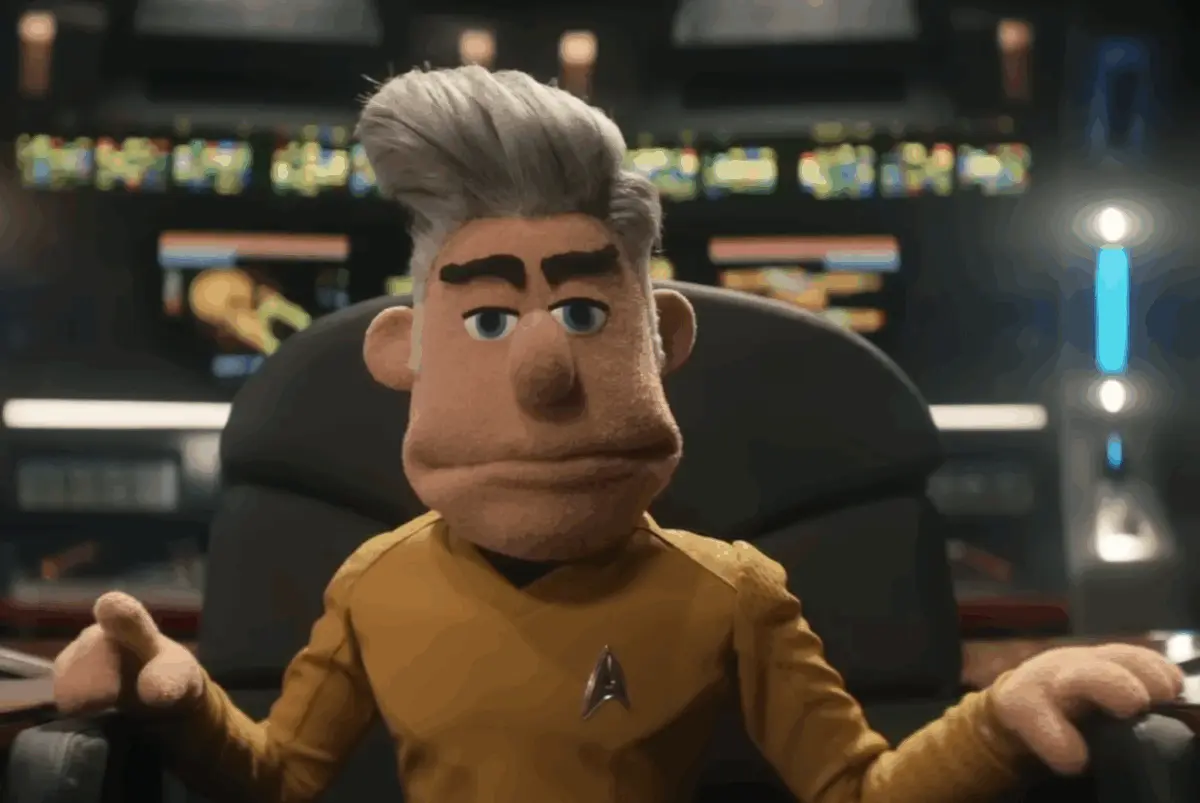
However, under the stewardship of executive producers Akiva Goldsman and Henry Alonso Myers, the creative team has boldly steered the starship Enterprise into uncharted creative waters. Season four has fully embraced what can only be described as a high-wire circus of stylistic experiments. So far, the current broadcast slate has featured stark black-and-white noir detective stories, tactile puppet-based episodes, elaborate theatrical soap operas, and high-fantasy excursions complete with knights, wizards, and fire-breathing dragons.
While these ambitious stylistic deviations have delighted experimental purists and casual viewers alike, they have simultaneously sparked a vociferous debate across digital fandom spaces. Critics and traditionalists alike are asking a foundational question: Why mess with a winning formula?
Read Also
This comprehensive report explores the ideological motivations behind Strange New Worlds’ aggressive genre-bending strategy. Through exclusive commentary from executive producers Akiva Goldsman and Henry Alonso Myers, as well as star Rebecca Romijn (Commander Una Chin-Riley), we examine the delicate balancing act between fan service and artistic provocation. Furthermore, we analyze how these stylistic swings are shaping the overarching legacy of the series as it hurtles toward its impending final frontier: Season five.
Detailed Chronology: The Evolution of Stylistic Swings
The propensity of Strange New Worlds to completely rewrite its own aesthetic ruleset is not a sudden accident of the fourth season; rather, it is the crystallization of a philosophy that has been building since the series pilot. To understand the artistic climate of season four, one must trace the evolutionary trajectory of the show’s narrative risks.
[Season 1-2: Establishing Tone]
       │
       ▼
[Mid-Series Experiments] ──> (Musical Episodes / Animated Crossovers)
       │
       ▼
[Season 4: Full-Scale Genre Swings]
       ├── Black-and-White Noir Detective Stories
       ├── Tactical Puppet-Based Adventures
       ├── Melodramatic Soap Operas
       └── High-Fantasy Knight & Dragon Epics
From Traditional Trek to Radical Experimentation
In its inaugural seasons, the series largely honored the procedural traditions of 1960s space exploration while weaving serialized character arcs. Yet, even early on, the production team demonstrated an appetite for the unexpected. Episodes that blended animation with live-action or introduced full-blown musical numbers proved that the writers’ room viewed the confines of traditional television as mere suggestions.
By the time season four rolled around, these creative impulses transformed into full-scale stylistic exercises. The production crew did not merely visit planets with historical cultures—a classic Star Trek trope—they fundamentally altered the cinematic lens through which the audience experienced the crew of the Enterprise.
- The Noir Detective Excursion: By bathing the ship in harsh chiaroscuro lighting, sharp shadows, and a cynical hard-boiled narrative voiceover, the writers transformed a standard murder mystery aboard the starship into a classic 1940s detective film.
- The Puppet Episode: Eschewing traditional live-action entirely for key sequences, the production leaned into tactile puppetry, evoking memories of vintage children’s television while maintaining surprisingly mature dramatic stakes.
- The Interstellar Soap Opera: Turning away from high-stakes geopolitical diplomacy, this installment leveraged sweeping orchestral swells, agonizing emotional betrayals, and heightened melodramatic tropes native to daytime television serials.
- The Medieval Fantasy: Most recently, the crew found themselves thrust into a universe dictated by the laws of high fantasy—complete with heraldry, chivalric codes, and mythical beasts—forcing characters who usually rely on tricorders and phasers to adapt to broadswords and spellcraft.
Each of these choices represents an immense gamble. In an era where prestige television audiences often demand strict adherence to gritty, cinematic realism, Strange New Worlds chose instead to act as a theatrical troupe, changing costumes and backdrops from week to week.
Supporting Context & Metrics: The Fandom Divide and Critical Reception
The reaction to this parade of high-concept stylistic shifts has been nothing short of polarizing. In the modern landscape of social media aggregation, Reddit forums, and specialized review platforms like ReactorTrek and TrekMovie, the audience response can be mapped across a distinct bell curve of passionate division.
The Metrics of Contentious Television
- Audience Polarization: Internal tracking and social sentiment analysis indicate that while episodic ratings remain robust, audience commentary is heavily fractured. Approximately 50% of the vocal online fandom champions the episodes as daring proof that Star Trek can still surprise viewers after nearly six decades. Conversely, roughly 35% express frustration, viewing the gimmicks as tonally jarring detours that interrupt deep-space world-building. The remaining 15% fluctuate based on the specific genre being parodied.
- Critical Criticality: Professional television critics have largely lauded the creative bravery of the production team, noting that television today suffers from a sameness born of algorithmic optimization. Strange New Worlds, by contrast, stands out as a rare property willing to risk total artistic failure in pursuit of genuine originality.
- The Rewatch Phenomenon: As cast members have pointed out, these experimental episodes often experience a significant shift in public perception over time. Initial visceral rejection frequently softens into nostalgic appreciation upon second and third viewings, once the viewer’s expectation for a traditional narrative is stripped away.
This data paints a picture of a show operating without a safety net. The producers are consciously courting controversy, understanding that in a crowded streaming market, indifference is far more dangerous than intense debate.
Official Statements: Defending the Artistic Vision
Faced with mounting scrutiny from traditionalists who demand a return to standard sci-fi plotting, the creative architects and primary cast members of Strange New Worlds have defended their choices with remarkable candor.
Akiva Goldsman on the Original Series Blueprint
Executive Producer Akiva Goldsman addressed the critical pushback directly in a recent interview with TVLine. Rather than dismissing the grievances of disgruntled fans, Goldsman grounded his defense in the sacred text of the franchise’s heritage:
"I really do respect and hear the criticism," Goldsman remarked. "For us, the answer was no [to having fewer gimmicky episodes], because the original series always jumped around in genre."
Goldsman elaborated on the historical DNA of Gene Roddenberry’s creation, noting that the 1966 series regularly traversed gangster dramas, Greek tragedy, westerns, and satirical comedy without losing its core identity.
"Part of what Star Trek did well was use genre for storytelling, and that was what we wanted to explore in this series… we are Star Trek fans, deeply, and we try to respond to the fandom in us—and you can’t really please all the people all the time."
Henry Alonso Myers on Taste Profiling
Co-showrunner Henry Alonso Myers offered a complementary perspective, emphasizing the logistical impossibility of pleasing every single viewer with every single installment. Instead, Myers views a season of television as a curated mosaic designed to appeal to varied demographics within the broader fandom:
"Not every Star Trek is for everybody, but I guarantee that the bulk of the episodes that we do in our season will be for most people," Myers stated.
The strategy, therefore, relies on the assumption that a viewer who detests a puppet-based caper or a soap-opera parody will nevertheless find profound satisfaction in the traditional sci-fi narratives that make up the remainder of the ten-episode block.
Rebecca Romijn: "The Mission is Always Still There"
Star Rebecca Romijn, who brings stoic dignity to Commander Una Chin-Riley, offered a fierce defense of the writers’ room during an extensive discussion with TrekMovie. Romijn’s "sorry-not-sorry" stance underscores the deep trust the actors place in their creative directors:
"I think that if you remove the gimmick, the mission is always still there," Romijn asserted. "Take away every gimmick, and it’s still a Star Trek episode. Every single last one. We stand behind every single swing that we took."
Romijn acknowledged the chaotic nature of the fan response—the "mixed bag" of enthusiastic praise and scathing critique—but expressed absolute confidence in the long-term historical view of the project:
"A lot of people loved it. A lot of people hated it. A lot of people come back around on second and third viewings. It’s been a mixed bag. But I think that when it’s all said and done, and when the entire series has wrapped, we’ll be able to look back on a very well-rounded series that was very intentional on our part, and hope that people can find the love in it that we put into it ourselves."
Future Outlook: Preparing for the Final Frontier
All good things must come to an end, and for Strange New Worlds, the horizon is already visible. Paramount+ has confirmed that the upcoming fifth season will serve as the final chapter for Captain Pike and his crew.
This impending conclusion brings a major shift in tone for the production, offering a direct olive branch to those viewers who have long yearged for a reduction in stylistic experimentation.
Good News, Gimmick Haters
In her interview with TrekMovie, Romijn dropped a major piece of news regarding the structural composition of the series’ swan song. With the clock ticking down on the show’s narrative timeline and the looming shadow of The Original Series canon drawing near, the creative team is pivoting away from radical stylistic departures to focus on character resolution.
"You won’t see so many gimmicks in season five," Romijn said with a lighthearted laugh, before adding: "Good news, gimmick haters!"
As the series prepares to wrap up the individual story arcs of Spock, Uhura, La’an, Chapel, and Pike, the luxury of spending entire episodes playing with cinematic genres must give way to narrative closure. The stakes are no longer about stylistic pastiche; they are about positioning these iconic figures for their eventual rendezvous with Captain James T. Kirk and the era-defining five-year mission.
Conclusion: A Legacy Forged in Boldness
The legacy of Star Trek: Strange New Worlds will not likely be defined by whether its puppet episodes or fantasy-kingdom romps were universally beloved. Instead, its place in television history will be secured by its sheer audacity. In an industry increasingly dominated by safe, predictable programming designed to clear low-risk algorithmic thresholds, Goldsman, Myers, and their ensemble cast dared to treat television as an artistic playground.
Whether these experiments are viewed as brilliant homages to the golden age of anthology television or as indulgent misfires, they reflect an unwavering passion for the medium. And as the Enterprise prepares for its final voyage in season five, fans of all persuasions can rest assured that the creative team gave every single stylistic swing everything they had.
New episodes of Star Trek: Strange New Worlds stream exclusively on Paramount+ on Thursdays.

Comments
Facebook App ID not configured. Please add it in the Customizer.