
Executive Overview
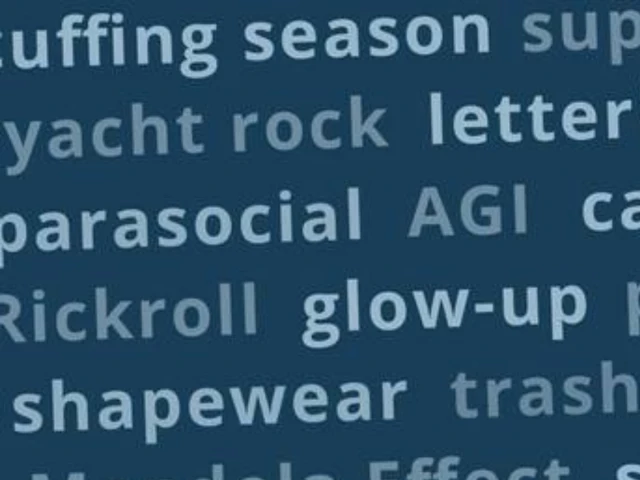
Language is not a static monument; it is a living, breathing ecosystem shaped by the rapid currents of technology, globalization, popular culture, and shifting human behavior. In its latest major update, Merriam-Webster—one of the United States’ oldest and most authoritative dictionary publishers—has officially integrated approximately 1,400 new words and definitions into its lexicon. This sweeping expansion captures the zeitgeist of contemporary society, bridging the gap between hyper-online digital subcultures, evolving culinary landscapes, psychological phenomena, and modern lifestyle trends.
From the ubiquitous influence of artificial intelligence on daily workflows and software development to the playful, absurd lexicon born from meme culture, the new entries offer a comprehensive mirror of how we live, communicate, and navigate the twenty-first century. Terms that once lived exclusively in Reddit threads, TikTok videos, or niche gaming communities—such as "vibe coding," "looksmaxxing," "meme coin," and "trash panda"—have crossed the threshold into official lexicographical permanence.
According to Merriam-Webster, these additions are not arbitrary inclusions; they are the result of rigorous linguistic observation. Every term inducted into the dictionary must demonstrate sustained, widespread use over time across diverse publications, platforms, and demographics. This latest update underscores the democratization of language, where digital-first communities hold unprecedented power in coining the terminology that defines our collective experiences. As lexicographers prepare for the upcoming announcement of the prestigious Word of the Year, this massive expansion provides a vital roadmap to the cultural touchstones defining our era.
Read Also
Detailed Chronology: How Digital Subcultures and Modern Life Shaped the New Lexicon
The process of language evolution has accelerated dramatically over the past two decades, largely driven by the internet and the instantaneous nature of global communication. The journey of these 1,400 new words from ephemeral slang to institutionalized vocabulary represents a fascinating timeline of cultural shifts.
The Digital Frontier: AI, Memes, and Internet Lore
The most prominent driver of linguistic expansion in this update is the intersection of technology and internet culture. For years, software development was viewed as a rigorous, highly technical discipline requiring mastery of complex syntaxes. However, the advent of generative artificial intelligence has fundamentally altered this paradigm. Enter "vibe coding," a newly minted term that describes the process of building software and generating computer code by interacting conversationally with an AI system. Instead of writing raw code line by line, the developer acts as a director, orchestrating the "vibe" and functional requirements while the AI handles the technical execution.
Similarly, the financial and digital asset landscape continues to leave its mark on the English language. "Meme coin," a term that emerged from the chaotic intersection of internet humor and cryptocurrency speculation, has officially secured its place in the dictionary. These digital currencies, often launched as jokes or based on viral internet phenomena, reflect the speculative and often satirical nature of modern digital finance.
Internet culture has also immortalized classic pranks and psychological observations. "Rickroll" has officially transitioned from a viral internet prank originating in the mid-2000s—where unsuspecting web users were redirected to Rick Astley’s 1987 pop hit Never Gonna Give You Up—into a recognized verb.
On the psychological and behavioral front, terms like "parasocial" have gained prominence to describe the increasingly common one-sided emotional connections fans form with public figures, influencers, or fictional characters. The dictionary also welcomed the "Mandela effect," a psychological phenomenon wherein a large group of people collectively share the same detailed, yet entirely false, memory of an event or fact. Furthermore, the "uncanny valley" has been codified to describe that unsettling, deeply eerie sensation experienced when an artificial entity—such as a humanoid robot, CGI character, or hyper-realistic animation—looks almost, but not quite, human.
Aesthetic, Social, and Lifestyle Evolutions
Beyond technology, human socialization and personal presentation have generated a flurry of new descriptors. The concept of personal self-improvement and transformation has expanded beyond the traditional "makeover" to include "glow-up," a term denoting a remarkable, positive physical, financial, or psychological transformation over time.
However, internet subcultures have taken self-optimization to hyper-specific extremes, as evidenced by the inclusion of "looksmaxxing." Rooted in online aesthetic forums, the term refers to the practice of maximizing one’s physical attractiveness through various techniques, ranging from skincare routines and physical fitness to grooming and even controversial cosmetic procedures.
Dating culture has likewise been cataloged with the addition of "cuffing season." This seasonal colloquialism identifies the autumn and winter months when single individuals reportedly feel an increased desire to enter into romantic relationships, motivated by the psychological urge for companionship during colder weather and holiday festivities.
Public discourse and internet stereotypes have also influenced the dictionary’s editorial board. The term "neckbeard," while historically used literally to describe facial hair extending beneath the chin and onto the throat, has acquired a heavy, disparaging cultural connotation. It is now widely recognized in modern lexicons as a stereotype associated with socially awkward, misogynistic behavior, poor hygiene, and obsessive enthusiasm for computing or gaming culture.
Other colloquialisms capturing the emotional weight of modern life include "Sunday scaries"—the distinct anxiety and dread experienced as the weekend draws to a close and the workweek looms—and "crashout," a versatile slang term used to describe either a sudden, dramatic emotional breakdown or a catastrophic, self-destructive failure and defeat.
Culinary Expansion and Regionalisms
Language evolution is equally visible at the dinner table. The modern palate has grown increasingly globalized, prompting the inclusion of international culinary staples. "Bao," the fluffy, steamed Chinese buns beloved worldwide, and "cake pop," the bite-sized, cake-on-a-stick confection, have both been formally recognized.
A particularly notable food-related addition is "chili crisp." Originating in Chinese cuisine and experiencing a massive global boom in popularity over recent years, chili crisp is a spicy condiment consisting of crunchy, fried pieces of ingredients such as chili peppers, garlic, shallots, and soybeans suspended in seasoned oil. Alongside broad terms like "superfood," these culinary entries illustrate how global food trends rapidly transition from niche ethnic markets into mainstream cultural staples.
Regional and lifestyle colloquialisms also made the cut. "California sober" has been added to describe a specific lifestyle approach to substance use, wherein an individual abstains from hard drugs (such as cocaine, heroin, or methamphetamine) while selectively permitting the use of marijuana, alcohol, or both. Meanwhile, everyday garments like "shapewear" have also found their formal definitions established within the reference text.
Supporting Context & Metrics: The Mechanics of Lexicography
To understand the weight of a Merriam-Webster dictionary update, one must examine the rigorous methodology behind lexicographical curation. Adding 1,400 words is not a casual editorial choice; it is the culmination of data-driven language tracking, continuous text analysis, and careful editorial consensus.
The Criteria for Inclusion
Not every trending TikTok audio or viral meme makes the cut. For a word or definition to be inducted into Merriam-Webster, it must satisfy three primary criteria:
- Widespread Use: The term must appear across a diverse range of sources, including journalism, literature, academic papers, corporate communications, and mainstream digital media.
- Sustained Longevity: The word cannot be a fleeting flash-in-the-pan. It must prove that it possesses staying power, remaining relevant over a span of several years rather than fading away after a single news cycle.
- Meaningful Semantic Value: The term must fill a distinct linguistic gap, describing an object, action, feeling, or phenomenon for which no pre-existing single word adequately sufficed.
The Broader Linguistic Landscape
The inclusion of terms like "trash panda"—a whimsical, affectionate moniker for raccoons derived from their notorious habit of rummaging through residential garbage cans—highlights how dictionaries are increasingly willing to embrace playful, internet-native vernacular. Lexicographers recognize that humor, irony, and internet slang are core components of modern human expression.
Furthermore, this update follows hot on the heels of the dictionary’s ongoing efforts to catalog the digital age. In previous cycles, Merriam-Webster famously selected "slop" as its Word of the Year, expanding its traditional definition to encompass the tidal wave of low-quality, automated digital text, images, and video content churned out en masse with the assistance of artificial intelligence. The new integration of terms like "vibe coding" and "meme coin" serves as a direct continuation of this technological documentation.
Official Statements and Editorial Insights
The editorial team at Merriam-Webster frequently emphasizes that the dictionary is designed to be a mirror of society rather than a prescriptive gatekeeper of how people ought to speak.
While official press releases accompanying the launch detailed the statistical scope of the 1,400 new entries, senior lexicographers have routinely noted that the English language is currently experiencing one of its most dynamic expansion phases in modern history. The democratization of publishing through social media platforms, independent journalism, and globalized internet forums has decentralized the coining of new words.
"Language reflects who we are, what we value, and how we interact with our rapidly changing environment," editorial spokespeople have noted in discussions surrounding dictionary updates. By cataloging everything from the psychological weight of the "Mandela effect" to the casual humor of a "trash panda," Merriam-Webster validates the lived experiences of a digitally interconnected global populace.
Future Outlook: Where Is the English Language Headed?
As we look toward the horizon of linguistic development, several key trajectories emerge from this latest dictionary expansion. The ongoing convergence of human culture and artificial intelligence guarantees that our vocabulary will continue to adapt to technological shifts at an unprecedented pace.
- The Institutionalization of Digital Dialects: As generations raised entirely on the internet enter professional, academic, and political spheres, the barrier between online slang and standard English will continue to dissolve. Words that originate in closed chatrooms will increasingly find themselves evaluated for formal inclusion.
- AI-Driven Lexical Creation: With tools like generative AI automating everything from software engineering ("vibe coding") to media creation ("slop"), we can anticipate a future where AI actively assists in generating not just digital content, but the very words used to describe that content.
- Hyper-Specialization vs. Global Universality: While globalized food trends ("chili crisp," "bao") demonstrate how culinary terms travel effortlessly across borders, niche internet subcultures ("looksmaxxing," "crashout") illustrate a simultaneous trend toward hyper-specialized micro-lexicons tailored to specific online demographics.
As lexicographers prepare to crown the upcoming Word of the Year, the overarching takeaway is clear: the English language remains endlessly resourceful, endlessly adaptable, and deeply reflective of the human condition in all its digital, culinary, and psychological complexity.

Comments
Facebook App ID not configured. Please add it in the Customizer.