
Executive Overview
For nearly two decades, author Jessica Brody has anchored her literary career in the mechanics of storytelling. As the mastermind behind the bestselling novel-writing guides Save the Cat! Writes a Novel and Save the Cat! Writes a Young Adult Novel, Brody has spent years teaching thousands of aspiring authors how to systematically construct narratives, navigate structural beats, and engineer satisfying emotional arcs. Yet, a linguistic observation eventually sparked a darker creative epiphany: novelists plot a story, but murderers plot a crime.
This linguistic overlap birthed Brody’s 21st novel and her adult mystery/thriller debut, How to Write a Murder, published by Bantam Books (an imprint of Penguin Random House) on September 22, 2026. Set within the claustrophobic confines of a remote mystery-writing conference where attendees find themselves stranded—and subsequently targeted—the novel explores a chilling premise: what happens when an anonymous killer uses the foundational steps of a popular fiction-plotting guide to orchestrate a real-life homicide?
Represented by Jim McCarthy of Dystel, Goderich, and Bourret Literary Management, Brody’s latest release represents a significant pivot from her extensive catalog of teen fiction, sci-fi trilogies (such as the System Divine series co-written with Joanne Rendell), and licensed Disney properties. Spanning over four years of development and more than ten distinct drafts, How to Write a Murder merges Brody’s deep academic understanding of narrative structure with the unpredictable, high-stakes mechanics of the locked-room mystery genre.
Read Also
Detailed Chronology
The journey of How to Write a Murder from a casual conceptual realization to a heavily anticipated Fall 2026 release spans a four-year development cycle defined by rigorous structural experimentation, shifting narrators, and relentless revision.
Phase 1: The Inciting Incident (The Conceptual Spark)
The seeds for the novel were planted long before the first manuscript page was drafted. As a prominent voice in the writing-craft community, Brody found herself constantly discussing the mechanics of "plotting." The realization that the terminology for structuring a narrative mirrors the terminology for executing a crime provided the initial catalyst. Brody began to ask a fundamental question: If a formula can reliably build a compelling narrative, could the exact same architecture be weaponized to design an untraceable murder?
Phase 2: The Drafting Marathon (2022–2025)
Transitioning from writing speculative fiction, middle-grade adventures, and writing guides to penning a complex mystery proved to be an unexpected endurance test. Despite having written over 20 books, Brody noted that this project demanded a level of structural precision she had never encountered before.
Over the course of nearly four years, Brody wrote and revised more than ten complete drafts. While the overarching premise and the ending—which she envisioned from the very beginning—remained intact, the internal mechanics of the story underwent radical transformations.
- The Scene-Sequencing Quagmire: At one point during the revision process, Brody spent three consecutive months isolating and rearranging a sequence of just 5 to 10 scenes.
- The Rotating Narrator Experiment: In an effort to find the optimal perspective for key revelations, a single critical scene in the manuscript was rewritten from the point of view of every single narrator at least once before Brody finalized the distribution.
Phase 3: The "Mystery-Flavored" Structural Breakthrough
While drafting, Brody faced a challenge common to structural theorists: adapting the 15 universal story beats of the Save the Cat! methodology to a genre she had never personally written in. Rather than treating the structural beats as static checkpoints, she immersed herself in reading and analyzing dozens of classic and contemporary mystery novels.
She began developing "mystery-flavored" nomenclature for the traditional structural beats as an internal shorthand. Milestone narrative turning points were reframed into genre-specific equivalents:
- Break into Two became "Summoning the Sleuth"
- Fun and Games became "The Maze of Misdirection"
- The Finale became "Storming the Killer’s Lair"
By the third draft, this structural mapping evolved into a narrative device within the book itself. Brody decided to weave these beats directly into the text as a fictional plotting guide utilized by the killer, while simultaneously structuring the overarching novel around those exact mechanical steps.
Phase 4: Publication and the Marketing Maze (September 2026)
With How to Write a Murder slated for release on September 22, 2026, Brody encountered an entirely new professional hurdle: the marketing paradox of a heavily twisted mystery novel. Promoting a book built entirely on layered deception and structural sleight-of-hand required a careful balancing act. Brody noted that explaining the premise without drifting into spoiler territory proved surprisingly difficult, forcing her to master the art of being "very cryptic, very quickly."
Supporting Context & Metrics
To fully understand the weight of How to Write a Murder within Brody’s bibliography, it is necessary to examine her extensive publishing footprint and the metrics of her literary career.
Comprehensive Bibliographic Metrics
- Total Published Novels: 21+ across multiple age brackets and genres.
- Writing Guides: 3 bestselling instructional books (Save the Cat! Writes a Novel, Save the Cat! Writes a Young Adult Novel, and associated instructional materials used by fiction writers globally).
- Global Reach: Translations published in over 20 languages worldwide.
- Adaptations: Several titles have been optioned for film and television adaptation.
- Literary Representation: Jim McCarthy of Dystel, Goderich, and Bourret Literary Management.
- Primary Publisher: Bantam Books, an imprint of Penguin Random House.
A Diverse Portfolio
Before entering the adult mystery space, Brody built a formidable career across various publishing categories:
- Writing Guides: Globally recognized manuals for fiction structure.
- Sci-Fi/Dystopian: The System Divine trilogy (co-written with Joanne Rendell), which serves as a science-fiction reimagining of Victor Hugo’s Les Misérables, alongside the Unremembered trilogy.
- Contemporary Young Adult & Middle Grade: Titles including The Geography of Lost Things, The Chaos of Standing Still, Amelia Gray Is Almost Okay, A Week of Mondays, and 52 Reasons to Hate My Father.
- IP and Franchise Work: Official novelizations and adaptations based on high-profile Disney and LEGO franchises, including Disney’s Descendants and LEGO Disney Princess.
The Mechanics of the Story
- Narrative Structure: Told through the perspectives of five distinct writers trapped at a remote conference, accompanied by an unidentified "mystery writer" narrator who continually shatters the fourth wall to address the reader directly regarding the composition of the unfolding murder.
- The Setting: An isolated, atmospheric retreat designed to evoke classic locked-room mystery tropes, forcing characters to confront both an external killer and their own professional insecurities.
Official Statements
Reflecting on her creative evolution, structural philosophies, and the grueling reality of the publishing pipeline, Jessica Brody shared several key insights regarding the creation of How to Write a Murder:
On the Genesis of the Idea
"I literally wrote the book on plot… Then one day I noticed something interesting: You ‘plot’ a novel, but you also ‘plot’ a murder. Coincidence? I thought not. And I started to wonder—what if someone used a popular novel-plotting guide to plot the perfect murder?"
On Adapting Structural Beats for the Mystery Genre
"As the author of Save the Cat! Writes a Novel, one of the biggest questions I’m asked is: ‘How do the 15 beats of the Save the Cat! method work for [insert any genre here]?’ And my answer has always been short and sweet: ‘The 15 beats don’t change per genre; their flavor does.’ Then, I decided to write a mystery novel of my own and I realized I had to go a bit deeper than that. I had to figure out exactly what those 15 beats looked like in a mystery novel—more specifically my mystery novel."
On the Reality of the Writing Process and Revisions
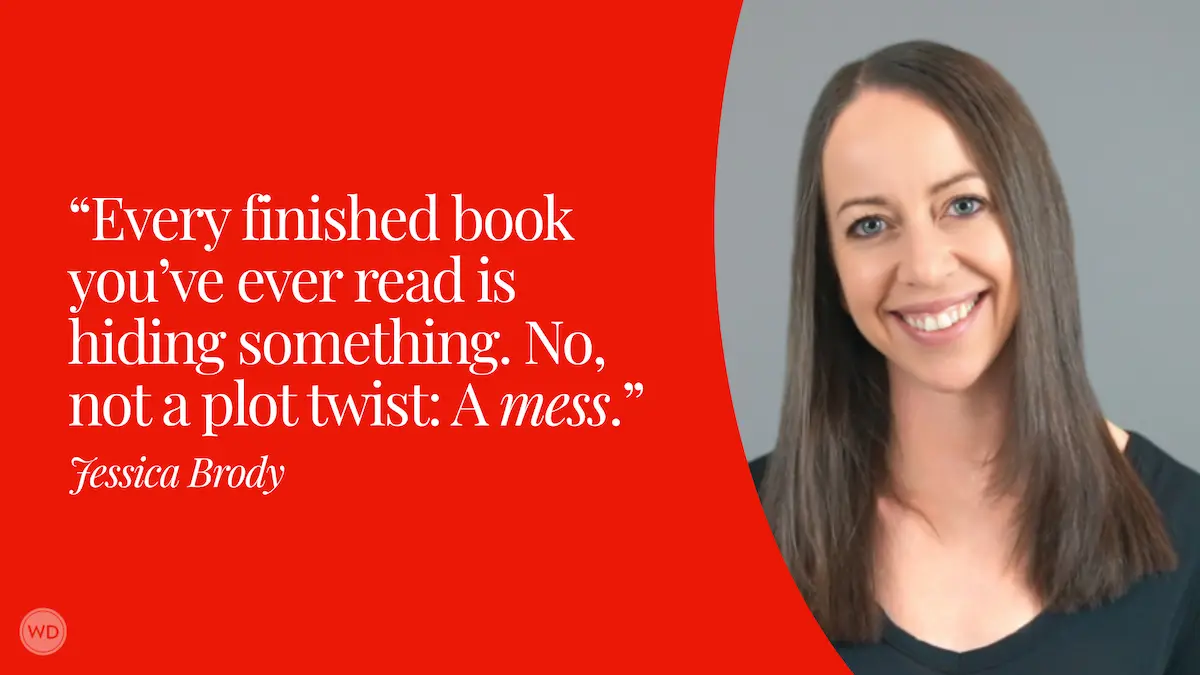
"Every finished book you’ve ever read is hiding something. No, not a plot twist: A mess. Far too often, all we ever get to see of another writer’s process is the perfectly polished prose at the end of it. Not the messy blobs of words they started with, or the months (even years) of revision it took to fix it."
On Reader Expectations and Entertainment Value
"Besides a brain teaser… Honestly, I always write my books with the primary goal of entertainment. If readers get a deeper meaning out of the novel—about the power of storytelling, the dark side of narrative control, or the courage required to face a blank page—then that’s a bonus. I just want readers to feel like part of the mystery. To be invited into this creepy setting, to pull up a chair beside the characters, and try to unravel this locked-room puzzle."
Future Outlook
As How to Write a Murder launches under the Bantam Books banner, its reception will likely serve as a barometer for how traditional writing-craft methodologies can be successfully subverted into commercial fiction. By meta-analyzing the structural architecture of thrillers from the inside out, Brody has carved out a distinct niche that bridges the gap between instructional pedagogy and high-concept entertainment.
For Brody—who operates the Writing Mastery Academy from her home near Portland, Oregon, alongside her husband and three dogs—this release marks a maturation of her literary output. Having conquered YA, middle-grade, sci-fi, and instructional non-fiction, her successful entry into adult mystery/thriller fiction demonstrates an impressive stylistic range.
Industry observers will be watching closely to see if How to Write a Murder sparks a broader trend of meta-narrative thrillers that toy with the expectations of genre-savvy readers. More importantly, Brody’s candid demystification of her four-year drafting process offers a reassuring message to the broader writing community: even the authors of definitive plotting guides must wrestle with messy drafts, structural rewrites, and the daunting blank page before finding the right path forward.



Comments
Facebook App ID not configured. Please add it in the Customizer.