
By the Editorial Desk
Published in partnership with Literary Insights & Creative Nonfiction Review
Executive Overview
Ten years ago, Amy Smyth Miller embarked on an act of creative bravery that still astonishes her: she began writing a book. With a bachelor’s degree in education and a master’s in counseling—rather than a Master of Fine Arts (MFA)—Miller possessed a professional background rooted in academic papers, professional presentations, and clinical contexts. What she did not possess, initially, was any desire to air her vulnerabilities in public.
For years, Miller had actively outrun her past. Even extensive trauma therapy left her with a firm stance on memoir-writing: “Nah, I’m good. Let somebody else do that.” Yet, what began as a deeply private confrontation with her history eventually evolved into a published hybrid memoir entitled Home, a work that blends personal narrative with empirical research on developmental trauma.
Read Also
This comprehensive review explores Miller’s decade-long journey from an elementary school educator to a published author. It examines the unconventional writing pedagogy she absorbed at Columbia University, the rigorous editorial pivots required to break into a saturated publishing market, and the psychological revelation that transformed her manuscript from a chronicle of victimization into an authoritative guide on the hidden strengths forged by adversity.
Detailed Chronology: The Decade-Long Evolution of Home
Phase 1: Unconscious Preparation in the Classroom
While Miller lacked a traditional creative writing degree, her foundational training in the craft began years before she ever considered writing a book. As a public elementary school teacher instructing fourth- and fifth-graders, she adopted the writing workshop method. This instructional framework was acquired during intensive summer institutes at the Teachers College Reading & Writing Project at Columbia University in New York City.
Navigating the subway system of Manhattan during steamy summers, Miller learned how to teach a subject that notoriously divides classrooms: writing. While traditional instruction often reduced writing to mechanical grammar drills, red ink, and punctuation policing, the Columbia project championed a different approach. It viewed writing as an art form capable of painting thoughtful words on a page to touch the human heart.
Miller carried this philosophy back to her students, and their output fundamentally altered her understanding of narrative power. Fourth-graders produced profound creative nonfiction:
- One student wrote about a father diagnosed with ALS, detailing how the child, a dog, and the father in his wheelchair would race down the sidewalk—culminating in an achingly beautiful account of the father’s final days.
- Another student recounted her "Coming to America" narrative, detailing adoption from a Russian orphanage and the realization of a lifelong dream for family.
- A third student transformed the everyday experience of building a treehouse with a grandfather into a piece of spare, poetic prose.
These students mastered the mechanics of creative nonfiction by deploying specific sensory details to anchor readers directly inside the action. They analyzed "mentor texts" to reverse-engineer craft moves. Ironically, this exact pedagogical structure would later mirror the adult writing classes Miller took when she finally decided to tackle her own story.
Phase 2: Facing the Page and Rewriting the Narrative
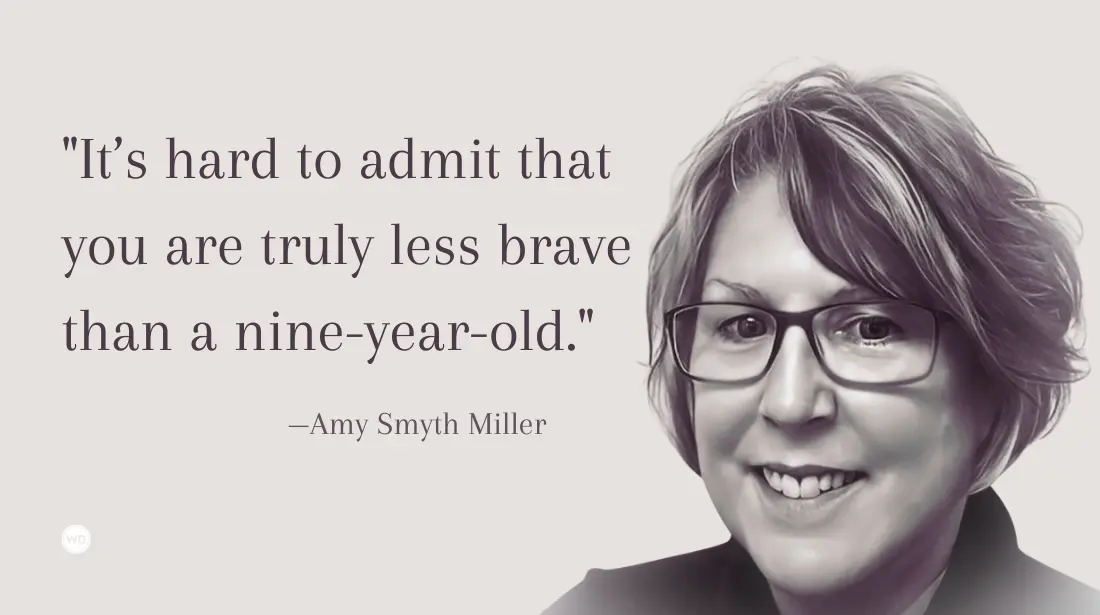
Witnessing nine-year-olds bravely confront vulnerable, emotional truths forced Miller to confront her own hypocrisy. It was difficult, she admits, to acknowledge that she was less brave than a child.
However, her subject matter carried the immense weight of personal trauma—a daunting terrain even for seasoned authors. Miller’s first objective was simply to get the story on paper. Using a chronological timeline of her childhood originally constructed for therapeutic purposes, she drafted her initial manuscript in the first-person present tense.
While this choice created an intense, visceral reading experience, subsequent critique groups—which pored over her more than 30 chapters—revealed structural flaws. Through formal memoir classes, Miller learned a vital technical lesson: highly traumatic subject matter is frequently best served by the past tense, which offers a necessary buffer and emotional distance for the reader. Heeding this advice, Miller performed a complete rewrite of the entire manuscript.
Phase 3: The Publishing Reality Check and the Hybrid Pivot
With a revised manuscript in hand, Miller submitted a chapter that earned her an invitation to an exclusive writing retreat. There, she encountered a publishing executive who delivered a sobering industry reality check.
The executive posed two critical questions:
- "Why would the average person want to read your story?"
- "How would it specifically benefit them?"
Furthermore, the executive noted a harsh economic truth of the modern literary marketplace: the traditional publishing rate for memoirs written by non-celebrities lacking a pre-existing, massive social media following is exceedingly low. To overcome this barrier, the executive offered a strategic pivot: convert the purely anecdotal memoir into a hybrid work combining personal narrative with actionable research.
Accepting this challenge, Miller dove back into her manuscript for yet another comprehensive revision. This pivot catalyzed the defining breakthrough of her writing career.
Supporting Context & Metrics: The Economics of Memoir and Trauma Research
The Modern Memoir Market
Navigating traditional publishing as a debut author without a built-in platform is notoriously difficult. Industry data indicates that literary agents and traditional publishing houses receive thousands of memoir submissions weekly. Of those, only a tiny fraction secure contracts, primarily because pure life-writing without a distinct hook, universal application, or platform struggles to capture broad commercial interest.
By integrating academic research with personal narrative, Miller successfully shifted her book’s genre classification. Hybrid memoirs—texts that bridge the gap between creative nonfiction and self-help, psychology, or sociology—occupy a highly marketable niche. They provide readers with an emotional narrative arc while delivering tangible, educational value.
Developmental Trauma and "Hidden Talents"
As Miller integrated research into her manuscript, she encountered psychological studies examining the long-term cognitive and behavioral adaptations of individuals who survive developmental trauma. Far from merely documenting damage, contemporary psychological literature increasingly highlights the adaptive mechanisms developed by survivors.
Reviewing her childhood timeline through this empirical lens, Miller began to recognize her past experiences not simply as a sequence of wounds, but as a crucible that forged critical adult proficiencies. Traits such as hyper-vigilance, emotional resilience, strategic adaptability, and deep empathy—often viewed clinically as symptoms—can also function as sophisticated survival tools and professional assets.
By framing her narrative around these "hidden talents," Miller’s work shifted away from a narrative of permanent brokenness toward an exploration of acquired strength.
Official Statements & Author Reflections
Reflecting on her decade-long odyssey, Amy Smyth Miller emphasizes the unexpected parallels between teaching children how to write and learning to author one’s own life story:
"I’d never written any book, much less a memoir, and my degrees were a bachelor’s in education and a master’s in counseling, not an MFA. I’d spent years running away from my past and had no desire to put anything so vulnerable in writing. Even after extensive trauma therapy, my attitude was—’Nah, I’m good. Let somebody else do that.’
My students’ bravery inspired me to tackle writing my own memoir. It’s hard to admit that you are truly less brave than a nine-year-old… Rather than a difficult read of traumatic event after traumatic event, a story of brokenness, my memoir transformed into a narrative of resilience, acquired strength, and hope."
Future Outlook: The Impact of Hybrid Memoirs in Mental Health and Literature
Amy Smyth Miller’s journey with Home signals a broader shift in how personal trauma is processed, validated, and shared through literature. As readers increasingly seek out authentic narratives that offer both emotional resonance and practical psychological insights, the hybrid memoir model is poised for continued growth.
For aspiring authors—particularly those coming from non-traditional academic backgrounds such as counseling, education, and social work—Miller’s path offers a compelling roadmap. It demonstrates that professional expertise in human behavior, combined with the structural discipline learned through teaching and critique, can bridge the gap between private healing and public literature.
Ultimately, Home stands as a testament to the fact that stories born from adversity do not merely record survival; when paired with research and empathy, they become blueprints for collective healing.



Comments
Facebook App ID not configured. Please add it in the Customizer.