
Executive Overview
The rapid democratization of artificial intelligence (AI) has unlocked unprecedented avenues for technological innovation, economic productivity, and creative expression. However, this same technological leap has birthed a dark underbelly: the proliferation of non-consensual, AI-generated deepfakes.
In recent weeks, the issue has vaulted to the forefront of political and social discourse in Pakistan following a high-profile incident involving prominent social media personality Jannat Mirza. Mirza became the latest high-profile victim of fabricated digital content, targeted by malicious actors using AI tools to place her likeness into misleading and unauthorized videos alongside a male figure.
The incident prompted swift and vociferous condemnation from political figures, most notably Punjab Assembly Member (MPA) Hina Parvez Butt. Taking to digital platforms, Butt used the incident to issue a stern warning regarding the escalating menace of deepfakes and the targeted harassment of women online.
Read Also
Moving beyond mere condemnation, MPA Butt laid out actionable steps for victims, urging them to preserve digital evidence and report violations immediately to specialized cybercrime authorities and provincial protection helplines. This developing crisis underscores a critical global dilemma: as generative AI tools become cheaper, faster, and more accessible to the general public, existing legal frameworks, societal norms, and digital literacy campaigns are struggling to keep pace, leaving women disproportionately vulnerable to digital exploitation, reputational ruin, and severe psychological distress.
Detailed Chronology of Events
The unfolding controversy began when a fabricated, AI-generated video featuring social media influencer Jannat Mirza surfaced across various digital channels. The manipulated clip depicted Mirza alongside an unfamiliar male figure in a context entirely divorced from reality, exploiting advanced neural rendering and face-swapping capabilities to create a hyper-realistic illusion.
The Outcry from Jannat Mirza
Recognizing the potential for immediate reputational damage, Mirza acted swiftly to address the falsehood. She released public statements calling out the malicious misuse of her image and bringing the gravity of the situation to light.
Mirza pointed out a terrifying asymmetry inherent in the modern digital landscape: as a prominent public figure with a massive following, she possesses the platform and the audience necessary to debunk such fabrications publicly. However, she emphasized that the vast majority of women targeted by such technology do not enjoy this privilege.
For ordinary women, students, and professionals who lack a public platform, the consequences of a circulated deepfake can be catastrophic, silent, and inescapable. Many victims remain entirely unaware that their faces, photographs, or likenesses are being weaponized across illicit forums or private messaging networks until irreversible social, professional, or familial damage has been inflicted.
Political Intervention and MPA Hina Parvez Butt’s Response
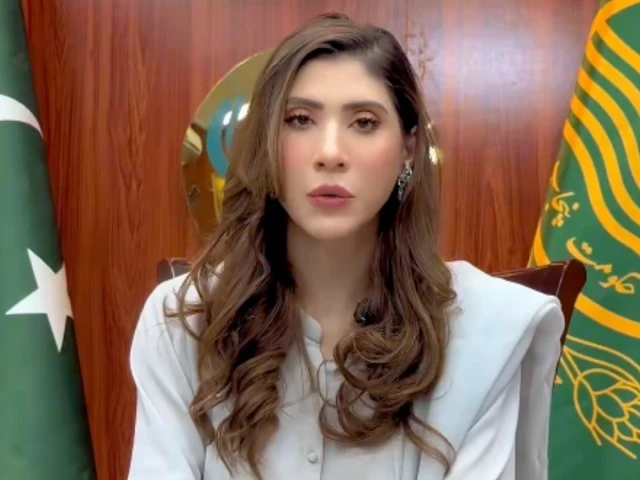
The day following Mirza’s public disclosure, Punjab Assembly Member Hina Parvez Butt amplified the issue, transforming a celebrity-centric news item into a broader legislative and societal call to action. In an official statement shared via her social media channels, accompanied by a dedicated video message, Butt framed the incident as a watershed moment for digital governance in Pakistan.
"The fake video generated by AI of Jannat Mirza has highlighted an extremely serious issue," Butt stated on X (formerly Twitter). "Technology is for progress and convenience, not for violating anyone’s honour, dignity, and privacy. Using women’s images or faces without permission is unacceptable. No compromise on the honour and protection of women!"
Expanding on her initial remarks in her video address, Butt underscored the indiscriminate nature of the threat: "Today, AI has become an important part of life, but its misuse without anyone’s, especially women’s, permission should not be allowed. It is very concerning. Today, it is one woman and tomorrow it can be anyone else. Digital rights violation is a crime as well if a woman’s face is used without her consent."
Supporting Context & Metrics: The Global and Local Deepfake Crisis
To fully grasp the urgency behind MPA Hina Parvez Butt’s warnings and Jannat Mirza’s appeals, one must examine the staggering velocity at which deepfake technology has evolved and the disproportionate toll it exacts on women globally.
The Weaponization of AI Against Women
According to various digital rights organizations and cyber-security analyses, an overwhelming majority of all deepfake videos created and shared online are non-consensual pornography or defamatory fabrications targeting women—ranging from global celebrities and journalists to everyday citizens. Unlike financial cybercrimes, which target corporate assets, or data breaches, which compromise institutional records, deepfakes inflict a profoundly personal assault. They attack a victim’s bodily autonomy, personal reputation, emotional well-being, and social standing.
In conservative and traditional societies like Pakistan, the social stigma attached to compromised imagery—even when definitively proven to be fake—can lead to severe ostracization, forced withdrawal from educational institutions or employment, and profound psychological trauma. The weaponization of AI thus serves as a digital extension of patriarchal control, designed to intimidate, silence, and push women out of public and digital spheres.
The Accessibility Trap
The democratization of generative AI has lowered the technical barrier to entry. What once required sophisticated rendering software, high-end graphic processing units (GPUs), and professional expertise can now be achieved via user-friendly smartphone applications and open-source models available to anyone with an internet connection.
This accessibility has resulted in a proliferation of malicious creation tools. Bad actors can take publicly available photographs from a woman’s social media profile—such as Instagram, Facebook, or LinkedIn—and feed them into deepfake algorithms to generate convincing, fabricated compromising content within minutes. The speed of creation vastly outpaces the speed of moderation, detection, and legal recourse.
Official Statements and Institutional Guidelines
In response to the growing threat landscape, lawmakers and digital safety advocates are scrambling to establish robust response mechanisms. During her public addresses, MPA Hina Parvez Butt transitioned from rhetoric to actionable advice, providing a step-by-step roadmap for victims of digital harassment and AI-driven impersonation.
Actionable Protocols for Victims
Recognizing that digital footprints can be easily altered, deleted, or obscured by perpetrators seeking to evade detection, Butt outlined explicit directives for individuals who find themselves targeted by fabricated content:
- Immediate Evidence Preservation: Victims or witnesses should immediately capture high-resolution screenshots of the defamatory or fabricated material. Furthermore, they must copy and save the exact uniform resource locator (URL) or digital link pointing to the content before it is scrubbed or taken down by the host platform.
- Refrain from Further Circulation: Butt explicitly cautioned against forwarding, resharing, or engaging with the offending material out of curiosity or outrage. Amplifying the content—even to condemn it—often feeds platform algorithms, increases its visibility, and causes secondary victimization.
- Formal Reporting to Cybercrime Authorities: Victims must bypass informal social media debates and immediately log official complaints with specialized investigative bodies. In Pakistan, the Federal Investigation Agency’s (FIA) Cyber Crime Wing is the primary federal agency equipped to handle digital harassment, identity theft, and online impersonation.
- Leveraging Provincial Helplines: For residents of Punjab, Butt highlighted localized institutional support systems, specifically directing women to contact the Punjab Women Protection Authority helpline. These provincial networks offer emergency response, legal aid, and psychological counseling to victims of domestic and digital abuse.
"This is an important issue that we must tackle," Butt concluded, "as there can be no threat to women’s integrity and respect."
Future Outlook: Navigating the Frontier of Digital Safety
The collision between rapid technological innovation and fundamental human rights represents one of the defining policy challenges of the twenty-first century. The case of Jannat Mirza and the subsequent intervention by MPA Hina Parvez Butt have catalyzed a much-needed conversation across Pakistan, yet structural hurdles remain.
Legislative and Regulatory Reforms
Moving forward, existing legal frameworks—such as the Prevention of Electronic Crimes Act (PECA)—must undergo rigorous modernization to specifically address the unique threats posed by generative AI. Traditional definitions of defamation, forgery, and electronic fraud often fail to capture the psychological and social nuances of deepfake exploitation. Lawmakers must draft targeted amendments that explicitly criminalize the unauthorized generation, distribution, and possession of non-consensual deepfakes, carrying stringent penalties that act as an effective deterrent.
Platform Accountability and Corporate Responsibility
Tech giants, social media platforms, and hosting services operating within Pakistan must also be held to higher standards of accountability. Platforms must invest heavily in automated watermarking, instantaneous deepfake detection algorithms, and streamlined reporting channels that allow victims to have fraudulent content removed within hours rather than weeks. Cooperation between international tech corporations and local regulatory bodies will be vital in curbing the cross-border dissemination of malicious files.
Fostering Digital Literacy and Cultural Shift
Ultimately, legal and technological fixes alone will not suffice. A comprehensive societal counter-offensive is required. Educational institutions, civil society organizations, and media outlets must prioritize digital literacy, teaching young internet users about privacy hygiene, the ethical implications of AI tools, and the critical evaluation of online media.
Furthermore, cultural paradigms must shift to ensure that society stops blaming victims of digital harassment. When a deepfake is exposed, the collective outrage must be directed squarely at the perpetrators of the crime and the systemic failures that permit such technology to run unchecked.
As artificial intelligence continues to reshape the contours of modern civilization, the courage displayed by public figures like Jannat Mirza and the policy leadership of lawmakers like Hina Parvez Butt signal a crucial step forward. Safeguarding the digital dignity of women is no longer merely a niche techno-legal concern—it is a fundamental pillar of a just, equitable, and secure society.





Comments
Facebook App ID not configured. Please add it in the Customizer.