

Executive Overview
The Hawaiian island of Kauai—affectionately known as the Garden Isle—is internationally celebrated for its dramatic cliffs, emerald valleys, and rich, biodiverse ecosystems. Among its many ecological treasures, the juxtaposition of the Allerton Garden and the McBryde Botanical Garden stands out as one of the premier highlights for travelers and naturalists alike. Situated side by side along the southern coast of the island, these two distinct horticultural havens operate under the umbrella of the National Tropical Botanical Garden (NTBG), a congressionally chartered institution dedicated to the conservation, study, and dissemination of knowledge regarding tropical plant life.
While sharing a contiguous landscape, the Allerton and McBryde gardens offer radically contrasting experiences. The Allerton Garden is an artistic masterpiece born of human imagination, architectural extravagance, and dramatic landscape design, often described as a wealthy visionary’s elaborate folly. In contrast, the McBryde Garden serves as a sprawling scientific sanctuary, housing a vast, meticulously curated living collection of rare and endangered flora native to tropical regions around the globe. Together, these properties present visitors with an immersive exploration of how human creativity and botanical science intersect. Beyond traditional guided bus tours and self-guided walking excursions, the NTBG extends its mission to the public through educational offerings, including watercolor and botanical illustration classes that bridge the gap between creative expression and environmental appreciation. This comprehensive report delves into the history, architectural intricacies, ecological significance, and future outlook of Kauai’s premier botanical sanctuaries.
Detailed Chronology
The Genesis of a Horticultural Landscape: Early History and Land Acquisition
The history of the land that now encompasses the Allerton and McBryde Botanical Gardens is deeply tied to the agricultural and socio-economic evolution of Hawaii during the late 19th and early 20th centuries. Long before it was transformed into a landscape of architectural follies and scientific collections, the Lawai Valley was utilized by native Hawaiians for agricultural cultivation, particularly taro, owing to its reliable water sources and fertile alluvial soils.
Read Also
By the late 1800s, as the Hawaiian sugar industry expanded rapidly under the aegis of the "Big Five" corporations, the valley fell under the control of the McBryde family. Duncan McBryde, alongside his sons, established extensive sugarcane operations across Kauai’s southern shores. However, portions of the valley floor and the adjacent coastal areas possessed unique microclimates and aesthetic qualities that transcended industrial agriculture.

The Allerton Era: From Sugar Lands to an Artist’s Sanctuary
The modern trajectory of the Allerton property shifted dramatically in the 20th century when it was acquired by Robert Allerton and his adopted son and partner, John Gregg Allerton. Robert Allerton, an heir to a substantial Chicago-based fortune derived from banking and stockyards, viewed himself as a failed artist. Channeling his profound creative energies and a considerable financial endowment into the physical landscape, Allerton set out to reshape the Lawai Valley into a living canvas.
Working closely with landscape architects and designers over several decades, the Allertons infused European formal garden design principles with the lush, tropical exuberance of the Hawaiian environment. They constructed dramatic outdoor "rooms," punctuated by classical statuary, fountains, reflecting pools, and architectural elements imported from Europe and Asia. The integration of the valley’s natural features—such as the meandering Lawai Stream and the towering cliffs—with manufactured grandeur created a surreal, theatrical atmosphere. Following Robert Allerton’s passing, the estate was preserved and eventually integrated into the newly formed National Tropical Botanical Garden, ensuring that his artistic vision would be maintained for future generations.

The Evolution of McBryde Garden as a Scientific Hub
While the Allerton property focused heavily on landscape architecture and artistic expression, the adjacent McBryde property took a distinctly scientific path. Established formally as a research and conservation center by the NTBG, the McBryde Garden was designed to house the world’s largest ex-situ collection of native Hawaiian flora, alongside extensive holdings of tropical plants gathered from expeditions across the globe.
Throughout the late 20th and early 21st centuries, McBryde evolved into a critical fortress against extinction. As native habitats across the Pacific and other tropical regions faced mounting pressures from invasive species, climate change, and human encroachment, McBryde’s horticulturists and researchers intensified efforts to collect, propagate, and study species teetering on the brink of extinction. Today, the garden functions as both an open-air museum and a high-tech laboratory, equipped with seed banks and tissue culture facilities designed to preserve genetic diversity.

Supporting Context & Metrics
Architectural and Botanical Contrasts
To fully appreciate the visitor experience at the NTBG’s Kauai properties, one must examine the distinct structural and horticultural philosophies governing each garden:
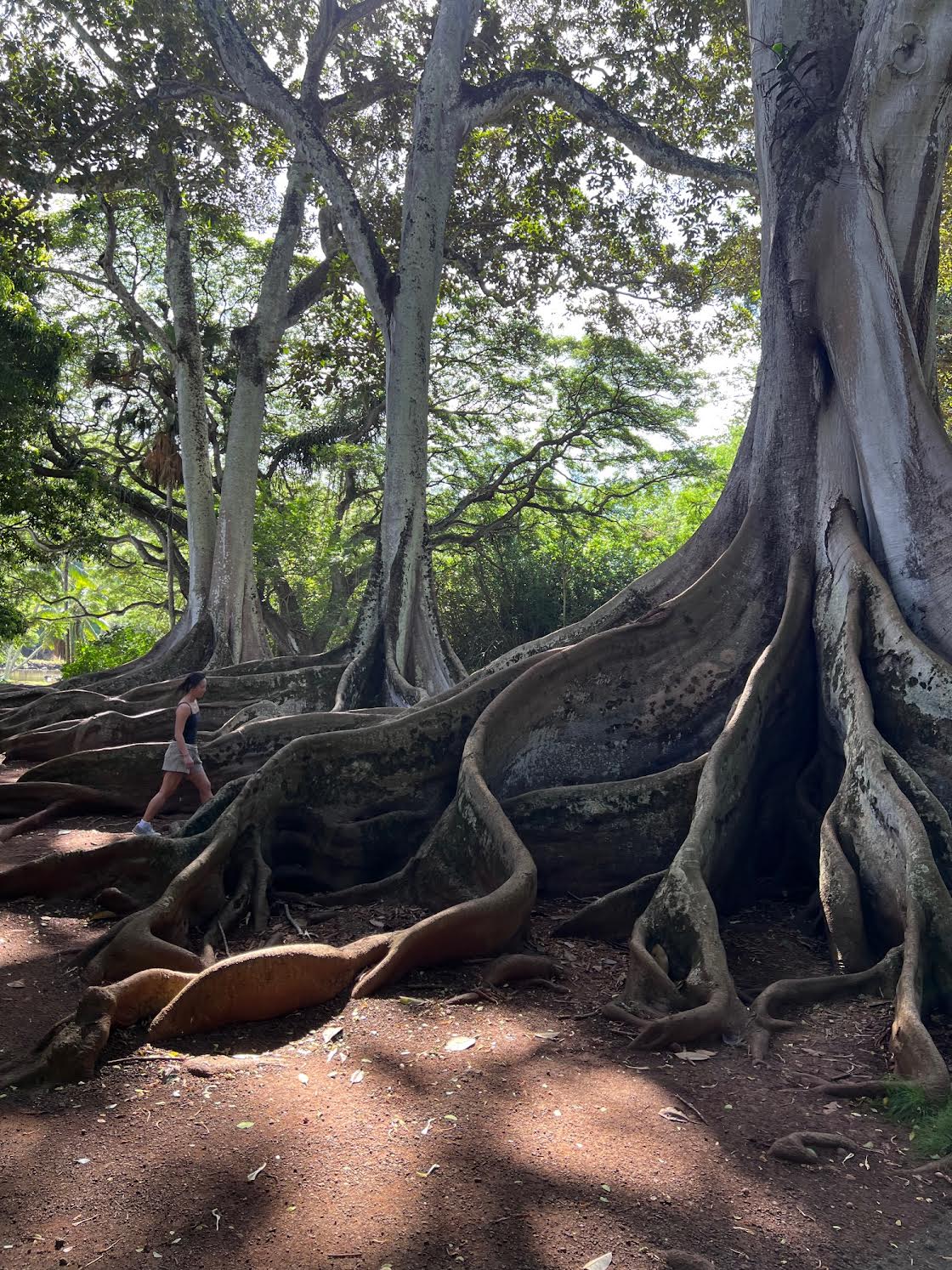
- Allerton Garden: Characterized by its “garden rooms,” this 80-acre property emphasizes human-made structures seamlessly blended with natural topography. Iconic features include the famous Moreton Bay fig trees with their massive, undulating buttress roots—famously featured in cinematic productions like Jurassic Park—as well as rows of swaying golden bamboo, classical European urns, and hidden grottos. The design reflects an aesthetic of surprise, guiding the visitor from formal, manicured courtyards into wild, jungle-like environments.
- McBryde Garden: Spanning over 250 acres of the lower Lawai Valley, McBryde is a scientific and ecological landscape. It features specialized zones including a native flora conservation area, a canoe garden highlighting plants brought to Hawaii by early Polynesian voyagers, a massive palm garden, and a heliconia and ginger garden.
| Metric / Feature | Allerton Garden | McBryde Botanical Garden |
|---|---|---|
| Primary Focus | Landscape design, art, architecture, and history | Scientific research, conservation, and plant diversity |
| Approximate Acreage | ~80 acres | ~250 acres |
| Key Visual Elements | Classical statues, fountains, formal rooms, giant Moreton Bay figs | Dense tropical plantings, specialized valley zones, palm collections |
| Visitor Access Type | Guided tours (bus and walking formats) | Guided tours, research access, educational workshops |
Educational Integration and Artistic Workshops
In recent years, the NTBG has expanded its public engagement profile by offering immersive educational programs that connect visitors directly with the environment. Among these, the botanical illustration and watercolor classes—held periodically at the Kauai headquarters—have garnered significant acclaim. These workshops leverage the visual splendor of the gardens to teach participants the meticulous skills required for scientific illustration, fostering a deeper, analytical appreciation of plant anatomy and ecological interconnectedness.

Official Statements
Leadership and conservation experts within the National Tropical Botanical Garden have consistently emphasized the dual mission of aesthetic preservation and ecological stewardship.
In institutional literature regarding the management of the Lawai Valley properties, NTBG spokespersons have noted:

"The gardens of Lawai Valley are not merely tourist attractions; they are living testaments to the delicate balance between human imagination and ecological responsibility. Robert Allerton carved a personal paradise from agricultural land, while McBryde established a sanctuary for the world’s most vulnerable species. Together, they represent our institutional commitment to saving tropical plant diversity before it is lost to history."
Botanical curators overseeing the living collections at McBryde further elaborate on the urgency of ex-situ conservation:

"With countless plant species facing imminent extinction in their native habitats due to habitat loss and invasive pressures, institutions like McBryde serve as the ultimate ark. Every specimen we successfully propagate and study represents a vital genetic lifeline for the future of our planet’s tropical ecosystems."
Future Outlook
As global biodiversity faces unprecedented threats from climate change, habitat fragmentation, and invasive species, the role of botanical institutions like the Allerton and McBryde gardens is more critical than ever. Looking ahead, the National Tropical Botanical Garden is poised to expand its conservation and education initiatives on Kauai.

Plans for the coming decade include enhanced integration of digital mapping technologies for living collections, upgraded seed banking and tissue culture laboratories to scale up rescue operations for critically endangered Hawaiian flora, and the expansion of community outreach programs, including nature-based art and science workshops. By continuing to bridge the worlds of high art, architectural history, and rigorous scientific research, the Allerton and McBryde Botanical Gardens will remain enduring monuments to the natural and cultural heritage of Hawaii, ensuring that future generations can witness, study, and draw inspiration from the unmatched beauty of the Garden Isle.





Comments
Facebook App ID not configured. Please add it in the Customizer.