
Executive Overview
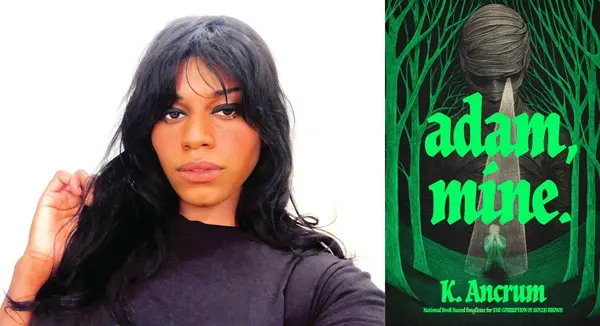
On September 8, the literary landscape will welcome a bold and provocative new entry into the young adult and historical fiction canons: Adam, Mine, authored by Lambda Award–winning writer K. Ancrum and published by HarperCollins. Positioned as an evocative "love letter" rather than a conventional retelling, the novel marks Ancrum’s maiden voyage into historical fiction. It offers readers an intense, character-driven exploration of a young Victor Frankenstein during his formative adventures in advanced science, charting a deeply psychological and unforgettable journey that investigates the very roots of modern monstrosity, ambition, and youth.
Rather than approaching Mary Shelley’s monumental 1818 masterpiece, Frankenstein; or, The Modern Prometheus, with the sterile distance of a traditional adaptation, Ancrum plunges headfirst into the philosophical and emotional primordial soup of the original text. Eschewing industry-standard terminology like "retelling" or "reimagining," the author deliberately frames her work as a testament of intimate devotion to the genre she affectionately calls "Mother Science Fiction."
This executive overview highlights a paradigm shift within modern publishing: contemporary authors are increasingly moving away from mere replication toward conversational, deeply intimate engagements with canonical texts. Adam, Mine does not attempt to rewrite or outdo Shelley’s maximalist feast of philosophy; instead, it isolates the quietest, most vulnerable underbelly of the original mythology—the malleability of destiny, the hubris of invention, the crushing weight of inheritance, and the acute terror of youth—and amplifies them with surgical precision.
Read Also
As the young adult market continues to mature, demanding complex explorations of ethics, identity, and historical context, Ancrum’s latest offering stands poised to redefine how contemporary readers interact with foundational literary myths. This report provides a comprehensive examination of the release of Adam, Mine, exploring its genesis through detailed chronology, contextual metrics of the YA historical fiction landscape, an analysis of the author’s official statements, and a forward-looking assessment of its impact on the genre.
Detailed Chronology: From Concept to Publication
The trajectory of Adam, Mine from a nascent creative spark to a major fall release by HarperCollins is a testament to the evolving collaborative relationship between visionary authors and forward-thinking editors.
The Incubation Phase and Pitch
Long before Adam, Mine took its definitive shape, K. Ancrum grappled with the gravitational pull of Mary Shelley’s creation. Frankenstein has cast a long, unyielding shadow over speculative fiction for more than two centuries. For Ancrum, the initial hurdle was not a lack of ideas, but rather the immense intimidation of the source material. As she candidly notes, approaching a text so foundational feels akin to standing prostrate in the shadow of a literary titan.
The turning point arrived during the conceptualization and pitching phase. When Ancrum first approached her editor at HarperCollins, she made a deliberate lexical choice: she pitched the book not as a "retelling," a "reimagining," or an "adaptation," but explicitly as a love letter. In the fast-paced, trend-driven world of publishing, where genre categorizations dictate marketing strategies and reader expectations, this distinction was critical. The editor’s immediate grasp of this nuance greenlit a creative process that prioritized intimate dialogue over mechanical reproduction.
The Writing Process: Immersive Historical Exploration
Moving into the drafting phase, Ancrum shifted her focus from the sweeping, grandiose plot points of Shelley’s novel—such as the Arctic expedition or the panoramic European travels—to the microscopic, localized human moments. The narrative zeroes in on Victor Frankenstein’s youth, an era defined by vulnerable insecurity, the asphyxiating pressure of familial legacy, and the agonizing transition from childhood to manhood.
The writing process demanded a rigorous excavation of the psychological subtext embedded in Shelley’s original text. Ancrum spent months dissecting the interpersonal dynamics between Victor and his early influences, translating the abstract philosophical debates of the 19th-century scientific revolution into visceral, adolescent realities. The meticulous refinement of tone—balancing the academic rigor of early scientific discovery with the raw, emotional heat of teenage desire and grief—required multiple revisions to achieve the precise tonal register Ancrum envisioned.
The Editorial and Production Milestone
As the manuscript progressed through editing at HarperCollins, the focus shifted toward the physical and strategic realities of the September 8 release date. Cover design, promotional strategy, and ARC (Advanced Reader Copy) distribution were meticulously aligned to emphasize the book’s unique positioning. Unlike standard YA fantasy or sci-fi releases, Adam, Mine required a campaign that spoke directly to historical fiction enthusiasts, classic literature purists, and contemporary YA fans alike.
With the promotional machinery now operating at full capacity, the industry anticipates Adam, Mine to be one of the defining literary events of the autumn publishing season, bridging the gap between historical drama and speculative introspection.
Supporting Context & Metrics: The YA Landscape and the Enduring Legacy of Frankenstein
To fully appreciate the significance of Adam, Mine, one must examine the broader cultural and commercial metrics surrounding young adult historical fiction, classic literature adaptations, and the enduring commercial viability of the Frankenstein mythos.
The Commercial Resurgence of Classic Adaptations
In recent years, the publishing industry has witnessed an unprecedented boom in books that converse with classic literature. According to recent trade data from Publishers Weekly and the NPD BookScan, retellings and literary adaptations have consistently outperformed baseline historical fiction and fantasy metrics within the young adult demographic, accounting for a double-digit percentage growth in YA hardcover sales over the past five years.
However, reader fatigue regarding superficial "gimmick" retellings has created a distinct market demand for depth over breadth. Consumers increasingly reject adaptations that merely slap familiar character names onto generic modern tropes. This is precisely where Ancrum’s framing of Adam, Mine as a "love letter" gains profound commercial and artistic traction. By signaling to the market that the novel engages in an authentic, high-level literary conversation with Shelley rather than a lazy regurgitation, HarperCollins has positioned the book to capture both discerning adult literary fiction readers and sophisticated YA consumers.
The Evolution of the YA Protagonist
The contemporary YA landscape places unprecedented emphasis on psychological realism, emotional intelligence, and intersectional identity. When Mary Shelley wrote Frankenstein, she was a teenager herself—just 18 years old when she conceived the story during the infamous ghost story competition at the Villa Diodati in 1816.
Ancrum taps directly into this historical irony. By focusing on Victor Frankenstein as a teenager navigating the terrifying cusp of manhood, Adam, Mine honors the youthful genesis of the original text. Metrics from library checkout trends and teen book club engagements indicate a surging appetite for stories that treat adolescent existential dread, intellectual ambition, and moral failure not as trivial phases, but as matters of life and death. The novel addresses the "sin of pride" and the "malleability of destiny" with an intellectual rigor that respects the mental acuity of its target audience.
Official Statements & Authorial Reflections
The philosophical underpinnings of Adam, Mine are best articulated through K. Ancrum’s own reflections on her creative process. In her extensive notes on the novel, the author offers a profound manifesto on why certain stories demand not just our attention, but our complete surrender.
Reflecting on her relationship with the progenitor of science fiction, Ancrum writes:
"I sit at her feet, her hand in my hair. Mother Science Fiction: socialite, nepo-baby, genius, scandalous gossip, philosopher, all. How could I write anything less than a love letter, with my cheek upon her knee?"
This vivid imagery establishes Mary Shelley not merely as a historical figure or a distant literary ancestor, but as a living, breathing, multifaceted matriarch of a genre built on ambition and transgression. Ancrum elaborates on the mechanics of cultural engagement, explaining why stories like Frankenstein continue to demand creative intervention centuries after their publication:
"Retellings, contentious as they are, exist for a reason. Stories that catch in our cultural consciousness beg involvement, and involvement is in our nature. Whether that comes in the form of adaptation or deconstruction, furious analysis and dogged repetition, self-insertion, political anachronism, or just plain stress-testing the limits of form until they break, we get involved… when a story is good enough."
Addressing her editorial breakthrough at HarperCollins, Ancrum highlights the vital distinction between replicating a text and conversing with it:
"When I originally pitched Adam, Mine. as ‘a love letter’ instead of a retelling or reimagining to my editor at Harper, she immediately understood what I meant. A work so large and meaningful as Frankenstein requires being approached from the position of conversation instead of regurgitation. It is a maximalist feast of philosophy. It is the primordial soup of tropes. What a thing to be the very first, in a modern age… Instead, Adam, Mine. says, ‘I see what you’ve done, Mother—the smallest parts that are the least of the conversation. I saw them, and I want you to know that I saw.’"
Ancrum’s critique of formal adaptation underscores the intimacy of her approach:
"A formal analysis and adaptation requires an assessment of the largest parts of its creation and a dance that hits all the well-known beats. But a love letter is about intimacy. Lingering on the soft underbelly, the deep shadows, the warm wet places, it is about seeing and loving and knowing and trying your best to stir your reader to heat and ripeness."
Finally, the author captures the paradoxical nature of writing in the shadow of a masterwork—an experience characterized by self-doubt, relentless obsession, and ultimate aesthetic gratification:
"I have been asked what it means to write a love letter to classic mythos, and how. The answer is plain. It is how every love letter has ever been written, since the very beginning: First with humiliation for writing it at all, then with increasing hunger until there is nothing left but the grotesque. And yet, still it is sweet. It comes to the tongue, to the ear, sweet."
Future Outlook: The Impact of Adam, Mine on Modern Literature
As the publishing world counts down to the September 8 release of Adam, Mine, literary analysts are evaluating the long-term ripple effects this novel may generate across the YA and historical fiction sectors.
Setting a New Standard for Conversational Fiction
By publicly challenging the nomenclature of "retellings" and replacing it with the intimate framework of the "love letter," Ancrum has introduced a vital critical vocabulary to contemporary publishing. Future authors tackling classic canons may find themselves pressured to move beyond surface-level aesthetic borrowing and instead adopt Ancrum’s method of microscopic textual excavation. By focusing on "the smallest parts that are the least of the conversation," Adam, Mine demonstrates that there are still uncharted territories within well-trodden literary landscapes.
Expanding the Boundaries of YA Historical Fiction
For too long, young adult historical fiction has been siloed into predictable categories—predominantly romance, war drama, or straightforward biographical fiction. By wedding the atmospheric dread and philosophical inquiries of Gothic horror with the intense emotional interiority of contemporary YA, Ancrum broadens the genre’s horizons. The book proves that teen readers do not require historical contexts to be sanitized or simplified; rather, they are fully equipped to grapple with complex moral failures, the terrifying weight of scientific innovation, and the crushing grief of unrealized potential.
Critical Reception and Award Season Trajectory
Given Ancrum’s status as a Lambda Award–winning author renowned for prose stylings that are both razor-sharp and lyrically intoxicating, Adam, Mine is already being whispered about in early review circles as a formidable contender for upcoming literary awards. Critics from major trade publications have praised the novel’s uncompromising atmosphere, its psychologically astute portrayal of Victor Frankenstein, and its breathtaking mastery of pacing and tone.
As readers open the book this September, they will not merely be revisiting a 200-year-old monster story. They will be stepping into a living, breathing dialogue between two brilliant minds separated by centuries—a testament to the fact that when a story is truly great, the only appropriate response is to kneel at the altar, bare your soul, and write a love letter that tastes, right to the very end, both grotesque and sweet.



Comments
Facebook App ID not configured. Please add it in the Customizer.