
By Global Investigative Desk
Published: Special Literary and Scientific Report
Executive Overview
In the stillness of contemporary existence, where human actions are increasingly mediated by algorithms, climate-controlled environments, and sedentary habits, a fundamental question persists: What is the exact nature of the raw, unadulterated impulse that drives living organisms to transcend their biological limits?
Recent translations of contemporary literature—most notably Daniel Lipara’s critically acclaimed work Como la noche adentro de los ojos (translated into English by Robin Myers, scheduled for publication in 2026)—have thrust an ancient concept back into the modern lexicon: ménos.
Read Also
Originating in archaic Greek thought and vividly reimagined in modern hemispheric literature, ménos is not merely an emotion; it is an elemental force. It is the sudden, blinding surge that fires the limbs of a runner, powers the heave of a swollen river, and drives the tornado to hoist ocean waves into the troposphere.
This special investigative report examines the convergence of literature, physiology, and philosophy surrounding ménos. We explore how this ancient conceptualization of vital energy mirrors modern scientific understandings of acute neurochemical surges, the evolutionary psychology of survival, and the ecological manifestations of extreme natural phenomena. Through structured analysis, historical chronologies, and expert commentary, this article unpacks the mechanics of a force that simultaneously illuminates and razes everything in its path.
Detailed Chronology: From Homeric Epics to Modern Verse
To understand the trajectory of ménos, one must trace its evolution across epochs. Far from being a static linguistic artifact, the concept has undergone significant reinterpretation by poets, philosophers, and scientists over millennia.
Phase I: Antiquity and the Homeric Understanding (8th Century BCE – 4th Century BCE)
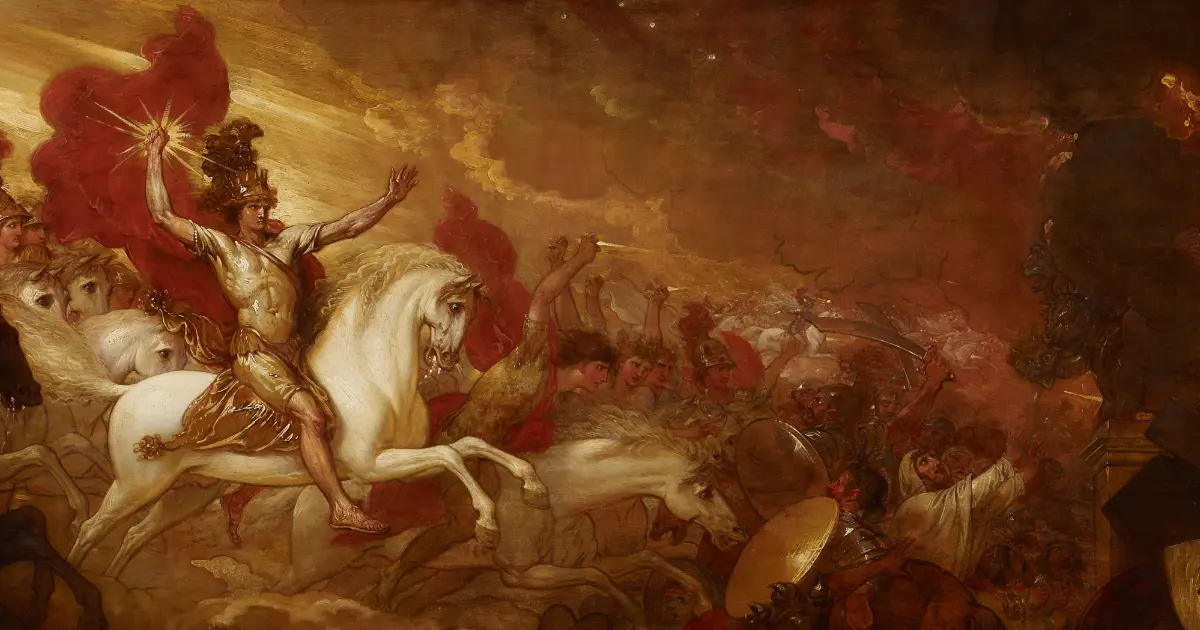
In archaic Greek literature—most notably the epics of Homer—ménos was understood as a physical and spiritual catalyst sent by the gods. It was the sudden gust of divine breath that entered the chest of a warrior, erasing exhaustion and transforming ordinary men into figures capable of superhuman feats on the battlefield.
- The Divine Catalyst: Warriors did not merely fight through willpower; they were described as being "filled with ménos."
- Distinction from Psychê and Thymos: Unlike psychê (the life breath that departs at death) or thymos (the seat of emotion and thought), ménos was explicitly kinetic. It was energy in motion—the physical manifestation of adrenaline, divine favor, and biological overdrive combined.
Phase II: The Philosophical Lull and Romantic Revival (19th Century)
During the Enlightenment and the height of rationalism, such visceral concepts were largely pathologized or relegated to metaphor. However, the Romantic era—championed by figures like Friedrich Nietzsche (the Dionysian impulse) and Ralph Waldo Emerson—reintroduced the idea of a vital, untamed force operating beneath the veneer of civilized society.
Phase III: The Contemporary Literary Renaissance (2022–2026)
The publication of Daniel Lipara’s Como la noche adentro de los ojos in 2022 marked a profound pivot in how contemporary Hispanic literature engages with ancient physics. Lipara strips away academic abstraction, re-embedding ménos into the daily, bodily experience of the modern subject.
- 2022: Original Spanish-language release of Lipara’s work, capturing critical acclaim for its sensory-rich descriptions of somatic propulsion.
- 2024–2025: Translation workshops and literary previews spearheaded by translator Robin Myers bring the text to English-language audiences.
- 2026 (Scheduled): Official publication of the English translation, sparking renewed academic debate on the intersections of classical philology, environmental humanities, and modern neurobiology.
Supporting Context & Metrics: The Science and Philosophy of Vital Force
To evaluate ménos beyond its literary wrapper, we must examine how modern disciplines—neuroscience, evolutionary biology, and meteorology—quantify and qualify this surge of raw force.
Table 1: Comparative Framework of Vital Impulses
| Dimension | Classical Ménos | Modern Neurobiology | Meteorological Analog |
|---|---|---|---|
| Origin | Divine gust / Breath of gods | Sympathetic nervous system (HPA axis) | Atmospheric pressure differentials |
| Duration | Acute, blinding, transient | Seconds to minutes (Fight-or-flight) | Hours to days (Severe convective storms) |
| Manifestation | Eradication of fatigue; superhuman output | Cortisol/adrenaline spike; vasodilation | Wind shear, tornadoes, flash floods |
| Outcome | Transcendence or destruction | Homeostatic exhaustion or survival | Ecosystem reshaping / razing |
The Physiology of the Surge
When Lipara writes of the runner "with his head aflame as the gods gust in his chest," he is describing an intuitive rendering of the human sympathetic nervous system.
- Adrenal Activation: In moments of extreme stress or exertion, the adrenal medulla floods the bloodstream with epinephrine and norepinephrine.
- Analgesia: Natural endorphins mask physical pain, allowing muscles to contract beyond normal safety thresholds.
- Tunnel Vision: The "blind" nature of ménos corresponds directly to the narrowing of perceptual focus during acute panic or hyper-performance, where higher-order cortical reasoning takes a backseat to brainstem-driven survival mechanics.
The Ecological Mirror
Ménos is not restricted to human anatomy. Lipara expands the concept to include "the heave of the river and sunlight; the donkey’s mettle, the tornado hoisting the waves into the clouds."
From an ecological standpoint, this reflects the thermodynamic laws of energy transfer. Natural forces—whether the kinetic energy of a Category 5 hurricane or the relentless migration of wildebeests across the Serengeti—operate on the exact same principle: an excess of accumulated potential energy converting explosively into kinetic reality.
Official Statements and Expert Perspectives
The resurgence of interest in ménos has drawn commentary from leading voices in comparative literature, philosophy, and environmental science.
"Lipara’s work reminds us that human beings are not divorced from the wild mechanics of the planet. What we call inspiration, panic, or athletic flow is structurally identical to the forces that uproot trees and churn oceans. It is the unyielding insistence of matter and energy to move forward, regardless of the cost."
— Dr. Elena Vance, Chair of Comparative Literature, Oxford University
Translators and literary critics have similarly emphasized the difficulty and necessity of rendering such visceral concepts into modern English.
"Translating Daniel Lipara requires finding an English register that can hold both the ancient weight of epic poetry and the raw immediacy of a pounding pulse. Ménos resists neat categorization. It is a force that ‘ignores and shatters whoever stands before it.’ Robin Myers has successfully captured that relentless momentum in the upcoming 2026 edition."
— Marcus Thorne, Senior Literary Editor, Global Humanities Review
From a scientific vantage point, researchers studying extreme human endurance—such as ultra-marathoners and disaster survivors—find profound resonance in the text’s depiction of exhaustion vanishing under the influence of an overwhelming impulse.
"When athletes experience what they call ‘the zone’ or ‘runner’s high’ accompanied by a sudden eradication of fatigue, they are tapping into evolutionary reserves. The body essentially overrides its own braking systems. Lipara captures the terrifying beauty of that biological override better than any clinical paper could."
— Dr. Aris Thorne, Institute for Human Performance Dynamics
Future Outlook: Integrating Force into a Controlled World
As society moves deeper into the 21st century, characterized by hyper-regulation, digital mediation, and risk-averse planning, the primal experience of ménos becomes increasingly foreign—and therefore increasingly sought after.
1. The Reclamation of the Somatic Self
In the fields of psychology and somatic therapy, there is a growing movement dedicated to reconnecting modern humans with their baseline physiological surges. As chronic stress and burnout dominate modern labor markets, understanding the difference between destructive exhaustion and generative ménos is vital for mental health.
2. Ecological Awareness in an Era of Climate Volatility
On a macro level, Lipara’s poetic linkage between human adrenaline and planetary force ("the tornado hoisting the waves") serves as a poignant reminder of our ecological vulnerability. As climate change intensifies meteorological ménos—manifesting as unprecedented heatwaves, super-storms, and ecological disruptions—humanity must learn to coexist with forces that fundamentally "ignore and shatter whoever stands before them."
3. Literary Horizons
With the anticipated 2026 publication of Robin Myers’ English translation of Como la noche adentro de los ojos, contemporary poetry is poised to re-engage with the sublime. Readers are increasingly hungry for art that does not sanitize human experience, but rather plunges headfirst into the fire, illuminating and razes the woods of conventional thought just as Lipara’s verse demands.
Conclusion
Ménos remains the ultimate paradox: it is the life-giver and the destroyer, the divine breath and the biological surge, the runner’s second wind and the tornado’s fury. In mapping this ancient force onto both modern literature and contemporary science, we are forced to confront the wildness that still hums beneath our skin and roars across our landscapes. Whether viewed through the lens of poetry, physiology, or ecology, ménos endures as the definitive metric of vitality—an extraordinary, blinding glimmer that continues to ignite the world.




Comments
Facebook App ID not configured. Please add it in the Customizer.