
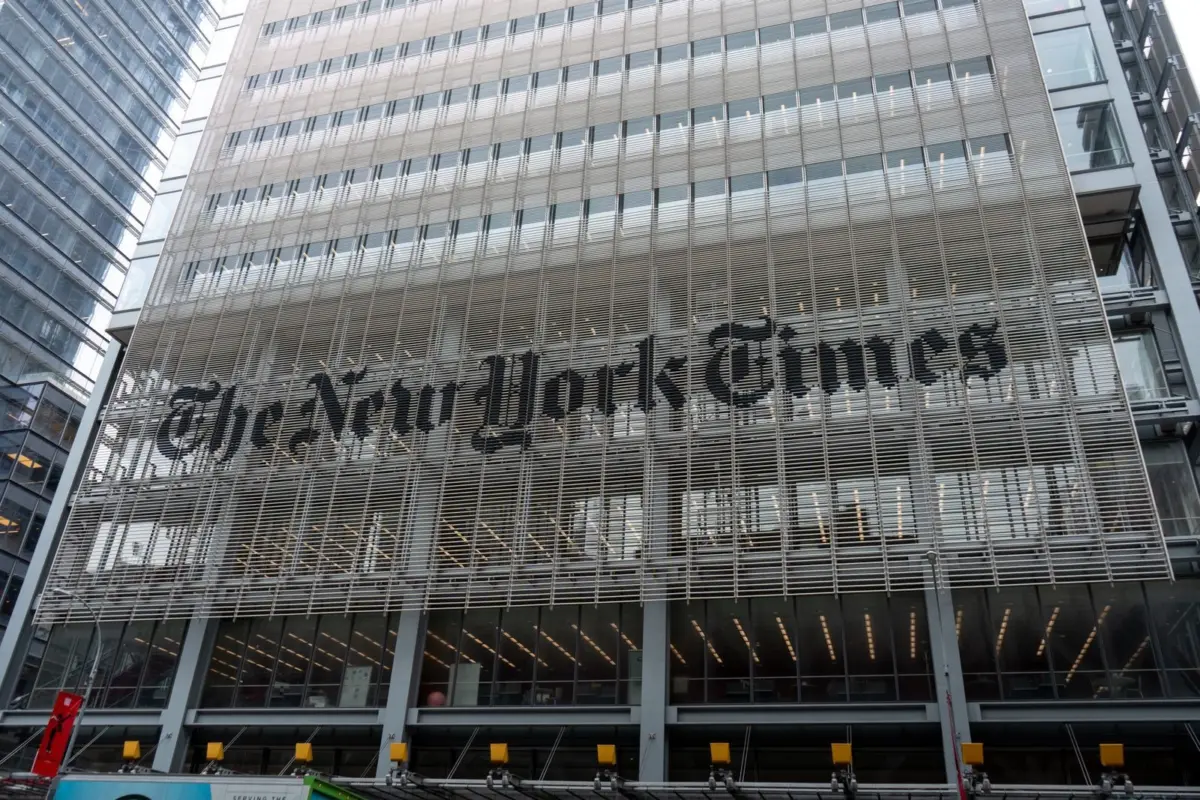
Executive Overview
On a brisk September morning in 1851, the reading public of New York City was introduced to a modest 24-column folio sheet titled the New-York Daily Times. Priced at a single cent per copy, it promised to cover every subject of public importance without falling prey to narrow partisan obsessions. One hundred and seventy-five years later, the hyphen has vanished, the word "Daily" has quietly dropped from the masthead, and the publication has expanded into a global media empire. Today, the New York Times commands the largest paid digital and print subscriber base of any news organization in the world, boasting more than 13 million paying subscribers.
Yet, as the institution celebrates its milestone anniversary, its leaders, archivists, and historians emphasize that the paper’s survival is rooted in a delicate equilibrium: a relentless adaptation to technological and cultural revolutions paired with a steadfast adherence to foundational journalistic ethics. From recording the assassination of Abraham Lincoln to deploying top-secret documents during the Vietnam War, and from navigating the shift from printing presses to 24-hour global digital newsrooms and hit podcasts like The Daily, the Times remains the premier barometer of the modern historical record.
/https://tf-cmsv2-smithsonianmag-media.s3.amazonaws.com/filer_public/43/c3/43c31d6b-0041-444c-a2b4-ffe1dfa01db4/gettyimages-2289911756_1.jpg)
Detailed Chronology: From a One-Cent Folio to a Global Powerhouse
The 19th Century: Founding, Principles, and the Crucible of War
The seeds of the Times were sown by Henry Jarvis Raymond, a prominent politician and future co-founder of the Republican Party, and George Jones, a former banker turned financial manager. In their August 1851 prospectus, they outlined a broad and ambitious scope: alongside daily dispatches of domestic and international affairs, the paper would feature rigorous literary reviews, art criticism, and deeply researched editorials.
Read Also
The paper’s first edition, published on September 18, 1851, immediately threw itself into the most contentious issues of the antebellum era. Its primary front-page story detailed the "Christiana riot" in Pennsylvania, an explosive confrontation wherein a group of African Americans killed a Maryland enslaver attempting to recapture escaped bondspersons. Raymond’s subsequent editorials walked a complicated, era-typical tightrope, condemning the murder while recognizing that the participants had acted on deeply held moral convictions—even as he maintained they must face the ultimate penalty of the law.
:focal(2080x1340:2081x1341)/https://tf-cmsv2-smithsonianmag-media.s3.amazonaws.com/filer_public/43/c3/43c31d6b-0041-444c-a2b4-ffe1dfa01db4/gettyimages-2289911756_1.jpg)
As the decade turned, the paper cemented its role as an indispensable chronicler of national trauma and triumph. It provided haunting, up-close accounts of the Civil War, later displaying original, laminated copies of issues announcing Union victories alongside the heartbreaking headline of April 15, 1855—President Lincoln Shot by an Assassin. Raymond, who had served as Lincoln’s friend and biographer, left a legacy of journalistic ambition that was tragically cut short by his sudden death in 1869 at age 49.
George Jones subsequently took full control of the paper’s editorial direction. In 1871, Jones solidified the Times’ reputation for fearless integrity by refusing a lucrative bribe from associates of the corrupt Tammany Hall politician William M. "Boss" Tweed. Instead of pocketing the hush money, Jones published a devastating series of exposés that dismantled Tweed’s embezzlement ring and directly engineered his downfall and imprisonment.
/https://tf-cmsv2-smithsonianmag-media.s3.amazonaws.com/filer_public/28/d0/28d021b1-f50e-4dcd-80f0-0ff611f51ecd/gettyimages-1410622687.jpg)
The Ochs Era and the Modern Journalistic Ethos
By 1893, following Jones’s death and the economic devastation of the Panic of 1893, the Times faced severe financial distress and declining circulation. Enter Adolph Simon Ochs, a visionary publisher from the American South who acquired the paper in 1896 for $75,000, much of it borrowed.
Ochs published a historic manifesto that redefined the publication’s mission. He vowed to present the news impartially, "without fear or favor, regardless of party, sect or interests involved." It was under Ochs that the legendary slogan, "All the News That’s Fit to Print," was introduced. Ochs also steered the paper toward cultural staples, such as the introduction of the iconic crossword puzzle in 1942—a decision famously pushed through by editors even in the days following the Pearl Harbor attack, on the premise that readers required mental respite alongside disaster bulletins.
/https://tf-cmsv2-smithsonianmag-media.s3.amazonaws.com/filer_public/80/42/80423af7-a149-43a0-9a3b-673ab73d565b/gettyimages-1288515217.jpg)
Following Ochs’s death in 1935, ownership remained strictly within the family. Today, the dynasty continues under his great-great-grandson, current publisher and chairman A.G. Sulzberger.
Supporting Context & Metrics: Archival Troughs and Triumphs
While the Times has earned its title as "the newspaper of record," its history is not without profound institutional failures. David W. Dunlap, a veteran journalist and curator at the Museum at the Times—a private, 15th-floor exhibition space within the company’s Manhattan headquarters—notes that the paper’s commitment to transparency extends to its own mistakes.
/https://tf-cmsv2-smithsonianmag-media.s3.amazonaws.com/filer_public/ee/48/ee48ebbe-c0cd-40fd-9d37-7fdd6349f282/1851-09-18_retouched.jpg)
The museum directly confronts dark chapters in the paper’s past, including its apparent editorial indifference to the Holocaust during the early years of World War II and its sluggishness in covering the unfolding AIDS epidemic in the 1980s. To help bridge these historical gaps, the paper launched initiatives like "Overlooked," a dedicated series providing obituaries for historically significant figures whose deaths initially went unreported by the Times.
Furthermore, the paper has confronted internal corruption head-on. When reporter Jayson Blair was exposed in 2003 for widespread fabrication and plagiarism, the Times published a massive, transparent investigative accounting across its own pages, re-reporting Blair’s stories to correct the historical record and inform its readership.
/https://tf-cmsv2-smithsonianmag-media.s3.amazonaws.com/filer_public/95/2a/952a1bac-e851-4a57-86a6-f9300d65c1d4/1865-04-15.jpg)
Balanced against these valleys are monumental peaks of investigative courage:
- The Titanic Sinking (1912): Led by legendary editor Carr Van Anda, the Times earned global acclaim for providing the earliest and most accurate accounts of the maritime disaster.
- The Pentagon Papers (1971): Defying the direct warnings of the U.S. Attorney General, the paper published a top-secret, 7,000-page historical dossier detailing the government’s covert involvement in the Vietnam War. This defense of the public’s right to know culminated in a landmark Supreme Court victory for freedom of the press.
Official Statements and Archival Insights
The operational heartbeat of the Times is preserved not only in its modern newsrooms but within the hallowed reading rooms of the New York Public Library, which houses the extensive corporate archives of the New York Times Company. Meredith Mann, a manuscripts curator at the library, oversees a vast trove of day-to-day documentation, including staff memos, article drafts, printing logistics, and internal policy guides.
/https://tf-cmsv2-smithsonianmag-media.s3.amazonaws.com/filer_public/84/6e/846ed19f-0d35-4862-b048-6eac04f8d2b8/08_ochs_and_iphigene.jpg)
"Every piece of the day-to-day running of the New York Times, and how each story went from the germ of an idea to something held in the hands of its many, many subscribers, is something that is documented in our collections," Mann explains.
Among the library’s most treasured artifacts is a piece of correspondence from aviator Amelia Earhart. Annoyed that the paper had referred to her by her married name rather than her professional identity, Earhart penned a swift, sharp correction: "I’m not Mrs. Putnam, I’m Amelia Earhart." Such documents offer researchers an intimate glimpse into how the paper interacted with the public figures it helped shape into icons.
/https://tf-cmsv2-smithsonianmag-media.s3.amazonaws.com/filer_public/0c/32/0c323d2f-2beb-474e-9ac2-4c28690de46b/14a3_timespastzipper-original-with-headline.jpg)
Future Outlook: From Print Newsrooms to Global Digital Frontiers
The transition of the Times over the past two decades has been nothing short of staggering. Sam Dolnick, a deputy managing editor who joined the paper in 2009, reflects on the profound cultural shift within the newsroom.
"When I came, it was a print newsroom built around the print newspaper and print deadlines and the print front page," Dolnick says. "Now, it’s a digital newsroom around the clock, around the globe."
/https://tf-cmsv2-smithsonianmag-media.s3.amazonaws.com/filer_public/d8/16/d816b8aa-0c2b-4a90-9161-afcd82d29f54/titanic-and-pentagon.jpg)
This digital metamorphosis found a new gear in 2017 with the launch of The Daily, a flagship news podcast that fundamentally altered internal prestige. Where reporters once vied exclusively for prime real estate on the print front page, competition quickly expanded to the audio realm. This cross-medium agility demonstrated that journalistic expertise could transcend traditional print limitations and capture vast new audiences.
As the Times navigates its 175th year, its leadership maintains that the recipe for longevity is deceptively simple: maintain absolute clarity on immutable core values—accuracy, independence, and relentless inquiry—while remaining utterly fearless about changing everything else. By marrying the foundational tenets laid down by Raymond, Jones, and Ochs with modern digital distribution, the New York Times has secured its place not just as a relic of journalistic history, but as an enduring engine of the future.


Comments
Facebook App ID not configured. Please add it in the Customizer.