
Executive Overview
Throughout human history, the boundary of the home has represented far more than a mere physical barrier against the elements; it has served as the frontline in a metaphysical war against misfortune, disease, malice, and unseen malevolent forces. Virtually all cultures and epochs brim with magical practices, operating as a secret ingredient of daily life designed to provide psychological reassurance and perceived supernatural security.
/https://tf-cmsv2-smithsonianmag-media.s3.amazonaws.com/filer_public/b8/04/b8041e14-0310-4961-9c52-3076b161a62f/witches-and-wizards.png)
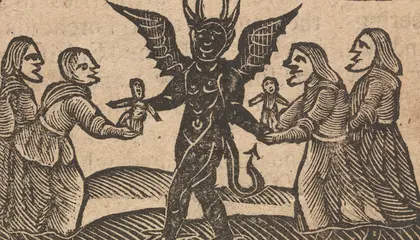
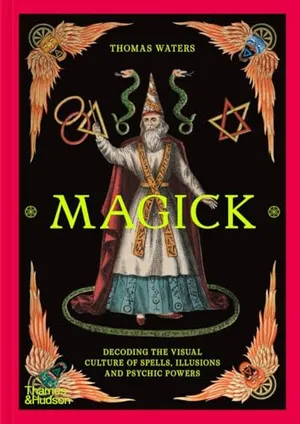
While modern society often categorizes historical mysticism as mere superstition, an evolving body of research among historians and archaeologists demonstrates that the defense of domestic spaces was a serious, systematic undertaking. From early modern Europe—where combustible timber homes fostered genuine dread of fires attributed to "incendiary witchcraft"—to ancient East Asia and the Ottoman Empire, people relied on an arsenal of protective talismans. As explored by historian Thomas Waters in his forthcoming book, Magick: Decoding the Visual Culture of Spells, Illusions and Psychic Powers, these protective measures ranged from specialized flora and architectural anomalies to macabre witch bottles and sacred texts. Even today, in an era of relative technological safety, individuals continue to deploy these ancient occult techniques to mitigate anxieties and cultivate domestic sanctuaries.
Read Also
Detailed Chronology: A History of Domestic Defense
The deployment of magic for domestic protection is neither a localized phenomenon nor a static tradition; it has evolved across centuries and continents in response to localized fears, shifting architectural styles, and changing religious landscapes.
/https://tf-cmsv2-smithsonianmag-media.s3.amazonaws.com/filer_public/b8/04/b8041e14-0310-4961-9c52-3076b161a62f/witches-and-wizards.png)
- 1533 (Central Europe): A wave of paranoia regarding "incendiary witchcraft" crests following catastrophic fires, such as the devastating blaze in Schiltach, Germany. Believed by contemporaries to be orchestrated by fire-starting demons or malefic witches, these events cement the hearth and chimney as primary focal points for magical domestic defense.
- 17th Century (Europe and the Americas): Botanist Nicholas Culpeper publishes The Complete Herbal, codifying botanical defenses such as bay trees, betony, and bittersweet nightshade as active deterrents against witchcraft and lightning. Simultaneously, the manufacturing of "witch bottles"—vessels packed with personal detritus, pins, and nails—peaks across Europe as an aggressive counter-magic measure to neutralize curses.
- 1622 (Great Britain): The compilation of grimoires, such as the Booke of Experiments (now housed in the Bodleian Library at the University of Oxford), documents the formalization of protective star symbols and geometric inscriptions designed to overcome enemies and repel evil influences.
- 18th to 19th Century (The British Isles & Channel Islands): The use of "hag stones" (naturally perforated stones) reaches a zenith in rural communities, where they are hung from bedposts and barn beams to ward off nightmares and bad luck. Meanwhile, protruding stones on Channel Island chimneys—originally designed to prevent rain damage—evolve into localized folklore known as "witches’ seats," meant to placate rather than provoke passing aerial sorcerers.
- 19th to Early 20th Century (Global): Protective domestic rituals remain deeply embedded in daily life. In Ireland, protective cross-in-circle motifs are inscribed into farm mortar to ward off capricious fairies known euphemistically as the "good people." In the Ottoman Empire, households display calligraphic hilyas to secure divine protection, while in rural Britain, placing a Bible under a pillow remains a common defense against night terrors.
- Contemporary Era: Modern esoteric practitioners, neo-pagans, and everyday homeowners continue these lineages. Traditional methods—such as planting rowan trees to ward off the "evil eye" or crafting hag stones—undergo a cultural renaissance, demonstrating the enduring psychological utility of magical self-defense.
Supporting Context & Metrics: Six Pillars of Historical Home Protection
To understand how our ancestors operationalized their metaphysical defenses, historians categorize these protective measures into six distinct methodologies:
1. Protective Plants and Botanical Defenses
Trees, herbs, and garden foliage formed an organic perimeter against both natural and supernatural hazards. In early modern Britain and Europe, rosemary bushes were cultivated near entryways under the belief that nocturnal witches would be forced to pause and count every individual leaf, keeping them occupied until the dawn stripped them of their power. Across the Americas, chile peppers have long been affixed to doors to repel harmful forces. Botanically, these traditions merged empirical observations of plant properties with ritualistic folklore, creating living green shields around vulnerable households.
2. Mystical Symbols and Architectural Graffiti
Inscriptions carved into wood, stone, and mortar served as silent sentinels. Five- and six-pointed stars, alongside intricate geometric shapes like hexafoils (daisy wheels), were frequently etched near entryways, windows, and chimneys. While some historians debate whether these markings originated as utilitarian masons’ marks, their dense concentration around architectural weak points strongly suggests a deliberate apotropaic (evil-repelling) purpose aimed at neutralizing witchcraft.
3. Magical Architecture
Builders worldwide incorporated defensive engineering directly into the blueprints of homes. In East Asia, traditional masonry guides mandated the placement of demon tiles and fierce protective figurines to frighten away burglars and malevolent spirits. In Spain’s Aragon region, complex geometric designs were carved into chimney flutes to conceptually confuse and trap descending witches. Similarly, the "witches’ seats" of the Channel Islands illustrate an architectural accommodation of the supernatural, offering a resting spot to appease flying entities rather than engaging them in open conflict.
/https://tf-cmsv2-smithsonianmag-media.s3.amazonaws.com/filer_public/ef/18/ef18b409-2156-4663-922e-d5ba1dfd7608/de_matiera_medica_abbasid_periode_bagdad_1224_kestron__betonica_officinalis.jpg)
4. Witch Bottles
Arguably the most visceral form of domestic magic, witch bottles were counter-offensive devices designed to break active bewitchments. Typically constructed from stoneware or glass, these containers were packed with the bodily items of the afflicted—such as hair, nail clippings, or urine—alongside bent brass pins, thorns, and cloth hearts. Sealed tightly, the bottles were either buried beneath the threshold or concealed within the chimney structure. The underlying magical logic posited that the contents would torture the witch’s bladder, forcing the culprit to lift the curse or reveal their identity.
5. Special Stones
Mineral talismans were trusted anchors of stability. In China, shigandang stones inscribed with protective invocations were placed near vulnerable entry points to evoke the immovable mass of Mount Tai, crushing any approaching evil. In the British Isles, naturally perforated "hag stones" were suspended from bedposts to prevent nocturnal oppression and nightmares, a practice that has experienced a modern revival among contemporary esoteric practitioners who emphasize positive, harm-rejection magic.
/https://tf-cmsv2-smithsonianmag-media.s3.amazonaws.com/filer_public/09/70/09706e1b-621a-4568-94a4-34c646e8eb6f/worlington.jpg)
6. Religious and Sacred Objects
The integration of orthodox religious items into domestic magic is well-documented. In 19th-century Britain, sleeping with a Bible beneath the pillow was a routine practice for warding off night terrors. In the Ottoman Empire, master calligraphers produced exquisite hilyas—illuminated scrolls detailing the physical attributes and virtues of the Prophet Muhammad—which were housed in protective amulets and hung on interior walls to shield families from supernatural harm.
Official Perspectives and Academic Insight
The study of historical domestic magic bridges folklore, archaeology, and psychology, offering profound insights into the human condition.
/https://tf-cmsv2-smithsonianmag-media.s3.amazonaws.com/filer_public/85/8a/858a187b-99f6-4c5d-8c31-87422676e22e/witch_bottles_curse_protection.jpg)
Dr. Thomas Waters, a historian at Imperial College London and author of Magick: Decoding the Visual Culture of Spells, Illusions and Psychic Powers, emphasizes that these practices cannot be dismissed as mere eccentricities. "Virtually all cultures and epochs fizz with magic," Waters notes. He explains that magic functions as "a secret ingredient of human life, because magic takes so many forms and serves so many functions."
According to academic researchers specializing in early modern material culture, these domestic rituals provided a vital framework of agency. In eras plagued by unexplainable illnesses, infant mortality, structural fires, and agricultural failures, magical talismans gave inhabitants a tangible method to manage overwhelming anxieties. By engaging in these protective acts—whether planting a rowan tree, burying a witch bottle, or carving a hexafoil into a timber beam—individuals transformed passive vulnerability into active, psychological self-defense.
/https://tf-cmsv2-smithsonianmag-media.s3.amazonaws.com/filer_public/6d/c4/6dc402ce-eb44-4ef0-bdb0-77f7ade0fed0/description_of_the_prophet_hilya_al-nabi_by_hafiz_osman_cbl_t_5594.jpg)
Future Outlook
As historical archaeology and digital cataloging techniques advance, our understanding of domestic mysticism continues to expand. Researchers are increasingly utilizing high-resolution imaging and spatial analysis to map the exact distribution of architectural marks and concealed artifacts within historic buildings, shedding light on the socio-economic status and psychological climate of early modern communities.
Furthermore, the twenty-first century has witnessed an unexpected resurgence in domestic magical practices. As modern populations navigate contemporary uncertainties—ranging from economic instability to digital isolation—the appeal of grounding rituals, botanical warding, and protective symbolism has found a receptive audience among younger generations. Whether interpreted through a literal supernatural lens or embraced as psychological mindfulness and folk-heritage reclamation, these ancient techniques endure. Ultimately, the impulse to safeguard the hearth, secure the threshold, and comfort the mind remains as vital today as it was in the timber-framed cottages of medieval Europe or the ancient courtyards of the East.




Comments
Facebook App ID not configured. Please add it in the Customizer.